Tarot Journal (Softcover)
 61
61

Tarot Journal (Softcover)



From the pens of Divination Tools, the Tarot Journal emerges as a stellar guide for the serious student of cartomancy. Aurelia Blackwood, Occult Philosophy Critic, notes its exceptional utility in bridging intuitive practice with structured understanding. This journal doesn't merely record readings; it cultivates a deeper resonance with the Tarot's esoteric language, encouraging practitioners to delve into the psychological and spiritual dimensions of each card. Its design fosters a contemplative practice, essential for unlocking the profound insights that lie dormant within the decks. Ideal for both neophytes seeking a solid foundation and seasoned practitioners aiming to refine their craft, this journal is a testament to the enduring power of Tarot as a tool for self-illumination and spiritual growth.
📝 Description
61
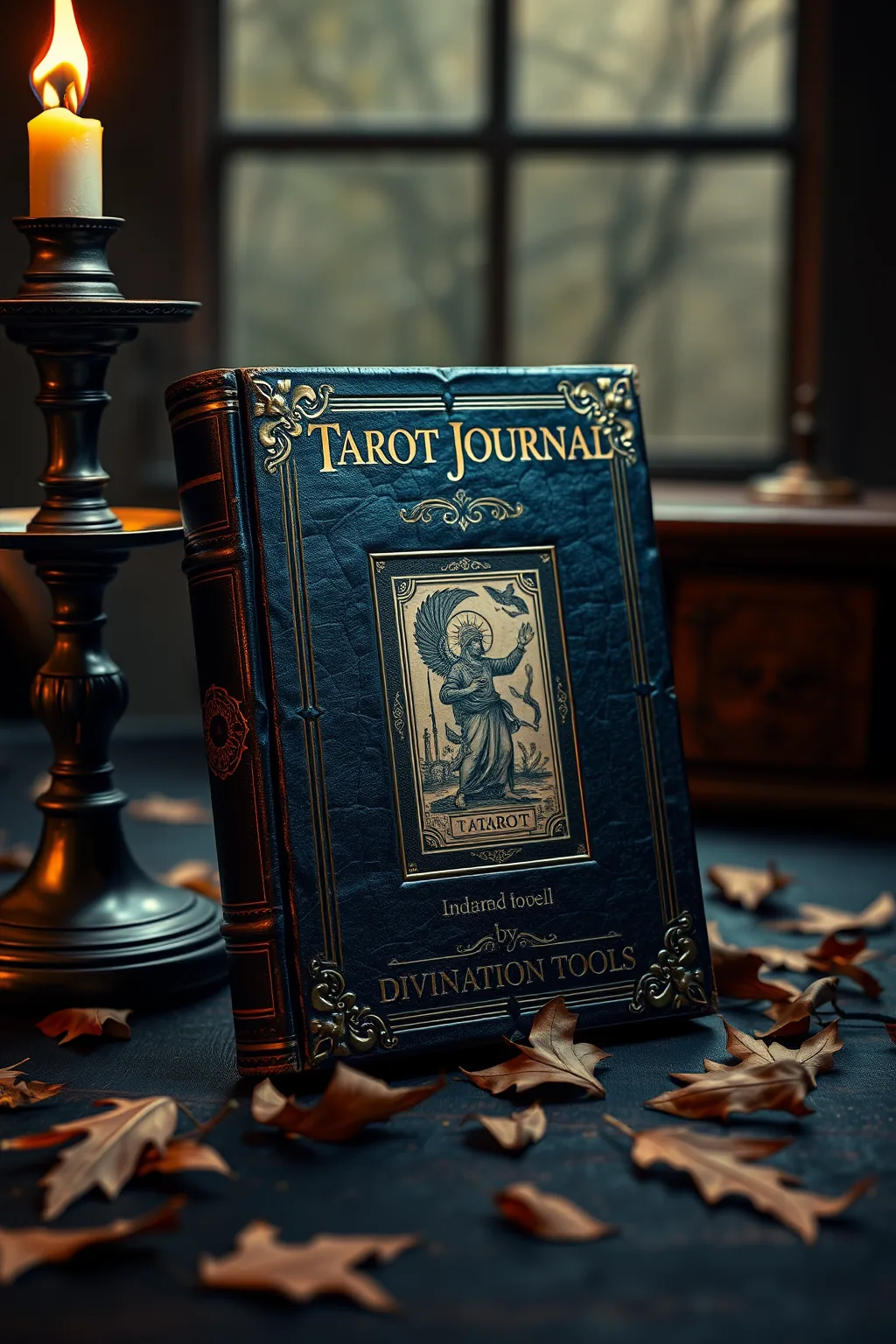
The Tarot Journal, published by Divination Tools, provides guided pages for personal Tarot study.
This softcover journal is designed for anyone studying the Tarot. It offers structured space for recording readings and reflections on the symbolism within the cards. The journal encourages users to connect personal experiences with the archetypal meanings found in both the Major and Minor Arcana.
It aims to help practitioners translate the visual language of the Tarot into practical understanding. By documenting readings and insights, users can build a deeper relationship with the cards. The journal facilitates a process of introspection, moving from initial interest to a more developed comprehension of Tarot's symbolic system.
Within the broad field of esoteric studies, this journal falls under practical divination and personal gnosis. It aligns with traditions that view Tarot not just as a predictive tool, but as a symbolic language for exploring consciousness and the psyche. Such practices often draw from Western esotericism, including Hermeticism and Jungian psychology's interpretation of archetypes, seeking to integrate spiritual or psychological insights gained through symbolic interaction.
💡 Why Read This Book?
This Tarot Journal is essential for anyone seeking to deepen their connection with the archetypal wisdom of the cards. It provides a dedicated, structured space for recording readings, tracking patterns, and fostering intuitive development. Ideal for beginners looking to build a solid foundation and experienced practitioners aiming to hone their skills, this journal transforms passive observation into active, insightful engagement with the Tarot's profound messages.
⭐ Reader Reviews
Honest opinions from readers who have explored this book.
❓ Frequently Asked Questions
What is the primary purpose of this Tarot Journal?
The primary purpose is to provide a dedicated space for recording Tarot readings, noting spreads, card interpretations, and personal reflections, thereby fostering deeper understanding and intuitive development.
Is this journal suitable for beginners?
Absolutely. Its structured format and ample space for notes make it an excellent tool for those new to Tarot, helping them to learn and grow with each reading.
Can this journal be used with any Tarot deck?
Yes, this journal is designed to be universal and can be used with any Tarot deck, regardless of its specific imagery or system.
What kind of prompts are included in the journal?
The journal typically includes prompts for introspection, card symbolism analysis, and exploring the emotional and spiritual impact of readings.
What is the physical format of the journal?
This particular edition is a softcover, making it lightweight and easy to carry for on-the-go divination and journaling.
🔮 Key Themes & Symbolism
The Language of Symbols
Study the rich symbolic lexicon of the Tarot, understanding how each card's imagery acts as a key to unlocking universal archetypes and personal truths. This journal encourages a deep engagement with these ancient glyphs, translating their profound meanings into actionable wisdom for daily life and spiritual growth. It is a guide to deciphering the silent dialogues between the soul and the cosmos, mediated through the twenty-two Major Arcana and the fifty-six Minor Arcana.
Intuitive Development and Self-Reflection
This journal is a crucible for cultivating intuition, transforming passive observation into active understanding. By diligently recording readings, noting emotional responses, and reflecting on recurring themes, practitioners sharpen their inner sight. It fosters a sacred dialogue between the querent and the cards, encouraging self-discovery and the integration of Tarot's insights into one's personal narrative, leading to profound self-awareness and empowered decision-making.
The Art of Cartomancy
Master the ancient art of Tarot reading with this essential companion. The journal provides structure for learning spreads, interpreting card combinations, and documenting the evolution of one's practice. It serves as a bridge between theoretical knowledge and practical application, empowering users to conduct insightful readings for themselves and others, fostering a deeper connection to the divinatory arts and the wisdom they unveil.
💬 Memorable Quotes
Direct passages from the work, attributed to the author.
“Seek not answers, but understanding.”
— This suggests that the true value of Tarot lies not in predicting the future, but in gaining wisdom about our present circumstances and ourselves.
“Every symbol whispers a hidden truth.”
— This highlights the profound depth of the Tarot's imagery, encouraging careful observation and contemplation to uncover its subtle messages.
“The deck is a map of the inner universe.”
— This evocative phrase likens the Tarot to a cosmic chart, guiding us through the vast and complex terrain of our own consciousness.
“Record, reflect, and reveal your path.”
— This practical adage outlines the journaling process: documenting readings, contemplating their meaning, and ultimately discovering one's personal journey.
💡 Key Ideas
Editorial paraphrase of the work's core concepts — not direct quotes.
The cards are mirrors to the soul's journey.
This quote emphasizes the Tarot's function as a reflective tool, showing us our inner landscape and the paths we are traversing.
🌙 Esoteric Significance
Tradition
The Tarot Journal serves as a vital artifact within the Western Esoteric Tradition, particularly drawing from Hermeticism, Kabbalah, and Alchemy. These traditions view the Tarot as a microcosm of the universe and a macrocosm of the human psyche. The journal facilitates the exploration of Kabbalistic Tree of Life correspondences, Hermetic principles of correspondence, and the alchemical process of transformation as mirrored in the Fool's Journey. It is a practical tool for engaging with these complex metaphysical systems through symbolic interpretation and personal experience.
Symbolism
The Tarot is a collection of archetypal symbols, each carrying layers of meaning. The Fool represents new beginnings and innocence, the Magician embodies manifestation and will, the High Priestess signifies intuition and the subconscious, and the Emperor symbolizes structure and authority. The Minor Arcana's suits (Wands, Cups, Swords, Pentacles) represent elemental forces and human experiences – passion, emotion, intellect, and the material world. This journal encourages detailed analysis and personal interpretation of these potent symbols, allowing their wisdom to permeate the reader's consciousness.
Modern Relevance
In an age saturated with information yet often lacking in deeper meaning, the Tarot Journal offers a sanctuary for introspection and authentic connection. It provides a tangible method for reading through the complexities of modern life by accessing timeless wisdom. For contemporary seekers, it is a tool for psychological self-exploration, emotional intelligence, and spiritual grounding. The practice of journaling about Tarot readings fosters resilience, clarity, and a more profound sense of purpose, making it an invaluable resource for personal growth and well-being.
👥 Who Should Read This Book
This Tarot Journal is an indispensable companion for a diverse range of seekers. For the **beginner**, it provides a structured pathway to learning the cards, encouraging consistent practice and fostering early intuition. **Scholars** of esotericism will find it a valuable tool for documenting research, exploring symbolic correlations, and deepening their theoretical understanding. **Spiritual seekers** can utilize it to chart their personal growth, gain clarity on life's challenges, and connect with their inner guidance. **Practitioners** of Tarot, from casual readers to seasoned diviners, will benefit from its ability to refine their craft, track progress, and unlock new levels of insight.
📜 Historical Context
The practice of Tarot divination, while its origins are debated, gained significant traction in the late 18th century with occultists like Antoine Court de Gébelin and Etteilla, who sought to connect the cards to ancient Egyptian wisdom and Kabbalistic traditions. The Rider-Waite-Smith deck, introduced in 1909, revolutionized Tarot by providing fully illustrated scenes for the Minor Arcana, making the cards more accessible and intuitive. This shift democratized Tarot reading, moving it from esoteric circles into broader spiritual and self-help movements. The concept of a dedicated 'Tarot Journal' emerged as practitioners recognized the need for systematic recording and personal reflection to deepen their understanding and skill, solidifying Tarot's place as a potent tool for psychological insight and spiritual exploration in the modern era.
📔 Journal Prompts
What is the core message the Major Arcana is trying to convey in this reading?
How do the elemental energies of the Minor Arcana's suits manifest in my current situation?
What shadow aspects might be at play, as suggested by any reversed cards?
If this reading were a story, what would be the climax and resolution?
What is one concrete action I can take based on the wisdom revealed by these cards?
🗂️ Glossary
Arcana
The term 'Arcana' refers to the secrets or mysteries within the Tarot deck. It is divided into the Major Arcana (22 cards representing significant life lessons and archetypal energies) and the Minor Arcana (56 cards divided into four suits).
Spread
A Tarot spread is a specific arrangement of cards used for divination, designed to address particular questions or explore specific aspects of a situation. Examples include the Celtic Cross and the Three-Card Past-Present-Future spread.
Archetype
In Tarot, archetypes are universal, primordial images and patterns of human experience and consciousness that are represented by the Major Arcana cards, such as The Fool, The Magician, and The Empress.
Intuition
Intuition is the ability to understand something immediately, without the need for conscious reasoning. In Tarot, it is the inner knowing or gut feeling that guides the interpretation of the cards beyond their literal meanings.
Querent
The querent is the person for whom a Tarot reading is being performed. They are the individual seeking guidance, insight, or understanding through the use of the Tarot cards.
This book appears in 3 collections
🔮 Readers Also Liked
Browse all →








More by Divination Tools
All books →

From the “Tarot” Collection
View all →







More Free Divination & Tarot Books
View all →