Tarot: Mirror of the Soul
 78
78

Tarot: Mirror of the Soul
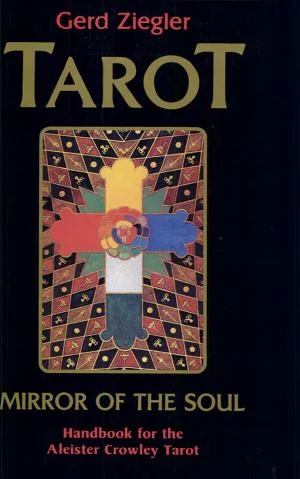
Gerd Ziegler's "Tarot: Mirror of the Soul" offers a refreshingly direct engagement with the Crowley Thoth deck, sidestepping common mystical jargon for a more grounded, psychological application. Its strength lies in framing the tarot as an internal diagnostic tool, a literal mirror reflecting the user's psyche. The instruction for reading cards to clarify emotional situations is particularly well-executed, providing actionable steps rather than abstract pronouncements. However, the book's reliance solely on the Crowley Thoth deck, while specific, might alienate readers unfamiliar with or disinclined towards its intricate and often dense symbolism. The inclusion of a chakra reading layout is an interesting, if somewhat unconventional, integration. Ziegler's approach is commendably practical for anyone seeking self-understanding through this particular deck. It serves well as a focused guide to the Thoth's reflective properties.
📝 Description
78
Gerd Ziegler's 1988 book, Tarot: Mirror of the Soul, uses the Crowley Thoth deck to explore the psyche.
This work posits that the tarot functions as a reflective surface for the inner self, mapping personal growth and emotional states. It moves beyond simple fortune-telling, presenting the cards as a guide to self-awareness and personal evolution. Ziegler details a structured method for engaging with the symbolic imagery of the tarot.
Individuals interested in a psychological interpretation of the tarot, especially those drawn to the Crowley Thoth deck, will find this book useful. It offers practical techniques for self-reflection and emotional clarification. While accessible to beginners of this specific deck, experienced practitioners might find new angles for interpreting the cards as a reflection of internal realities and spiritual progress.
Published in 1988, Ziegler's book emerged during a resurgence of interest in esoteric studies and psychological approaches to ancient systems. The Crowley Thoth deck, with its complex occult and astrological symbolism developed in the early 20th century, provided fertile ground for such interpretations. Ziegler's work aimed to make this intricate visual language accessible for personal development, connecting its rich imagery to internal psychological landscapes.
💡 Why Read This Book?
• Understand the tarot not as a predictive tool, but as a direct reflection of your inner psychological state, offering insights into your personal growth. • Gain practical skills for using the specific symbolism of the Crowley Thoth deck to analyze and clarify complex emotional situations. • Learn unique card layouts, such as the chakra reading, designed to map your internal landscape and guide your path toward maximum personal development.
⭐ Reader Reviews
Honest opinions from readers who have explored this book.
❓ Frequently Asked Questions
What makes Gerd Ziegler's "Tarot: Mirror of the Soul" different from other tarot books?
This book uniquely uses the Crowley Thoth deck as its sole visual reference, framing the tarot specifically as a "mirror of the soul" for psychological self-reflection and personal growth, rather than focusing on divination.
Is this book suitable for beginners who have never used the Crowley Thoth deck before?
Yes, the book provides definitions for the Major and Minor Arcana and includes instructions for reading the cards, making it accessible for beginners to the Thoth system, though familiarity with tarot basics is helpful.
What kind of tarot layouts are included in the book?
The book offers several different tarot layouts designed for practical application. Notably, it includes a specific chakra reading intended to help users analyze and understand their emotional and energetic states.
What is the primary goal of using the tarot as a 'mirror of the soul' as described by Ziegler?
The primary goal is to foster self-awareness by observing how the tarot cards symbolize your inner reality. It's about recognizing your growth patterns and potential, using the cards as a guide for personal evolution.
When was "Tarot: Mirror of the Soul" first published, and what deck does it feature?
The book was first published in 1988. It exclusively utilizes and illustrates the Crowley Thoth tarot deck, developed by Aleister Crowley and painted by Lady Frieda Harris.
Does the book focus on traditional fortune-telling methods?
No, the book's emphasis is on psychological interpretation and self-reflection. It presents the tarot as a system to understand one's inner world and facilitate personal growth, rather than predicting future events.
🔮 Key Themes & Symbolism
The Tarot as a Psychological Mirror
The central thesis posits the tarot deck, specifically the Crowley Thoth, as a symbolic representation of the user's internal landscape. This perspective shifts the focus from external prediction to internal exploration. Ziegler guides readers to perceive the cards not as external omens, but as reflections of their own thoughts, emotions, and developmental stages. This involves understanding how the archetypal imagery of the Major and Minor Arcana corresponds to one's own psychological patterns and experiences, fostering a dialogue between the inner self and the symbolic language of the cards.
Growth and Self-Development through Symbolism
Ziegler frames the tarot system as a tool for personal evolution. The "mirror" reflects not just the present state but also the trajectory of growth. By engaging with the cards and their specific meanings within the Crowley Thoth system, individuals can identify areas for development and understand their potential for reaching their maximum capacity. This involves interpreting the cards' messages in the context of one's life journey, using the symbolic narrative to inform conscious choices and facilitate a deeper connection with one's authentic self.
Practical Application with the Crowley Thoth Deck
This work emphasizes the practical application of tarot reading, specifically tailored to the complexities of the Crowley Thoth deck. It moves beyond mere definitions to provide concrete instructions for interpretation, particularly concerning emotional situations. The inclusion of various layouts, such as the chakra reading, offers structured methods for self-inquiry. This hands-on approach ensures that readers can actively use the deck as an accessible system for gaining clarity and insight into their personal circumstances.
Understanding the Major and Minor Arcana
The book offers detailed explorations of both the Major and Minor Arcana within the context of the Crowley Thoth deck. Ziegler provides definitions and interpretations that align with the psychological and self-reflective approach. This section serves as a foundational guide, enabling readers to grasp the individual significance of each card and how they collectively contribute to the broader narrative of the soul's journey. The focus is on understanding the symbolic language inherent in each card's imagery and numerology.
💬 Memorable Quotes
Direct passages from the work, attributed to the author.
“The tarot cards symbolize your inner reality.”
— This core statement highlights the book's central thesis: the tarot is not an external predictive force, but an internal map. It suggests that by examining the cards, one is essentially looking at a reflection of their own psychological state, potential, and growth.
“Learn how this 'mirror' reflects your growth.”
— This emphasizes the dynamic aspect of the tarot as presented by Ziegler. It's not just a static reflection but a tool that illustrates the process of personal evolution, showing where one is and how they are moving forward.
“How you can grow to your maximum with this easy-to-use system.”
— This points to the practical, self-help orientation of the book. The tarot system, as explained by Ziegler, is presented as a pathway to achieving one's full potential through accessible methods.
“Includes definitions of the major and minor arcana.”
— This indicates the book provides foundational knowledge necessary for understanding the tarot. It promises a breakdown of the card system, essential for anyone learning to interpret them.
“Instructions for reading the cards to clarify emotional situations.”
— This highlights a key practical benefit of the book. It offers specific guidance on how to apply tarot readings to address and gain clarity on personal emotional challenges.
🌙 Esoteric Significance
Tradition
Ziegler's work is firmly rooted within the Western Esoteric Tradition, particularly influenced by psychological approaches to symbolism. While not explicitly tied to a single lineage like Hermeticism or Kabbalah, it draws heavily on the symbolic language that these traditions have informed, especially as codified in the Crowley Thoth deck. The deck itself is a syncretic creation, incorporating elements of Hermetic Qabalah, astrology, and ceremonial magic. Ziegler's contribution is to translate this complex esoteric framework into a practical system for introspection, focusing on the individual's inner reality rather than external magical workings.
Symbolism
The book utilizes the intricate symbolism of the Crowley Thoth deck. Key motifs include the archetypal figures of the Major Arcana, such as the Magus or the Empress, interpreted through a psychological lens representing inner states or potentials. The suits of the Minor Arcana (Wands, Cups, Swords, Disks) are also explored, often with associations to elemental forces and psychological faculties. Furthermore, the specific numerological and astrological correspondences embedded within the Thoth system, which Ziegler addresses, are crucial symbolic layers reflecting the intricate interconnectedness of the cosmos and the individual psyche.
Modern Relevance
Ziegler's approach continues to resonate with contemporary practitioners of tarot who favor psychological and self-exploratory methods over strict divination. His focus on the tarot as a mirror for inner reality aligns with modern therapeutic and coaching techniques that utilize archetypal imagery for self-discovery. Thinkers and practitioners within the Jungian-inspired tarot community, as well as those exploring esoteric psychology, find value in his structured interpretations. The emphasis on personal growth and understanding one's 'maximum potential' also connects with current self-improvement and mindfulness movements, albeit through an esoteric framework.
👥 Who Should Read This Book
• Practitioners of Western Esotericism interested in psychological interpretations of tarot, especially those drawn to the unique symbolism of the Crowley Thoth deck. • Individuals seeking a structured system for self-reflection and emotional clarification, looking to use tarot as a tool for personal growth rather than prediction. • Students of comparative religion and symbolism who wish to understand how esoteric systems can be applied to map the human psyche and facilitate self-awareness.
📜 Historical Context
Gerd Ziegler's "Tarot: Mirror of the Soul," first published in 1988, emerged during a significant period for esoteric and psychological studies in the West. The 1980s saw a continued flourishing of interest in Jungian psychology, archetypal symbolism, and alternative spiritual practices, building on the counter-cultural movements of the preceding decades. The Crowley Thoth deck, a complex system developed by Aleister Crowley and painted by Lady Frieda Harris in the mid-20th century, was itself a product of early 20th-century occult revivals and esoteric syncretism, drawing heavily on Kabbalah, astrology, and Egyptian mythology. Ziegler’s work tapped into this rich symbolic language, offering a specific lens for interpreting its intricate designs for personal growth, aligning with a broader trend of applying esoteric tools for psychological insight rather than purely divinatory purposes. Its publication provided a structured approach to a deck known for its challenging complexity.
📔 Journal Prompts
How does the card that fell for today truly mirror my current emotional state?
Which aspect of my inner reality does the 'Fool' card represent for me right now?
What potential for growth is reflected in the 'Ace of Wands' in my current situation?
How can the symbolism of the 'Three of Swords' help me understand a difficult emotional situation?
In what way does the 'Chakra Reading' layout reveal imbalances in my inner landscape?
🗂️ Glossary
Crowley Thoth Deck
A specific tarot deck created by Aleister Crowley, with artwork by Lady Frieda Harris, known for its complex symbolism integrating Kabbalah, astrology, and Egyptian mythology.
Major Arcana
The 22 trump cards in a tarot deck that represent significant life lessons, archetypal figures, and major spiritual or psychological stages.
Minor Arcana
The 56 cards in a tarot deck, divided into four suits (typically Wands, Cups, Swords, Disks/Pentacles), representing everyday events, situations, and personal attributes.
Chakra
In esoteric traditions, particularly Hinduism and Tantra, chakras are energy centers within the body believed to influence physical, emotional, and spiritual well-being.
Inner Reality
The internal world of a person, encompassing their thoughts, emotions, beliefs, subconscious patterns, and psychological states.
Personal Growth
The process of self-improvement and development through conscious effort to enhance one's understanding, skills, and emotional maturity.
Layout
A specific arrangement or pattern in which tarot cards are placed for a reading, designed to address particular questions or explore specific aspects of a situation.
This book appears in 1 collection
🔮 Readers Also Liked
Browse all →

From the “Tarot” Collection
View all →
![The New-England primre [sic] improved.](/img/thumb/the-new-england-primre-sic-improved.webp)
![Cicero in twenty eight volumes. Vol.20: De senectute, De amicitia, De divinatione [Loeb 154]](/img/thumb/cicero-in-twenty-eight-volumes-vol-20-de-senectute-de-amicitia-de-divinatione-loeb-154-cicero-marcus-tulius-106-43-bce.webp)
More Free Occult Philosophy Books
View all →