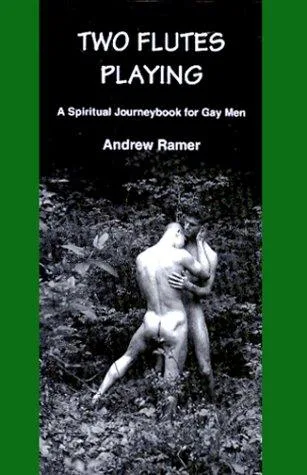
Two flutes playing
 73
73

Two flutes playing
Andrew Ramer’s "Two Flutes Playing" presents a challenging, if sometimes opaque, meditation on the nature of perception and reality. The 1987 publication date places it squarely within a fertile period for esoteric literature, yet Ramer’s approach feels distinct. He avoids the more overtly New Age pronouncements of his contemporaries, opting instead for a more philosophical, almost mythopoeic style. The section discussing the "inner dialogue" between opposing forces, while not groundbreaking, is handled with a nuanced touch that distinguishes it from more simplistic dualistic arguments. However, the work’s abstraction can be a double-edged sword; at times, the prose becomes so dense with metaphor that concrete understanding feels just out of reach, a significant hurdle for readers seeking direct application. Despite this, the book serves as a potent reminder of the intricate ways our internal landscapes shape our external worlds.
📝 Description
73
Andrew Ramer's 1987 book investigates esoteric thought, challenging typical understandings of consciousness.
Published in 1987, "Two Flutes Playing" is Andrew Ramer's philosophical inquiry into esoteric ideas. It moves beyond simple spiritual narratives, posing questions about consciousness and reality that resist easy answers. The book is not a guide for practical application but rather an invitation to consider the ways things are interconnected. It engages with concepts that invite readers to think about existence in deeper, more complex terms. The writing encourages contemplation rather than instruction, focusing on the philosophical implications of these ideas.
This work is suited for those interested in comparative mythology, the psychology of consciousness, and philosophical contemplation of existence. It appeals to readers who enjoy texts that tackle significant questions without providing definitive solutions. Those familiar with Jungian psychology or Hermetic philosophy may find particular resonance within its pages. Ramer's approach is thoughtful and personal, aligning with a tradition of esoteric writing that seeks to provoke insight.
Ramer's book emerged in 1987 amidst a resurgence of interest in esoteric studies and New Age thought, a time when authors often attempted to blend Western and Eastern mystical traditions. It stands apart through its academic yet personal style. The work engages with ideas popular in circles influenced by Carl Jung and the perennial philosophy, which posits a common source for world religions and philosophies. Ramer's specific focus is on the nature of opposites and their potential reconciliation, a concept found across various esoteric lineages.
💡 Why Read This Book?
• Gain a new perspective on psychological duality, understanding concepts like the shadow self and its integration as presented in Ramer's unique philosophical framework, inspired by early 20th-century depth psychology. • Explore the symbolic language of myth and consciousness, as the book uses archetypal imagery to illustrate the interconnectedness of seemingly separate phenomena, a hallmark of Jungian analysis. • Engage with a text from 1987 that offers an alternative to mainstream spiritual discourse, providing a contemplative experience that prompts introspection on personal beliefs and perceptions.
⭐ Reader Reviews
Honest opinions from readers who have explored this book.
❓ Frequently Asked Questions
What esoteric tradition does Andrew Ramer's "Two Flutes Playing" draw from?
The work exhibits influences from Western Esotericism, particularly Hermeticism and Jungian psychology, exploring themes of consciousness and symbolism that were prevalent in esoteric circles during the late 20th century.
When was "Two Flutes Playing" first published?
"Two Flutes Playing" by Andrew Ramer was first published in 1987, placing it within a significant period of renewed interest in esoteric and metaphysical literature.
Is "Two Flutes Playing" a practical guide to achieving enlightenment?
No, it is primarily a philosophical and symbolic exploration of consciousness and duality. It aims to provoke thought and contemplation rather than offering direct 'how-to' instructions for spiritual attainment.
What kind of symbolism is present in the book?
The book employs symbolic language, often drawing on archetypal imagery to represent psychological states and the interplay between opposing forces, reflecting themes common in comparative mythology and depth psychology.
Who might benefit most from reading this book?
Readers interested in comparative mythology, esoteric philosophy, Jungian psychology, and those seeking texts that encourage deep reflection on the nature of reality and self.
Does the book discuss specific historical figures?
While not focused on biographical accounts, the work engages with concepts developed by figures like Carl Jung, whose ideas on archetypes and the collective unconscious are relevant to Ramer's exploration of the psyche.
🔮 Key Themes & Symbolism
Consciousness and Duality
The central theme revolves around the inherent dualities in human experience – light/dark, conscious/unconscious, self/other – and Ramer's exploration of how these are not absolute divisions but interconnected aspects of a larger whole. The 'two flutes' metaphor suggests a harmonious interplay, a way to sound a unified melody from seemingly separate sources. This concept challenges readers to reconsider their perception of opposition, drawing parallels to mystical traditions that speak of transcending paradox.
Symbolic Language of the Psyche
Ramer employs rich symbolic imagery to articulate complex psychological and metaphysical ideas. The work functions almost as a modern myth, using archetypal patterns to represent the journey of the soul or the unfolding of consciousness. This approach invites readers to engage with the material on a subconscious level, mirroring the symbolic language that Carl Jung identified as fundamental to the human psyche and its quest for wholeness.
The Nature of Reality and Perception
"Two Flutes Playing" probes the subjective nature of reality, suggesting that our perception is not a passive reception but an active construction. The book implies that by altering our inner state and understanding the interplay of internal forces, we can influence our experience of the external world. This perspective aligns with certain esoteric philosophies that posit consciousness as fundamental to the fabric of existence.
Integration and Wholeness
A significant undercurrent in the book is the pursuit of integration – the reconciliation of inner conflicts and the embrace of all aspects of the self. Ramer suggests that true understanding and spiritual growth come not from suppressing or denying parts of ourselves, but from recognizing their place within a larger, unified structure. This carries the alchemical pursuit of the 'major work' and the Gnostic aim for spiritual completion.
💬 Memorable Quotes
Direct passages from the work, attributed to the author.
“The melody is not in one flute, nor the other, but in the space between them.”
— This highlights the core theme of interconnectedness, suggesting that true meaning or spiritual realization arises from the relationship and interaction between seemingly separate elements, rather than from the elements themselves.
“The world we perceive is but a reflection of the inner landscape.”
— This interpretation points to the book's exploration of subjective reality, suggesting that our external experiences are not objective truths but rather manifestations or projections of our internal psychological state and beliefs.
“Silence holds the unspoken harmonies.”
— This suggests that profound truths and connections are often found not in overt expression but in the quiet spaces of awareness, where the underlying unity of existence can be perceived.
💡 Key Ideas
Editorial paraphrase of the work's core concepts — not direct quotes.
To see the shadow is to begin to understand the light.
This paraphrased concept emphasizes the necessity of acknowledging and integrating darker or less desirable aspects of the self (the shadow) as a prerequisite for a more complete understanding and experience of one's own inner illumination (the light).
The dance of opposites creates the rhythm of existence.
This paraphrased idea frames conflict and duality not as problems to be eliminated, but as essential dynamic forces that generate the very pulse and movement of life and the cosmos.
🌙 Esoteric Significance
Tradition
The work draws significantly from Western Esotericism, particularly the psychological insights of Carl Jung and the philosophical underpinnings of Hermeticism. It aligns with traditions that emphasize the inner journey and the symbolic nature of reality, seeking to bridge the gap between the conscious mind and the deeper, often unconscious, areas of experience. Ramer's contribution lies in his unique synthesis and poetic articulation of these perennial themes.
Symbolism
A key symbol is the titular 'two flutes,' representing duality – the mind/body, spirit/matter, conscious/unconscious. Their playing together symbolizes integration and harmony. Another motif is the 'inner landscape,' reflecting the Hermetic principle 'As Above, So Below,' suggesting that the external world is a projection of internal states and that understanding the psyche is key to understanding reality.
Modern Relevance
Contemporary thinkers and practitioners in depth psychology, comparative mythology, and consciousness studies continue to find value in Ramer's exploration of duality and integration. His work provides a foundation for modern approaches to mindfulness, shadow work, and the understanding of archetypal patterns in personal and collective life, resonating with current interests in non-dual philosophies.
👥 Who Should Read This Book
• Students of Jungian psychology and archetypal symbolism seeking literary explorations of the psyche's dynamics. • Readers of comparative mythology interested in how ancient patterns inform modern understanding of consciousness. • Individuals on a spiritual path who appreciate philosophical contemplation over prescriptive guidance.
📜 Historical Context
Published in 1987, Andrew Ramer's "Two Flutes Playing" emerged during a period of significant diversification within esoteric and New Age thought. The late 1980s saw a widespread interest in synthesizing psychological theories with spiritual practices, heavily influenced by figures like Carl Jung. Ramer's work engaged with this milieu, offering a more philosophically grounded exploration than many contemporary self-help or channeled texts. It stood apart from the more overtly mystical or occult traditions that often dominated the discourse, such as the Theosophical Society's teachings or the resurgence of ceremonial magic. While not directly engaging in public debate, Ramer's approach implicitly responded to the era's search for meaning, providing a contemplative alternative to the more dogmatic or sensationalist spiritual offerings available.
📔 Journal Prompts
The interplay between the 'two flutes': How do opposing forces manifest in your daily life?
Reflecting on the 'inner landscape': What aspects of your internal world might be projecting onto your external circumstances?
The concept of 'unspoken harmonies': Where do you find profound connection in moments of quiet observation?
The 'shadow' and the 'light': How does acknowledging difficult aspects of yourself illuminate your path forward?
The 'rhythm of existence': How can embracing paradox lead to a richer understanding of life's challenges?
🗂️ Glossary
Duality
The state of being divided into two parts, often seen as opposing forces such as good/evil, light/dark, or conscious/unconscious, which the book explores as interconnected.
Integration
The process of bringing together different aspects of the self, particularly opposing psychological elements, into a harmonious and unified whole.
Archetype
A universal, archaic pattern or image that derives from the collective unconscious and is believed by Jung to influence human behavior and perception.
Inner Landscape
The internal world of a person's thoughts, feelings, beliefs, and subconscious processes, which the book suggests significantly shapes their perception of external reality.
Symbolic Language
The use of images, metaphors, and allegories to represent deeper, often psychological or spiritual, meanings that may not be directly expressible in literal terms.
Perennial Philosophy
The idea, popularized by Aldous Huxley, that there is a single, universal spiritual truth underlying all religions and esoteric traditions.
Esotericism
Belief systems and practices that focus on inner knowledge and spiritual transformation, often distinct from exoteric or publicly accessible religious doctrines.
🔮 Readers Also Liked
Browse all →









More by Andrew Ramer
All books →
More Free Occult Philosophy Books
View all →




![The 70 Best Tales of Edgar Allan Poe [69 stories]](/img/thumb/the-70-best-tales-of-edgar-allan-poe-69-stories-edgar-allan-poe-523054.webp)