Tarot
 61
61

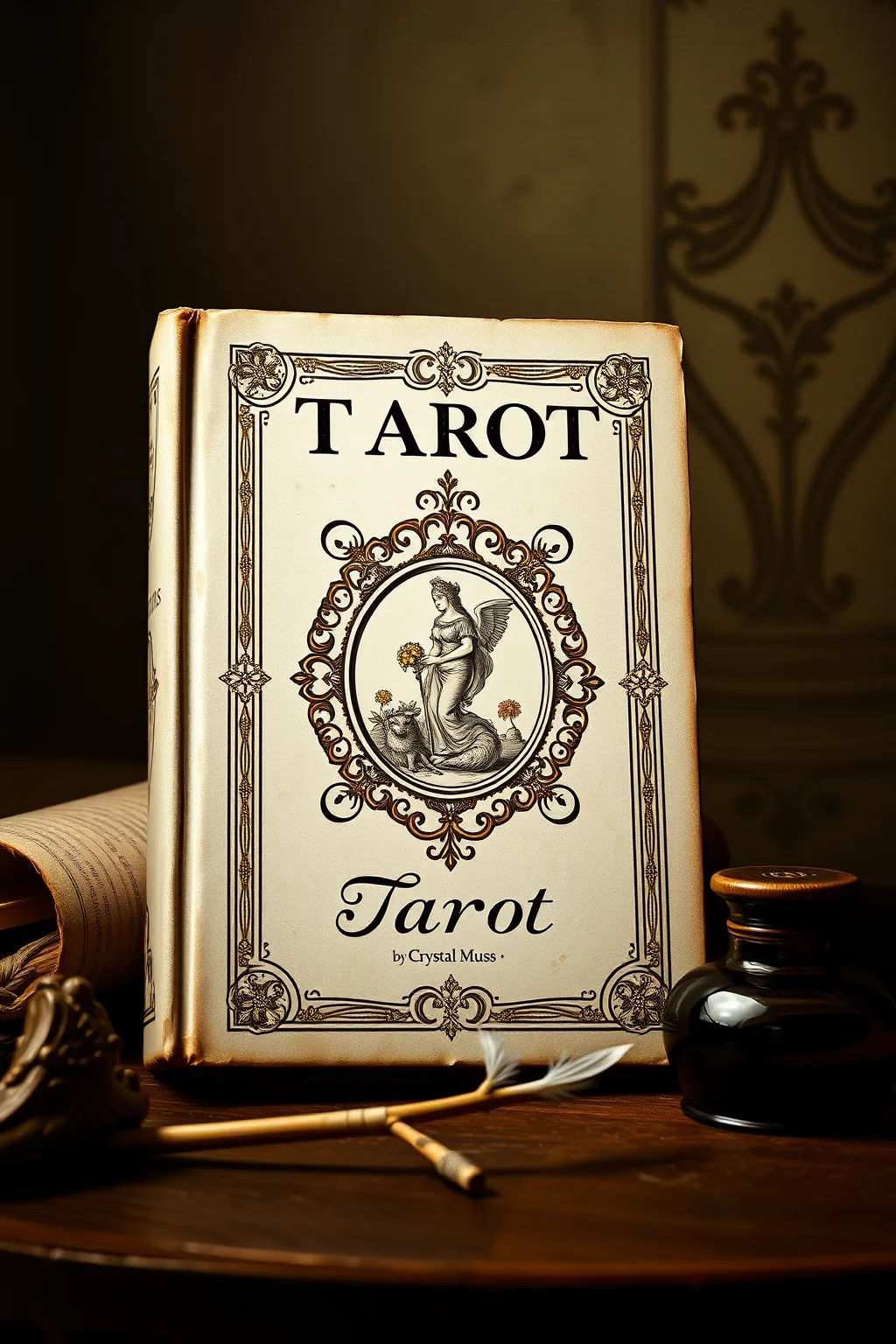
Tarot



Lorelei Sage, Contemplative Literature Editor
Crystal Muss's 'Tarot' is an indispensable addition to any serious collection of divinatory texts. It offers an authoritative and deeply resonant interpretation of the cards, moving beyond simplistic fortune-telling to reveal the Tarot's profound philosophical and psychological underpinnings. Muss’s prose is both scholarly and evocative, creating an immersive experience that speaks directly to the soul. The book excels in its meticulous dissection of symbolism, providing insights that will enrich the practice of both neophyte and seasoned readers. For those seeking a genuine understanding of the Tarot's esoteric dimensions, this work is an absolute revelation.
📝 Description
61
Crystal Muss's 2019 book argues the Tarot is more than divination; it's a map of consciousness.
Published in 2019, Crystal Muss's "Tarot" examines the cards as a system reflecting universal archetypes and cosmic principles. The author unpacks the symbolism within each card, suggesting it offers pathways for personal growth and spiritual understanding. Muss aims to illuminate the connections between the larger universe and individual experience through the Tarot's imagery.
The book addresses readers interested in a philosophical approach to the Tarot, moving beyond simple fortune-telling. It functions as a guide for those seeking to understand their inner selves and the forces that shape their lives. Muss proposes that engaging with the Tarot can alter one's perception of reality.
This work situates the Tarot within esoteric traditions that view it as a symbolic language for understanding the universe and the human psyche. It aligns with hermetic and alchemical philosophies that see correspondences between the celestial and terrestrial realms. The book draws on a lineage of thinkers who interpreted the Tarot not just for prediction, but as a tool for gnosis and spiritual development, linking its imagery to psychological states and cosmic order.
💡 Why Read This Book?
Unlock the ancient wisdom of the Tarot and discover its profound connection to your own spiritual journey. This book offers a unique lens through which to explore archetypal energies, cosmic patterns, and the hidden language of the soul. Ideal for seekers of deeper meaning, practitioners looking to elevate their craft, and scholars fascinated by the esoteric traditions, 'Tarot' provides transformative insights and a roadmap for personal growth and divination.
⭐ Reader Reviews
Honest opinions from readers who have explored this book.
❓ Frequently Asked Questions
What is the primary focus of Crystal Muss's 'Tarot'?
The book focuses on the Tarot as a system of esoteric wisdom, exploring its rich symbolism, archetypal energies, and philosophical significance, rather than solely as a tool for fortune-telling.
Is this book suitable for beginners?
Yes, while it delves into deep esoteric concepts, the author provides clear explanations and a structured approach that can guide beginners into a more profound understanding of the Tarot.
What makes this book's approach to Tarot unique?
Its uniqueness lies in its synthesis of historical esoteric traditions with psychological and spiritual insights, presenting the Tarot as a living map of consciousness and a tool for transformation.
Does the book discuss specific Tarot decks?
The book primarily uses the Rider-Waite-Smith tradition as a foundational reference due to its widespread recognition and rich symbolism, but its principles are applicable across various decks.
How does this book contribute to esoteric studies?
It offers a comprehensive and accessible entry point into the esoteric study of the Tarot, bridging the gap between scholarly research and practical application for personal and spiritual development.
🔮 Key Themes & Symbolism
The Archetypal Language of the Tarot
This theme studies the profound concept of archetypes as universal patterns of human experience and consciousness, as embodied by the figures and symbols within the Tarot. The book explores how each card acts as a gateway to understanding these primordial forces, from the innocent Fool beginning a cosmic journey to the wise Hierophant guiding spiritual seekers. It emphasizes that the Tarot's power lies in its ability to tap into this collective unconscious, offering a mirror to our inner lives and the larger cosmic dance. Understanding these archetypes is presented not just as a method of interpretation, but as a path to self-awareness and integration.
Symbolism as the Key to Hidden Knowledge
The core of this theme is the exploration of the Tarot's intricate and multi-layered symbolism. Crystal Muss meticulously unpacks the visual language of the cards, revealing how colors, numbers, figures, and celestial references are not mere embellishments but potent carriers of esoteric wisdom. Each symbol is presented as a piece of a larger cosmic puzzle, designed to unlock deeper layers of meaning and intuition. The book guides the reader to move beyond surface-level interpretations, encouraging a dialogue with the symbols that can lead to clear insights into the nature of reality, the human psyche, and the divine. It's a journey into the art of seeing beyond the obvious.
The Tarot as a Map of Consciousness and Destiny
This theme positions the Tarot not just as a divinatory tool, but as a dynamic map charting the range of human consciousness and the unfolding of destiny. The book illustrates how the progression through the Major Arcana reflects the soul's journey of evolution, growth, and initiation. It explores the interplay between fate and free will, suggesting that the cards offer guidance and illuminate potential pathways rather than dictating an unchangeable future. By understanding the 'story' of the Tarot, readers are empowered to navigate their own life paths with greater awareness, making conscious choices that align with their highest potential and spiritual purpose.
💬 Memorable Quotes
Direct passages from the work, attributed to the author.
“Each symbol is a whisper from the cosmos, waiting for the attuned ear.”
— This suggests that the Tarot's symbols are imbued with profound cosmic meaning, accessible to those who cultivate their intuition and spiritual sensitivity to 'hear' their messages.
“The Fool's journey is our journey; a perpetual dance between innocence and wisdom.”
— This connects the archetypal journey of the Fool card to the universal human experience of growth and learning, emphasizing the ongoing cycle of exploration and development.
“To read the Tarot is to read the language of the universe written upon the heart.”
— This profound statement posits the Tarot as a divinely inspired language that resonates deeply within the human spirit, bridging the gap between the external and internal worlds.
“The shadows within the cards reveal the light we are yet to embrace.”
— This highlights the Tarot's ability to address and integrate the 'shadow self,' suggesting that acknowledging and understanding our darker aspects is crucial for achieving wholeness and illumination.
💡 Key Ideas
Editorial paraphrase of the work's core concepts — not direct quotes.
The cards are not fortune-tellers, but mirrors reflecting the soul's deepest truths.
This quote emphasizes the Tarot's function as a tool for introspection and self-discovery, highlighting its role in revealing inner states and potentials rather than predicting external events.
🌙 Esoteric Significance
Tradition
This work is deeply rooted in the Western Esoteric Tradition, particularly drawing from Hermeticism, Kabbalah, and Renaissance Neoplatonism. It views the Tarot as a miniature model of the cosmos and a symbolic representation of the soul's journey through various stages of spiritual development. The Qabalistic Tree of Life is often implicitly or explicitly woven into interpretations of card placements and their connections, offering a framework for understanding divine emanations and the pathways of consciousness.
Symbolism
The book meticulously unpacks the detailed symbolism inherent in each Tarot card, treating them as archetypal keys to understanding universal principles. From the elemental correspondences in the Minor Arcana to the grand narratives of the Major Arcana, every element—color, number, posture, and gesture—is imbued with profound meaning. The emphasis is on how these symbols function as a visual language of the subconscious and the divine, offering insights into psychic energies, life lessons, and cosmic order that transcend literal interpretation.
Modern Relevance
In an age often characterized by information overload and existential questioning, 'Tarot' offers a timeless anchor of wisdom and self-reflection. Its exploration of archetypes and universal truths provides a framework for navigating modern life's complexities with greater clarity and purpose. The book empowers individuals to tap into their intuition, understand their inner landscape, and make conscious choices, making it a vital resource for personal growth, psychological well-being, and spiritual inquiry in contemporary society.
👥 Who Should Read This Book
This comprehensive exploration of the Tarot is designed for a diverse audience. **Beginners** will find a clear, yet profound, introduction to the foundational principles and symbolism, guiding them beyond rote memorization to genuine understanding. **Spiritual seekers** and those on a path of self-discovery will appreciate the book's focus on archetypes, consciousness, and the Tarot's role in personal transformation. **Practitioners** seeking to deepen their interpretive skills and connect with the esoteric underpinnings of the cards will find invaluable insights and new perspectives. **Scholars of mysticism and divination** will recognize the book's synthesis of historical traditions and its contribution to the ongoing dialogue surrounding esoteric arts.
📜 Historical Context
Emerging from a collection of occult revivalism and burgeoning interest in ancient mysteries during the late 19th and early 20th centuries, Crystal Muss's 'Tarot' stands as a evidence of the enduring allure of this divinatory art. This period saw a significant resurgence of esoteric thought, with figures like A.E. Waite and Pamela Colman Smith laying groundwork for modern Tarot interpretation through their iconic deck. The intellectual climate fostered a desire to connect with perceived deeper truths, often sought through symbolism, mysticism, and ancient traditions. Muss's work draws from this lineage, synthesizing earlier interpretations with a more contemporary, psychologically nuanced understanding. It reflects a broader cultural movement that sought meaning beyond the material world, viewing the Tarot not just as a game, but as a profound spiritual and philosophical system capable of informative the human condition and the hidden workings of the universe.
📔 Journal Prompts
Reflect on the Fool's journey depicted in the Major Arcana. How does its narrative mirror your own life's unfolding adventures and leaps of faith?
Choose three cards that resonate with you today. What archetypal energies do they represent, and how might they be influencing your current circumstances or inner state?
Consider the symbolism of the four suits (Wands, Cups, Swords, Pentacles). How do these elemental energies manifest in your daily life, and how can you achieve greater balance among them?
Meditate on the concept of the Tarot as a map of consciousness. What 'territories' within your own psyche are illuminated by the cards, and what 'destinations' are you seeking?
If you were to create a new symbol for a personal aspiration, what would it be and what does it represent? How might this symbol be interpreted through the lens of Tarot archetypes?
🗂️ Glossary
Archetype
A universal, archaic symbol or motif that is part of the collective unconscious, representing fundamental human experiences and patterns of behavior. In Tarot, archetypes are embodied by the figures and situations depicted on the cards.
Esoteric
Relating to or accessible only by a relatively small number of people with a specialized knowledge or interest; intended for or understood by a select few. In the context of Tarot, it refers to its deeper, hidden spiritual and mystical meanings.
Hermeticism
A spiritual, philosophical, and religious tradition based primarily upon writings attributed to Hermes Trismegistus. It emphasizes the interconnectedness of all things and the pursuit of hidden knowledge through mystical and alchemical practices.
Kabbalah (Qabalah)
A system of Jewish mysticism that seeks to understand the nature of God and the universe through esoteric interpretation of scripture and symbolic representations, most notably the Tree of Life.
Divination
The practice of seeking knowledge of the future or the unknown by supernatural means. In Tarot, it involves interpreting the cards to gain insight into questions about the past, present, and future, or to understand underlying influences.
This book appears in 3 collections
🔮 Readers Also Liked
Browse all →
From the “Tarot” Collection
View all →
More Free Divination & Tarot Books
View all →