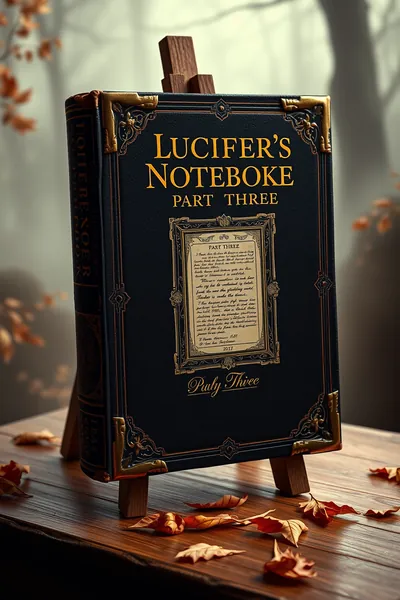
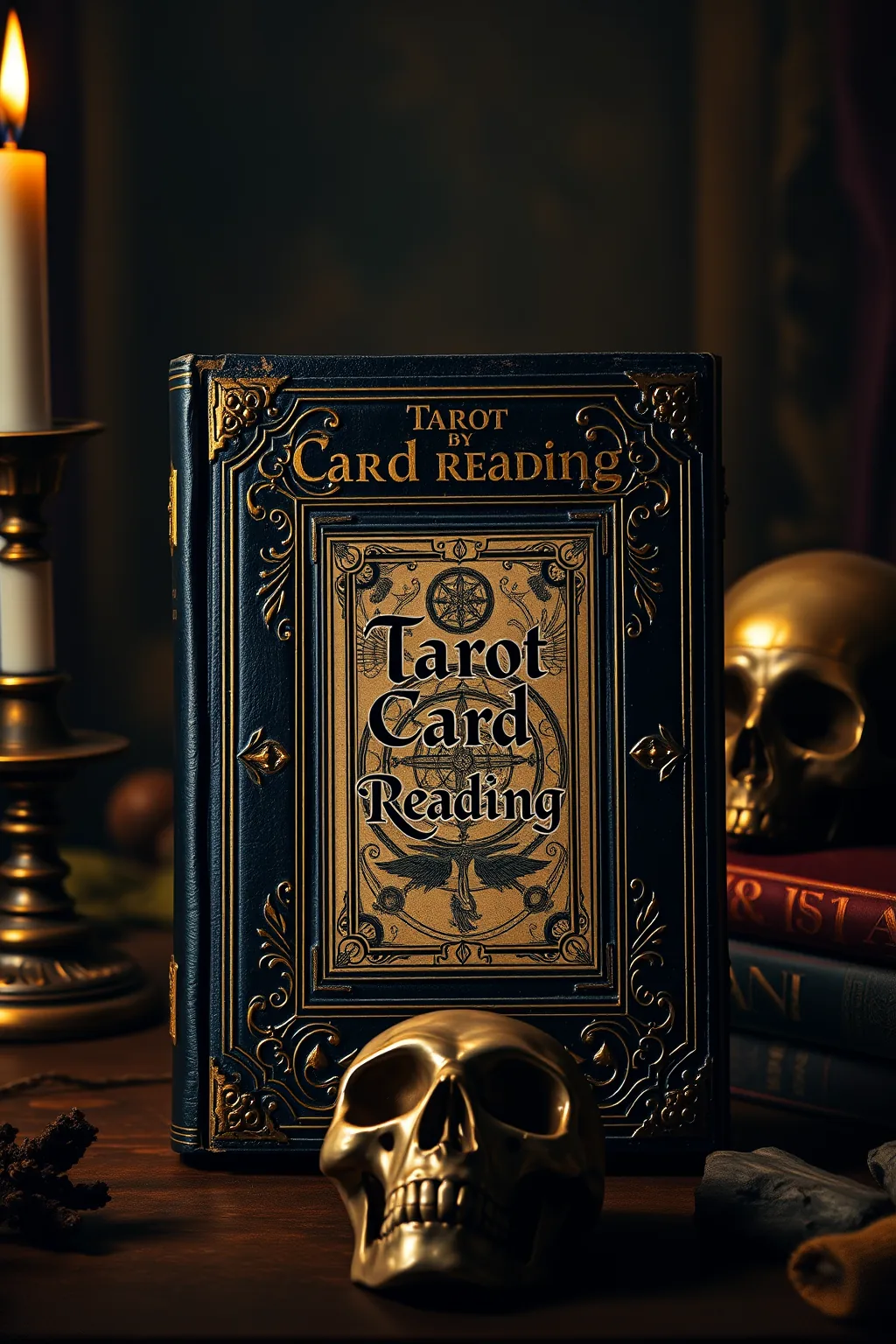
Tarot Card Reading
 61
61

Tarot Card Reading



Lorelei Sage, Contemplative Literature Editor — Sebastian Collins' 'Tarot Card Reading' stands as a beacon of profound insight within the realm of esoteric divination. Collins eschews simplistic pronouncements for a deeply philosophical exploration of the Tarot's archetypal power. He illuminates the interconnectedness of the cards, not merely as predictive tools, but as keys to unlocking inner wisdom and spiritual growth. The book’s strength lies in its ability to foster a contemplative practice, encouraging readers to engage with the symbolism on a soul level. This is an essential text for serious practitioners and spiritual explorers who seek authentic, transformative understanding of this ancient oracle.
📝 Description
61
Sebastian Collins' 'Tarot Card Reading' appeared in 2018, aiming to demystify the practice.
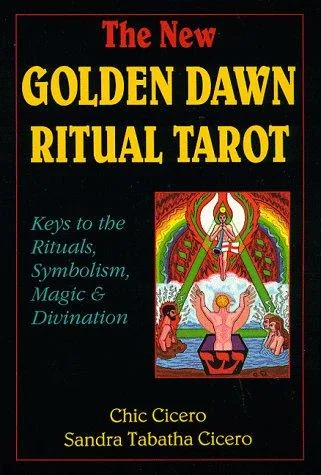
Sebastian Collins' 2018 book, 'Tarot Card Reading,' examines the symbolism and practice of tarot. The work breaks down the meaning of individual cards, exploring their archetypal narratives and how they reflect aspects of the human psyche. Collins discusses tarot as a tool for self-understanding and for perceiving underlying patterns in life. The book addresses the subtle energies associated with the cards and their use as a conduit for insight. It aims to guide readers in interpreting the cards for personal illumination.
Collins' approach treats each tarot card as a significant symbolic unit, offering a way to connect with deeper truths. The text focuses on the practical application of tarot knowledge for the earnest student. It encourages a more enlightened perception of the world through the study of tarot's visual language and its connection to esoteric traditions. The book is structured to help those interested in mysticism and contemplative study develop their skills in reading tarot.
This book sits within the Western esoteric tradition that views tarot not just as a divination tool, but as a symbolic language reflecting universal principles and the human condition. It draws on the historical development of tarot interpretation, which gained prominence in occult circles during the 19th and 20th centuries. These traditions often link tarot imagery to Kabbalah, astrology, and alchemical symbolism, presenting it as a map of consciousness and a means to access inner wisdom. Collins' work engages with this lineage, framing tarot reading as a practice of introspection and spiritual development.
💡 Why Read This Book?
Uncover the hidden language of the cosmos through the archetypal wisdom of Tarot. This book is for the curious soul, the dedicated practitioner, and the academic scholar seeking a profound understanding of divination's esoteric roots. It offers not just interpretation, but a pathway to self-discovery and spiritual awakening, transforming everyday insights into profound moments of clarity.
⭐ Reader Reviews
Honest opinions from readers who have explored this book.
❓ Frequently Asked Questions
What foundational knowledge is required to read this book?
No prior knowledge of Tarot is strictly necessary. Collins begins with foundational concepts, making it accessible to beginners while offering depth for those with existing familiarity. A curious mind is the only prerequisite.
Does this book focus on predictive fortune-telling or spiritual insight?
While predictive aspects are touched upon, the primary focus is on spiritual insight, self-reflection, and understanding the archetypal forces at play. It emphasizes Tarot as a tool for personal growth and inner wisdom.
What makes Sebastian Collins' approach unique?
Collins weaves together historical context, Jungian psychology, and deep esoteric philosophy, offering a holistic and multi-layered understanding of the Tarot unlike many contemporary guides.
Can this book be used for practical daily readings?
Absolutely. The book provides practical guidance and exercises that can be integrated into daily practice, empowering readers to derive meaningful insights from their card spreads.
Is this book suitable for experienced Tarot readers?
Yes, seasoned readers will find Collins' nuanced interpretations and exploration of deeper symbolic connections enriching, offering new perspectives and deepening their existing understanding.
🔮 Key Themes & Symbolism
The Archetypal Language of the Soul
This theme studies the Tarot as a universal language of archetypes, mirroring the collective unconscious and the fundamental human experiences. Collins posits that each card is a potent symbol, a doorway to understanding primal forces and psychological patterns that shape our lives. It explores how these ancient images resonate with our deepest selves, offering useful insights into our motivations, challenges, and potential for transformation. The reading becomes a dialogue with these timeless figures, revealing the subtle interplay of destiny and free will.
Esoteric Symbolism and Hidden Meanings
Here, the focus shifts to the intricate layers of symbolism embedded within each Tarot card, transcending superficial interpretations. Collins guides readers through the esoteric traditions that have influenced the Tarot's development, from Kabbalah and Hermeticism to Gnosticism. He reveals how colors, numbers, celestial correspondences, and mythological allusions contribute to a body of hidden knowledge. Understanding these deeper meanings unlocks the Tarot's power as a tool for spiritual illumination and esoteric inquiry, moving beyond simple fortune-telling.
Tarot as a Path to Inner Illumination
This theme emphasizes the transformative power of Tarot as a catalyst for personal growth and spiritual awakening. Collins presents the practice of Tarot reading not just as an act of divination, but as a meditative and introspective journey. By engaging with the cards, readers are encouraged to confront their inner landscapes, gain clarity on their life paths, and harness their intuition. The Tarot becomes a sacred mirror, reflecting the soul's journey and guiding the seeker towards greater self-awareness and empowerment.
💬 Memorable Quotes
Direct passages from the work, attributed to the author.
“Each card is a whisper from the collective unconscious, a key to ancient truths.”
— This interpretation underscores the Jungian and archetypal perspective presented, positioning Tarot cards as conduits to profound, universal wisdom embedded within humanity's shared psychological heritage.
“To read the Tarot is to engage in a sacred dialogue with the self and the cosmos.”
— This suggests that Tarot reading is a deeply personal and spiritual practice, fostering a connection between the individual's inner world and the greater universal forces at play.
“The Fool's leap is not recklessness, but faith in the unfolding mystery.”
— This offers a nuanced interpretation of a key Tarot archetype, reframing potential 'foolishness' as an act of trust and surrender to the unknown, a crucial element in spiritual growth.
💡 Key Ideas
Editorial paraphrase of the work's core concepts — not direct quotes.
The Tarot is not a crystal ball, but a compass for the soul's voyage.
This quote highlights the book's emphasis on Tarot as a tool for guidance and self-discovery rather than mere prediction. It frames the practice as an active journey of inner exploration.
Symbolism is the forgotten language of the divine, and Tarot is its grammar.
This quote positions symbolism as the primary means by which the sacred communicates, with the Tarot serving as a structured system for deciphering these divine messages.
🌙 Esoteric Significance
Tradition
This work is deeply rooted in Western Esotericism, particularly drawing from Hermeticism, Kabbalah, and Jungian archetypal psychology. It views the Tarot not merely as a divinatory tool, but as a symbolic map of the soul's journey, a microcosm of the universe, and a key to understanding spiritual principles and cosmic laws. The book connects the cards to ancient wisdom traditions, positioning them as a language for accessing higher consciousness.
Symbolism
The book meticulously unpacks the multi-layered symbolism inherent in the Tarot. It explores the meaning of numbers, colors, figures, and celestial correspondences within the Major and Minor Arcana. Emphasis is placed on understanding these symbols as archetypal representations of universal forces, psychological states, and stages of spiritual development, revealing a profound interconnectedness between the earthly and the divine through visual language.
Modern Relevance
In an age often characterized by disconnection and superficiality, 'Tarot Card Reading' offers a profound pathway back to inner wisdom and spiritual grounding. Collins demonstrates how the ancient archetypes of the Tarot remain powerfully relevant, providing tools for navigating modern life, fostering self-awareness, and cultivating intuition. The book empowers readers to use Tarot not just for foresight, but as a potent catalyst for personal transformation and conscious evolution.
👥 Who Should Read This Book
This comprehensive guide is designed for a broad spectrum of seekers. Beginners will find a clear and accessible entry point into the world of Tarot, guided by foundational explanations. Scholars and practitioners seeking deeper esoteric knowledge will appreciate the rich historical context and intricate symbolic analysis. Spiritual seekers will discover a powerful tool for self-reflection, introspection, and a deeper connection to their inner landscape. Anyone yearning to unlock hidden potentials and gain useful insights into life's mysteries will find this book an invaluable companion.
📜 Historical Context
Sebastian Collins' 'Tarot Card Reading' emerges from a rich lineage of esoteric thought, drawing heavily from the late 19th and early 20th-century occult revival in Europe. This era saw a resurgence of interest in ancient mystery traditions, Hermeticism, Kabbalah, and Neoplatonism, often reinterpreted through a psychological lens. Figures like Eliphas Lévi, A.E. Waite, and Aleister Crowley were instrumental in shaping the modern understanding of Tarot, imbuing it with complex symbolic systems and esoteric significance. Collins builds upon this foundation, integrating these historical currents with a contemporary appreciation for the Tarot's psychological depth, making it relevant to both the seasoned occultist and the modern seeker of wisdom.
📔 Journal Prompts
Reflect on the 'Fool's Journey' as your own life path. What leaps of faith have you taken, and what lessons did they impart?
Choose one Major Arcana card that speaks to your current life situation. How does its symbolism speak to your inner experience?
Consider the interplay of light and shadow represented in the Tarot. Where do you see this dynamic playing out in your personal life?
How can the wisdom of the Tarot be integrated into your daily decision-making process? What practical steps can you take?
Explore the concept of synchronicity as it relates to your Tarot readings. What 'meaningful coincidences' have you observed?
🗂️ Glossary
Archetype
Universal, archaic patterns and images that derive from the collective unconscious and are the psychic counterpart of instinct. In Tarot, these are embodied by the figures and symbols on the cards.
Kabbalah
An esoteric tradition of Jewish mysticism concerned with the divine nature and the creation of the universe, often represented by the Tree of Life, which influences Tarot symbolism.
Hermeticism
A philosophical and religious tradition based on the purported teachings of Hermes Trismegistus, emphasizing divine wisdom, alchemy, and astrology, which deeply informs Tarot interpretation.
Divination
The practice of seeking knowledge of the future or the unknown by supernatural means, in this context, primarily through the interpretation of Tarot cards.
Synchronicity
The simultaneous occurrence of events that appear significantly related but have no discernible causal connection, often perceived as meaningful by the observer in Tarot readings.
This book appears in 3 collections
🔮 Readers Also Liked
Browse all →
From the “Tarot” Collection
View all →
More Free Divination & Tarot Books
View all →