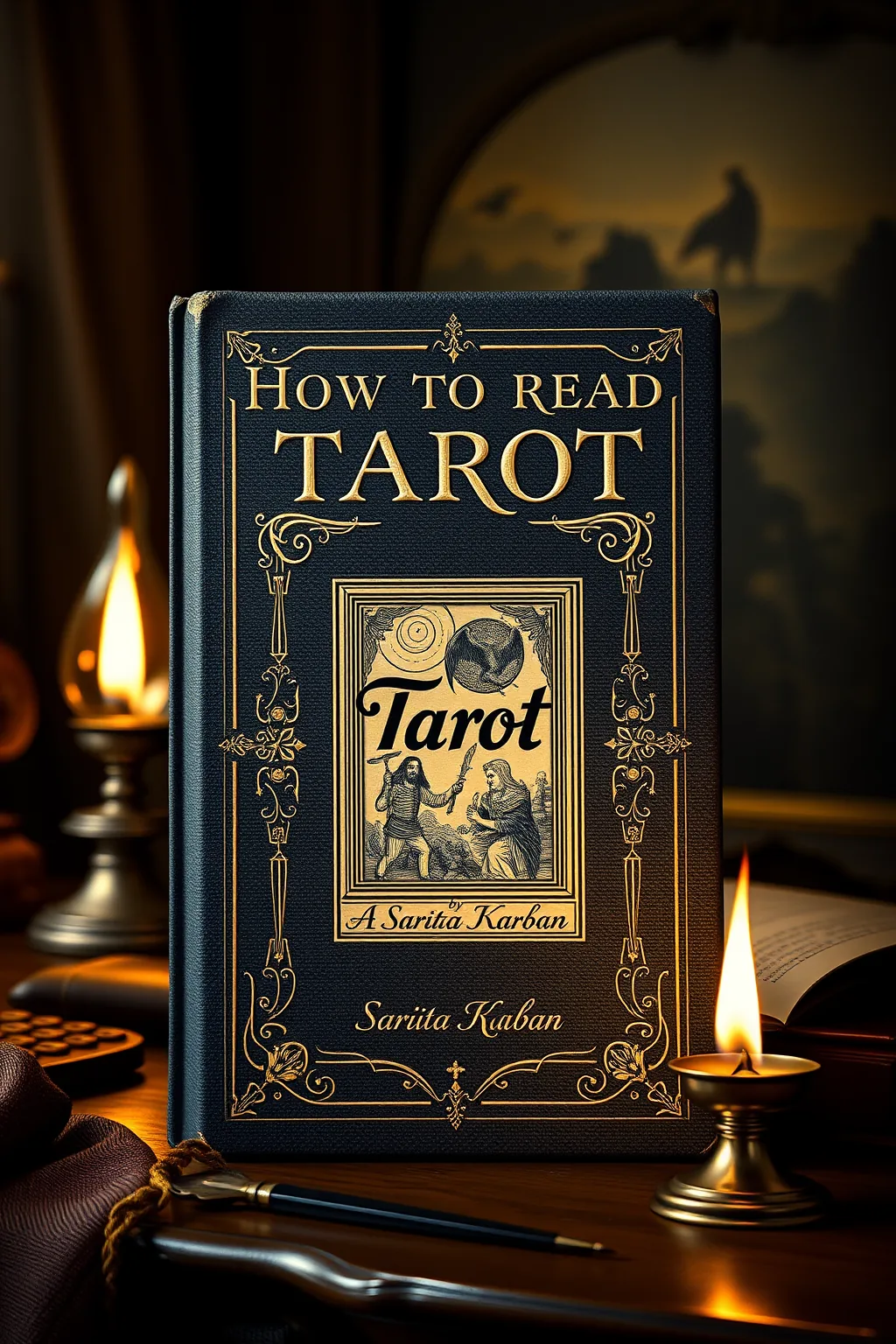
How to Read Tarot : a Modern Guide
 61
61

How to Read Tarot : a Modern Guide



Sophia Crane (Associate Editor) — Sarita Karban's "How to Read Tarot" is a masterful modern interpretation of an ancient art. Karban deftly navigates the esoteric depths of the Tarot, offering insights that resonate with both neophyte and seasoned practitioner. Her approach emphasizes the Tarot as a tool for self-discovery and spiritual growth, stripping away dogma to reveal the intuitive power of the cards. This guide is particularly strong in its illumination of symbolic language and its practical application for contemporary seekers. A must-read for anyone seeking to unlock the profound wisdom held within the Major and Minor Arcana.
📝 Description
61
Sarita Karban's "How to Read Tarot" was published in 2023.
Sarita Karban's guide approaches the Tarot with a contemporary perspective, aiming to make the cards accessible to new readers. The book moves past rote memorization of card meanings. Instead, it emphasizes developing an intuitive understanding of the imagery and symbolism. Karban structures the text to help readers connect the cards to their own lives and inner experiences. It covers how to interpret the Major and Minor Arcana, as well as basic spreads.
The author encourages a personal relationship with the Tarot, suggesting it can be a tool for self-reflection and understanding. The goal is to see the cards not just as predictive tools, but as mirrors of the psyche and the world. This approach helps demystify the practice for those unfamiliar with esoteric traditions.
This book enters a long tradition of Tarot interpretation that began in the 18th century with occultists like Antoine Court de Gébelin. Later figures such as Eliphas Lévi and A.E. Waite further codified the connection between the Tarot, Kabbalah, and other esoteric systems. Karban's modern guide builds upon this history, adapting the use of the cards for contemporary psychological and spiritual inquiry. It positions the Tarot as a symbolic language relevant to personal development and understanding.
💡 Why Read This Book?
This book is your key to unlocking the profound wisdom held within the Tarot. Whether you are a nascent seeker yearning to understand life's mysteries, a dedicated practitioner seeking to deepen your intuitive connection, or a scholar fascinated by archetypal symbolism, Karban offers a clear, modern path. It's an invitation to engage with a timeless divinatory system as a tool for personal empowerment and spiritual evolution.
⭐ Reader Reviews
Honest opinions from readers who have explored this book.
❓ Frequently Asked Questions
What is the core philosophy behind Tarot divination presented in this book?
The book posits Tarot as a symbolic language of the soul, reflecting universal archetypes and the unfolding of human experience. It emphasizes intuition and personal connection over rigid dogma, viewing the cards as mirrors to inner wisdom and guides for navigating life's path.
How does this guide differ from other Tarot books?
"How to Read Tarot" distinguishes itself through its modern, accessible approach, focusing on intuitive understanding and practical application. It bridges ancient esoteric principles with contemporary psychological insights, making the Tarot a relevant tool for personal growth and self-discovery today.
Is prior knowledge of Tarot necessary to read this book?
No, the book is designed for both absolute beginners and those with some familiarity. It starts with foundational concepts and gradually introduces more complex interpretations, ensuring a comprehensive learning experience for all levels of understanding.
What kind of spreads are taught in this book?
The guide introduces a variety of spreads, from foundational single-card draws for daily insight to more intricate layouts designed to explore complex life situations and illuminate multifaceted challenges.
Can Tarot readings from this book predict the future?
The book frames Tarot not as a tool for deterministic prediction, but as a mirror of current energies and potential paths. It encourages readers to use readings for guidance, empowerment, and to make conscious choices that shape their future.
🔮 Key Themes & Symbolism
The Language of Archetypes
This book examines the Tarot as a profound system of archetypal symbolism, drawing parallels to universal myths and the collective unconscious. It explores how each card embodies fundamental human experiences, desires, and challenges, providing a wide range for self-understanding and spiritual exploration. Readers will learn to decipher the deep psychological and spiritual narratives embedded within the imagery, transforming the cards into potent allies on their personal journey.
Intuitive Connection and Personal Guidance
Beyond rote memorization, Karban champions the development of an authentic, intuitive connection with the Tarot. The guide offers practical techniques for honing inner perception, fostering a dialogue between the reader and the cards. It emphasizes that the true power of Tarot lies not in external pronouncements, but in its ability to illuminate inner truths and empower individuals to navigate their lives with greater clarity, purpose, and self-awareness. This fosters a dynamic, personalized approach to divination.
Modern Application of Ancient Wisdom
The book masterfully bridges the ancient esoteric traditions of Tarot with the demands and complexities of contemporary life. It presents the cards as relevant tools for navigating modern challenges, from career decisions to relationship dynamics. Karban offers a fresh perspective, ensuring that the wisdom of the Tarot remains vibrant and applicable, empowering readers to integrate its clear insights into their daily existence and foster personal transformation in the 21st century.
💬 Memorable Quotes
Direct passages from the work, attributed to the author.
“Each card whispers a truth waiting to be heard.”
— This suggests that the Tarot's wisdom is subtle and requires attentive listening and intuition. It encourages a receptive state of mind to access the profound messages within the cards.
“Symbolism is the soul's native tongue.”
— This underscores the inherent power of symbols to communicate directly with our inner being. It posits that understanding symbolic language is key to unlocking deeper levels of consciousness and meaning.
“The journey inward is the most profound divination.”
— This highlights the introspective nature of Tarot reading, positioning self-discovery and inner exploration as the ultimate forms of insight and guidance.
“Embrace the mystery, for within it lies understanding.”
— This encourages an acceptance of the unknown and the enigmatic aspects of life and Tarot. It suggests that true comprehension often emerges from embracing rather than fearing the mysterious.
💡 Key Ideas
Editorial paraphrase of the work's core concepts — not direct quotes.
The Tarot is not a crystal ball, but a compass.
This quote emphasizes Tarot's role as a guide for direction and understanding rather than a deterministic predictor of fixed events. It highlights agency and conscious choice in navigating life's journey.
🌙 Esoteric Significance
Tradition
This book draws heavily from the Western Esoteric tradition, particularly Hermeticism, Kabbalah, and Jungian psychology. It integrates principles of symbolic interpretation and archetypal understanding, viewing the Tarot as a microcosm of the universe and a map of the soul's journey. The emphasis on intuition and inner knowing aligns with mystical paths that seek direct experience of the divine or ultimate reality.
Symbolism
The Tarot's collection of symbolism is central to its esoteric significance. Karban illuminates the profound meanings embedded in each card's imagery, from the celestial influences on the Major Arcana to the elemental forces represented by the suits. The book explores how these symbols act as keys to understanding the subconscious mind, the cycles of life, and the interconnectedness of all things, offering a visual language for spiritual truths.
Modern Relevance
In an age often marked by disconnection and superficiality, "How to Read Tarot" offers a potent antidote. Its modern approach makes ancient esoteric wisdom accessible, providing individuals with a practical framework for self-reflection, personal growth, and intuitive development. The book empowers readers to harness the Tarot's symbolic power to navigate contemporary challenges, foster inner peace, and cultivate a deeper, more meaningful connection with themselves and the universe.
👥 Who Should Read This Book
This guide is an indispensable resource for a diverse array of readers. Beginners will find a welcoming and clear introduction to the fundamentals of Tarot, explaining the cards and building foundational knowledge. Dedicated practitioners will appreciate the depth of insight and the encouragement to refine their intuitive skills, moving beyond basic interpretations to nuanced readings. Scholars of esotericism and mythology will find a contemporary lens through which to examine archetypal symbolism and its enduring relevance. Seekers of personal growth and spiritual enlightenment will discover a powerful tool for self-discovery and guidance on their life's path.
📜 Historical Context
The late 20th and early 21st centuries have witnessed a significant resurgence of interest in esoteric traditions, including Tarot. This era is characterized by a globalized exchange of ideas, a growing emphasis on personal spirituality outside of traditional religious frameworks, and an increased accessibility to ancient texts and practices through digital platforms. "How to Read Tarot: A Modern Guide" emerges from this milieu, responding to a generation seeking authentic connection to ancient wisdom and practical tools for navigating a complex world. Karban's work reflects a broader trend of reinterpreting and reclaiming esoteric knowledge for contemporary relevance, making it accessible and empowering for a new wave of seekers.
📔 Journal Prompts
Reflect on the Major Arcana card that most strongly speaks to your current life situation. What message does it hold for you?
Choose a Minor Arcana suit and explore how its elemental energy is manifesting in your daily life.
Consider the Fool's journey: where are you on your own path of initiation and growth?
How can the symbolism of the Hierophant guide you in seeking wisdom or guidance in your life?
What is one area of your life where you are currently experiencing a 'challenge' card's energy, and how can you approach it with greater awareness?
🗂️ Glossary
Major Arcana
The 22 trump cards of the Tarot deck, representing significant life events, spiritual lessons, and archetypal forces that shape our journey.
Minor Arcana
The 56 cards of the Tarot deck, divided into four suits (Wands, Cups, Swords, Pentacles), which represent the everyday events, challenges, and circumstances of life.
Archetype
A universal, inherited pattern of thought or image derived from the collective unconscious and forming the basis of myths and fairy tales.
Divination
The practice of seeking knowledge of the future or the unknown by supernatural means, often through symbolic systems like the Tarot.
Intuition
The ability to understand something immediately, without the need for conscious reasoning; a direct perception of truth or knowledge.
This book appears in 3 collections
🔮 Readers Also Liked
Browse all →
From the “Tarot” Collection
View all →
More Free Divination & Tarot Books
View all →