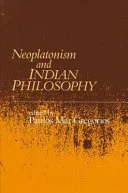
Neoplatonism and Indian Philosophy
 80
80

Neoplatonism and Indian Philosophy
Paulos Gregorios's "Neoplatonism and Indian Philosophy" offers a sophisticated comparison that, while occasionally dense, provides substantial intellectual reward. Gregorios succeeds admirably in highlighting the structural parallels between Plotinus's emanations and the concept of Brahman in Indian thought, a core strength of the work. A minor limitation is the sometimes-abstract nature of the argumentation, which may require dedicated concentration from the reader. The discussion of the 'descent' of consciousness in Neoplatonism and its counterpart in Indian yogic traditions offers a particularly compelling point of analysis. This book is essential for anyone seeking to understand the deep currents of philosophical and mystical thought across disparate cultures.
📝 Description
80
Paulos Gregorios' 2002 study compares Neoplatonism and Indian philosophy, finding deep commonalities.
This 2002 book examines philosophical connections between Neoplatonism and Indian thought traditions. It moves beyond surface similarities to uncover shared metaphysical structures, ways of knowing, and ethical ideas that cross geographical and temporal divides. Gregorios analyzes concepts like the absolute principle (the One or Brahman), the idea of divine outflow or intermediaries, and the spiritual path toward unity or release (henosis or moksha).
The work also considers the role of contemplative practice and meditation in these traditions, along with their views on humanity's place between the physical world and the divine. It is written for those interested in rigorous comparative analysis of abstract philosophical and spiritual concepts, tracing their historical development across cultures.
Published in 2002, this book engages with the long history of comparing Western esoteric traditions, specifically Neoplatonism, with Eastern spiritual philosophies. Gregorios builds on earlier attempts to find parallels, like those of Ananda Coomaraswamy, but aims for a more balanced perspective. The study reflects a period of increased global philosophical exchange, seeking to understand universal patterns in mystical and intellectual thought that transcend distinct cultural origins.
💡 Why Read This Book?
• Gain a nuanced understanding of the concept of 'The One' in Neoplatonism and its parallels with Brahman from Vedanta, a key philosophical bridge Gregorios constructs. • Explore the shared emphasis on spiritual ascent and liberation (henosis and moksha) as central aims of philosophical practice, as detailed in the comparative sections. • Appreciate the intricate connections between Plotinus's metaphysical system and the sophisticated cosmological models found in Indian philosophical schools, offering a unique perspective not readily found elsewhere.
⭐ Reader Reviews
Honest opinions from readers who have explored this book.
❓ Frequently Asked Questions
When was "Neoplatonism and Indian Philosophy" first published?
The foundational work by Paulos Gregorios, "Neoplatonism and Indian Philosophy," was first published on January 1, 2002, marking a significant contribution to comparative philosophical studies.
What is the main focus of "Neoplatonism and Indian Philosophy"?
The book's central aim is to explore and illuminate the significant connections and shared metaphysical concepts between the ancient Greek philosophical school of Neoplatonism and various traditions within Indian philosophy.
Who is the author of "Neoplatonism and Indian Philosophy"?
The author of this comparative philosophical study is Paulos Gregorios, a notable figure in theological and philosophical discourse.
What esoteric traditions does the book compare?
The book primarily compares Neoplatonism, a school of Hellenistic philosophy, with major Indian philosophical and spiritual traditions, including Vedanta and aspects of yogic thought.
Is this book suitable for beginners in philosophy?
While accessible to motivated readers, the book's depth in comparative analysis of complex metaphysical systems might be more readily appreciated by those with some foundational knowledge of philosophy or religious studies.
What are some key shared concepts discussed?
Key shared concepts include the nature of ultimate reality, emanative cosmology, spiritual liberation, and the role of contemplative practice in achieving higher states of consciousness.
🔮 Key Themes & Symbolism
The Absolute and Emanation
The work meticulously traces the parallel concepts of an ultimate, ineffable source (The One in Neoplatonism, Brahman in Indian thought) and its subsequent unfolding or emanation into the manifest world. Gregorios highlights how both traditions posit a hierarchical structure of reality, moving from pure being to multiplicity, without diminishing the primacy of the source. This is examined through the lens of Plotinus's thought and the Upanishads, revealing a shared metaphysical architecture.
The Path of Ascent
A significant theme is the shared focus on the spiritual journey or ascent of the soul towards its divine origin. The book explores Neoplatonic henosis (union with the One) and Indian concepts like moksha (liberation) or yoga, identifying commonalities in the methods prescribed – often involving purification, intellectual contemplation, and ecstatic experience. This emphasizes the practical, soteriological dimension of both philosophical systems.
Epistemology and Consciousness
The comparative analysis extends to how knowledge is acquired and the nature of consciousness. Gregorios examines the Neoplatonic emphasis on 'knowing by becoming' and the Indian yogic emphasis on meditative insight and direct experience. Both traditions value intuitive or supra-rational apprehension of truth over purely empirical or discursive reasoning, positioning consciousness itself as a primary tool for metaphysical understanding.
The Human Condition and the Divine
The book frames the human being as a crucial nexus between the material and the spiritual realms. It discusses how both Neoplatonism and Indian philosophies view humanity as capable of transcending its limitations and realizing its divine potential. This involves understanding the soul's true nature and its relationship to the cosmic order, often presented as a process of remembering or re-awakening.
💬 Memorable Quotes
Direct passages from the work, attributed to the author.
“The One, Brahman, and the ultimate ground of being.”
— This phrase expresses the core comparative project, identifying the central metaphysical principle in both Neoplatonism and Indian philosophies as an ultimate, ineffable source from which all existence emanates.
“The soul's journey from multiplicity back to unity.”
— This highlights the shared soteriological aim: the spiritual and philosophical path that leads the individual consciousness away from worldly distractions and towards reunion with the divine source.
“Knowledge through contemplation and direct apprehension.”
— This points to the epistemological parallels, emphasizing that true understanding of ultimate reality in both traditions is achieved not merely through logical deduction but through intuitive insight and meditative practice.
“The descending and ascending movements of consciousness.”
— This concept illustrates the dynamic interplay between the divine source and the created world, and the human capacity to reverse the 'descent' through spiritual discipline.
“Metaphysical structures and ethical imperatives.”
— This indicates the book's dual focus: analyzing the abstract architecture of reality as conceived by both traditions and examining the moral and practical guidance derived from these metaphysical understandings.
🌙 Esoteric Significance
Tradition
This work fits within the broad lineage of comparative mysticism and esoteric philosophy, bridging Hellenistic esoteric thought with Indic traditions. While Neoplatonism itself has been a foundational influence on Western esotericism (Hermeticism, Christian mysticism), its direct comparison with Indian philosophies like Vedanta and Yoga opens new avenues for understanding universal spiritual principles and practices that transcend cultural specificity.
Symbolism
Key symbols explored include the concept of 'The One' or 'Brahman' as the unmanifest source, often represented metaphorically. The 'emanations' or 'descents' from this source can be seen as symbolic of cosmic creation and spiritual illusion. The 'ascent' or 'yoga' represents the symbolic journey of the soul's return, often depicted through metaphors of light, ascent up a mountain, or dissolution into pure consciousness.
Modern Relevance
Contemporary thinkers and practitioners in fields like transpersonal psychology, integral philosophy, and comparative religious studies draw upon Gregorios's work. It remains relevant for those exploring consciousness studies, contemplative practices, and seeking to understand the common ground between diverse spiritual paths in an increasingly interconnected world. Schools of thought emphasizing non-dualism and the unity of consciousness find particular resonance here.
👥 Who Should Read This Book
• Students of Comparative Philosophy: Those seeking to understand the deep structural similarities between Western Hellenistic thought and Eastern metaphysical systems. • Practitioners of Meditation and Contemplation: Individuals interested in how different traditions conceptualize the path to higher consciousness and spiritual realization. • Scholars of Religious Studies: Researchers looking for rigorous analysis of the philosophical underpinnings of mystical traditions and their cross-cultural connections.
📜 Historical Context
Published in 2002, "Neoplatonism and Indian Philosophy" arrived at a time when academic and popular interest in comparative spirituality was well-established, yet often lacked rigorous philosophical grounding. Paulos Gregorios's work sought to rectify this by engaging deeply with both traditions' intellectual frameworks. It implicitly addressed the legacy of Orientalism in Western scholarship, aiming for a more balanced dialogue. While figures like Ananda Coomaraswamy had previously drawn parallels, Gregorios's approach offered a systematic philosophical comparison. The book emerged in an intellectual climate that valued interdisciplinary studies, yet it also navigated the challenge of presenting complex metaphysical ideas from distinct cultural contexts without oversimplification or syncretism.
📔 Journal Prompts
The concept of The One and Brahman as ultimate source.
Spiritual ascent: comparing henosis and moksha.
The role of consciousness in attaining metaphysical knowledge.
The human condition as a bridge between worlds.
Implications of emanation cosmology for understanding reality.
🗂️ Glossary
Neoplatonism
A school of philosophy founded by Plotinus in the 3rd century CE, emphasizing the One as the ultimate source of all reality and the soul's journey towards union with it.
The One
In Neoplatonism, the supreme, ineffable principle from which all existence emanates; the ultimate reality that is beyond being and thought.
Brahman
In Vedanta philosophy, the ultimate reality, the supreme cosmic spirit, the unchanging, infinite, and absolute consciousness that is the source of all existence.
Emanation
The Neoplatonic concept of reality flowing or proceeding from the One in a hierarchical series of levels or hypostases, such as Intellect and Soul.
Henosis
The Neoplatonic term for mystical union or unification with The One, the ultimate goal of the philosophical and spiritual life.
Moksha
In Indian religions, particularly Hinduism and Jainism, liberation from the cycle of death and rebirth (samsara); spiritual emancipation.
Vedanta
A school of Hindu philosophy based on the Upanishads, exploring the nature of Brahman, Atman (the self), and their relationship.