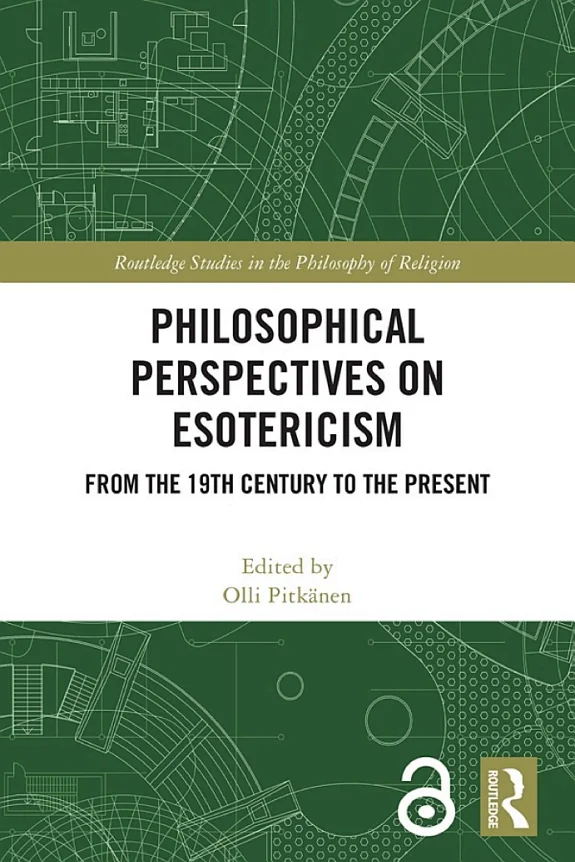
Philosophical Perspectives on Esotericism
 81
81

Philosophical Perspectives on Esotericism
Olli Pitkänen’s *Philosophical Perspectives on Esotericism* undertakes the ambitious task of reintegrating esoteric thought into the annals of Western philosophy, a project long overdue. The book’s primary strength lies in its systematic approach, meticulously laying out methodological considerations before delving into substantive arguments. Pitkänen effectively demonstrates how figures often confined to the philosophical mainstream, like Leibniz, engaged with alchemical symbolism, a point well-articulated in the early chapters. However, the text occasionally suffers from an academic dryness that might distance readers less accustomed to dense philosophical discourse. While it successfully argues for the influence of esotericism, it could have benefited from more direct engagement with the lived experiential aspects often central to esoteric practice, rather than focusing solely on intellectual history. Despite this, the work is a significant contribution for its clear articulation of esotericism’s philosophical relevance.
📝 Description
81
Olli Pitkänen's "Philosophical Perspectives on Esotericism" (2023) argues for esotericism's overlooked influence on Western thought.
This volume examines the philosophical foundations of esoteric traditions, moving beyond simple historical surveys. It questions the nature of philosophy and esotericism themselves, suggesting methods for their comparative study. The author contends that these fields share a significant intellectual connection, often missed by mainstream scholarship. The book calls for a reconsideration of philosophical history, pointing out the substantial, though unacknowledged, impact of esoteric ideas on prominent thinkers.
The study traces the historical and philosophical engagement with esoteric concepts, showing their influence on Western thought from ancient times through the late modern era. It investigates how ideas from mystical and occult traditions have been understood, discussed, and incorporated by philosophers. The work aims to uncover a consistent line of esoteric inquiry within philosophical discourse, often present in subtle but important ways. Central to the book is an analysis of how esoteric systems provide unique frameworks for knowledge and reality. It discusses specific esoteric doctrines and their philosophical consequences, including the nature of consciousness, the connection between the small and large scale (microcosm and macrocosm), and the function of intuition in gaining knowledge.
Pitkänen's work engages with the Western Esoteric Tradition, a broad category encompassing various historical and philosophical currents distinct from mainstream Western philosophy and religion. This tradition includes Hermeticism, Neoplatonism, Kabbalah, alchemy, and later magical and occult movements. The book focuses on the intellectual and conceptual aspects of these traditions, examining how their ideas about reality, consciousness, and knowledge have intersected with and sometimes shaped philosophical inquiry, often outside of recognized academic channels. It positions esoteric thought not merely as a historical curiosity but as a vital source of alternative philosophical perspectives.
💡 Why Read This Book?
• Learn how thinkers like Gottfried Wilhelm Leibniz engaged with alchemical symbolism, offering a new lens on Enlightenment philosophy, as detailed in the book's exploration of historical influence. • Gain a structured methodology for analyzing esoteric traditions from a philosophical standpoint, moving beyond superficial categorizations, a key takeaway from the section on substantial and methodological questions. • Understand the often-neglected impact of esoteric ideas on Western thought, challenging established narratives and providing a richer, more nuanced view of intellectual history, as argued throughout the volume.
⭐ Reader Reviews
Honest opinions from readers who have explored this book.
❓ Frequently Asked Questions
What is the primary argument of Olli Pitkänen's "Philosophical Perspectives on Esotericism"?
The book's central argument is that esoteric ideas have significantly impacted Western philosophy, even when this influence has been overlooked by contemporary scholarship. It advocates for a systematic philosophical study of esotericism.
Which historical period does the book focus on regarding philosophical engagement with esotericism?
While acknowledging roots in antiquity, the book particularly examines the late modern period, highlighting how important philosophers grappled with esoteric concepts during this era.
What kind of philosophical questions does the book address?
It tackles fundamental questions about the definition of philosophy and esotericism, their relationship, and the appropriate methodologies for studying them side-by-side.
Does the book claim esotericism is a form of philosophy?
The book explores the philosophical dimensions and implications of esotericism, suggesting a deep intellectual connection and influence rather than a direct equivalency in all cases.
Who is the intended audience for "Philosophical Perspectives on Esotericism"?
The book is aimed at academics, students of philosophy and religious studies, and anyone interested in the intellectual history of Western esotericism.
When was "Philosophical Perspectives on Esotericism" first published?
The work was first published on 2024-11-12, making it a recent contribution to the field of esoteric studies.
🔮 Key Themes & Symbolism
Methodology of Esoteric Study
The volume initiates a critical examination of how esotericism should be approached philosophically. It questions the boundaries between esoteric traditions and established philosophical discourse, proposing that a comparative methodology can reveal shared intellectual concerns. This involves defining what constitutes 'esotericism' for analytical purposes and outlining principles for assessing its philosophical validity and influence, moving beyond purely historical or sociological perspectives to engage with its conceptual content.
Historical Philosophical Influence
A core theme is the demonstrable, yet often minimized, impact of esoteric ideas on prominent figures in Western philosophy. The book argues that concepts, symbols, and frameworks originating from esoteric traditions have subtly shaped the thinking of many influential philosophers, particularly during the late modern period. It seeks to correct the scholarly narrative by bringing these connections to light and demonstrating their significance for understanding intellectual history.
Epistemology and Ontology in Esotericism
The work looks at the distinct ways esoteric traditions conceive of knowledge (epistemology) and reality (ontology). It analyzes how esoteric systems propose alternative paths to understanding, often emphasizing intuition, direct experience, or symbolic interpretation alongside or in contrast to rational argumentation. This exploration highlights how esoteric frameworks offer unique perspectives on consciousness, the cosmos, and the human condition.
Esotericism and Mainstream Philosophy
This theme addresses the perceived divide between esoteric thought and academic philosophy. The book challenges the notion that these are entirely separate domains, positing that a continuous dialogue, often unacknowledged, has existed. It aims to bridge this gap by demonstrating the philosophical substance within esoteric traditions and their role in broader intellectual currents.
💬 Memorable Quotes
Direct passages from the work, attributed to the author.
“The impact of esoteric ideas on countless important philosophers has been neglected in contemporary philosophy.”
— This statement underscores the book's central thesis: that the philosophical canon has systematically overlooked or downplayed the significant contributions and influences stemming from esoteric traditions, necessitating a re-evaluation.
“What is philosophy, what is esotericism, and how should we think about their relation?”
— This question frames the book's foundational inquiry, setting out the core methodological and definitional challenges it seeks to address in establishing a framework for philosophical engagement with esotericism.
“Esoteric doctrines offer distinct epistemological and ontological frameworks.”
— This highlights the book's focus on the conceptual content of esotericism, asserting that these traditions provide unique models for understanding knowledge acquisition and the nature of reality itself.
“The integration of esoteric thought requires a revised understanding of intellectual history.”
— This points to the broader implications of Pitkänen's work, suggesting that acknowledging the philosophical role of esotericism necessitates a significant revision of how Western intellectual history is currently understood and taught.
“Late modern philosophy provides fertile ground for examining esoteric influence.”
— This indicates a key temporal focus for the study, suggesting that the period of late modernity is particularly crucial for uncovering and analyzing the philosophical engagement with esoteric concepts.
🌙 Esoteric Significance
Tradition
This work engages primarily with the Western Esoteric Tradition, encompassing Hermeticism, alchemy, and various forms of mystical philosophy that flourished across Europe. It situates itself within contemporary academic scholarship that seeks to understand these traditions not merely as historical curiosities but as systems with significant intellectual and philosophical content, departing from earlier occultist interpretations by applying rigorous philosophical analysis.
Symbolism
Key symbols explored include the alchemical concept of the 'prima materia,' representing primordial potential and the raw material of transformation, and the Hermetic axiom 'As Above, So Below,' which posits a fundamental correspondence between the macrocosm and microcosm. These symbols are analyzed for their ontological and epistemological implications within esoteric frameworks.
Modern Relevance
Contemporary thinkers exploring consciousness studies, integral philosophy, and post-structuralist critiques of knowledge often find resonance with Pitkänen's arguments. Scholars examining the relationship between science and spirituality, or those working within hermeneutics to uncover hidden meanings in texts, draw upon the book's methodology and historical findings.
👥 Who Should Read This Book
• Academic philosophers and students of philosophy seeking to broaden their understanding of Western intellectual history beyond the conventional canon. • Researchers in comparative religion and history of ideas interested in the intersection of mystical traditions and philosophical discourse. • Practitioners and students of Western Esotericism looking for a rigorous philosophical framework to understand their traditions' intellectual depth and historical impact.
📜 Historical Context
Published in 2024, Olli Pitkänen's *Philosophical Perspectives on Esotericism* emerges in an intellectual climate increasingly open to reconsidering the boundaries of the Western canon. The late modern period, particularly the 18th and 19th centuries, witnessed a complex interplay between burgeoning rationalism and enduring mystical traditions. Thinkers like Immanuel Kant, while critiquing speculative metaphysics, indirectly laid groundwork for later philosophical engagement with subjective experience. Contemporaneously, figures such as the Comte de Saint-Germain and various Rosicrucian movements represented esoteric currents often dismissed by Enlightenment rationalists. Pitkänen's work engages with this historical tension, arguing that philosophers who seemingly adhered to rationalism often harbored or were influenced by esoteric ideas, a viewpoint that challenges the dominant narrative of a purely secular philosophical progression. The reception of such studies often involves debates with historians of philosophy who emphasize the established canon and may be hesitant to integrate less conventional sources.
📔 Journal Prompts
The neglected impact of esoteric ideas on philosophers: What specific historical figures warrant re-examination through this lens?
Defining esotericism: How does Pitkänen's proposed methodology challenge conventional academic categorizations?
The relation between philosophy and esotericism: Consider the implications of their intellectual overlap for contemporary thought.
Epistemological frameworks: Compare an esoteric path to knowledge with a mainstream philosophical one.
The 'As Above, So Below' axiom: Reflect on its potential philosophical interpretations beyond its esoteric context.
🗂️ Glossary
Esotericism
A broad category of religious and spiritual traditions characterized by an emphasis on esoteric knowledge (gnosis) or spiritual insight, often transmitted through initiation or secret teachings, and typically concerned with the nature of reality, the divine, and the human soul.
Gnosis
In esoteric contexts, a type of knowledge that is salvific, intuitive, and experiential, often understood as direct apprehension of divine truth or ultimate reality, distinct from empirical or rational knowledge.
Late Modern Philosophy
Refers to the philosophical period roughly spanning the late 18th century through the early 20th century, characterized by diverse movements including German Idealism, Romanticism, existentialism, and early analytic philosophy.
Ontology
The branch of metaphysics dealing with the nature of being, existence, or reality itself; it explores fundamental questions about what exists and how it exists.
Epistemology
The branch of philosophy concerned with the theory of knowledge, investigating its nature, origin, scope, and validity; it asks how we know what we know.
Hermeticism
A religious, philosophical, and esoteric tradition based on writings attributed to Hermes Trismegistus, a syncretic figure blending Greek Hermes and Egyptian Thoth, emphasizing divine wisdom, cosmology, and the unity of all things.
Prima Materia
In alchemy, the fundamental, undifferentiated substance from which all matter is derived; it represents potentiality, chaos, and the initial stage of the alchemical Great Work or transformation.
This book appears in 1 collection
🔮 Readers Also Liked
Browse all →








From the “Western Esotericism” Collection
View all →






More Free Occult Philosophy Books
View all →