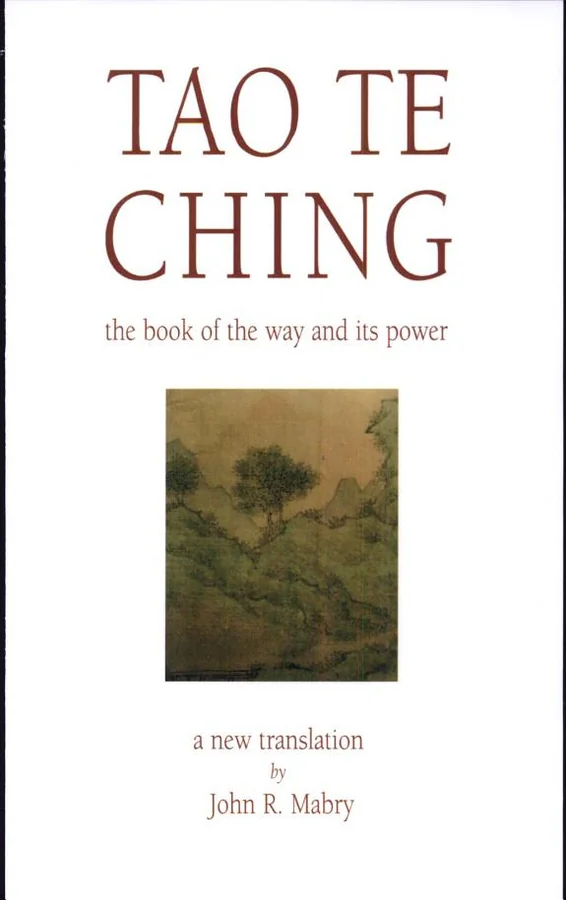
Tao Te Ching
 79
79

Tao Te Ching
The Tao Te Ching, in its myriad translations, often struggles with conveying the subtle power of its original Chinese. This particular edition, published in 2004, succeeds admirably where many falter. Its translation achieves a rare balance: accuracy in conveying the philosophical nuances of concepts like Wu Wei, coupled with a lyrical quality that honors the text's poetic origins. The opening lines, which speak of the Tao that can be spoken of not being the eternal Tao, immediately set a tone of profound humility and the limits of language. However, the commentary, if present, can sometimes oversimplify the paradoxes, risking a flattening of the text's inherent ambiguity. Despite this minor quibble, the clarity of its rendering of the core principles makes it an accessible yet deeply rewarding engagement with one of humanity's most enduring spiritual and philosophical works.
📝 Description
79
Composed of 81 short chapters, the Tao Te Ching defines the Tao as the ineffable reality underpinning existence.
The Tao Te Ching, attributed to Lao Tzu, is a central text in Taoism. It uses poetic and often paradoxical language across its 81 chapters to explain the Tao, the fundamental principle of the universe. This principle is described as the source and underlying reality of all things, which cannot be named or fully comprehended.
The text advocates for living in harmony with this natural order. It introduces concepts such as Wu Wei, or effortless action, suggesting a way of being that flows with the natural course of events rather than resisting it. De, often understood as virtue or integrity, is presented as the manifestation of the Tao within individuals. The book's teachings offer a perspective on personal conduct, governance, and the nature of reality that contrasts with more socially rigid philosophies.
While traditionally linked to Lao Tzu from the 6th century BCE, scholars believe the text's final form emerged later, possibly during the Warring States period. It arose during a time of intellectual diversity in China, known as the Hundred Schools of Thought, alongside traditions like Confucianism. The Tao Te Ching offered a distinct viewpoint, prioritizing naturalness and spontaneity.
The Tao Te Ching is a core scripture for Taoism, a tradition that seeks understanding of the fundamental nature of reality. Its emphasis on the ineffable Tao and effortless action aligns with mystical paths that value direct experience and non-interference. The text's paradoxical language and focus on the unseen forces guiding the universe place it within a lineage of wisdom literature that explores the limits of conceptual thought and points toward a deeper, intuitive apprehension of existence.
💡 Why Read This Book?
• Learn the principle of Wu Wei, understanding how to achieve effectiveness through aligned action rather than forceful effort, as described in chapters like Chapter 3. • Grasp the concept of the Tao, the ineffable source of all, and its role as the underlying order of the universe, as introduced in the foundational Chapter 1. • Discover the virtue of De, not as moralistic judgment, but as the inherent power and integrity that arises from living in harmony with the Tao, a recurring theme throughout the text.
⭐ Reader Reviews
Honest opinions from readers who have explored this book.
❓ Frequently Asked Questions
What is the Tao Te Ching and who wrote it?
The Tao Te Ching is a foundational text of Taoism, a Chinese philosophical and religious tradition. While traditionally attributed to Lao Tzu, a sage believed to have lived in the 6th century BCE, the text's authorship and exact compilation date remain subjects of scholarly debate, likely emerging during the Warring States period.
What does 'Tao' mean in the Tao Te Ching?
The Tao (or Dao) is a central concept, often translated as 'the Way.' It represents the fundamental, ineffable principle that underlies all existence, the natural order of the universe. The text emphasizes that the Tao that can be named is not the eternal Tao.
What is 'Wu Wei' and why is it important in the Tao Te Ching?
Wu Wei translates to 'non-action' or 'effortless action.' It's a core principle advocating for living in harmony with the natural flow of the universe, acting without force or unnatural striving. It's about achieving results by yielding and aligning with the Tao, not by imposing one's will.
When was the Tao Te Ching first published?
While the text is ancient, this specific translation was first published in 2004, making it a modern rendition of classical Chinese philosophy.
Is the Tao Te Ching a religious text or a philosophical one?
It functions as both. It is the primary scripture for Taoism, a religion, but its profound philosophical insights on ethics, governance, and the nature of reality have made it influential in secular philosophical discourse worldwide.
What are some key themes explored in the Tao Te Ching?
Key themes include the nature of the Tao, the practice of Wu Wei (effortless action), the concept of De (virtue/power), the importance of naturalness (Ziran), simplicity, humility, and the cyclical nature of existence.
🔮 Key Themes & Symbolism
The Ineffable Tao
The Tao Te Ching posits the existence of a fundamental, ultimate reality known as the Tao, often translated as 'The Way.' This principle is described as the source and sustainer of all things, yet it is beyond human comprehension and language. Chapter 1 famously states, 'The Tao that can be told is not the eternal Tao.' Understanding the Tao involves recognizing its presence in the natural order and aligning one's actions with its subtle flow, rather than attempting to grasp it through intellectualization.
Effortless Action (Wu Wei)
Central to the text is the concept of Wu Wei, often mistranslated as 'doing nothing.' It more accurately signifies acting in accordance with nature's rhythms, without force, striving, or artificiality. This principle suggests that true effectiveness comes from yielding, adapting, and allowing things to unfold naturally. Examples include water flowing around obstacles or a skilled artisan working with intuitive precision, embodying the natural power of the Tao.
Naturalness and Simplicity (Ziran)
The Tao Te Ching advocates for Ziran, or naturalness, emphasizing authenticity and spontaneity. It encourages a return to a simpler state of being, free from excessive desires, societal conventions, and intellectual complexities that obscure one's innate connection to the Tao. This theme promotes humility, contentment, and a direct, unmediated experience of reality, valuing the uncarved block over artificial refinement.
The Power of Emptiness and Stillness
The text frequently highlights the utility and power found in what appears to be empty or still. For instance, the value of a cup lies in its emptiness, and the usefulness of a room comes from its empty space. This motif underscores the idea that potential, receptivity, and true understanding often arise from a state of quietude and non-attachment, allowing the Tao to manifest.
💬 Memorable Quotes
Direct passages from the work, attributed to the author.
“The Tao that can be told is not the eternal Tao.”
— This opening statement immediately establishes the ineffable nature of the Tao. It suggests that any attempt to define or describe the ultimate reality through language is inherently limited and falls short of capturing its true, eternal essence.
“To the mind that is still, the whole universe surrenders.”
— This highlights the transformative power of stillness and mental quietude. When the mind is free from agitation and attachment, it becomes receptive to the underlying order of the universe, the Tao, allowing for a state of profound harmony and understanding.
“The sage stays behind, thus is ahead; lets go, thus holds.”
— This paradoxical statement reflects the core principles of Wu Wei and De. True leadership and influence come not from forceful assertion but from humility, service, and detachment. By not seeking prominence, the sage naturally leads; by releasing control, they maintain influence.
“He who knows does not speak. He who speaks does not know.”
— This emphasizes the limits of verbal knowledge and the superiority of intuitive understanding. True wisdom lies not in articulation but in direct experience and realization. Those who possess useful insights often remain silent, while those who speak readily may lack genuine comprehension.
💡 Key Ideas
Editorial paraphrase of the work's core concepts — not direct quotes.
Nature does not hurry, yet everything is accomplished.
This quote expresses the principle of Wu Wei. It illustrates that effective action doesn't require frantic effort but rather alignment with natural timing and processes. Nature achieves its grand designs through patient, consistent unfolding, offering a model for human conduct.
🌙 Esoteric Significance
Tradition
While foundational to the Taoist religion, the Tao Te Ching's emphasis on the ineffable source (Tao), inner transformation, and alignment with cosmic principles places it within the broader spectrum of esoteric traditions. It shares common ground with Hermeticism in its focus on 'as above, so below' principles and the pursuit of gnosis through understanding universal laws. Its non-dualistic perspective and emphasis on paradox also echo Gnostic thought, although its approach is rooted in ancient Chinese cosmology rather than Abrahamic traditions.
Symbolism
Key symbols include water, representing the yielding yet persistent nature of the Tao, and the uncarved block (Pu), symbolizing original, unadulterated simplicity and potential before societal conditioning. The concept of 'emptiness' (Xu) is also vital, signifying not a void but a space of pure potentiality and receptivity, crucial for the manifestation of the Tao and the practice of Wu Wei.
Modern Relevance
Contemporary thinkers and practitioners in fields ranging from mindfulness and meditation to organizational leadership and environmentalism draw heavily on the Tao Te Ching. Its principles of non-striving, holistic systems thinking, and living in harmony with natural cycles resonate deeply with modern challenges. Schools of thought like Deep Ecology and various forms of self-help and personal development often reference its core ideas for guidance.
👥 Who Should Read This Book
• Students of comparative religion and philosophy seeking to understand the foundational texts of Eastern thought and their divergence from Western traditions. • Practitioners of mindfulness, meditation, and contemplative arts looking for guidance on achieving inner peace and living with greater presence and authenticity. • Leaders and managers interested in alternative models of governance and influence, exploring the effectiveness of 'effortless action' (Wu Wei) in organizational and personal contexts.
📜 Historical Context
The Tao Te Ching emerged during China's tumultuous Spring and Autumn (771–476 BCE) and Warring States (475–221 BCE) periods, a time characterized by political fragmentation and intense philosophical debate known as the Hundred Schools of Thought. This era witnessed the rise of competing ideologies like Confucianism, which emphasized social order, ritual, and hierarchical relationships. In contrast, the Tao Te Ching offered a radical alternative, advocating for naturalness, simplicity, and non-interference (Wu Wei). While traditionally attributed to Lao Tzu, a figure possibly contemporary with Confucius, scholars now generally place its compilation later, perhaps around the 4th century BCE. Its teachings provided a philosophical grounding for Taoism, influencing Chinese art, medicine, and governance for millennia, and presenting a distinct counterpoint to the prevailing social philosophies of its time.
📔 Journal Prompts
The Tao's ineffable nature and its manifestation in the natural world.
Wu Wei in daily actions: identifying opportunities for effortless accomplishment.
The uncarved block (Pu) as a symbol of innate potential and authenticity.
Reflections on the paradoxes presented in the text and their implications.
The virtue of stillness and its role in understanding the universe.
🗂️ Glossary
Tao (Dao)
The fundamental, ineffable principle underlying all existence; the natural order of the universe. It is the source from which all things arise and to which they return.
Wu Wei
Literally 'non-action' or 'effortless action.' It signifies acting in accordance with the natural flow of the Tao, without force, striving, or artificiality.
De (Te)
Often translated as 'virtue' or 'power.' It refers to the inherent quality, integrity, or manifestation of the Tao within individual beings and phenomena.
Ziran
Naturalness, spontaneity. Emphasizes living authentically, free from artificiality and societal constraints, in harmony with one's innate nature and the Tao.
Pu
The 'uncarved block' or 'plain wood.' Symbolizes original simplicity, authenticity, and the state of pure potential before being shaped by external forces or desires.
Xuan
Mystery, the profound, the arcane. Often refers to the deep, hidden workings of the Tao and the subtle nature of reality.
San Cai
The Three Treasures: often cited as compassion, frugality, and humility, representing core virtues for embodying the Tao.
This book appears in 1 collection
🔮 Readers Also Liked
Browse all →









From the “Taoism” Collection
View all →





More Free Occult Philosophy Books
View all →