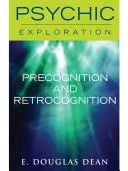
Precognition and Retrocognition
 72
72

Precognition and Retrocognition
E. Douglas Dean's examination of precognition and retrocognition, as presented in this chapter, offers a commendably pragmatic approach to subjects often shrouded in mysticism. Dean's strength lies in his insistence on empirical evidence, citing laboratory studies and electronic instrumentation as validation tools. His direct assertion that precognition, though conceptually difficult, is scientifically testable and experientially accessible is a strong starting point. However, the brevity inherent in a single chapter limits the depth of historical context or detailed methodological critique. A more thorough exploration of the challenges in experimental design or the philosophical implications of foreknowledge would have been beneficial. The mention of laboratory-confirmed dreams is a particularly compelling, albeit brief, point. This work serves as a solid, evidence-focused primer on the scientific investigation of future and past perception.
📝 Description
72
E. Douglas Dean's 1975 essay examines seeing the future and past as subjects for scientific inquiry.
E. Douglas Dean's essay "Precognition and Retrocognition" addresses the phenomena of foreseeing future events and recalling past ones, framing them as topics for scientific investigation rather than mere curiosities. Dean acknowledges the conceptual difficulties but highlights the experiential reality and potential for controlled testing of these abilities. He cites a significant body of research, encompassing spontaneous experiences and experimental designs, as support for their existence.
This work is suited for individuals with a serious interest in parapsychology and the scientific study of consciousness. Researchers, students, and practitioners seeking an empirical understanding of precognitive and retrocognitive capacities will find it valuable. It also serves those who are skeptical yet open to evidence, or who wish to contextualize personal experiences within a scholarly framework. The essay addresses the limits of human perception and the scientific methods applied to unusual mental phenomena.
Originally chapter 6 of 'Psychic Exploration', this piece situates precognition and retrocognition within the broader field of parapsychological research. Dean refers to numerous studies conducted during the 20th century's growing interest in psychical research. The validation of these phenomena through modern instruments and laboratory experiments, including controlled dream studies, shows a scientific engagement with the paranormal that intensified after World War II, particularly from the 1950s onward, aiming to verify subjective experiences with objective data.
Dean's work engages with the long tradition of divination and foresight found across numerous cultures and spiritual systems. While grounded in the scientific methodology of parapsychology, it addresses abilities that have been central to mystical traditions for centuries. By attempting to validate precognition and retrocognition through empirical study, Dean bridges the gap between subjective, often spiritually interpreted, experiences and objective, scientific observation. This approach reflects a 20th-century effort to bring phenomena traditionally relegated to the esoteric into the domain of academic and laboratory investigation.
💡 Why Read This Book?
• Learn about the scientific methodology used to test precognition, as detailed in Dean's discussion of laboratory experiments and electronic instruments, offering a concrete approach to validating psychic phenomena. • Understand the comparative rarity and challenges of studying retrocognition, distinguishing it from the more frequently observed and tested precognition, as presented in the work's core concepts. • Gain insight into the historical parapsychological research landscape, referencing the hundreds of studies Dean mentions, to contextualize the scientific pursuit of phenomena like precognitive dreams.
⭐ Reader Reviews
Honest opinions from readers who have explored this book.
❓ Frequently Asked Questions
What is the primary difference between precognition and retrocognition as discussed by E. Douglas Dean?
E. Douglas Dean explains that precognition is the ability to foresee future events, which he notes is easier to experience and test scientifically. Retrocognition, conversely, is the ability to perceive past events, which is reported much less frequently.
How does E. Douglas Dean support the scientific validity of precognition?
Dean supports the scientific validity by referencing hundreds of studies on both spontaneous precognitive experiences and controlled laboratory experiments. He also notes the confirmation provided by modern electronic instruments.
Can precognition be observed in dreams according to this text?
Yes, the text indicates that dreams have been shown to come true in laboratory settings, suggesting that dreams can serve as a medium for precognitive experiences that are amenable to scientific observation.
What specific aspect of parapsychology does Dean find most challenging to understand?
Dean identifies precognition as the most conceptually difficult aspect of parapsychology for humans to grasp, despite its relative ease of experiential access and scientific testing.
Where does this essay on precognition and retrocognition originally appear?
This essay is chapter 6 from the larger work titled 'Psychic Exploration', providing a focused look at precognitive and retrocognitive phenomena within a broader context of psychic research.
What role do electronic instruments play in the study of precognition?
According to Dean, modern electronic instruments have been used to confirm precognitive phenomena. This suggests they provide objective data that corroborates subjective reports and experimental findings.
🔮 Key Themes & Symbolism
Empirical Basis of Precognition
The work centers on establishing precognition as a phenomenon that can be scientifically validated. Dean emphasizes that despite its abstract nature, precognitive abilities are subject to empirical investigation through controlled laboratory settings. He points to the aggregate of hundreds of studies and the utilization of advanced electronic instruments as concrete evidence supporting its reality. This theme challenges purely subjective interpretations by grounding the discussion in measurable results and repeatable experiments, suggesting that foreknowledge is not merely a philosophical concept but an observable aspect of consciousness.
The Challenge of Retrocognition
While precognition receives significant attention due to its testability, the text also addresses retrocognition—the perception of past events. Dean notes that this ability, though occurring, is reported far less frequently than precognition. This disparity highlights a key area of inquiry within parapsychology: why certain psychic phenomena manifest more readily or are more easily studied than others. The rarity of retrocognitive reports suggests unique challenges in its investigation, potentially related to its subjective nature or the difficulty in designing experiments to reliably elicit and verify past-event perception.
Dreams as a Psychic Medium
An intriguing aspect explored is the role of dreams in precognition. The essay references findings where dreams have been demonstrably linked to future events, even within laboratory conditions. This suggests that the subconscious mind, particularly during sleep, may act as a conduit for precognitive impressions. The confirmation of such dream precognition in controlled settings lends further scientific weight to the idea that altered states of consciousness can facilitate extraordinary perceptive abilities, moving beyond anecdotal accounts to documented experimental outcomes.
Scientific Methodology in Parapsychology
Dean's approach underscores the importance of rigorous scientific methodology in the study of psychic phenomena. By referencing laboratory experiments and the use of electronic instruments, he demonstrates a commitment to objective verification. This theme advocates for applying established scientific principles to investigate consciousness and its potential anomalous capabilities. The work implies that parapsychology, when conducted with scientific rigor, can yield credible data on subjects like precognition, moving the field towards greater acceptance and understanding within the broader scientific community.
💬 Memorable Quotes
Direct passages from the work, attributed to the author.
“Precognition is the hardest aspect of parapsychology for us to understand yet the easiest to experience and to test scientifically in the laboratory.”
— This statement expresses the central paradox Dean explores: precognition defies easy conceptualization but is remarkably accessible for empirical study. It sets the stage for a scientific examination of a phenomenon that is both intellectually baffling and experientially verifiable.
“Retrocognition occurs but is reported much more rarely.”
— This observation highlights a key distinction in psychic phenomena research. It points to retrocognition as a less documented, perhaps more elusive, ability compared to precognition, suggesting different mechanisms or reporting biases at play.
“Hundreds of studies have been made of spontaneous precognition experiences and of controlled experiments in the laboratory.”
— This factual claim asserts the substantial research history behind precognition. It signals that the topic is not speculative but has been a subject of considerable scientific investigation over time.
“The use of modern electronic instruments has confirmed this.”
— This is a critical assertion for Dean's argument, indicating that objective, technological measures have corroborated the existence of precognitive phenomena, lending scientific credibility beyond mere subjective accounts.
“Even dreams have been shown to come true in the laboratory.”
— This specific finding underscores the potential of dreams as a vehicle for precognition. Its mention in a laboratory context lends it significant weight, demonstrating that even seemingly subconscious experiences can be scientifically validated.
🌙 Esoteric Significance
Tradition
This work fits within the broader lineage of modern esoteric thought that seeks to reconcile spiritual or psychic capacities with empirical observation, influenced by movements like Theosophy and later by academic parapsychology. While not strictly adhering to ancient Hermetic or Kabbalistic structures, it engages with concepts of hidden knowledge and expanded consciousness that are perennial esoteric themes. Dean’s approach, however, prioritizes scientific methodology over mystical interpretation, reflecting a 20th-century trend to 'scientize' the occult, making it palatable to a wider, more skeptical audience.
Symbolism
The primary 'symbols' explored are the temporal dimensions themselves: the future (precognition) and the past (retrocognition). These are not treated as symbolic representations in the traditional sense but as objective realities accessible to consciousness. The laboratory setting and electronic instruments function as modern 'alchemical vessels' or 'scrying mirrors,' tools designed to reveal hidden truths about the mind's temporal reach. Dreams, in this context, become symbolic landscapes where precognitive insights might manifest, bridging the unconscious and the future.
Modern Relevance
Dean's emphasis on the scientific testability of precognition continues to influence contemporary parapsychological research and discussions on consciousness. Thinkers and practitioners exploring fields like lucid dreaming, remote viewing, and the nature of time consciousness often cite or implicitly build upon the foundational experimental work of researchers like Dean. His contribution is relevant to modern investigations into altered states of consciousness and the potential for the human mind to transcend linear temporal perception, finding echoes in fields ranging from cognitive science to transpersonal psychology.
👥 Who Should Read This Book
• Students of parapsychology seeking an evidence-based introduction to precognitive and retrocognitive phenomena, understanding the historical attempts at scientific validation. • Researchers interested in the methodology of consciousness studies, particularly how subjective experiences like foreknowledge are approached and tested in laboratory settings. • Skeptics open to scientific inquiry into the paranormal, who will appreciate Dean's focus on empirical data and experimental results over anecdotal claims.
📜 Historical Context
E. Douglas Dean's chapter on precognition and retrocognition emerges from the mid-to-late 20th century's burgeoning interest in parapsychology, a period marked by attempts to legitimize the study of psychic phenomena within scientific frameworks. This era saw influential figures like J.B. Rhine at Duke University championing experimental methods. Dean's work aligns with the broader movement that sought empirical validation for abilities like telepathy, clairvoyance, and precognition, often employing statistical analysis and laboratory controls. The text implicitly references the scientific discourse of the time, where subjects like precognitive dreams were explored not just anecdotally but through experimental paradigms. While not explicitly detailing censorship or specific reception events, the essay's focus on laboratory confirmation reflects the ongoing debate and the pushback from more orthodox scientific circles who remained skeptical of parapsychological claims, often demanding more rigorous proof than was readily accepted in established fields.
📔 Journal Prompts
Precognition's ease of experience versus difficulty of understanding.
Retrocognition's reported rarity and investigative challenges.
Laboratory confirmation of dreams and psychic phenomena.
The role of electronic instruments in validating precognition.
Conceptualizing temporal perception beyond linear experience.
🗂️ Glossary
Precognition
The ability to foresee or know future events before they happen. E. Douglas Dean highlights this as a key area of parapsychological study due to its potential for scientific verification.
Retrocognition
The ability to perceive or know past events. Dean notes this phenomenon occurs but is reported less frequently and is considered more challenging to study than precognition.
Parapsychology
The study of alleged psychic phenomena (such as telepathy, clairvoyance, precognition, and psychokinesis) and other paranormal claims, often employing scientific methodology.
Spontaneous Experiences
Unprompted, naturally occurring instances of alleged psychic phenomena, such as sudden intuitions or dreams that later come true, as opposed to phenomena elicited in a laboratory.
Controlled Experiments
Research designs conducted in a laboratory setting where variables are manipulated and measured to investigate a specific hypothesis, aiming for objectivity and repeatability.
Electronic Instruments
Tools such as EEG machines or other monitoring devices used in parapsychological research to detect physiological changes or other objective data associated with psychic experiences.
Psychic Exploration
The broader field or collection of studies, from which this essay is drawn, concerning various aspects of psychic abilities and consciousness beyond conventional scientific understanding.