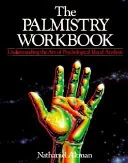
The Palmistry Workbook
 79
79

The Palmistry Workbook
Nathaniel Altman’s The Palmistry Workbook, while originating in 1984, presents a structured approach that still holds utility for contemporary students of palmistry. Its strength lies in its methodical breakdown of the hand's anatomy and its clear explanations of how various features—from the shape of the thumb to the presence of the Apollo line—contribute to a holistic reading. The section on the mounts, for instance, offers a nuanced understanding beyond simple line interpretations, linking them directly to personality traits and life areas like "career and self-fulfillment." However, the book's primary limitation is its didactic, workbook-style format, which can feel somewhat dry for readers seeking a more narrative or philosophical exploration of palmistry. A passage detailing the "minor lines" like the girdle of Venus and its potential association with emotional sensitivity, while informative, exemplifies this straightforward, almost clinical, presentation.
Ultimately, Altman provides a reliable technical manual for dissecting the palm.
📝 Description
79
Nathaniel Altman's The Palmistry Workbook, published in 1984, offers a structured approach to reading hands.
This 1984 workbook by Nathaniel Altman provides a methodical guide to palmistry, moving beyond basic interpretations. It breaks down the hand into its constituent parts, detailing the meaning of lines, mounts, and finger formations. The book is designed for those who want a practical method for palm reading, useful for both self-understanding and predicting personal potentials and challenges. It suits beginners curious about palmistry's fundamentals as well as those with existing knowledge seeking to expand their skills. Altman's text presents structured lessons within the practice.
The workbook systematically covers the core elements of chiromancy. Readers learn about the major and minor hand lines, such as the Life, Head, and Heart lines, and the significance of various mounts like Venus and Jupiter. It also examines finger shapes and lengths. The book explains how these features combine to offer insights into areas like relationships, career paths, health, intellect, imagination, and spiritual inclinations.
Published in 1984 amidst renewed interest in esoteric subjects, The Palmistry Workbook served as a clear and accessible resource for a modern audience. It emerged at a time when many texts on the occult were either highly academic or overly simplified. Altman aimed for a middle path, delivering detailed instruction based on established palmistry traditions. This approach made the ancient practice understandable for contemporary readers interested in divination and self-discovery.
💡 Why Read This Book?
• You will learn to interpret the specific significance of the mounts on the palm, such as the Mount of Venus and its connection to emotional depth, as detailed in Chapter 3, "The Mounts." • You will gain practical skills in analyzing the interplay between the major lines, like the Heart line and Head line, as presented in Chapters 1 and 2, to understand personal intellect and emotional expression. • You will discover how to assess the hand's overall shape and finger proportions, as discussed in Chapter 4, "The Fingers," to correlate with innate talents and character tendencies.
⭐ Reader Reviews
Honest opinions from readers who have explored this book.
❓ Frequently Asked Questions
When was The Palmistry Workbook first published and by whom?
The Palmistry Workbook was first published in 1984 by Nathaniel Altman, offering a comprehensive guide to palm reading.
What are the main areas of life The Palmistry Workbook helps analyze?
The book guides readers in examining love and sex, career and self-fulfillment, health, intellect, imagination, and spirituality through palmistry.
Does the book explain the meaning of different hand lines?
Yes, The Palmistry Workbook provides detailed explanations for major lines like the Life, Head, and Heart lines, as well as minor lines.
What is the significance of the mounts in palmistry according to this book?
Altman's workbook explains that the mounts (e.g., Venus, Jupiter) represent different facets of personality and potential, influencing areas like emotional capacity and ambition.
Is this book suitable for beginners in palmistry?
Absolutely. The book is structured as a workbook, providing a thorough grounding in the essentials for those new to the practice.
What role do finger shapes play in palmistry as per Altman's work?
The book details how different finger shapes and lengths can indicate specific character traits and innate talents, contributing to a comprehensive reading.
🔮 Key Themes & Symbolism
Line Interpretation
The workbook meticulously details the primary and secondary lines of the palm, such as the Life Line, Head Line, and Heart Line. Altman explains their individual meanings and how their breaks, chains, or islands can signify specific life events or personality tendencies. This focus on line analysis forms the bedrock of understanding the narrative etched into the hand, connecting physical markings to psychological states and life trajectories.
Mount Analysis
Beyond the lines, the book dedicates significant attention to the mounts – the fleshy pads at the base of fingers and palm edges. Each mount (e.g., Mount of Venus, Mount of Jupiter) is associated with specific planetary influences and human characteristics like love, ambition, or intellect. Understanding these mounts is crucial for a balanced reading, revealing underlying energies and potential strengths or challenges.
Hand and Finger Morphology
Altman emphasizes that the overall shape of the hand and the characteristics of the fingers are as vital as the lines. Different hand shapes (e.g., Earth, Air, Fire, Water) are linked to elemental qualities and dominant personality types. Similarly, the length, shape, and spacing of fingers provide further clues to an individual's nature, creativity, and practical abilities.
Applied Palmistry
The workbook's core utility lies in its application to various life domains. It moves beyond theoretical knowledge to address how palmistry can illuminate aspects of love, relationships, career choices, intellectual pursuits, and spiritual development. This practical application allows readers to use their newfound knowledge for self-discovery and understanding others.
💬 Memorable Quotes
Direct passages from the work, attributed to the author.
“The major lines are the Life, Head, and Heart lines.”
— This statement from the early sections underscores the foundational importance of these three primary lines in any palmistry reading, serving as the essential starting point for analysis.
“The mounts indicate the strength of the planetary influences in your life.”
— This highlights the astrological connection inherent in palmistry, suggesting that the fleshy parts of the hand are conduits for cosmic energies influencing personality and destiny.
“A clear, unbroken Life Line suggests good vitality.”
— This exemplifies the direct correlation the book draws between specific physical markings on the palm and tangible aspects of well-being, such as health and physical energy.
“The shape of the fingers reveals your innate talents.”
— This points to the nuanced approach of the workbook, emphasizing that not only lines but also the physical structure of the hand, including finger morphology, offers critical insights into personal aptitudes.
💡 Key Ideas
Editorial paraphrase of the work's core concepts — not direct quotes.
Palmistry can help you understand your potential for love and career.
This summarizes the practical, life-application aspect of the book, demonstrating its utility as a tool for self-awareness and guidance in key life areas.
🌙 Esoteric Significance
Tradition
This work aligns with the Western esoteric tradition, specifically within the lineage of practical divination and physiognomy. It draws upon centuries of chiromantic practice, which has roots stretching back to ancient Greece and India, and was further developed through Hermetic and Renaissance texts. Altman's workbook modernizes this tradition, presenting its principles in a structured, accessible format suitable for individual study, departing from purely oral transmission or highly esoteric grimoires.
Symbolism
Key symbols in the book include the major palm lines (Life, Head, Heart) which represent fundamental human experiences like vitality, intellect, and emotion. The mounts, named after classical deities and planets (e.g., Mount of Venus, Mount of Jupiter), act as symbolic representations of archetypal energies and personality traits. Finger shapes and hand types also function symbolically, linking physical form to elemental correspondences (Earth, Air, Fire, Water) and inherent character structures.
Modern Relevance
The Palmistry Workbook remains relevant for contemporary practitioners and enthusiasts of divination and self-knowledge. Its clear, systematic approach serves as a foundational text for those interested in modern intuitive development and psychological astrology, which often incorporates physiognomic elements. Thinkers and practitioners exploring somatic psychology or embodied cognition may find its direct correlation of physical form to inner states of interest.
👥 Who Should Read This Book
• Aspiring palmists seeking a structured curriculum to learn the fundamentals of hand analysis, moving from basic line meanings to complex mount and finger interpretations. • Individuals interested in self-discovery and personal growth who want to explore their innate potentials, challenges, and life path through a tangible, visual method. • Students of comparative divination practices looking to understand the historical and systematic foundations of Western palmistry as distinct from other forms of fortune-telling.
📜 Historical Context
Emerging in 1984, The Palmistry Workbook arrived during a period of renewed public interest in esoteric subjects, a trend that had gained momentum throughout the 1970s and continued into the 1980s. This era saw a diversification of occult literature, moving beyond purely academic or highly specialized texts. Nathaniel Altman’s work positioned itself as a practical, instructional manual, distinct from the more philosophical or historical treatments of palmistry. While contemporary figures like psychic Uri Geller were prominent in popular culture, Altman’s approach was more grounded in the traditional systems of chiromancy. Unlike the more mystical or spiritualist interpretations prevalent in some circles, this workbook offered a systematic, almost scientific, breakdown of hand analysis, emphasizing clarity and learnability. Its publication did not coincide with major academic debates on the subject, but it contributed to the broader accessibility of divination practices for a lay audience.
📔 Journal Prompts
The significance of the Head Line's length and clarity in relation to your intellectual approach.
Mount of Jupiter’s prominence and its connection to your ambition and leadership style.
The characteristics of your dominant hand's fingers and how they reflect your natural talents.
Interpreting the branching patterns of your Heart Line to understand your emotional expression.
The interplay between the Life Line's depth and any minor lines affecting your vitality.
🗂️ Glossary
Life Line
The curved line on the palm extending from near the thumb towards the wrist, generally interpreted as indicating physical vitality, general health, and significant life experiences.
Head Line
A horizontal line across the palm, usually starting below the index finger, representing mental faculties, intellect, learning style, and communication.
Heart Line
The uppermost horizontal line on the palm, typically running from below the little finger towards the index or middle finger, signifying emotional nature, relationships, and romantic life.
Mount of Venus
The fleshy area at the base of the thumb, associated with love, sensuality, passion, vitality, and the capacity for affection.
Mount of Jupiter
The mount located below the index finger, symbolizing ambition, leadership qualities, confidence, and spiritual aspirations.
Fate Line
A vertical line on the palm, usually running from the wrist towards the middle finger, representing career, life path, and external influences.
Chirognomy
The study of the shape and general characteristics of the hand and fingers, as opposed to chiromancy, which focuses on the lines.
This book appears in 1 collection
🔮 Readers Also Liked
Browse all →









From the “Palmistry” Collection
View all →








More Free Occult Philosophy Books
View all →