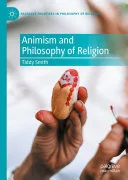
Animism and Philosophy of Religion
 71
71

Animism and Philosophy of Religion
Tiddy Smith's "Animism and Philosophy of Religion" performs a necessary, if somewhat academic, service by forcing the philosophy of religion to confront its persistent theistic bias. The book meticulously details how animist cosmologies, often dismissed or misunderstood, present sophisticated answers to questions of being, consciousness, and the sacred. A particular strength lies in Smith's clear explication of animist ethics, demonstrating a robust moral framework distinct from Abrahamic traditions. However, the work occasionally succumbs to an overly academic tone, which might alienate readers seeking more direct engagement with animist practitioners or ethnographic accounts. The section on animist epistemology, while thorough, could have benefited from more concrete examples of how these beliefs are *lived* rather than just theorized. Despite this, Smith makes a compelling case for animism's philosophical legitimacy.
📝 Description
71
Tiddy Smith's 2023 book argues philosophy of religion has historically ignored animism.
Tiddy Smith's "Animism and Philosophy of Religion" addresses a perceived historical gap in the philosophy of religion, which Smith contends has largely overlooked animist traditions. The author aims to position animism not as a marginal belief system but as a significant worldview with substantial philosophical implications. The book is organized around four core inquiries into animist ontologies, ethics, personhood, and epistemology. Smith's work encourages a broader academic engagement with religious thought by challenging ethnocentric viewpoints. It advocates for the serious academic consideration of animism, comparing its complexity to that of major world religions. Ultimately, the book seeks to expand the philosophy of religion by showing how animist perspectives can inform enduring philosophical questions about the sacred and spiritual across diverse cultures.
This work engages with traditions that often fall outside Western academic philosophy's usual focus. By examining animism, it touches upon ideas of immanent spirit, interconnectedness, and non-anthropocentric views of consciousness. These concepts resonate with various esoteric traditions that explore animistic principles, shamanism, and indigenous cosmologies, seeking a more holistic understanding of reality that acknowledges the agency and spirit in the natural world.
💡 Why Read This Book?
• Gain a nuanced understanding of animist worldviews, moving beyond simplistic anthropological categorizations, as explored in the book's detailed examination of animist ethics. • Discover how animist ontologies challenge Western philosophical assumptions about personhood and consciousness, directly engaging with concepts presented in the volume's core questions. • Appreciate the historical and philosophical marginalization of animism within academic religious studies, understanding the necessity of works like this published in 2023.
⭐ Reader Reviews
Honest opinions from readers who have explored this book.
❓ Frequently Asked Questions
What is the central argument of "Animism and Philosophy of Religion"?
The book argues that mainstream philosophy of religion has largely ignored animist beliefs, implicitly favoring theistic worldviews. It aims to rectify this by presenting animism as a philosophically robust and viable religious option.
Who is Tiddy Smith, and when was this book first published?
Tiddy Smith is the author of "Animism and Philosophy of Religion," which was first published on February 25, 2023. Their work seeks to bridge academic philosophy with often-overlooked spiritual traditions.
What are the main areas of inquiry addressed in the book?
The volume addresses four major questions concerning animism: its fundamental nature, its ethical dimensions, its concept of personhood, and its epistemological frameworks.
How does this book contribute to the study of religion?
It challenges the Eurocentric and theocentric biases prevalent in the philosophy of religion, advocating for a more inclusive and critical engagement with diverse spiritual and religious systems like animism.
Is this book suitable for beginners in philosophy of religion?
Yes, while academic, the book's clear aim to correct historical oversights makes it accessible for those interested in expanding their understanding beyond traditional Western religious philosophy.
What makes animism a 'live option' according to the book?
Smith presents animism as a 'live option' by demonstrating its capacity to address complex philosophical questions regarding existence, consciousness, and morality with sophisticated conceptual frameworks.
🔮 Key Themes & Symbolism
Challenging Theistic Bias
The core of Smith's argument rests on identifying and dismantling the implicit theistic framework that has dominated Western philosophy of religion. The work meticulously illustrates how scholarly engagement has historically sidelined or misinterpreted animist traditions, treating them as primitive precursors rather than complex philosophical systems. By contrasting animist ontologies with those typically found in monotheistic religions, the book reveals the limitations of a narrow focus and advocates for a pluralistic approach to understanding the divine and the sacred.
Animist Ontology and Personhood
Smith examines the fundamental nature of reality as understood through animist lenses. This includes exploring concepts of spirit, agency, and interconnectedness within the natural world. A significant focus is placed on how animism conceives of personhood, often extending it beyond the human to include animals, plants, and even inanimate objects or natural phenomena. This challenges Western anthropocentric views and opens up new philosophical avenues for understanding consciousness and subjective experience.
Ethical Frameworks in Animism
Beyond mere belief systems, the book examines the ethical implications inherent in animist worldviews. Smith elucidates how a deep respect for all sentient and even non-sentient entities, stemming from the belief in indwelling spirits or life forces, translates into distinct moral codes. These codes often emphasize reciprocity, balance, and responsible stewardship of the environment, offering alternative perspectives to ethical systems derived from divine commandments or utilitarian calculus.
Epistemology of Lived Experience
The volume also addresses how knowledge is acquired and validated within animist traditions. This often involves a reliance on direct experience, intuition, dreams, visions, and communal wisdom passed down through generations, rather than solely on empirical observation or abstract reasoning. Smith highlights how this experiential epistemology is integral to the animist understanding of the world and its spiritual dimensions, validating knowledge gained through non-conventional means.
💬 Memorable Quotes
Direct passages from the work, attributed to the author.
“The field that is now called "philosophy of religion" could quite easily be renamed "philosophy of theism."”
— This statement captures the book's central thesis: that academic study of religion has been overwhelmingly biased towards monotheistic, particularly Abrahamic, traditions, thereby excluding vast swathes of human spiritual experience.
“Animism as a live option among the plethora of religious worldviews.”
— This phrase signifies the book's aim to reposition animism from a dismissed or exoticized belief system to a serious contender in the spectrum of philosophies of religion, deserving equal intellectual consideration.
“The volume addresses four major questions: 1. What is animism? 2. What are its ethical implications? 3. How does it conceptualize personhood? 4. What are its epistemological claims?”
— This direct enumeration outlines the book's structured approach, promising a comprehensive philosophical examination of animism across key domains of inquiry relevant to religious studies.
“Mainstream philosophy of religion has persistently failed to engage seriously or critically with animist beliefs and practices.”
— This declaration sets the critical tone of the work, highlighting a perceived scholarly neglect and establishing the imperative for a re-evaluation of the discipline's scope and historical biases.
“It is the aim of this volume to rectify that failure.”
— This sentence clearly states the author's objective: to correct the historical imbalance and intellectual deficit in the philosophy of religion concerning animist traditions.
🌙 Esoteric Significance
Tradition
While not explicitly aligning with a single esoteric lineage, Smith's work speaks to traditions that emphasize immanence and interconnectedness, such as certain interpretations of Hermeticism (as in 'All is Mind' and the divine spark within all things) and panentheistic philosophies. It departs from more dualistic or transcendent-focused esoteric systems by focusing on the inherent spiritual reality within the seemingly mundane, aligning with animistic worldviews that see spirit as pervasive.
Symbolism
The book implicitly engages with the symbolism of the natural world – the spirit in the stone, the consciousness in the tree, the agency in the river. These are not mere metaphors but perceived realities within animism. The symbolism often revolves around the concept of the 'anima' or life-force, the invisible yet potent energies that animate all existence, a concept found in various esoteric philosophies concerning vital forces and elemental spirits.
Modern Relevance
Contemporary thinkers and movements concerned with ecological spirituality, deep ecology, and indigenous rights often draw upon or implicitly affirm animist principles. Practitioners of nature-based spiritualities, eco-philosophers, and scholars exploring non-dualistic consciousness find Smith's work crucial for legitimizing and understanding these perspectives within a broader philosophical framework, moving beyond purely Western metaphysical constructs.
👥 Who Should Read This Book
• Academic philosophers of religion seeking to broaden their theoretical scope beyond theism and explore under-represented religious traditions. • Students of anthropology and comparative religion interested in the philosophical underpinnings of diverse cultural beliefs and practices. • Individuals drawn to nature-based spiritualities and ecological philosophies who wish to understand the intellectual foundations of animist worldviews.
📜 Historical Context
Tiddy Smith's "Animism and Philosophy of Religion," published in 2023, enters a field long dominated by theistic interpretations, a trend evident since the mid-20th century's rise of analytic philosophy of religion, heavily influenced by figures like Ludwig Wittgenstein and later, Alvin Plantinga's work on Reformed epistemology. While anthropology had long engaged with animism, spurred by figures like E.B. Tylor in the late 19th century and later by Claude Lévi-Strauss, its philosophical implications were often sidelined. Smith's work arrives in an era where postcolonial theory and critical race theory have prompted re-examinations of Western intellectual traditions. The book's significance lies in its direct challenge to a philosophical establishment that, despite engagement with Eastern traditions, has largely treated animism as a subject for ethnographic description rather than serious philosophical discourse, a perspective that persisted even through the late 20th century's comparative religion boom.
📔 Journal Prompts
The challenge to the philosophy of religion's theistic bias.
Animist concepts of personhood beyond the human.
The ethical implications of perceiving agency in nature.
Comparing animist epistemology with empirical methods.
How does the concept of 'spirit' in animism differ from Western notions?
🗂️ Glossary
Animism
A religious or spiritual belief system attributing a spirit, soul, or consciousness to inanimate objects, natural phenomena, and plants and animals.
Philosophy of Theism
The branch of philosophy of religion that focuses primarily on the existence, nature, and attributes of a personal, transcendent God, often within Abrahamic traditions.
Ontology
The branch of metaphysics dealing with the nature of being, existence, and reality.
Epistemology
The theory of knowledge, especially regarding its methods, validity, and scope, and the distinction between justified belief and opinion.
Personhood
The state or quality of being a person, often involving consciousness, self-awareness, and moral agency, debated in philosophy regarding its applicability to non-human entities.
Cosmology
The study of the origin, evolution, and eventual fate of the universe; in a religious context, the understanding of the structure and order of the universe.
Theocentric Bias
A perspective or interpretation that is centered on or predominantly influenced by the concept of God or a divine being.