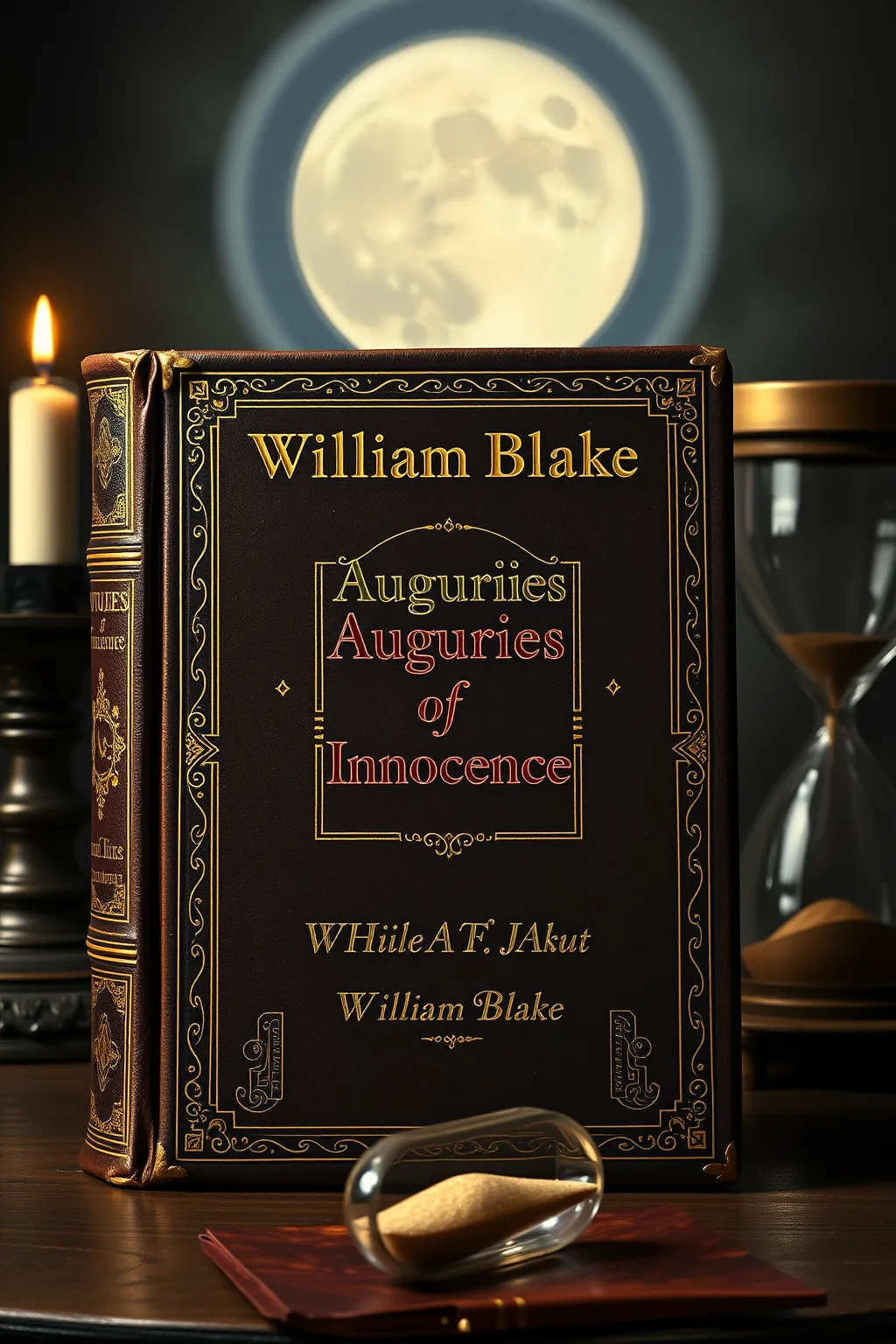
William Blake's Auguries of innocence
 61
61

William Blake's Auguries of innocence



Marcus Thorne (Esoteric Sciences Reviewer): William Blake's 'Auguries of Innocence' remains a cornerstone of mystical literature, a profound exploration of cosmic interconnectedness and spiritual insight. Blake masterfully weaves dense symbolism with a deceptively simple AABB rhyme scheme, creating aphorisms that resonate with ancient wisdom. This work is a powerful antidote to materialistic thought, urging readers to perceive the divine immanent in all things. Its strength lies in its ability to provoke deep contemplation, challenging conventional dualities and revealing the unity of existence. Essential for seekers of esoteric knowledge, students of Blakean philosophy, and anyone yearning to glimpse the spiritual architecture of reality. A truly illuminating read.
📝 Description
61
William Blake wrote 'Auguries of Innocence' around 1803, a poem that links the macrocosm and microcosm.
William Blake's 'Auguries of Innocence' is a lengthy poem, likely composed around 1803, that uses rhyming couplets to express a unique spiritual vision. It connects the vastness of the cosmos with the smallest details of earthly existence. Blake suggests that a divine presence infuses all things, from a grain of sand to a wild flower. He contrasts this underlying truth with the illusions and errors that obscure human perception.
The poem presents a series of aphoristic statements that challenge conventional ways of seeing the world. Blake urges readers to recognize the infinite within the finite, and the eternal within the temporal. It is a call to awaken to a deeper reality, one where spiritual insight informs everyday experience. The work is not a narrative but a collection of visionary pronouncements designed to alter the reader's perspective on existence.
Written in the early 19th century, 'Auguries of Innocence' draws on various mystical traditions that influenced Blake. Elements can be found linking to Gnosticism's emphasis on hidden knowledge and the divine spark within humanity, as well as Hermeticism's concept of "as above, so below," reflecting the poem's concern with macrocosm and microcosm. Blake synthesized these with his own personal prophetic and spiritual system, often expressed through vivid, symbolic imagery.
💡 Why Read This Book?
Discover profound, often overlooked, spiritual insights that connect the celestial with the terrestrial. 'Auguries of Innocence' offers a unique lens through which to view existence, fostering a deeper appreciation for the interconnectedness of all life. Ideal for seekers of hidden knowledge, students of mysticism, and those who wish to expand their consciousness beyond material limitations. This poem is a potent catalyst for personal and spiritual transformation.
⭐ Reader Reviews
Honest opinions from readers who have explored this book.
❓ Frequently Asked Questions
What is the primary message of 'Auguries of Innocence'?
The poem's primary message is the profound interconnectedness of all things, asserting that the divine is immanent in every aspect of creation and that perception shapes reality. It encourages seeing the infinite within the finite.
Is this poem suitable for beginners in esoteric studies?
While rich in complex symbolism, its rhyming couplets offer an accessible entry point. Beginners can appreciate its core themes of interconnectedness and divine immanence, with deeper layers revealing themselves over time.
What makes Blake's 'Auguries of Innocence' 'esoteric'?
It draws upon mystical traditions, uses potent, multi-layered symbols (like the fly and the grain of sand), and presents a worldview that challenges conventional materialist understanding, pointing towards hidden spiritual realities.
How does this poem relate to divination?
While not a direct instruction manual for divination, its aphoristic nature and focus on perceiving hidden meanings and cosmic patterns serve as a form of spiritual prognostication, revealing truths about the soul and the universe.
What is the significance of the title 'Auguries of Innocence'?
The title suggests prophecies or omens ('auguries') that arise from a state of pure, uncorrupted perception ('innocence'), implying that true insight comes from a clear, unclouded spiritual vision.
🔮 Key Themes & Symbolism
Interconnectedness of All Things
Blake posits a radical unity, where the smallest element reflects the entirety of existence. The poem asserts that every creature, from a fly to a tiger, is intrinsically linked to the divine and to each other. This theme challenges separation, urging readers to perceive the universal soul pervading all forms, suggesting that harm to one is harm to the whole. It is a call to recognize the sacredness inherent in every particle of the cosmos.
Perception and Reality
A central tenet is that our perception dictates our reality. Blake famously states, 'To see a World in a Grain of Sand / And a Heaven in a Wild Flower.' This highlights the transformative power of the inner eye, capable of revealing infinite truths within finite forms. The poem suggests that societal and personal 'mind-forg'd manacles' obscure this innate ability, and true spiritual sight is achieved by transcending these limitations.
The Divine Immanent
Blake's work is imbued with the concept of God or the Divine not as an external entity, but as an ever-present force within all creation. 'Auguries of Innocence' reveals the divine spark in nature, in human emotions, and even in suffering. This immanence suggests that spiritual awakening is not about seeking something outside oneself, but about recognizing the divine already present, urging a reverence for life in all its manifestations.
💬 Memorable Quotes
Direct passages from the work, attributed to the author.
“To see a World in a Grain of Sand”
— This iconic line captures the theme of infinite potential within the finite, urging profound perception of universal truths in the smallest details of existence.
“And a Heaven in a Wild Flower”
— This emphasizes the divine immanence in nature, suggesting that spiritual ecstasy and cosmic understanding can be found by observing the beauty and complexity of the natural world.
“And Eternity in an hour”
— Blake suggests that the timeless nature of eternity can be experienced in the fleeting present moment, highlighting the power of mindful awareness to transcend linear time.
“The Bird that cuts the airy way”
— This imagery speaks to freedom, transcendence, and the effortless movement of spirit through the seemingly boundless expanse of the cosmos.
“But if the Eye Mislead, the Truth is there”
— This underscores the subjective nature of perception and the importance of inner truth, implying that even when external observation is flawed, an inherent reality persists.
🌙 Esoteric Significance
Tradition
Blake's 'Auguries of Innocence' draws heavily from Neoplatonic and Hermetic traditions, emphasizing the concept of the 'One' from which all multiplicity emanates and the macrocosm/microcosm correspondence. It aligns with mystical Christianity and Gnostic thought in its assertion of divine immanence and the inherent divinity within humanity, often veiled by material ignorance. The poem serves as a form of 'gnosis' or direct spiritual knowledge, bypassing dogma for experiential understanding.
Symbolism
The poem is rich with potent symbols: the 'grain of sand' and 'wild flower' represent the infinite within the finite; the 'fly' and 'tiger' embody the dualistic nature of existence, both innocent and fierce, divine and fallen. The 'weeping child' symbolizes suffering and the loss of divine connection, while concepts like 'chains' and 'manacles' represent the limitations imposed by materialistic thought and societal conventions, obscuring spiritual vision.
Modern Relevance
In an age often characterized by disconnection, existential anxiety, and environmental degradation, Blake's message of universal interconnectedness offers a powerful antidote. The poem's emphasis on perception's role in shaping reality is highly relevant to contemporary discussions on mindfulness, consciousness studies, and the psychological impact of our environment. It serves as a timeless reminder of our intrinsic connection to the natural world and the spiritual dimension, urging a more compassionate and enlightened way of being.
👥 Who Should Read This Book
This profound work is essential for seekers of esoteric wisdom, offering a unique perspective on the interconnectedness of all life. Scholars of mysticism, Blakean studies, and comparative religion will find rich material for analysis. Spiritual practitioners and meditators will appreciate its insights into perception and divine immanence, providing potent affirmations for their path. Even beginners curious about deeper meanings beyond the material world will find accessible yet transformative truths within its lines, serving as a gateway to profound contemplation.
📜 Historical Context
Penned around 1803, 'Auguries of Innocence' emerged from the fertile, yet turbulent, intellectual soil of late Georgian England. This era was marked by the Enlightenment's emphasis on reason, but also by a powerful counter-current of Romanticism, which championed imagination, emotion, and the sublime. William Blake, a visionary artist and poet, stood at the vanguard of this spiritual and artistic revolution. His work was profoundly influenced by his intense personal religious experiences, his study of mystical texts, and his critical engagement with the perceived spiritual bankruptcy of institutionalized religion and burgeoning industrial society. The poem reflects a deep concern for the suffering of the innocent and a prophetic condemnation of cruelty and injustice, resonating with the era's social upheavals and philosophical inquiries into human nature and the divine.
📔 Journal Prompts
Reflect on a moment where you perceived the infinite in the mundane. Describe the experience and its impact on your understanding.
How do the 'mind-forg'd manacles' of modern society limit your perception? Identify one such limitation and explore its origins.
Consider the 'tiger' and the 'lamb' within yourself. How do these seemingly opposing forces coexist and inform your being?
Write a short piece from the perspective of a 'fly' or a 'grain of sand,' contemplating its place in the universe.
What does 'innocence' mean to you in the context of spiritual insight? How can one cultivate or reclaim this state of perception?
🗂️ Glossary
Auguries
Prophecies, omens, or portents, often interpreted as divine signs or insights into future events or hidden truths. In this context, they are spiritual revelations derived from pure perception.
Immanence
The belief that the divine is present within the material world and all of creation, rather than being separate or transcendent. God is seen as being *in* everything.
Mind-forg'd manacles
A metaphor coined by Blake for the self-imposed limitations and prejudices created by one's own mind, societal conditioning, and rationalistic thinking, which prevent true spiritual perception.
Cosmos
The universe considered as a complex and orderly system. Blake often views the cosmos as a manifestation of divine order and interconnectedness, imbued with spiritual significance.
Visionary
Characterized by or containing visions; imaginative or inspired. In Blake's context, it refers to a direct apprehension of spiritual or divine realities beyond normal sensory experience.
This book appears in 1 collection
🔮 Readers Also Liked
Browse all →







More by William Blake
All books →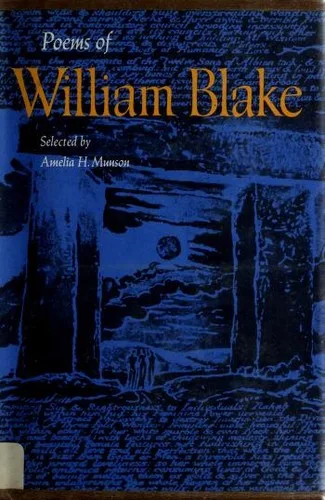





From the “Augury” Collection
View all →






More Free Divination & Tarot Books
View all →