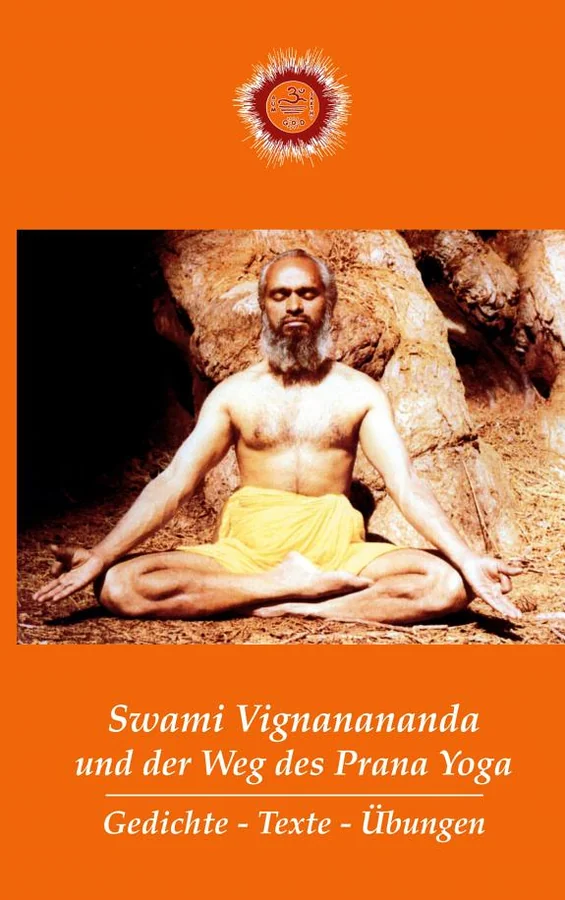
Swami Vignanananda und der Weg des Prana Yoga
 78
78

Swami Vignanananda und der Weg des Prana Yoga
Swami Vignanananda’s approach to Prana Yoga, as presented in this collection, distinguishes itself through its integration of practical methods with direct philosophical exposition. The fusion of poetic verse and lecture transcripts offers a layered understanding of his teachings. A notable strength lies in the detailed descriptions of pranayama techniques, which feel grounded and accessible. However, the book occasionally suffers from a certain repetitiveness, particularly in the sections devoted to Vedanta, where core concepts are revisited without significant new elaboration. The inclusion of Vignanananda’s poems, while artistically valuable, sometimes interrupts the flow of practical instruction. Despite this, the work provides a solid entry point into a lesser-known, yet potent, yogic lineage.
📝 Description
78
Swami Vignanananda’s 1935 book details his unique Prana Yoga system.
This volume introduces Swami Vignanananda, the founder of Prana Yoga. It seeks to convey his distinct character and his practical teaching methods, all connected to the eternal Self. The book is meant for individuals committed to spiritual practices. It combines Prana Yoga techniques with Vignanananda’s philosophical talks and poems. This content suits those who practice meditation, pranayama, Hatha Yoga, and Vedanta.
Prana Yoga appeared in the early 20th century, coinciding with a growing Western interest in Indian spiritual traditions. It developed alongside movements inspired by figures such as Swami Vivekananda and the founding of yoga centers. The book clarifies central ideas within Prana Yoga. It focuses on controlling vital energy (prana) through particular yogic exercises and the philosophical basis of Vedanta. This approach stresses self-awareness and the divine nature present in all creatures.
Emerging in the early 20th century, Prana Yoga reflects a period of renewed engagement with Indian spiritual thought in the West. Its development occurred alongside other movements influenced by figures like Swami Vivekananda, who helped introduce Vedanta and Raja Yoga to a wider audience. This book situates Vignanananda’s system within that broader context, linking specific yogic techniques for vital energy control to the philosophical goals of Vedanta, such as self-realization and recognizing the immanent divine.
💡 Why Read This Book?
• Understand the foundational practices of Prana Yoga, including specific pranayama exercises and their energetic effects, as outlined by Swami Vignanananda, offering a distinct approach to breath control. • Gain insight into the practical Vedanta philosophy espoused by Vignanananda, learning how to anchor oneself in the True Self through daily application, as detailed in his lectures. • Explore the spiritual teachings through a unique combination of poetry and prose, experiencing Vignanananda's insights in both lyrical and didactic forms, enriching your contemplative practice.
⭐ Reader Reviews
Honest opinions from readers who have explored this book.
❓ Frequently Asked Questions
When was Swami Vignanananda's "Swami Vignanananda und der Weg des Prana Yoga" first published?
The original publication date for "Swami Vignanananda und der Weg des Prana Yoga" is September 10, 2025. This edition serves as an introduction to his teachings.
What is Prana Yoga?
Prana Yoga, as founded by Swami Vignanananda, is a spiritual path focused on the mastery and direction of vital life force (prana) through integrated practices of breathwork, meditation, and philosophical study.
What kind of content can I expect in this book?
The book contains a blend of practical Prana Yoga techniques, spiritual teachings from Swami Vignanananda in the form of lectures, and his original poetry, offering a holistic view of his path.
Is this book suitable for beginners in yoga?
While it covers foundational aspects, the book is primarily geared towards those with some existing practice in meditation, pranayama, Hatha Yoga, or Vedanta, seeking deeper insights.
What philosophical tradition does Prana Yoga draw from?
Prana Yoga is deeply rooted in practical Vedanta, emphasizing self-realization and the understanding of the True Self, as taught by Swami Vignanananda.
Where can I find more information about Swami Vignanananda?
This book serves as a primary introduction to Swami Vignanananda and his unique system of Prana Yoga, offering insights into his life and teachings.
🔮 Key Themes & Symbolism
Mastery of Prana
The central theme revolves around the concept of 'prana,' the vital life force. The book details methods to consciously control and direct this energy, not just for physical well-being but as a fundamental tool for spiritual ascent. Vignanananda's teachings emphasize that a regulated prana leads to a regulated mind, a crucial step towards self-realization. This goes beyond simple breathing exercises, aiming for a profound energetic transformation.
The True Self
A core tenet is the realization of the 'True Self' (Atman) as distinct from the ego or personality. Vignanananda guides the reader toward recognizing their inherent, unchanging nature, which is described as pure consciousness. The practices and philosophical discussions presented aim to dissolve illusions that obscure this fundamental truth, leading to liberation from suffering.
Integrated Spiritual Practice
The book advocates for a holistic approach to spirituality, combining physical postures (Hatha Yoga), breath control (Pranayama), meditation, and philosophical study (Vedanta). This integration is presented as essential for balanced development. Vignanananda's method avoids focusing on isolated techniques, instead showing how they interdepend to facilitate spiritual growth.
Poetic Expression of Truth
Beyond instructional content, the inclusion of Swami Vignanananda's poetry offers an alternative pathway to understanding his philosophy. These verses often convey subtle spiritual truths and experiential states in striking prose, providing a different dimension to the intellectual and practical teachings presented in the lectures and method descriptions.
💬 Memorable Quotes
Direct passages from the work, attributed to the author.
“Prana is the bridge between the material and the spiritual.”
— This statement highlights the important role of vital energy in Vignanananda's system. It suggests that by mastering prana, one can effectively transcend the limitations of the physical body and mind to connect with higher states of consciousness.
“The True Self is not sought, it is recognized.”
— This aphorism points to the non-dualistic perspective of Vedanta. It implies that the ultimate reality of our being is already present and perfect; the spiritual path is one of uncovering or remembering this inherent truth, rather than acquiring something new.
“Breath is the silent teacher of the universe.”
— This poetic expression elevates the act of breathing to a profound source of wisdom. It suggests that observing and understanding the breath can reveal universal laws and truths, acting as a direct conduit to cosmic consciousness.
“In stillness, the Self speaks its name.”
— This interpretation underscores the importance of meditation and inner quietude. It posits that true self-discovery occurs not through external activity or intellectual analysis, but through cultivating a deep inner silence where one's essential nature can be perceived.
💡 Key Ideas
Editorial paraphrase of the work's core concepts — not direct quotes.
Yoga is not mere exercise; it is the science of existence.
This quote positions yoga, specifically Prana Yoga, as a comprehensive system for understanding life itself. It moves beyond the physical aspects often emphasized in modern interpretations, framing it as a profound philosophical and practical discipline.
🌙 Esoteric Significance
Tradition
Prana Yoga, as presented by Swami Vignanananda, firmly belongs within the broad stream of yogic and Vedantic traditions. It draws heavily on the philosophical framework of Advaita Vedanta, particularly the concept of Brahman and Atman (the Absolute and the Self). However, its distinct emphasis on the conscious manipulation and direction of 'prana' (vital energy) positions it as a practical, energetic discipline that complements the philosophical teachings. It can be seen as a specific application of yogic science aimed at achieving Vedantic realization through energetic mastery.
Symbolism
The core symbolism revolves around 'prana' itself, representing the universal life force that animates all existence. The breath ('prana') is often seen as the most accessible manifestation of this force, hence its central role in the practices. Another significant motif is the 'True Self' (Atman), symbolized by light, consciousness, or pure being, which is the ultimate reality to be realized. The path itself can be symbolized as a journey from illusion (maya) to truth (satya), guided by inner awareness.
Modern Relevance
Contemporary practitioners of yoga and meditation seeking deeper energetic and philosophical understanding often find resonance with Vignanananda's integrated approach. His emphasis on prana control connects with modern explorations of bioenergetics and subtle body practices. Thinkers and schools focusing on non-dualistic philosophies and the practical application of ancient wisdom for psychological and spiritual well-being can draw inspiration from his synthesis of Vedanta and yogic science.
👥 Who Should Read This Book
• Dedicated practitioners of Hatha Yoga and Pranayama seeking to deepen their understanding of energetic control and its spiritual implications beyond physical postures. • Students of Vedanta and Advaita philosophy looking for practical methods to embody and realize abstract concepts of the True Self and consciousness. • Meditators and spiritual seekers interested in exploring lesser-known yogic lineages that offer a structured path toward self-realization through breath and energy work.
📜 Historical Context
Published in 2025, "Swami Vignanananda und der Weg des Prana Yoga" arrives in an era of renewed interest in authentic yogic traditions, often seeking to move beyond purely physical interpretations. The early 20th century, when figures like Swami Vivekananda were introducing Vedanta and Raja Yoga to the West, saw a significant influx of Indian spiritual teachers and philosophies. Vignanananda's Prana Yoga emerged within this fertile ground, likely influenced by and in dialogue with the prevalent currents of Hatha Yoga and Advaita Vedanta. While contemporaries like Paramahansa Yogananda were popularizing Kriya Yoga, Vignanananda focused on a specific energetic and philosophical synthesis. His work offered a distinct path that emphasized the direct manipulation of prana, differentiating it from purely philosophical schools or solely asana-focused physical disciplines, potentially drawing parallels with the energetic practices discussed within certain branches of Tantra, albeit framed within a Vedanta context.
📔 Journal Prompts
The relationship between breath regulation and mental stillness.
Recognizing the True Self amidst daily experiences.
The role of prana in bridging the material and spiritual realms.
Interpreting the poetic expressions of spiritual insight.
Applying Vedanta principles to practical living.
🗂️ Glossary
Prana
The vital life force or energy that animates all beings and the universe. In Prana Yoga, its conscious control is central to spiritual development.
Prana Yoga
A spiritual discipline founded by Swami Vignanananda, emphasizing the mastery of prana through specific yogic techniques and philosophical understanding.
True Self (Atman)
The eternal, unchanging, innermost essence of an individual, understood in Vedanta as identical with Brahman, the Absolute Reality.
Vedanta
A school of Hindu philosophy concerned with the nature of ultimate reality (Brahman) and the self (Atman), often translated as 'the end of the Vedas'.
Hatha Yoga
A branch of yoga that focuses on physical postures (asanas) and breathing techniques (pranayama) to prepare the body and mind for higher states of consciousness.
Pranayama
The practice of breath control and regulation, considered a vital component of yoga for managing prana and influencing mental states.
Asana
A physical posture or position in Hatha Yoga, intended to promote stability, health, and awareness in the body.
This book appears in 1 collection
🔮 Readers Also Liked
Browse all →









From the “Prana” Collection
View all →








More Free Occult Philosophy Books
View all →