What is Prana?
Prana, often translated as 'life force' or 'vital energy,' is a fundamental concept in yogic philosophy and various Eastern traditions. It is understood as the energetic principle that sustains all life, animating the body and mind. Prana is believed to flow through subtle channels called nadis and is influenced by breath, thought, and environment. Practices like pranayama (breath control) are designed to regulate and enhance the flow of Prana for improved physical, mental, and spiritual well-being.
Best Books for Complete Beginners
For those new to the concept of Prana, starting with accessible guides is key. Stephen Austen's 'Meditation for Everyday Living' introduces basic mindfulness and breath awareness techniques that indirectly touch upon Prana regulation. 'Easy Tarot Reading' by Pranay Bhagwat, while focused on tarot, can offer insights into energetic interpretation. 'Detox-Yoga' by Alexandra Rittinger links physical cleansing with energetic flow, providing a practical entry point. 'Prana up your life' by Josephine Jeß and Jasmin Jeß offers contemporary advice on harnessing this energy for daily life. These texts provide foundational understanding without overwhelming the reader with complex theory.
Intermediate Reading
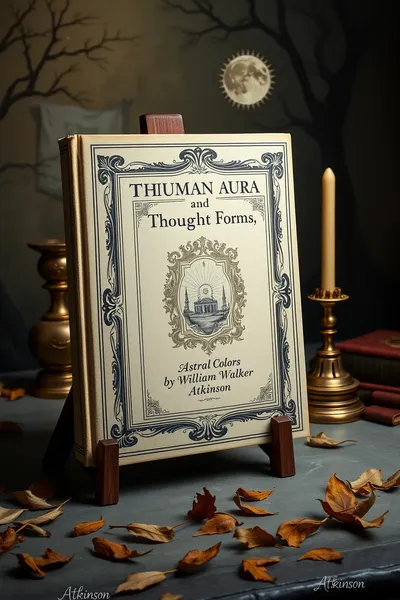
Building upon foundational knowledge, intermediate texts delve deeper into Prana's energetic mechanics and applications. 'The Human Aura: Astral Colors and Thought Forms' by William Walker Atkinson (1912) explores the energetic field surrounding the body and its connection to consciousness. 'Meditation As Medicine' by Guru Dharma Singh Khalsa and Cameron Stauth presents a therapeutic approach to meditation and breathwork for health enhancement. 'Jivamukti Yoga' by Sharon Gannon and David Life offers a comprehensive system integrating physical practice, chanting, and meditation, all rooted in energetic principles. 'Prana Energie-Therapie' by Hubert Leitenbauer introduces specific energy healing techniques.
Classical / Advanced Texts
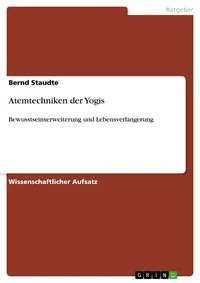
Advanced study requires engagement with primary sources and more complex theoretical frameworks. 'Atemtechniken der Yogis' by Bernd Staudte explores the intricate science of yogic breathing techniques, essential for Prana manipulation. Swami Vignanananda's 'Swami Vignanananda und der Weg des Prana Yoga' provides deeper insights into a specific lineage of Prana Yoga. Rosemary Guiley's 'Encyclopedia of Mystical & Paranormal Experience' offers a broad contextual understanding of Prana within wider esoteric traditions, serving as a reference for advanced exploration.
Reading Order — Step by Step
Begin your journey with foundational concepts. Months 1-2: Start with accessible guides like 'Meditation for Everyday Living' by Stephen Austen and 'Prana up your life' by Josephine Jeß and Jasmin Jeß to grasp basic breath and energy awareness. Month 3: Transition to 'The Human Aura' by William Walker Atkinson to understand energetic fields. Months 4-5: Explore therapeutic applications with 'Meditation As Medicine' by Guru Dharma Singh Khalsa and Cameron Stauth, and 'Prana Energie-Therapie' by Hubert Leitenbauer. Months 6+: Engage with advanced texts like 'Atemtechniken der Yogis' by Bernd Staudte for in-depth pranayama study.
Frequently Asked Questions
Which Prana book should I read first?
For a gentle introduction, begin with 'Meditation for Everyday Living' by Stephen Austen, which covers foundational breath awareness. Alternatively, 'Prana up your life' by Josephine Jeß and Jasmin Jeß offers practical, modern applications.
How does Prana relate to the aura?
Prana is considered the vital life force that emanates from and sustains the aura, which is the energetic field surrounding the body. Books like Atkinson's 'The Human Aura' explore this connection in detail.
Can Prana be used for healing?
Yes, many traditions believe Prana can be directed and balanced for healing. Texts such as 'Prana Energie-Therapie' by Hubert Leitenbauer and 'Meditation As Medicine' by Guru Dharma Singh Khalsa discuss these therapeutic applications.
What is the difference between Prana and Qi?
While both terms represent vital life force energy, Prana is primarily from Indian yogic traditions, whereas Qi (or Chi) is from Chinese traditions. The underlying concept of animating energy is similar.
Are there books on Prana for physical health?
Several books connect Prana with physical well-being. 'Detox-Yoga' by Alexandra Rittinger and 'The Self-Health Guide' offer practical approaches to health that incorporate energetic principles.
What is Pranayama?
Pranayama refers to specific yogic breathing techniques designed to consciously regulate and enhance the flow of Prana within the body. 'Atemtechniken der Yogis' by Bernd Staudte is a key resource.
Do any books cover Prana without yoga?
While yoga is a primary vehicle, some texts explore Prana more broadly. 'The Human Aura' by William Walker Atkinson discusses the energetic field independently of specific yogic postures.