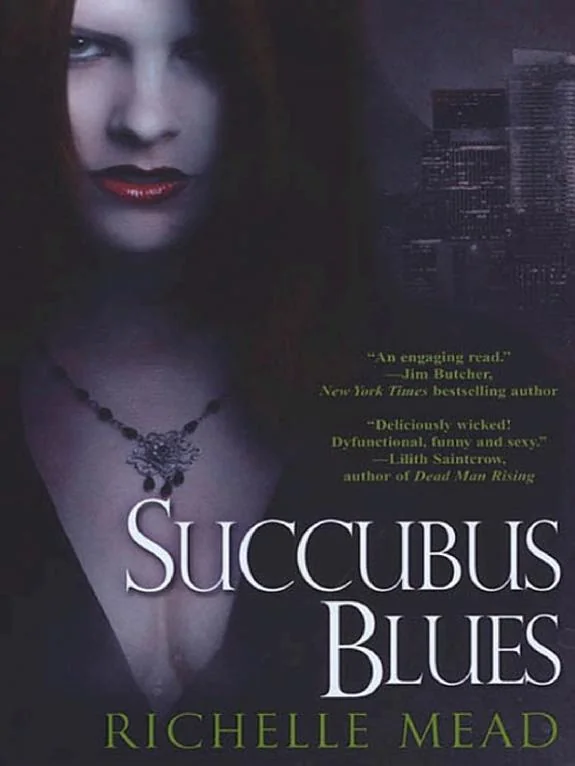
Succubus Blues
 81
81

Succubus Blues
Richelle Mead’s *Succubus Blues* offers a familiar, yet satisfying, dive into the life of a demon trying to balance her predatory nature with a desire for normalcy. Georgina Kincaid, our succubus protagonist, is a well-drawn character whose internal conflicts drive the narrative. The novel shines when it focuses on Georgina’s relationships and her attempts to maintain a semblance of a personal life amidst supernatural intrigue and danger. A particularly effective element is the portrayal of the “immortal adversaries” and the shadowy figure manipulating events, creating genuine suspense. However, the pacing occasionally falters, particularly in sections detailing Georgina's professional life as an author, which, while intended to ground her, can sometimes slow the plot's momentum. The strength of the book lies in Mead's ability to imbue a creature of legend with relatable human anxieties and desires. Ultimately, *Succubus Blues* is a solid entry in the urban fantasy genre, offering a compelling protagonist and an engaging, if sometimes uneven, story.
📝 Description
81
Richelle Mead's 2010 novel, Succubus Blues, centers on Georgina Kincaid, a succubus trying to live a normal life.
Succubus Blues, published in 2010, follows Georgina Kincaid, a succubus who struggles with her nature in a modern urban setting. The book examines the difficulties she faces balancing her inherent need to drain life force with a desire for genuine connection and a semblance of normalcy. Georgina navigates a hidden supernatural community, encountering the unique moral quandaries that come with her existence. The narrative focuses on her personal and professional life, highlighting the clash between her demonic identity and her aspirations.
This novel appeals to readers who enjoy character-focused urban fantasy. It combines supernatural elements with a strong romantic subplot and a dark sense of humor. Those interested in modern interpretations of mythological creatures, particularly succubi, will find the premise engaging. The story also features a complex female protagonist dealing with issues of identity, power, and relationships, making it relatable for readers who appreciate such themes in their fiction.
Published in 2010, Succubus Blues engages with the urban fantasy tradition that reinterprets mythological figures for contemporary audiences. It places the succubus, a figure traditionally associated with demonic temptation and sexual predation, into a relatable, modern context. The book explores themes of agency and personal conflict within a supernatural being, moving beyond simplistic portrayals of demons to examine their societal integration and individual struggles. This approach aligns with a broader trend in occult fiction to deconstruct and humanize traditional esoteric entities.
💡 Why Read This Book?
• Gain insight into the modern interpretation of succubus lore, exploring Georgina Kincaid's struggle to reconcile her nature with her desires, as detailed in the 2010 publication. • Experience the unique blend of supernatural conflict and personal relationship drama that Richelle Mead crafts, offering a character-driven narrative distinct from typical action-focused urban fantasy. • Understand the social dynamics within a hidden supernatural world, observing how creatures like Georgina navigate a society with its own rules and hierarchies.
⭐ Reader Reviews
Honest opinions from readers who have explored this book.
❓ Frequently Asked Questions
What is the primary conflict for Georgina Kincaid in Succubus Blues?
Georgina Kincaid's primary conflict is balancing her succubus nature, which requires her to drain life force, with her desire for a normal life and genuine relationships. This is complicated by external threats from unknown entities targeting her adversaries.
Who is the author of Succubus Blues?
The author of Succubus Blues is Richelle Mead, who first published the book in 2010 as part of her Georgina Kincaid series.
What makes Succubus Blues different from other urban fantasy novels?
Succubus Blues stands out by focusing on a succubus protagonist and exploring the personal and ethical dilemmas of her existence, rather than solely focusing on action or typical vampire/werewolf tropes prevalent in the genre.
Are there romantic elements in Succubus Blues?
Yes, the book features significant romantic elements, as Georgina navigates complex relationships with both mortals and supernatural beings, a hallmark of the paranormal romance subgenre.
What is the general tone of Succubus Blues?
The general tone is a mix of dark humor, suspense, and romantic drama. Mead balances the inherent darkness of Georgina's nature with wit and relatable character struggles.
What are some key themes explored in Succubus Blues?
Key themes include identity, the struggle between nature and nurture, the ethics of survival, and the search for belonging, all viewed through the lens of a supernatural being in a modern setting.
🔮 Key Themes & Symbolism
Nature vs. Nurture
The narrative intensely explores whether Georgina Kincaid is solely defined by her succubus heritage or if her personal choices and desires can shape her identity. The book questions if her inherent need to feed dictates her destiny or if she can forge a path independent of her demonic nature. This internal conflict is central to her character arc and her interactions with other beings, highlighting the age-old debate of innate predispositions versus environmental influence and personal will within a supernatural context.
The Ethics of Survival
Georgina's existence as a succubus necessitates the exploitation of others for sustenance, raising profound ethical questions. The work examines the moral cost of survival when one's very being is parasitic. It probes the justifications Georgina and others like her might create, and the guilt or detachment that results. This theme forces readers to consider the darker aspects of supernatural existence and the compromises required to endure in a world that often demands such sacrifices.
Supernatural Society Dynamics
Beyond Georgina's personal struggles, the book offers a glimpse into the complex social structures of the supernatural world. It depicts a hidden society with its own hierarchies, rules, and rivalries among various factions, including demons and potentially other mythical beings. The presence of an unknown entity actively eliminating Georgina's adversaries introduces an element of political intrigue and danger within this clandestine community, demonstrating that even immortal beings are subject to power plays and existential threats.
Identity and Belonging
Georgina's quest for a sense of belonging is a driving force. She grapples with being an outsider, both to the human world she observes and the potentially more monstrous aspects of her own kind. Her relationships, particularly romantic ones, become a means of seeking validation and connection. The novel explores how one finds identity when their fundamental nature is at odds with societal norms and personal aspirations, making her search for acceptance a relatable and central theme.
💬 Memorable Quotes
Direct passages from the work, attributed to the author.
“Being a succubus sounds pretty glamorous.”
— This opening line from the original blurb sets a tone of ironic detachment, immediately signaling that the reality of being a succubus is far more complicated and less glamorous than popular perception suggests.
“Shape-shifting, killer wardrobe, what's not to like?”
— This phrase highlights the superficial appeal of Georgina's abilities and lifestyle, contrasting it sharply with the underlying difficulties and dangers she faces, emphasizing the superficiality of appearances.
“Georgina Kincaid's life gets complicated when an unknown entity "helpfully" begins killing her immortal adversaries.”
— This points to the central plot complication: external intervention that, while seemingly beneficial by removing enemies, introduces a new, unknown threat and shifts the power dynamics of Georgina's world.
“The novel explores Georgina's attempts to maintain normalcy amidst supernatural conflict.”
— This interpretation of the book's premise underscores the character's internal struggle to reconcile her demonic nature with human aspirations for a stable life and relationships.
“The narrative questions whether Georgina's succubus nature dictates her destiny.”
— This interpretation focuses on a core thematic element: the exploration of free will versus determinism, specifically as it applies to supernatural beings and their inherent traits.
🌙 Esoteric Significance
Tradition
While not strictly adhering to any single esoteric lineage, *Succubus Blues* draws heavily from demonological lore found within Western occult traditions, particularly those influenced by medieval grimoires and later interpretations of demonic entities. It recontextualizes the succubus, traditionally a figure of temptation and corruption, into a modern protagonist grappling with personal identity and morality, departing from rigid theological or magical frameworks to focus on psychological and social dimensions.
Symbolism
The succubus itself is a potent symbol of forbidden desire, duality, and the predatory aspect of sexuality. Georgina's ability to shape-shift can symbolize the fluidity of identity and the masks individuals wear. The act of draining life force represents a parasitic relationship, a metaphor for unhealthy dependencies or exploitative power dynamics, which are recurrent motifs in discussions of human relationships and societal structures.
Modern Relevance
Contemporary urban fantasy and paranormal romance continue to explore complex supernatural beings with relatable human issues, a trend exemplified by Mead's work. Thinkers and practitioners interested in reinterpreting demonic figures beyond their traditional malevolent roles, or those examining the psychology of power and desire in fictional contexts, find relevance in Georgina's character arc. The book’s focus on a female protagonist navigating a dangerous, patriarchal-coded supernatural world also speaks to modern feminist interpretations of myth.
👥 Who Should Read This Book
• Fans of urban fantasy seeking character-driven narratives with supernatural elements and a strong romantic subplot, particularly those interested in less common mythological figures like succubi. • Readers who enjoy exploring complex female protagonists grappling with their identity, morality, and societal expectations, offering a nuanced look at a creature often depicted solely as a villain. • Individuals interested in the evolution of occult and mythological figures in contemporary literature, providing a modern perspective on demonology and its implications.
📜 Historical Context
Richelle Mead’s *Succubus Blues*, released in 2010, arrived during a flourishing period for urban fantasy, a genre solidified by authors like Laurell K. Hamilton whose *Anita Blake, Vampire Hunter* series had been popular for over a decade. The early 2010s saw a continued appetite for paranormal romance and supernatural thrillers, with series like Charlaine Harris's *The Southern Vampire Mysteries* (the basis for the *True Blood* television series) achieving mainstream success. Mead's work tapped into this market by offering a fresh take on a demonological figure, moving beyond traditional vampires and werewolves to explore the unique challenges of a succubus. While not explicitly tied to a specific intellectual movement, the book aligns with the broader cultural interest in exploring mythological figures through contemporary, often feminist, lenses. The reception was generally positive within the genre, contributing to Mead's established readership following her *Vampire Academy* series.
📔 Journal Prompts
Georgina Kincaid's struggle to reconcile her succubus nature with her personal desires.
The ethical compromises Georgina makes for survival and connection.
Reflections on the portrayal of supernatural society and its hierarchies.
The symbolism of shape-shifting and its connection to identity.
How Georgina's relationships offer a sense of belonging.
🗂️ Glossary
Succubus
In demonology, a succubus is a female demon believed to prey on men, typically by seducing them in their dreams and draining their life force. In *Succubus Blues*, Georgina Kincaid is a succubus who exists in the modern world.
Shape-shifting
The ability to alter one's physical form into that of another creature or being. In the context of *Succubus Blues*, this is one of Georgina's supernatural abilities, used for disguise or to enhance her predatory nature.
Immortal Adversaries
Characters within the book who are supernatural beings and pose a threat to Georgina Kincaid. The novel introduces a plot element where these adversaries are being eliminated by an unknown party.
Demonic Nature
Refers to the inherent characteristics and urges associated with being a demon, such as the need to feed on life force. Georgina grapples with the conflict between her demonic nature and her personal aspirations.
Urban Fantasy
A subgenre of fantasy fiction that is set in a modern, typically urban, environment. It often features supernatural creatures and elements integrated into everyday human society.
Supernatural Community
The hidden society of non-human entities, such as demons, angels, and other mythical beings, that coexists with the human world. This community has its own rules, politics, and dangers.
Life Force
The vital energy or essence of a living being. For succubi like Georgina, consuming life force is essential for their survival and power.
This book appears in 1 collection
🔮 Readers Also Liked
Browse all →









From the “Demonology” Collection
View all →

![CIA Reading Room cia-rdp84-00022r000200150084-5: ORIENTATION COURSE LECTURE ON 'SERVICES OF [ ] [ ]'](/img/thumb/cia-reading-room-cia-rdp84-00022r000200150084-5-orientation-course-lecture-on-services-of-cia-reading-room.webp)





More Free Occult Philosophy Books
View all →