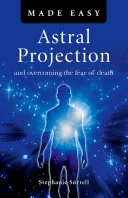
Astral Projection Made Easy
 72
72

Astral Projection Made Easy
Stephanie Sorrell’s *Astral Projection Made Easy* confronts the fear of death directly, positing that understanding consciousness independent of the body offers a potent antidote. The book’s strength lies in its clear, step-by-step methodology, demystifying what can seem an arcane subject. Sorrell skillfully integrates concepts from Near-Death Experiences (NDEs) and Lucid Dreaming, using them as accessible entry points to the broader discussion of life beyond physical limitations. While the initial chapters meticulously lay the groundwork, some readers might find the later sections on advanced techniques lean heavily on anecdotal evidence without deeper theoretical exploration. However, the practical guidance offered, particularly in the early stages of developing awareness, is commendable. The work effectively bridges the gap between abstract spiritual concepts and actionable practice, making it a solid resource for those beginning their journey into non-physical exploration. It serves as a competent manual for the curious.
📝 Description
72
Stephanie Sorrell's 2012 book, Astral Projection Made Easy, addresses mortality by examining consciousness beyond the body.
This book tackles the fundamental human fear of death by exploring the concept of consciousness existing independently of the physical form. Sorrell suggests that understanding this separation can alleviate existential dread. The text systematically lays out methods and theoretical foundations to help readers engage in these non-physical explorations. It is written for those actively interested in experiencing or comprehending non-physical consciousness. Individuals drawn to the overlap between psychology and spirituality, particularly concerning altered states of awareness, will find its direct approach useful. The guide is suitable for newcomers to the subject as well as those with prior experience seeking to sharpen their techniques.
Sorrell details specific practices for initiating and managing astral projection, commonly known as out-of-body experiences (OBEs). The emphasis is placed on maintaining control and ensuring a conscious return to the physical body. The book introduces readers to key ideas related to consciousness, such as near-death experiences (NDEs) as potential indicators of life after death, and lucid dreaming as a practice space for developing conscious awareness. These concepts serve as a basis for the practical exercises that follow.
The exploration of out-of-body experiences has a long history, notably gaining prominence in the late 19th and early 20th centuries through figures associated with the Theosophical Society. Sorrell's 2012 publication emerges during a resurgence of interest in consciousness studies, which now frequently intersects with neuroscience and psychology. Her work draws upon decades of research and personal accounts, seeking to connect established esoteric traditions with contemporary accessibility.
💡 Why Read This Book?
• You will learn specific, actionable techniques for inducing and controlling Out-of-Body Experiences (OBEs), moving beyond theoretical speculation to practical application as detailed in the chapter on 'Techniques for Astral Projection'. • Gain a framework for understanding consciousness beyond the physical through the lens of Near-Death Experiences (NDEs), providing a conceptual basis for exploring non-physical states presented in the text. • Develop skills in Lucid Dreaming as a preparatory practice for astral projection, allowing you to hone conscious awareness in altered states, a method Sorrell outlines as crucial for beginners.
⭐ Reader Reviews
Honest opinions from readers who have explored this book.
❓ Frequently Asked Questions
What is the primary goal of Stephanie Sorrell's book 'Astral Projection Made Easy'?
The book aims to alleviate the fear of death by demonstrating that consciousness can exist and operate independently of the physical body, exploring this through Near-Death Experiences, Lucid Dreaming, and Out-of-Body Experiences.
How does the book explain the connection between Near-Death Experiences and astral projection?
It uses accounts of Near-Death Experiences (NDEs) as evidence suggesting that consciousness can persist beyond physical death, thereby providing a conceptual foundation for the possibility and validity of astral projection.
What role does Lucid Dreaming play in 'Astral Projection Made Easy'?
Lucid Dreaming is presented as a vital training ground for developing conscious awareness and control within altered states of consciousness, skills that are directly transferable and beneficial for achieving successful astral projection.
When was 'Astral Projection Made Easy' first published?
The book was first published on May 25, 2012, positioning it within the contemporary resurgence of interest in consciousness studies and esoteric practices.
What are the main techniques discussed for achieving an out-of-body experience?
The book details specific techniques designed to facilitate the separation of consciousness from the physical body, guiding the reader through methods to induce and control these Out-of-Body Experiences (OBEs).
Is 'Astral Projection Made Easy' suitable for beginners in esoteric studies?
Yes, the book is designed with accessibility in mind, offering a clear and structured approach to complex topics, making it suitable for individuals new to the study of astral projection and consciousness.
🔮 Key Themes & Symbolism
Consciousness Beyond the Physical
The central thesis posits that consciousness is not solely confined to the physical brain but can exist and function independently. This is explored through various phenomena, including Near-Death Experiences (NDEs), which are presented as compelling indicators of post-mortem survival. The book argues that understanding and experiencing this separation can profoundly alter one's perspective on mortality, transforming it from a source of dread into a natural transition. It provides frameworks for conceptualizing and intentionally accessing these non-physical states.
Fear of Death Mitigation
Sorrell directly addresses mortality as a primary human fear, suggesting that much of our societal and personal energy is dedicated to avoiding this reality. The book offers astral projection not as an escape, but as a means of confronting and understanding death by experiencing a state of being where physical demise is irrelevant. By demonstrating the possibility of existence outside the body, it aims to dissolve the terror associated with the end of physical life, promoting acceptance and spiritual liberation.
Practical Techniques for OBEs
Beyond theoretical exploration, the work provides a practical toolkit for individuals seeking to achieve Out-of-Body Experiences (OBEs). It breaks down the process into manageable steps, often beginning with foundational practices like meditation and lucid dreaming. The author guides readers through specific mental and energetic techniques designed to facilitate the separation of the astral body from the physical form, emphasizing control, awareness, and safe return.
The Role of Lucid Dreaming
Lucid Dreaming is highlighted as a crucial preparatory stage for astral projection. The ability to become aware that one is dreaming while dreaming and to exert conscious control within the dream state is seen as a direct training ground for maintaining awareness during an OBE. Sorrell explains how skills developed in lucid dreams, such as maintaining focus and navigating non-physical environments, are directly applicable to achieving a successful and conscious astral projection.
💬 Memorable Quotes
Direct passages from the work, attributed to the author.
“Mans greatest fear is of death.”
— This foundational statement frames the entire work, establishing the psychological impetus behind exploring consciousness beyond the physical realm. It suggests that overcoming this primal fear is a key motivator for spiritual and metaphysical inquiry.
“Astral Projection Made Easy is an attempt to eliminate this fear through approaching the whole concept of life beyond and outside the physical body.”
— This interpretation of the original blurb highlights the book's core objective: to provide practical means (through NDEs, lucid dreaming, OBEs) to confront and diminish the existential dread of mortality by exploring consciousness's potential independence from the physical form.
“The author draws from a rich source of information, including...”
— This indicates the book's reliance on a broad base of knowledge, suggesting that its conclusions and techniques are informed by existing literature and anecdotal accounts within the fields of consciousness studies and esoteric philosophy.
“The concept of life beyond and outside the physical body.”
— This captures the central theme: the exploration of consciousness's potential to exist independently of biological limitations. It is the core premise upon which the techniques and discussions in the book are built.
“Near-Death Experiences (NDEs) Lucid Dreaming and the technique of Out-of-Body experiences(OBEs).”
— These three phenomena are presented as the primary avenues through which the book investigates and teaches about non-physical consciousness, serving as both evidence and practical methods for exploration.
🌙 Esoteric Significance
Tradition
This work fits within the broader Western Esoteric Tradition, particularly drawing from concepts explored in Theosophy and New Age spirituality, which often emphasize the divisible nature of consciousness and the existence of subtle bodies. It departs from more rigid, ritualistic traditions by focusing on direct experiential methods accessible through psychological techniques and focused intention, rather than solely relying on ceremonial magic or strict adherence to ancient dogma.
Symbolism
While not heavily symbolic in a traditional sense, the book implicitly uses the 'body' as a symbol for limitation and the 'astral form' as a symbol for freedom and expanded awareness. The concept of 'separation' itself acts as a potent motif, representing the liberation of consciousness from material constraints, akin to Gnostic ideas of escaping the material prison.
Modern Relevance
Sorrell's approach remains relevant for contemporary practitioners of lucid dreaming and mindfulness meditation, who often seek to expand their awareness beyond ordinary waking states. The book's emphasis on practical techniques appeals to modern self-help culture and the burgeoning field of consciousness research, where anecdotal reports of OBEs continue to fuel debate and investigation.
👥 Who Should Read This Book
['• Aspiring astral projectors seeking clear, step-by-step instructions on how to achieve and control Out-of-Body Experiences (OBEs), moving from theory to practice.', '• Individuals interested in comparative spirituality and the nature of consciousness who want to understand how Near-Death Experiences (NDEs) and lucid dreaming relate to non-physical exploration.', '• Those grappling with existential fears, particularly the fear of death, looking for philosophical and practical frameworks to find comfort and understanding through altered states of awareness.']
📜 Historical Context
Published in 2012, *Astral Projection Made Easy* emerged during a period of renewed public and academic interest in consciousness studies, paralleling advancements in neuroscience and a growing acceptance of subjective experience as valid research data. This era saw a confluence of spiritual seeking and scientific curiosity, with many individuals exploring alternative paths to understanding the mind and reality. The book taps into a lineage of esoteric thought that gained significant momentum in the late 19th century, influenced by movements like Spiritualism and Theosophy, which actively promoted the idea of spirit communication and non-physical realms. Contemporary authors such as Robert Monroe, whose work in the 1970s popularized the term 'Out-of-Body Experience' (OBE), provided foundational texts. Sorrell's contribution can be seen as an effort to synthesize and make these concepts more accessible to a modern audience, bridging the gap between older occult traditions and contemporary self-help and consciousness exploration paradigms.
📔 Journal Prompts
The concept of consciousness independent of the physical body: initial impressions and assumptions.
Reflecting on personal experiences with lucid dreaming and their potential connection to astral projection.
Analyzing the role of fear, specifically the fear of death, in limiting exploration of consciousness.
Exploring the practical techniques for inducing separation presented in the book.
Considering the implications of Near-Death Experiences (NDEs) for personal beliefs about life after physical death.
🗂️ Glossary
Astral Projection
The intentional separation of one's consciousness or 'astral body' from the physical body, allowing for exploration of non-physical realms or dimensions.
Out-of-Body Experience (OBE)
A subjective experience in which a person feels that their consciousness has left their physical body and is observing the world from a location outside their own body. Often used interchangeably with astral projection.
Near-Death Experience (NDE)
A profound personal experience associated with being close to death or undergoing a trauma, often involving altered perceptions, feelings of peace, and encounters with spiritual beings or light.
Lucid Dreaming
A dream state in which the dreamer becomes aware that they are dreaming and can sometimes exert control over the dream's narrative, characters, and environment.
Astral Body
In esoteric traditions, a subtle body or energetic duplicate of the physical body, believed to be the vehicle for consciousness during astral projection or out-of-body experiences.
Physical Body
The biological, corporeal form that is the primary vessel for consciousness during ordinary waking states. The book explores the possibility of consciousness operating independently of this form.
Consciousness
The state of being aware of and responsive to one's surroundings; the totality of one's thoughts, feelings, and experiences. The book posits its existence beyond the physical brain.