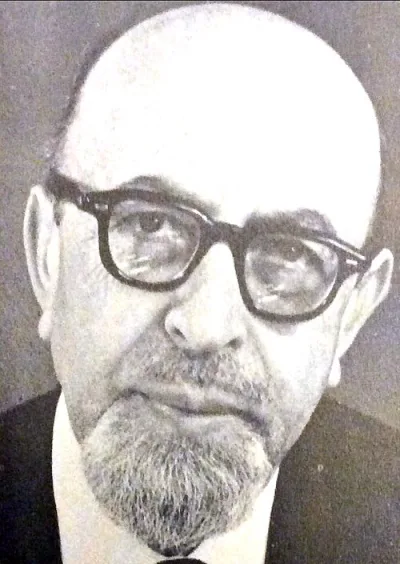
Altmann, Alexander
Alexander Altmann was a leading scholar of Jewish philosophy and mysticism, particularly Moses Mendelssohn.
Alexander Altmann (1906–1987) was an Orthodox Jewish scholar and rabbi renowned for his extensive research into Jewish philosophy and mysticism. Born in Austria-Hungary, he later established a significant academic career in the United States, serving for many years as a professor at Brandeis University. His work is particularly noted for revitalizing the study of Moses Mendelssohn, whom he championed as a profound original philosopher. Altmann also made substantial contributions to understanding Jewish mysticism, often being the sole academic in the U.S. focused on this area during his tenure.
Altmann's early life included rabbinical training and academic pursuits in Germany, culminating in a Ph.D. from the University of Berlin and ordination as a rabbi. He fled Nazi Germany in 1938, eventually settling in England where he served as a communal rabbi and pursued scholarly work, including a translation of Saadia Gaon's "Beliefs and Opinions." He later founded and directed the Institute of Jewish Studies in Manchester before moving to Brandeis University in 1959. Throughout his career, he was dedicated to scholarship, mentoring numerous students, and enriching academic discourse on Jewish thought.
Scholarship on Jewish Mysticism and Philosophy
Alexander Altmann's scholarly legacy is deeply rooted in his profound engagement with Jewish philosophy and mysticism. He is widely recognized as the foremost scholar of Moses Mendelssohn, working to establish Mendelssohn's stature as an original and insightful philosopher rather than merely an Enlightenment popularizer. Beyond Mendelssohn, Altmann also significantly advanced the academic study of Jewish mysticism, an area he pursued with singular dedication for much of his career in the United States. His supervision guided many students who would go on to become influential figures in the field. Altmann's academic journey began with a focus on Max Scheler, but his primary interests evolved to encompass medieval Jewish philosophy and mysticism, seeking to illuminate thinkers often overlooked or misunderstood.
Academic Career and Contributions
Altmann's academic career spanned several decades, beginning in Germany and continuing in England before he joined Brandeis University in 1959. At Brandeis, he held the Philip W. Lown Professorship of Jewish Philosophy and History of Ideas, contributing significantly to the university's intellectual landscape until his retirement in 1976. His work extended beyond teaching and research, as he played a role in acquiring important collections for Brandeis, such as the Vatican Library Hebraica microfilm. Even after retirement, Altmann remained intellectually active, serving as a visiting professor at Harvard and Hebrew University and continuing his scholarly associations. His commitment to learning was lifelong, evidenced by his participation as a student in a Coptic language class in his sixties.
Rabbinical Service and Personal Convictions
Beyond his academic achievements, Altmann served as an Orthodox rabbi for much of his life, including periods in Berlin and Manchester. His experiences in Berlin during the 1930s involved delivering coded messages of encouragement to Jewish congregants facing Nazi persecution, demonstrating his commitment to his community amidst growing threats. After settling in the Boston area, he became an active member of Congregation Shaarei Tefillah, where he continued to deliver sermons and lectures, finding renewed vigor in the synagogue setting. Notably, during his time in Manchester, he advocated for the acceptance of a former German prisoner of war into a local football club, a decision reflecting his personal convictions despite the tragic loss of family members to the Nazi regime.
Books by Altmann, Alexander
0 free public domain books · Read online or download