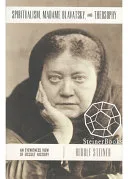
Spiritualism, Madame Blavatsky and Theosophy
 74
74

Spiritualism, Madame Blavatsky and Theosophy
Rudolf Steiner's "Spiritualism, Madame Blavatsky and Theosophy" is less a hagiography and more an intellectual dissection. Steiner, with his characteristic rigor, unpacks the foundational texts and pronouncements of Helena Blavatsky, the formidable architect of modern Theosophy. He doesn't shy away from the complexities or potential contradictions inherent in her vast output, particularly in works like "The Secret Doctrine." The strength lies in Steiner's ability to connect Blavatsky's ideas to broader spiritual currents and his own developing philosophy, offering a unique perspective from within the esoteric milieu. However, for readers unfamiliar with Steiner's later Anthroposophy, the text can sometimes feel like a preamble to a much larger, unstated system. A particularly insightful passage details Steiner's view on the 'elemental beings' Blavatsky described, showing his attempt to translate her imagery into his own cosmic-spiritual framework.
This book serves as a crucial, albeit challenging, examination of Theosophy's genesis.
📝 Description
74
Rudolf Steiner wrote "Spiritualism, Madame Blavatsky and Theosophy" to examine the early Theosophical Society.
Rudolf Steiner's "Spiritualism, Madame Blavatsky and Theosophy" offers an analysis of the nascent Theosophical Society and the significant role of its founder, Helena Blavatsky. Steiner, a figure himself in esoteric philosophy, provides a measured critique of Blavatsky's doctrines and the spiritual currents she fostered. This work is for those deeply interested in esoteric history and the roots of contemporary spiritual thought.
Readers who want a detailed grasp of Theosophy's beginnings, moving past superficial accounts, will find this text valuable. It also appeals to individuals researching the evolution of spiritual ideas during the late 19th and early 20th centuries. Published after Steiner's death, the book reflects the intellectual atmosphere of its time, a period marked by spiritual inquiry and the rise of scientific materialism. Theosophy, established in 1875, represented a distinct alternative.
Steiner's text engages with the late 19th-century spiritual landscape, a time when movements like Theosophy emerged as alternatives to both conventional religion and scientific materialism. Theosophy, founded in 1875 by Helena Blavatsky, Helena Blavatsky, and others, proposed a synthesis of Eastern and Western esoteric traditions. Steiner, who would later develop his own distinct path, Anthroposophy, here addresses Blavatsky's seminal contributions and the philosophical underpinnings of her work. This book offers insight into Steiner's perspective on Blavatsky's foundational influence and the spiritual currents she initiated.
💡 Why Read This Book?
• Gain insight into the foundational Theosophical texts like "The Secret Doctrine" (1888) and their esoteric interpretations by Rudolf Steiner, moving beyond superficial summaries. • Understand the historical milieu of late 19th-century spiritualism and how Helena Blavatsky's movement emerged as a significant intellectual and spiritual force. • Explore Steiner's critical engagement with concepts like karma and reincarnation as presented by Blavatsky, revealing nuances in their early development within Theosophy.
⭐ Reader Reviews
Honest opinions from readers who have explored this book.
❓ Frequently Asked Questions
What is the primary focus of Rudolf Steiner's "Spiritualism, Madame Blavatsky and Theosophy"?
The book focuses on an in-depth analysis of Helena Blavatsky's teachings, her foundational Theosophical texts like "The Secret Doctrine," and the spiritual movements she initiated in the late 19th century.
When was Rudolf Steiner's "Spiritualism, Madame Blavatsky and Theosophy" first published?
Although Steiner wrote extensively on these topics, this specific compilation and analysis was first published in November 2002, presenting his views on Blavatsky and Theosophy.
How does Steiner's perspective differ from a standard historical account of Theosophy?
Steiner offers an insider's esoteric perspective, analyzing the spiritual and cosmic dimensions of Blavatsky's work rather than just historical events. He connects her ideas to his own developing spiritual science.
What are some key Theosophical concepts discussed in the book?
Key concepts include karma, reincarnation, the evolution of consciousness, elemental beings, and the spiritual interpretation of ancient scriptures, as presented and analyzed by both Blavatsky and Steiner.
Is this book suitable for beginners in esoteric studies?
It is more suited for those with some familiarity with Theosophy or Steiner's work. Beginners might find the dense philosophical and spiritual concepts challenging without prior context.
What is the relationship between Steiner and Madame Blavatsky as presented in this work?
Steiner, while acknowledging Blavatsky's significance, critically examines her teachings, often interpreting them through the lens of his own spiritual scientific framework, highlighting both convergences and divergences.
🔮 Key Themes & Symbolism
Theosophical Origins
Steiner meticulously traces the inception of the Theosophical Society in 1875 and the foundational role of Helena Blavatsky. He scrutinizes her primary works, "Isis Unveiled" (1877) and "The Secret Doctrine" (1888), not merely as historical documents but as conduits for spiritual knowledge. The analysis examines the esoteric cosmology and anthropological theories presented by Blavatsky, positioning them within a broader spiritual evolutionary framework.
Spiritual Science vs. Spiritualism
The work distinguishes Steiner's concept of 'Spiritual Science' from the more common phenomena associated with 19th-century Spiritualism. While acknowledging the spiritual currents Blavatsky tapped into, Steiner seeks to frame her teachings within a more rigorous, cosmic evolutionary perspective. He examines the nature of mediumship and psychic phenomena, often contrasting them with the higher spiritual faculties he believed were accessible through conscious development.
Karma and Reincarnation
Steiner provides his unique interpretation of the karmic and reincarnationary cycles as articulated by Blavatsky. He explores how these concepts function within the grand scheme of human and cosmic evolution, moving beyond a purely ethical or personal interpretation. The discussion highlights the intricate interplay of past actions and future destinies on both individual and collective levels, as understood within the Theosophical context.
Blavatsky's Esoteric Legacy
This theme centers on Steiner's assessment of Blavatsky's spiritual authority and the enduring impact of her writings. He addresses the challenges in understanding her complex teachings and the various interpretations that arose. The text serves as a bridge, connecting the vital energy of Blavatsky's initial impulse to the subsequent development of esoteric movements, including Steiner's own Anthroposophy.
💬 Memorable Quotes
Direct passages from the work, attributed to the author.
“Steiner's interpretation of Blavatsky's "The Secret Doctrine."”
— This refers to Steiner's detailed engagement with Blavatsky's main work, analyzing its complex cosmology and evolutionary theories through his own framework of spiritual science.
“The distinction between spiritualism and spiritual science.”
— Steiner emphasizes that true spiritual knowledge (spiritual science) arises from disciplined inner development, differing from phenomena-based spiritualism or mediumship.
“Analysis of karma and reincarnation.”
— The book explores how Blavatsky understood these concepts as fundamental laws governing cosmic and human evolution, a perspective Steiner further elaborates upon.
“The phenomenon of elemental beings in Blavatsky's work.”
— Steiner addresses Blavatsky's references to various spiritual or elemental entities, seeking to place them within a hierarchical cosmic order.
“Steiner's view on Blavatsky's spiritual mission.”
— The work reflects Steiner's considered opinion on Blavatsky's role in reintroducing ancient wisdom to the modern world, while also noting the specific character of her teachings.
🌙 Esoteric Significance
Tradition
This work is deeply rooted in the Theosophical tradition initiated by Helena Blavatsky but filtered through the distinct lens of Rudolf Steiner's Spiritual Science (Anthroposophy). While building upon Theosophical concepts like karma, reincarnation, and root races, Steiner reframes them with his own cosmological understanding and emphasis on individual spiritual development through conscious effort, departing from Blavatsky's more descriptive, often mystical, approach.
Symbolism
Key symbols include the "Root Races," representing stages of planetary and human evolution, and the "Seven Planes of Existence," detailing the many-sided nature of reality beyond the physical. Steiner interprets Blavatsky's complex cosmogony, particularly as detailed in "The Secret Doctrine," as symbolic representations of spiritual processes that can be apprehended through inner spiritual perception and study.
Modern Relevance
Contemporary Anthroposophists and scholars of esoteric history continue to reference Steiner's critique and reinterpretation of Blavatsky. Thinkers interested in the evolution of consciousness, comparative mythology, and the philosophical underpinnings of movements like Theosophy find Steiner's analysis valuable for understanding the lineage of modern esoteric thought and its divergence points.
👥 Who Should Read This Book
• Students of Helena Blavatsky and early Theosophy: Gain a critical, yet deeply informed, perspective on Blavatsky's core teachings and their esoteric underpinnings from a major successor. • Researchers of Rudolf Steiner and Anthroposophy: Understand Steiner's foundational views on Theosophy and how they informed the development of his own spiritual science. • Scholars of comparative religion and esoteric movements: Analyze the intellectual and spiritual currents of the late 19th century and the significant impact of Theosophy on Western esotericism.
📜 Historical Context
Rudolf Steiner's examination of Spiritualism, Madame Blavatsky, and Theosophy originates from a period of intense spiritual inquiry in the late 19th and early 20th centuries. The Theosophical Society, founded in 1875, emerged as a major force, offering a synthesis of Eastern and Western esoteric traditions. Steiner, initially a prominent member and editor within the German branch of the Theosophical Society, later diverged to form his own path, Anthroposophy. This book reflects his mature perspective on Blavatsky's foundational work, written from the vantage point of his independent spiritual science. Key contemporaries included Helena Blavatsky herself, Annie Besant, and later figures like C.W. Leadbeater, all central to Theosophy's development. A significant intellectual current was the rise of scientific materialism, which Theosophy directly challenged. Steiner’s critical engagement with Blavatsky’s extensive writings, particularly "The Secret Doctrine" (1888), places this text within ongoing debates about the nature of consciousness, evolution, and hidden spiritual realities.
📔 Journal Prompts
The concept of "Spiritual Science" as presented by Steiner in relation to Blavatsky's revelations.
Blavatsky's "The Secret Doctrine" and its proposed evolutionary cosmology.
The function of karma and reincarnation within the framework of human spiritual development.
Steiner's interpretation of the challenges and contributions of Madame Blavatsky's work.
The distinction between phenomena of spiritualism and the faculty of spiritual perception.
🗂️ Glossary
Theosophy
A spiritual movement founded in 1875 by Helena Blavatsky, aiming to synthesize Eastern and Western esoteric traditions and explore universal wisdom.
Spiritualism
A religious movement prominent in the 19th century, focused on communication with the spirits of the dead, often through mediums.
Anthroposophy
A spiritual philosophy founded by Rudolf Steiner, often described as a 'spiritual science,' focusing on the development of higher consciousness and understanding the spiritual nature of reality.
Karma
In Theosophical and Indian traditions, the principle of cause and effect governing the cycle of reincarnation, where actions influence future lives.
Reincarnation
The belief that the soul or spirit, after biological death, begins a new life in a new body; a central tenet of Theosophy and Hinduism.
Elemental Beings
Spiritual or semi-physical entities said to inhabit different natural elements (earth, air, fire, water), often mentioned in esoteric literature.
Root Races
A Theosophical concept referring to successive stages of human evolution on Earth, each with distinct physical and spiritual characteristics.