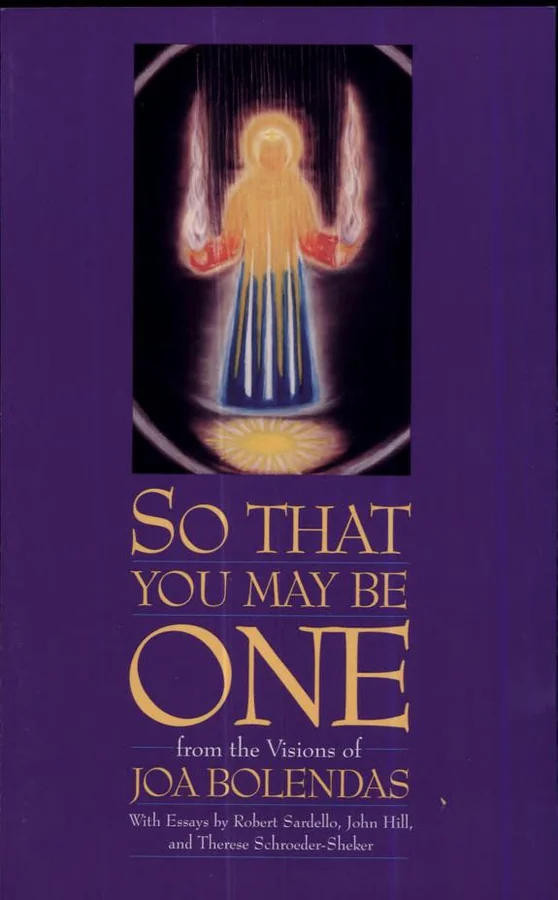
So that You May be One
 71
71

So that You May be One
Joa Bolendas’s "So that You May be One" offers a rare glimpse into a sustained, decades-long dialogue with non-physical intelligences, presented with remarkable restraint. The strength of this work lies in its unvarnished presentation; Bolendas largely avoids the interpretive flourishes that often accompany channeled material, allowing the messages to stand on their own. This fidelity to the raw experience is its greatest asset. However, the lack of interpretation, while honest, can sometimes leave the reader adrift, seeking a framework for the profound, at times abstract, pronouncements. A particularly striking section involves Bolendas’s journal entries detailing the sheer emotional and psychological effort required to remain open to these communications, a powerful counterpoint to the often-sanitized portrayals of spiritual reception. The book serves as a potent, if occasionally demanding, testament to the reality of direct spiritual engagement.
📝 Description
71
Joa Bolendas transcribed spiritual communications between 1957 and 1990.
This book presents direct transcriptions of spiritual communications Joa Bolendas received between 1957 and 1990. Bolendas, a pastor's wife living in Switzerland, recorded these dialogues with non-physical entities without interpretation. The text intersperses these conversations with her personal journal entries, detailing her process of receiving and understanding this information. The work is intended for those studying mediumship, channeled literature, and personal spiritual growth. It will appeal to readers who prefer direct spiritual testimony over commentary and who are interested in the practical experience of receiving spiritual guidance within a conventional life.
It also speaks to individuals exploring the intersection of faith and direct spiritual encounter. Bolendas' experiences took place during a period of heightened interest in parapsychology and spiritualism, aligning with broader European spiritual thought influenced by movements like Theosophy and Anthroposophy. Her personal account offers a unique perspective distinct from more organized spiritual or philosophical systems of the mid-to-late 20th century.
Joa Bolendas' work emerged in the late 20th century, a time when interest in spiritualism and parapsychology was significant. Her experiences occurred within a European context where movements like Theosophy and Anthroposophy continued to shape esoteric thought, and figures like Carl Jung were examining the psyche. This book adds a personal testament to spiritual communication, distinct from academic or formal spiritual organizations, focusing on the direct reception and integration of messages from non-physical entities.
💡 Why Read This Book?
• Gain insight into the unmediated nature of spiritual communication, as documented from 1957 to 1990, offering a direct look at messages without extensive interpretation. • Understand the personal challenges of receiving profound spiritual information, as revealed through Joa Bolendas's journal excerpts, providing a grounded perspective. • Explore the concept of spiritual unity through direct dialogue, as presented in the book's central conversations, fostering a deeper personal reflection on interconnectedness.
⭐ Reader Reviews
Honest opinions from readers who have explored this book.
❓ Frequently Asked Questions
When were the spiritual conversations in "So that You May be One" recorded?
The spiritual conversations documented in "So that You May be One" were recorded over a significant period, spanning from 1957 to 1990.
Where did Joa Bolendas have these spiritual experiences?
Joa Bolendas, the author, experienced and recorded these spiritual visions and conversations while living in Switzerland.
What is the primary focus of the book's content?
The primary focus is the direct transcription of conversations with spiritual beings, presented uninterpreted, alongside the author's personal journal entries about the experience.
Is "So that You May be One" available in its original language?
This edition makes the work available for the first time in English; its original language is not specified but it was first published in 1997.
What distinguishes this book from other channeled works?
Its distinction lies in its unembellished presentation, emphasizing the raw dialogue and the author's personal struggle, without adding layers of interpretation.
Who was Joa Bolendas?
Joa Bolendas was a mother and pastor's wife living in Switzerland who began experiencing spiritual visions and dialogues in 1957.
🔮 Key Themes & Symbolism
Direct Spiritual Dialogue
The book centers on the unmediated transmission of messages from spiritual entities to Joa Bolendas. Unlike theological texts or interpretive commentaries, "So that You May be One" prioritizes the raw transcriptions of these encounters, which occurred over three decades. This approach allows readers direct access to the communications, fostering an understanding of how spiritual guidance might be received and articulated without human intermediaries or doctrinal filters. The unembellished nature of the text is crucial to its esoteric value.
Personal Integration of the Sacred
Interspersed with the channeled dialogues are excerpts from Bolendas' personal journals. These entries illuminate the profound internal process—the struggle, doubt, and eventual acceptance—involved in receiving and holding such extraordinary spiritual information. This theme highlights the human element behind esoteric experience, demonstrating that direct contact with the divine requires significant personal resilience and a willingness to reconcile the sacred with the mundane realities of life as a pastor's wife in Switzerland.
The Nature of Spiritual Beings
The conversations themselves offer a unique perspective on the entities with whom Bolendas communicated. The book presents these beings not through allegorical or anthropomorphic descriptions, but through the content and style of their communications. This focus on the message itself, rather than the messenger's form, invites contemplation on the nature of non-physical consciousness and its capacity for interaction with the human plane. The work implicitly questions traditional conceptions of angelic or divine messengers.
Unity and Divine Connection
The title, "So that You May be One," strongly suggests a central theme of unity and interconnectedness. The spiritual messages likely explore the concept of oneness with the divine, with oneself, and with others. This theme is explored through the direct dialogue, aiming to foster a sense of unity within the reader. The book’s approach suggests that direct spiritual experience is a pathway to realizing this fundamental unity, transcending the perceived separation of the material world.
💬 Memorable Quotes
Direct passages from the work, attributed to the author.
“The conduit was open from 1957 until 1990.”
— This statement, derived from the book's timeframe, signifies the extended and consistent nature of Joa Bolendas's spiritual reception, highlighting a sustained period of direct communication.
💡 Key Ideas
Editorial paraphrase of the work's core concepts — not direct quotes.
The messages that emerged were simple, clear, and without judgment.
This paraphrased concept highlights the unadorned quality of the spiritual communications received by Bolendas, suggesting they were free from complex theological dogma or personal bias, aiming for direct clarity.
I wrestled daily with the weight of these divine encounters.
This paraphrased concept emphasizes the personal struggle and emotional burden Joa Bolendas experienced in processing the profound spiritual information she received, underscoring the human aspect of her journey.
They spoke of a unity that underlies all existence.
This paraphrased concept points to a core message within the spiritual dialogues, focusing on the esoteric principle of interconnectedness and the fundamental oneness that transcends apparent separation.
No interpretation was added; only the words as received.
This paraphrased concept underscores the book's commitment to presenting the raw, unmediated spiritual messages, valuing the direct experience over subsequent analysis or theological framing.
🌙 Esoteric Significance
Tradition
This work aligns with traditions focused on direct divine inspiration and mediumship, akin to certain Gnostic or mystical Christian currents, but eschews formal lineage. It bypasses established hierarchies and interpretive bodies, emphasizing a personal, unmediated connection. The emphasis on simple, direct communication and the concept of unity suggests resonance with Neoplatonic ideals and certain forms of non-dualistic spirituality, presenting a unique, individual path rather than adherence to a specific school.
Symbolism
The title itself, "So that You May be One," serves as a primary symbolic concept, pointing towards the esoteric goal of spiritual unity and integration. The act of communication across different planes of existence symbolizes the bridge between the material and the spiritual, a recurring motif in Hermetic and Gnostic traditions. The journal entries, depicting the personal struggle, symbolize the alchemical process of transforming the mundane self through contact with the divine fire.
Modern Relevance
Contemporary interest in embodied spirituality, somatic practices, and direct inner knowing finds echoes in Bolendas's unvarnished account. Thinkers and practitioners exploring consciousness, mediumship, and the integration of spiritual experiences into daily life may draw parallels. The book's emphasis on unfiltered reception speaks to a modern desire for authenticity and direct experience, cutting through layers of interpretation found in many spiritual or self-help genres, influencing those who seek raw, personal testimonies of the sacred.
👥 Who Should Read This Book
• Students of mediumship and channeled literature seeking examples of uninterpreted spiritual communication, offering a direct contrast to curated or academic works. • Individuals interested in the psychology of spiritual experience, particularly those who value personal accounts of integrating profound encounters into ordinary life. • Seekers exploring esoteric themes of unity and direct connection with the divine, who appreciate raw, personal testimony over dogmatic or systematic teachings.
📜 Historical Context
Joa Bolendas's "So that You May be One" emerged from a period of intense spiritual and psychological exploration in the 20th century. The decades spanning 1957 to 1990 witnessed continued interest in the works of figures like Carl Jung, whose theories on archetypes and the collective unconscious offered frameworks for understanding profound inner experiences. In Europe, movements like Anthroposophy, founded by Rudolf Steiner, provided alternative spiritual philosophies. Bolendas's work offers a personal, unmediated counterpoint to more structured esoteric systems or academic parapsychology. While not directly engaging with contemporaries in public discourse, her experiences align with a broader late-20th-century re-examination of consciousness and spirituality, distinct from mainstream religious dogma and often operating outside the circles of established Western esoteric orders.
📔 Journal Prompts
Reflect on the concept of 'unity' as presented in the dialogues.
Consider the personal struggle Joa Bolendas documented in her journal entries.
Analyze the uninterpreted nature of the spiritual messages received.
Explore the implications of direct spiritual communication without intermediaries.
What does the timeframe of the conversations (1957-1990) suggest about enduring spiritual connection?
🗂️ Glossary
Spiritual Beings
Non-physical entities or intelligences with whom Joa Bolendas communicated, described through their messages rather than physical form.
Uninterpreted Conversations
The direct transcriptions of dialogues presented in the book, intentionally lacking authorial or external analysis, preserving the raw content of the spiritual messages.
Journal Entries
Personal writings by Joa Bolendas included in the book, detailing her subjective experience, struggles, and reflections on receiving spiritual communications.
Spiritual Conduit
Refers to Joa Bolendas's role as a channel or medium through which spiritual communications were received and recorded.
Unity
A central theme suggested by the title, representing spiritual interconnectedness, oneness with the divine, and the dissolution of perceived separation.
Direct Experience
Emphasis on encountering the spiritual realm without mediation, filters, or layers of dogma, as exemplified by the book's presentation.
Pastor's Wife
Joa Bolendas's social and familial role, providing context for the grounding of her extraordinary spiritual experiences within a conventional life in Switzerland.
This book appears in 1 collection
🔮 Readers Also Liked
Browse all →









From the “Visions” Collection
View all →

More Free Occult Philosophy Books
View all →