Ancient Empires of the New Age
 80
80

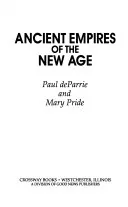
Ancient Empires of the New Age
Paul DeParrie and Mary Pride's 1989 examination, Ancient Empires of the New Age, attempts to chart the trajectory of emergent esoteric thought and its societal implications. The authors posit a compelling theory regarding the inherent instability of empires founded on what they term "New Age beliefs," suggesting a pattern of rapid ascent followed by inevitable collapse. Their tracing of "New Age thinking" from its roots in esoteric traditions to its public emergence in post-war America provides a valuable historical snapshot. A particular strength lies in their contextualization of various spiritual movements of the 1970s and 80s, identifying common threads and divergence points. However, the work sometimes falters in its analytical depth, occasionally leaning on broad generalizations rather than nuanced deconstruction of specific belief systems. The concept of "empires" themselves, while metaphorical, could benefit from more rigorous definition within the New Age context. Despite these limitations, the book remains a useful, if somewhat dated, survey for those interested in the sociology of esoteric movements.
📝 Description
80
Paul DeParrie and Mary Pride's 1989 book examines societal belief systems and their cyclical rise and fall.
Ancient Empires of the New Age, published in 1989, analyzes how emerging New Age philosophies influenced societal belief systems in America and other Western nations during the latter half of the 20th century. The authors trace the development and effects of these ideologies.
The book suits readers interested in the history of alternative spiritual movements, comparative mythology, and the sociology of belief. It offers insights into the historical precedents of contemporary esoteric thought. Students of occult history and cultural studies will find its analytical approach useful.
This work addresses the 1980s resurgence of esoteric and New Age concepts, which moved from fringe groups into wider cultural discussions. This era saw many attempts to blend ancient wisdom with modern science and psychology. DeParrie and Pride provide a critical view of these trends, placing them within historical patterns of societal change.
The book engages with the cultural currents of the 1980s, a time when New Age ideas saw wider adoption. DeParrie and Pride analyze this phenomenon, treating "New Age thinking" as a mix of Theosophy, Gnosticism, and Eastern mysticism. They examine how these ideas, when integrated into societal structures, can lead to periods of growth followed by decline, often due to internal issues or external pressures.
💡 Why Read This Book?
• Understand the cyclical patterns of belief-driven societal structures, informed by the book's analysis of empires from the 1970s and 1980s. • Gain insight into the specific historical emergence of "New Age thinking" in Western nations, referencing its appearance in America. • Explore the inherent tensions within synthesizing diverse esoteric traditions, as detailed in the book's examination of societal belief systems.
⭐ Reader Reviews
Honest opinions from readers who have explored this book.
❓ Frequently Asked Questions
What historical period does "Ancient Empires of the New Age" primarily focus on regarding the rise of New Age thinking?
The book primarily focuses on the latter half of the 20th century, specifically examining the emergence and impact of New Age thinking in America and other Western nations during the 1970s and 1980s.
What is the central argument about "New Age beliefs" in the book?
The central argument is that ancient and modern empires built upon "New Age beliefs" tend to grow rapidly but ultimately decline, suggesting an inherent instability within such systems.
Who are the authors of "Ancient Empires of the New Age"?
The authors are Paul DeParrie and Mary Pride. The book was first published in 1989.
What kind of societal structures does the book analyze?
The book analyzes societal structures and belief systems that were influenced by what the authors define as "New Age thinking," tracing their growth and eventual dissolution.
What intellectual currents does the book engage with?
The book engages with intellectual currents related to esoteric traditions, alternative spirituality, and the sociology of belief systems prevalent in the late 20th century.
What is the main takeaway regarding the history of esoteric thought?
The main takeaway is that the historical trajectory of esoteric thought, particularly its manifestation in broader societal movements during the 1980s, follows discernible patterns of influence and eventual transformation.
🔮 Key Themes & Symbolism
Societal Cycles of Belief
The work explores the recurring phenomenon of societies forming around specific belief systems, termed "New Age thinking" by the authors. It posits that these empires, characterized by rapid expansion fueled by unifying ideologies, contain the seeds of their own demise. This cyclical pattern, observed from ancient times to the late 20th century, highlights the inherent challenges in sustaining structures built on fluid or evolving spiritual paradigms. The analysis suggests that while these beliefs can foster initial cohesion and growth, their very nature often leads to eventual fragmentation or collapse.
Emergence of New Age Ideologies
Ancient Empires of the New Age traces the outbreak and proliferation of what is identified as "New Age thinking" within Western nations, particularly America, during the latter half of the 20th century. This section examines the sources and influences of these ideas, which often blend esoteric traditions, Eastern philosophies, and modern psychological concepts. The book details how these distinct currents coalesced into a discernible cultural force, influencing various social movements and spiritual explorations of the era.
The Instability of Esoteric Empires
A core theme is the examination of why empires or significant societal movements based on esoteric or "New Age" principles tend to be transient. The authors analyze the factors contributing to their growth, such as charismatic leadership and appealing spiritual narratives, but also examine the reasons for their eventual decline. This includes internal ideological schisms, the difficulty of institutionalizing fluid spiritual concepts, and the challenges of integrating such movements with established societal norms. The work offers a critical lens on the longevity of belief-driven structures.
Comparative Historical Analysis
The book employs a comparative historical approach, drawing parallels between ancient civilizations and contemporary movements. By examining historical empires and juxtaposing them with the developments of "New Age thinking" in the late 20th century, the authors seek to identify universal patterns in the rise and fall of societies. This methodology allows for a broader understanding of how belief systems shape human organization and how their influence waxes and wanes over time.
💬 Memorable Quotes
Direct passages from the work, attributed to the author.
“Empires based on New Age beliefs grew and then died.”
— This concise statement expresses the book's central thesis: that societal structures built around what the authors define as "New Age thinking" are inherently prone to cyclical patterns of growth followed by collapse.
“The outbreak of New Age thinking in America and other Western nations.”
— This phrase highlights the book's focus on the historical tracing of specific ideological currents, particularly their dissemination and impact within a defined geographical and temporal context during the late 20th century.
“The cyclical nature of belief-driven societal growth and decay.”
— This interpretation points to the book's overarching theme of analyzing how belief systems, particularly those identified as 'New Age,' influence the trajectory of civilizations, leading them through phases of expansion and eventual contraction.
“The underlying causes for the dissolution of esoteric-based societies.”
— This refers to the book's critical examination of the factors that lead to the decline of societies whose foundations lie in esoteric or 'New Age' principles, looking beyond simple narrative to systemic issues.
💡 Key Ideas
Editorial paraphrase of the work's core concepts — not direct quotes.
Ancient empires that mirrored modern spiritual movements.
This paraphrased concept suggests the book's methodology involves drawing parallels between historical civilizations and contemporary esoteric or spiritual trends, looking for common developmental or structural patterns.
🌙 Esoteric Significance
Tradition
While not strictly adhering to a single lineage, "Ancient Empires of the New Age" engages with the broader currents of Western Esotericism and the more recent "New Age" movement, which itself draws eclectically from Theosophy, Gnosticism, Hermeticism, and Eastern philosophies. The work fits within a tradition of critical analysis of spiritual movements, seeking to understand their societal impact and inherent structures rather than solely promoting their doctrines.
Symbolism
The work implicitly engages with symbols of cyclicality and societal transformation, common in esoteric thought. The "empire" itself serves as a symbol for any large-scale societal construct built on shared belief. The concept of "New Age thinking" can be seen as representing a modern manifestation of perennial philosophical ideas, often symbolized by cyclical cosmologies and the concept of recurring ages (like the Age of Aquarius).
Modern Relevance
Contemporary discussions on the sociology of spirituality, the influence of online spiritual communities, and the analysis of emergent belief systems echo the concerns raised in DeParrie and Pride's work. Thinkers analyzing the fragmentation of modern spiritual landscapes or the dynamics of cultic studies might find its historical framing useful, particularly in understanding the patterns of growth and dissolution observed in earlier New Age movements.
👥 Who Should Read This Book
• Students of cultural history and sociology of religion seeking to understand the societal impact of esoteric movements in the late 20th century. • Researchers interested in the intellectual lineage and practical manifestations of "New Age thinking" from the 1970s and 1980s. • Individuals exploring the historical patterns of belief-driven societies and the challenges of their long-term sustainability.
📜 Historical Context
Published in 1989, Ancient Empires of the New Age emerged during a period of significant popular interest in esoteric and New Age philosophies, a trend that had been gaining momentum throughout the 1970s and 1980s. This era saw a broad cultural engagement with concepts drawn from Theosophy, Eastern religions, and various forms of occultism, often synthesized into new spiritual frameworks. Thinkers like Marilyn Ferguson, with her influential 1980 book "The Aquarian Conspiracy," captured this zeitgeist, highlighting a perceived societal "shift." DeParrie and Pride's work offered a more critical, historical perspective on these developments, questioning the long-term viability of movements heavily influenced by these ideas. Their analysis stood in contrast to more celebratory accounts, framing the "New Age" not as a utopian future but as a recurring historical phenomenon with inherent limitations. The work engaged with intellectual currents that were exploring the sociology of religion and alternative spiritualities, a field that also saw contributions from scholars examining the growth of new religious movements.
📔 Journal Prompts
The outbreak of New Age thinking in America and its societal structures.
Ancient empires and their relation to belief systems.
The cyclical nature of societal growth and decay.
Factors contributing to the dissolution of esoteric-based societies.
The historical trajectory of "New Age beliefs" in Western nations.
🗂️ Glossary
New Age thinking
A term used by the authors to describe a confluence of spiritual, esoteric, and alternative belief systems that gained prominence in Western nations during the latter half of the 20th century, often blending Eastern philosophies with Western occult traditions.
Empires
In this context, "empires" refers metaphorically to significant societal structures, movements, or cultural phenomena that coalesce around a particular set of beliefs or ideologies, exhibiting periods of growth and eventual decline.
Societal belief systems
The underlying frameworks of ideas, values, and doctrines that inform the organization, behavior, and collective understanding of a society or a significant group within it.
Esoteric traditions
Systems of thought and practice, often secret or mysterious, that explore hidden knowledge concerning the nature of reality, the human condition, and the cosmos, typically passed down through initiation or specialized study.
Cyclical patterns
Recurring sequences of events or phases observed in history, nature, or human affairs, suggesting a non-linear progression and a tendency towards repetition or renewal.
Western nations
Refers primarily to countries in Europe and North America, particularly those where the influence of "New Age thinking" was notably observed and analyzed by the authors in the post-World War II era.
Ideological currents
Streams of thought, doctrines, or belief systems that flow through society, influencing public opinion, cultural trends, and the formation of social movements.
This book appears in 1 collection
🔮 Readers Also Liked
Browse all →








From the “Spirit Guides” Collection
View all →








More Free Occult Philosophy Books
View all →