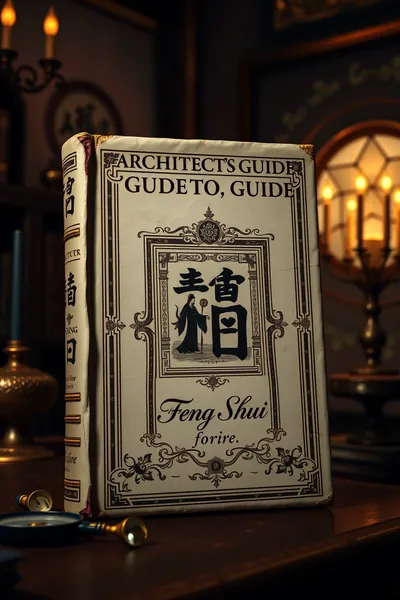
Authentic Feng Shui

 77
77

Authentic Feng Shui
Victorio Hua WongSengTian's "Authentic Feng Shui" presents a rigorous exploration of Chinese geomancy, a welcome departure from many modern, simplified guides. The author's commitment to classical principles is evident throughout, particularly in the detailed explanation of the Lo Shu Square's application to landscape analysis. This isn't a book for those seeking quick aesthetic fixes; it demands careful study. However, the dense prose, while scholarly, occasionally hinders accessibility. A passage detailing the precise calculations for determining auspicious water flow, for instance, requires significant prior knowledge to fully grasp. Despite this, the work's strength lies in its unwavering dedication to historical accuracy and its refusal to dilute complex theories for popular consumption. "Authentic Feng Shui" offers a robust, if challenging, foundation for understanding true geomantic practice.
📝 Description
77
Victorio Hua WongSengTian's 1993 book, Authentic Feng Shui, details classical Chinese environmental harmony.
Published in 1993, Authentic Feng Shui by Victorio Hua WongSengTian examines the classical Chinese art of environmental harmony. The book moves past superficial interpretations to focus on the core principles and practices that have informed Chinese geomancy for centuries. It discusses the connection between human living spaces and the natural world, with an emphasis on the flow of vital energy, or Qi, and how this energy affects well-being and prosperity.
This text is for dedicated students of Feng Shui, practitioners who wish to understand its classical foundations more deeply, and scholars interested in the historical and philosophical aspects of Chinese geomancy. It is not an introductory guide promising quick solutions but a thorough resource for those committed to mastering the discipline. Readers who value careful research and a balanced perspective on esoteric traditions will find this book especially useful.
The practice of Feng Shui has ancient roots in Chinese cosmology and the principles of Yin and Yang. By 1993, global interest in Feng Shui had grown, often through Western adaptations. WongSengTian's work acts as a counterpoint, aiming to reintroduce original, more complex methods from dynasties like the Han and Tang, which used astronomical observations and landscape analysis.
Authentic Feng Shui situates itself within the long tradition of Chinese geomancy, a practice rooted in ancient cosmology and the observation of natural forces. It aims to present the discipline's classical methodologies, particularly those developed during periods like the Han and Tang dynasties. These methods involved sophisticated analysis of landscapes and astronomical patterns to harmonize human environments with the natural world, emphasizing the flow of vital energy (Qi). The book seeks to provide a deeper understanding of these traditional practices.
💡 Why Read This Book?
• Gain an understanding of the Five Elements (Wu Xing) as presented in classical Chinese cosmology, moving beyond their popular, simplified interpretations. • Learn about the historical development of Feng Shui, understanding its roots in ancient Chinese astronomy and landscape analysis predating modern adaptations. • Grasp the foundational principles of the Lo Shu Square and its practical application in geomantic assessments as detailed in the book's early chapters.
⭐ Reader Reviews
Honest opinions from readers who have explored this book.
❓ Frequently Asked Questions
When was Victorio Hua WongSengTian's "Authentic Feng Shui" first published?
The book "Authentic Feng Shui" by Victorio Hua WongSengTian was first published in 1993, aiming to present classical Chinese geomancy principles.
What is the primary focus of "Authentic Feng Shui"?
The book focuses on the classical principles and foundational practices of Feng Shui, emphasizing the flow of Qi and the relationship between environment and well-being.
Does "Authentic Feng Shui" offer quick fixes for home decor?
No, "Authentic Feng Shui" is intended for serious students and practitioners, offering a deep dive into historical and complex methodologies rather than superficial solutions.
What are some key concepts explored in the book?
Key concepts include the Five Elements (Wu Xing), Yin-Yang duality, the Bagua, and the Lo Shu Square, detailing their interaction and environmental influence.
Who is the intended audience for this book?
The intended audience includes serious students of Feng Shui, practitioners seeking classical knowledge, and scholars of Chinese esoteric traditions.
How does "Authentic Feng Shui" differ from modern interpretations?
It emphasizes historical accuracy and complex methodologies from dynasties like Han and Tang, contrasting with more simplified, globally adapted versions of Feng Shui.
🔮 Key Themes & Symbolism
Classical Geomancy Principles
This work meticulously reconstructs the core tenets of Feng Shui as practiced historically, moving beyond popular adaptations. It details the intricate calculations and landscape analyses derived from ancient Chinese cosmological understandings, emphasizing the vital energy (Qi) that permeates all environments. The book stresses that true geomancy involves a deep understanding of natural forces, not merely aesthetic adjustments, grounding its teachings in principles established during significant Chinese dynasties.
The Five Elements and Yin-Yang
Central to "Authentic Feng Shui" is a thorough exposition of the Five Elements (Wu Xing) and the dynamic interplay of Yin and Yang. WongSengTian explains how these fundamental forces manifest in the natural world and within constructed spaces, influencing health, prosperity, and harmony. The text illustrates their cyclical relationships and the importance of balancing their energies for auspicious outcomes, offering a scholarly perspective on these foundational Taoist concepts.
Lo Shu Square and Bagua
The book provides an in-depth analysis of the Lo Shu Square, a mystical diagram that forms the basis for many Feng Shui applications, and the Eight Trigrams (Bagua). It elucidates how these tools are used to map energetic patterns, interpret directional influences, and understand the complex interactions between time and space in geomantic practice. Readers are guided through the historical significance and practical deployment of these ancient symbolic systems.
Environmental Harmony and Qi Flow
A dominant theme is the cultivation of environmental harmony through the mindful management of Qi. WongSengTian details how the physical layout of land and buildings affects the circulation of this vital energy. The text explores how site selection, building orientation, and internal design elements can either promote or obstruct the beneficial flow of Qi, thereby impacting the well-being and fortunes of inhabitants.
💬 Memorable Quotes
Direct passages from the work, attributed to the author.
“The true art of Feng Shui lies in understanding the inherent energies of a site.”
— This statement emphasizes that authentic geomancy is not about imposing artificial designs but about discerning and working with the natural energetic patterns already present in a location.
“The Five Elements cycle dictates the ebb and flow of prosperity.”
— This highlights the core Taoist concept that the relationships between Wood, Fire, Earth, Metal, and Water are crucial for manifesting abundance and ensuring smooth transitions in life's affairs.
“Yin and Yang must be balanced, not one dominating the other.”
— This interpretation stresses the necessity of equilibrium between complementary opposites—passive and active, dark and light—for creating harmonious and stable environments and situations.
“Harmonizing with Qi ensures auspicious outcomes.”
— This concept underscores the fundamental goal of Feng Shui: to align human habitations with the vital life force (Qi) to foster positive results and well-being.
💡 Key Ideas
Editorial paraphrase of the work's core concepts — not direct quotes.
The Lo Shu Square is a map of cosmic influence.
This paraphrase suggests that the Lo Shu Square is more than a diagram; it's a symbolic representation that helps practitioners interpret and align with universal forces affecting a given space or time.
🌙 Esoteric Significance
Tradition
This work is deeply rooted in the Taoist tradition, forming a central to classical Chinese esoteric practices. It aligns with the Hermetic principle of "As Above, So Below" by positing that the energetic patterns of the cosmos are reflected in the terrestrial landscape and human habitations. WongSengTian's approach emphasizes the practical application of cosmological principles, distinguishing it from more purely philosophical or meditative esoteric systems.
Symbolism
Key symbols include the Lo Shu Square, a nine-star grid that maps directional influences and temporal energies, and the Bagua, eight trigrams representing fundamental natural forces and archetypes. These symbols are not merely decorative but function as analytical tools, used to decode the energetic signatures of a site and guide the placement of elements for optimal Qi flow and harmony.
Modern Relevance
Contemporary practitioners and scholars of geomancy, particularly those focused on historical accuracy and classical methodologies, draw heavily from works like WongSengTian's. It informs modern approaches that seek to move beyond superficial trends, reconnecting with the sophisticated analytical frameworks developed in ancient China. Thinkers focusing on environmental psychology and sustainable design also find value in its principles of energetic alignment.
👥 Who Should Read This Book
• Students of classical Chinese metaphysics: Those seeking to understand the historical and philosophical underpinnings of Feng Shui beyond contemporary adaptations will find a rigorous academic treatment. • Dedicated Feng Shui practitioners: Individuals looking to deepen their practice by grounding it in authentic, ancient methodologies and analytical tools like the Lo Shu Square. • Scholars of esoteric traditions: Researchers interested in comparative studies of geomancy, environmental spirituality, and the intersection of cosmology and place-making in East Asian cultures.
📜 Historical Context
Published in 1993, Victorio Hua WongSengTian's "Authentic Feng Shui" emerged during a period of intense global interest in the practice, often fueled by Westernized interpretations. This work sought to anchor the discipline in its classical roots, referencing methodologies developed over centuries, particularly during the Han (206 BCE – 220 CE) and Tang (618 – 907 CE) dynasties. At a time when simplified 'curative' techniques were gaining traction, WongSengTian's book stood apart by emphasizing rigorous landscape analysis and cosmological principles. Its publication offered a scholarly counterpoint to more accessible, but less historically grounded, guides that proliferated in the late 20th century, engaging with the broader academic and practitioner communities interested in traditional Chinese arts and sciences.
📔 Journal Prompts
Reflect on the principles of Qi flow as described in relation to site selection.
Consider the cyclical interactions of the Five Elements and their potential impact on your environment.
Analyze how the duality of Yin and Yang might be represented in a space you know well.
Explore the symbolic meaning of the Bagua in the context of your personal life.
Examine the historical development of Feng Shui as presented in the text.
🗂️ Glossary
Qi (Chi)
The vital life force or energy that flows through all things and environments, central to Feng Shui and traditional Chinese medicine.
Wu Xing
The Five Elements: Wood, Fire, Earth, Metal, and Water. Their cyclical generation and destruction govern natural processes and are key to Feng Shui analysis.
Yin and Yang
The fundamental Taoist concept of complementary, interdependent opposites (e.g., dark/light, passive/active) whose balance is crucial for harmony.
Bagua
The Eight Trigrams, derived from the I Ching, representing fundamental natural forces and archetypes, used in Feng Shui to map directional energies.
Lo Shu Square
A magic square of nine numbers arranged in a 3x3 grid, used in Feng Shui for analyzing directional influences, time cycles, and environmental energies.
Geomancy
The art and practice of divining or interpreting the earth's energies, particularly as applied to the placement and design of buildings and landscapes.
Auspicious
Suggesting future success; favorable or conducive to good fortune, as determined by the principles of Feng Shui.
This book appears in 1 collection
🔮 Readers Also Liked
Browse all →









From the “Geomancy” Collection
View all →







More Free Occult Philosophy Books
View all →