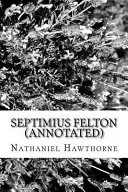
Septimius Felton (Annotated)
 71
71

Septimius Felton (Annotated)
Hawthorne's exploration of immortality in Septimius Felton is less a triumphant quest and more a somber meditation on its profound isolating effects. The titular character, Septimius, becomes a vessel for the author's anxieties about life's finite nature, a poignancy amplified by Hawthorne's own failing health during its composition. The narrative, while occasionally meandering, excels in its depiction of how the promise of unending years can corrode the present. One particularly arresting passage details Septimius's growing detachment from the world, an almost spectral existence born from his unique burden. However, the supporting characters sometimes feel underdeveloped, serving more as allegorical figures than fully realized individuals. Despite this, the novel remains a powerful, albeit somber, contemplation of humanity's oldest desire.
Septimius Felton offers a somber, introspective examination of immortality's true cost.
📝 Description
71
Nathaniel Hawthorne's final completed novel, Septimius Felton, was published in 1872.
Septimius Felton, or The Elixir of Life, follows its titular character, who possesses a potion promising eternal life. This discovery, however, leads Septimius into a complex web of moral and existential questions. He must confront the consequences of his unique inheritance and the hidden truths behind its creation.
The novel was published in 1872, a time when scientific and philosophical discussions about life and death were prominent. The late Victorian era also saw a rise in interest in spiritualism and the nature of consciousness. Hawthorne, writing not long before his own death, infused the story with a sense of urgency regarding the human drive to overcome mortality, a theme echoed by writers like Edgar Allan Poe.
This annotated edition is for readers interested in late 19th-century American literature, especially Hawthorne's body of work. It will appeal to those drawn to explorations of mortality, longevity, and the philosophical challenges associated with the quest for unending existence. Students of American Romanticism and Gothic literature will find its thematic depth particularly rewarding.
Published in 1872, Septimius Felton engages with a late Victorian fascination with spiritualism and the potential for transcending natural life. The novel grapples with concepts of immortality and longevity, reflecting a broader cultural interest in the boundaries of human existence and the possibility of alchemical or supernatural means to extend life. Hawthorne's exploration touches upon the inherent moral and psychological burdens that accompany such pursuits, situating it within a tradition of speculative fiction concerned with the darker implications of forbidden knowledge and unnatural existence.
💡 Why Read This Book?
• Understand the philosophical weight of eternal life through Septimius's internal conflict, a concept explored in depth as he confronts the consequences of the elixir. • Gain insight into late 19th-century anxieties about mortality and longevity, a period marked by scientific curiosity and spiritualist movements, as reflected in the 1872 publication. • Analyze Hawthorne's symbolic use of the elixir of life, a potent motif representing unattainable desires and their corrupting influence on the soul.
⭐ Reader Reviews
Honest opinions from readers who have explored this book.
❓ Frequently Asked Questions
When was Septimius Felton first published?
Septimius Felton, or The Elixir of Life, was first published in 1872, shortly after Nathaniel Hawthorne's death.
What is the central theme of Septimius Felton?
The central theme revolves around the pursuit and consequences of immortality, exploring its philosophical, psychological, and moral implications for the individual.
What is the significance of the elixir in the novel?
The elixir represents the human desire for eternal life, but also the potential burden, isolation, and corruption that such a state could bring.
Is Septimius Felton related to Hawthorne's other works?
Yes, it is one of Hawthorne's later novels that continues his engagement with themes of mortality, sin, and the supernatural, similar to works like 'The Scarlet Letter'.
Who is the protagonist of Septimius Felton?
The protagonist is Septimius, a character who discovers or possesses an elixir granting immortality, and who must then grapple with its profound implications.
What kind of reader would enjoy Septimius Felton?
Readers interested in classic American literature, Gothic fiction, philosophical explorations of life and death, and Nathaniel Hawthorne's unique literary style would find this novel compelling.
🔮 Key Themes & Symbolism
The Burden of Immortality
The novel dissects the concept of eternal life not as a blessing, but as a profound curse. Septimius's unending existence isolates him from human connection, transforming him into a spectral observer of time's passage. This is not the vibrant, unending future often idealized, but a stagnant, lonely present that stretches into an unbearable infinity. The narrative questions whether the human psyche can truly endure such a state without succumbing to madness or a complete loss of identity. The weight of centuries presses down, making each passing moment an echo of the last.
Inherited Guilt and Secrets
Septimius Felton explores the lingering impact of past actions and hidden knowledge. The possession of the elixir is tied to a lineage burdened by secrets, suggesting that immortality itself is a legacy tainted by the sins of ancestors. This theme of inherited guilt, a recurring element in Hawthorne's oeuvre, suggests that no individual can escape the moral repercussions of their family's history. The elixir's origins are shrouded in mystery and possibly iniquity, linking Septimius's eternal life to an unspoken ancestral crime.
The Corrupting Nature of Desire
Fundamentally, the novel serves as a cautionary tale about the human yearning for that which is beyond our natural scope. The elixir, a symbol of ultimate desire, ultimately leads to Septimius's spiritual decay. It highlights how the pursuit of an abstract ideal, such as perpetual existence, can warp one's perception of reality and erode moral integrity. The story suggests that true fulfillment lies not in transcending the human condition, but in embracing its inherent limitations and transience.
The Elixir as a Metaphor
The titular elixir is more than just a magical potion; it functions as a potent metaphor for any all-consuming desire or unattainable goal. Whether it's wealth, power, or the very negation of death, the relentless pursuit can lead individuals away from genuine happiness and ethical living. The elixir's promise of an endless life underscores the futility and danger of seeking to escape the natural cycle of existence, presenting it as a force that ultimately diminishes rather than enhances life.
💬 Memorable Quotes
Direct passages from the work, attributed to the author.
“The elixir was a secret, and secrets are often heavier than any earthly burden.”
— This aphorism speaks to the psychological toll of hidden knowledge. The promise of immortality, tied to a concealed truth, becomes a crushing weight on Septimius's soul.
“To live forever was to cease truly living.”
— A paradoxical statement that gets to the heart of the novel's critique of immortality. It suggests that the finite nature of human life is what gives it meaning and value.
“His immortality was a gilded cage, keeping him from the warmth of the sun.”
— This metaphor vividly illustrates the isolating nature of Septimius's condition. His eternal life, though seemingly a privilege, traps him, preventing him from experiencing the natural joys and connections of mortal existence.
“The past was his only companion, the future an unwelcome stranger.”
— This highlights Septimius's detachment from the present and his inability to look forward with anticipation. His existence is defined by what has already transpired, rendering him stagnant.
💡 Key Ideas
Editorial paraphrase of the work's core concepts — not direct quotes.
He had lived so long that the present was but a faint echo of the past.
This line captures the existential dread of unending life, suggesting that for Septimius, the present moment loses its vitality and meaning, becoming merely a repetition of historical events.
🌙 Esoteric Significance
Tradition
While not explicitly tied to a single esoteric lineage, *Septimius Felton* speaks to themes found in Hermeticism and Alchemy, particularly the pursuit of the Elixir of Life. The novel deconstructs the alchemical ideal of immortality, presenting it not as a spiritual apotheosis but as a potential source of profound suffering and existential dread. It departs from traditional alchemical narratives by focusing on the psychological and moral decay rather than the transmutational power of the elixir, framing it as a cautionary tale against unnatural prolongation of life.
Symbolism
The primary symbol is the 'Elixir of Life,' representing the ultimate human desire for immortality. In an esoteric context, it symbolizes the alchemical Main work, the Great Work, which in this novel is shown to be fraught with peril. The 'ancient house' where Septimius resides can symbolize the decaying vessel of the mortal body, burdened by ancestral secrets. The recurring motif of 'blood' and lineage ties the elixir's power to inherited destiny and guilt, a common trope in occult lore where lineage can carry significant spiritual or karmic weight.
Modern Relevance
Contemporary explorations of transhumanism and life-extension technologies echo the core questions posed by *Septimius Felton*. Thinkers and practitioners in fields like bioethics and futurism grapple with the ethical implications of artificially extending human life, mirroring Septimius's own dilemmas. The novel's critique of unchecked desire and the pursuit of ultimate control over life and death remains relevant to modern technological ambitions, prompting reflection on what it truly means to live a meaningful existence beyond mere biological continuity.
👥 Who Should Read This Book
• Students of American Gothic literature seeking to understand Hawthorne's late-career thematic concerns regarding mortality and the supernatural. • Aspiring alchemists and Hermetic philosophers interested in a literary deconstruction of the Elixir of Life mythos and its potential pitfalls. • Readers fascinated by existential philosophy and the psychological toll of isolation, particularly those drawn to explorations of immortality's dark side.
📜 Historical Context
Published in 1872, Nathaniel Hawthorne's *Septimius Felton* emerged in an era fascinated by scientific progress and the mysteries of life and death. The late Victorian period saw a surge in spiritualism and debates on human longevity, fueled by advancements in medicine and biology. Hawthorne, writing this novel shortly before his own passing in 1864, tapped into a profound personal and societal anxiety about mortality. The work engages with the Romantic and Gothic traditions, common in American literature of the time, exploring the darker psychological consequences of human desires. While not directly engaging with a specific philosophical movement like Transcendentalism in this particular work, its exploration of the individual's struggle against natural limits and the burden of hidden knowledge aligns with broader currents of American Romanticism's introspection. The novel’s themes of inherited sin and the supernatural also echo the concerns of authors like Edgar Allan Poe, though Hawthorne's approach is generally more allegorical and less overtly sensational.
📔 Journal Prompts
The weight of the elixir, as a secret burden.
Septimius's detachment from the present moment.
The corrupting influence of the desire for eternal life.
Reflecting on the concept of 'living forever' as presented in the novel.
Ancestral secrets and their impact on Septimius's existence.
🗂️ Glossary
Elixir of Life
A mythical potion, often associated with alchemy, believed to grant immortality or eternal youth. In the novel, it is the source of Septimius's unnatural longevity and his subsequent existential torment.
Immortality
The quality of being eternal or living forever. The novel explores the psychological and moral consequences of achieving immortality, questioning its desirability.
Inherited Guilt
The concept that guilt or responsibility for past actions can be passed down through generations. This theme is central to the mysterious origins of Septimius's power.
Existential Dread
A profound sense of anxiety arising from the contemplation of human existence, freedom, and the meaning of life. Septimius experiences this intensely due to his prolonged existence.
Gothic Literature
A genre characterized by elements of horror, death, and gloom, often featuring supernatural events, psychological terror, and decaying settings. Hawthorne is a key figure in American Gothic.
Alchemy
An ancient practice involving the transformation of matter, often associated with the search for the Philosopher's Stone and the Elixir of Life. The novel engages with these themes allegorically.
Transcendentalism
A philosophical and literary movement emphasizing intuition, the inherent goodness of people and nature, and self-reliance. While not directly espoused, Hawthorne's work often engages with its counterpoints.