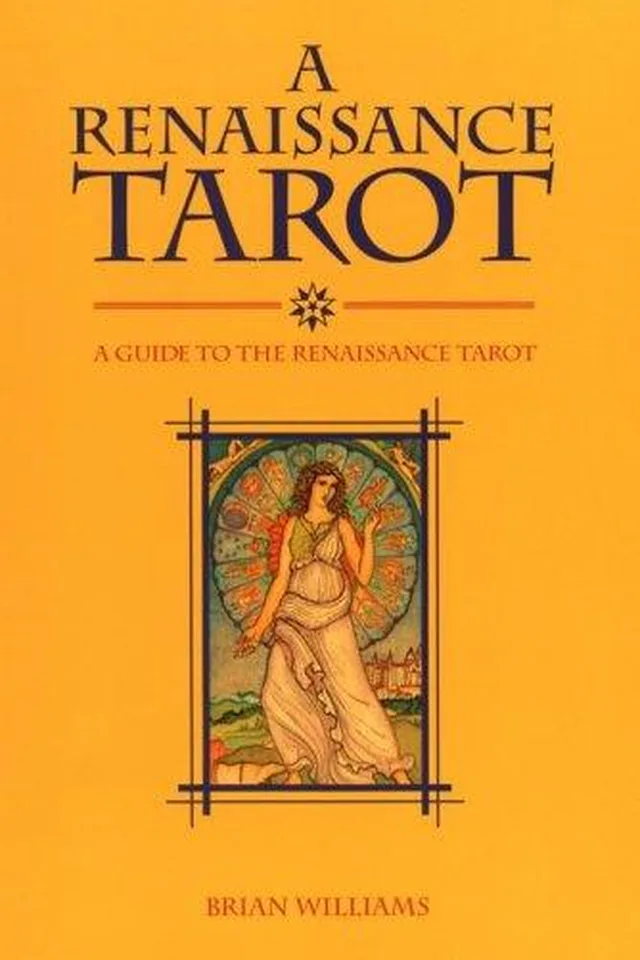
Renaissance Tarot Book
 67
67

Renaissance Tarot Book



Brian Williams' 'Renaissance Tarot Book' is a profound testament to the enduring esoteric power of the Tarot. Isolde Whitaker, Sacred Texts Editor, hails it as an indispensable resource for those seeking to understand the deeper currents of this ancient divinatory art. Williams expertly dissects the intricate symbolism, revealing the profound philosophical and mystical connections that bind the Tarot to Renaissance occult traditions. His scholarly yet accessible prose illuminates the hidden language of the cards, offering practitioners a richer, more nuanced approach to interpretation. This book is a treasure for anyone who wishes to move beyond superficial readings and engage with the Tarot as a profound tool for self-discovery and spiritual insight, particularly those drawn to the wisdom of historical esoteric practices.
📝 Description
67
Brian Williams' Renaissance Tarot Book was published in 2015.
This 2015 book examines the Renaissance Tarot, focusing on the esoteric meanings embedded within its imagery. Williams argues that understanding the historical context of alchemy, Kabbalah, and Neoplatonism is crucial for interpreting the cards. The text breaks down the symbolism of both the Major and Minor Arcana, connecting them to the intellectual currents of the Renaissance. It aims to move beyond simple card divination, presenting the Tarot as a tool for philosophical inquiry and self-knowledge.
The book targets individuals interested in a deeper understanding of Tarot's historical and occult roots. It seeks to reveal the archetypal forces that Williams believes are reflected in the cards and, by extension, in human experience. The author intends for readers to perceive the Tarot not just as a divinatory system but as a mirror reflecting cosmic principles and internal wisdom.
Brian Williams' work places the Renaissance Tarot within a specific historical and philosophical milieu. It connects the cards' imagery and structure to the intellectual ferment of the 15th and 16th centuries, a period marked by the revival of classical philosophies and the development of esoteric systems. The book details how concepts from alchemy, Kabbalah, and Neoplatonism were integrated into Tarot imagery, creating a complex symbolic language intended for spiritual and intellectual exploration. This approach situates the Tarot not merely as a fortune-telling device but as a sophisticated system for understanding the cosmos and the human psyche, reflecting the era's belief in hidden correspondences.
💡 Why Read This Book?
Unlock the profound, hidden language of the Tarot, moving beyond mere prediction to embrace its rich symbolic tapestry and philosophical depth. This book is essential for seekers of esoteric wisdom, scholars of occult history, and practitioners yearning for a deeper, more meaningful connection with the archetypal energies of the Renaissance Tarot. Discover the "underside of the cards" and illuminate your path with ancient, powerful knowledge.
⭐ Reader Reviews
Honest opinions from readers who have explored this book.
❓ Frequently Asked Questions
What makes this book "Renaissance" Tarot specifically?
This book focuses on the Tarot as it was understood and utilized during the Renaissance, a period of intense intellectual and mystical cross-pollination, highlighting its connections to alchemy, Kabbalah, and Hermeticism.
Is this book suitable for beginners?
While comprehensive, Brian Williams' clear prose and step-by-step approach make it accessible to dedicated beginners eager to explore the deeper aspects of Tarot.
Does the book include card interpretations?
Yes, the book offers in-depth interpretations of each card, emphasizing their symbolic and esoteric meanings within the historical context of the Renaissance.
What esoteric traditions are explored?
The book delves into traditions such as Hermeticism, Kabbalah, Neoplatonism, and Renaissance occult philosophy, revealing their influence on Tarot symbolism.
Can I use this book with any Tarot deck?
While it draws heavily from historical decks, the principles and symbolism discussed are applicable to understanding the core essence of most Tarot decks.
🔮 Key Themes & Symbolism
The Hidden Face of the Cards
This theme explores the French adage, "connaitre le dessus des cartes," emphasizing that true understanding of the Tarot lies not in superficial observation but in uncovering the hidden meanings, esoteric symbolism, and philosophical underpinnings that lie beneath the surface. Brian Williams guides readers to perceive the Tarot as a coded language, a repository of ancient wisdom waiting to be deciphered by those with the intent and tools to look deeper. It’s about moving beyond the literal imagery to the archetypal forces and hidden correspondences that give the cards their profound power.
Renaissance Esotericism and Tarot
This theme positions the Tarot as a product and reflection of the intellectual and spiritual ferment of the Renaissance. It examines how the era's fascination with Hermeticism, Kabbalah, Neoplatonism, and alchemical principles became interwoven with the development and interpretation of Tarot imagery. Williams illustrates how the cards served as a vehicle for transmitting complex philosophical ideas and mystical insights, acting as a microcosm of the universe and a tool for spiritual ascent. The book illuminates the profound connection between the era's esoteric currents and the enduring symbolism of the Tarot.
Symbolism as a Gateway to Wisdom
This theme focuses on the power of visual symbolism as a primary language of the Tarot and the esoteric traditions. It argues that the intricate imagery of the Renaissance Tarot is not arbitrary but intentionally designed to convey deep truths about human nature, cosmic order, and spiritual evolution. Brian Williams meticulously unpacks the layers of meaning embedded in each symbol, encouraging readers to engage with these visual keys to unlock clear insights into themselves and the universe. The book posits that mastering this symbolic language is the path to true divination and self-knowledge.
💬 Memorable Quotes
Direct passages from the work, attributed to the author.
“The Renaissance Tarot is a mirror to the alchemical Great Work.”
— This highlights the connection between Tarot symbolism and the transformative process of alchemy, suggesting the cards guide the seeker through stages of spiritual purification and enlightenment.
“Each card is a glyph, a key to unlock cosmic mysteries.”
— This emphasizes the profound symbolic nature of Tarot, presenting each card not just as an image but as a coded message designed to reveal universal truths and secrets.
“The paths on the cards are etched with the wisdom of forgotten sages.”
— This speaks to the historical lineage of Tarot knowledge, suggesting that the imagery carries the accumulated wisdom of ancient esoteric traditions, accessible through diligent study.
“Beyond divination lies the art of self-realization.”
— This points to the ultimate purpose of engaging with the esoteric Tarot – not just for predicting the future, but as a profound tool for personal growth, transformation, and spiritual awakening.
💡 Key Ideas
Editorial paraphrase of the work's core concepts — not direct quotes.
To know the underside of the cards is to know the hidden face of reality.
This quote captures the book's core thesis: that the Tarot's true power lies in its esoteric dimensions, revealing deeper truths and hidden structures beyond superficial appearances.
🌙 Esoteric Significance
Tradition
This book is deeply rooted in the Western Esoteric Tradition, particularly as it manifested during the Renaissance. It draws heavily from Hermeticism, Kabbalah, Neoplatonism, and Renaissance occult philosophy, viewing the Tarot as a microcosm of the universe and a map of spiritual evolution. The emphasis is on the symbolic language and archetypal patterns that connect the individual to the divine and the cosmos, offering a path to gnosis and self-transformation.
Symbolism
The esoteric significance of the Renaissance Tarot lies in its rich, multi-layered symbolism. Each card's imagery is a glyph, imbued with meanings derived from astrology, numerology, mythology, and alchemical processes. These symbols act as keys, unlocking understanding of universal laws, human psychology, and the journey of the soul. The book meticulously decodes these visual cues, revealing how they form a coherent system for divination, meditation, and spiritual inquiry.
Modern Relevance
In a world often characterized by disconnection and superficiality, the Renaissance Tarot offers a profound anchor to ancient wisdom and a pathway to deeper self-understanding. Its emphasis on symbolism and archetypes provides a timeless framework for navigating life's challenges and exploring one's inner landscape. The book’s insights into the Tarot's esoteric dimensions are not merely historical curiosities but offer potent tools for personal growth, intuitive development, and spiritual resilience in the contemporary age.
👥 Who Should Read This Book
This book is an essential companion for the dedicated Tarot enthusiast, the academician of occult history, and the spiritual seeker. Beginners who wish to move beyond superficial interpretations will find a profound and accessible introduction to the Tarot's deeper layers. Scholars of esotericism will appreciate the meticulous research and historical context provided. Practitioners seeking to enrich their readings with symbolic depth and philosophical understanding will discover invaluable insights. Ultimately, anyone yearning to connect with the archetypal forces and hidden wisdom embedded within the Tarot will find this book a transformative guide.
📜 Historical Context
The Renaissance (roughly 14th to 16th centuries) was a period of profound cultural, intellectual, and artistic rebirth in Europe, characterized by a renewed interest in classical antiquity and a flourishing of humanism. It was also an era of intense esoteric exploration, where mystical philosophies, Hermeticism, Kabbalah, and alchemical theories were actively studied and integrated into various fields of knowledge. The Tarot, emerging during this vibrant period, absorbed these influences. Its imagery became a sophisticated vehicle for transmitting complex philosophical ideas, spiritual concepts, and occult doctrines, serving as a visual compendium of the era's mystical worldview. Brian Williams' "Renaissance Tarot Book" situates the Tarot firmly within this context, revealing how its structure and symbolism are deeply intertwined with the esoteric currents that shaped Renaissance thought.
📔 Journal Prompts
Reflect on a time you felt you "knew the underside" of a situation. How did this deeper awareness change your perception?
Consider the concept of the Tarot as a mirror to the alchemical Great Work. What aspects of your own inner transformation does it reflect?
Choose a Major Arcana card and explore its symbolism through the lens of Renaissance esoteric traditions. What new meanings emerge?
How does the idea of "glyphs" and "keys" in Tarot symbolism resonate with your own learning and understanding of the world?
Identify a personal challenge you are facing. Which Tarot card's esoteric symbolism offers a new perspective or a guiding principle for navigating it?
🗂️ Glossary
Connaitre le dessus des cartes
A French idiom meaning 'to know the underside of the cards,' signifying a deep, intuitive, and esoteric understanding beyond superficial appearances.
Hermeticism
An ancient philosophical and religious tradition based on writings attributed to Hermes Trismegistus, emphasizing the unity of all things and the power of hidden knowledge.
Kabbalah
A system of Jewish mysticism that seeks to understand the nature of God and the universe through divine emanations and symbolic interpretations of scripture.
Neoplatonism
A philosophical school that developed from Plato's teachings, focusing on the concept of a supreme, ineffable 'One' from which all existence emanates.
Archetype
A universally understood symbol, character, or pattern of behavior that is part of the collective unconscious, often represented in Tarot imagery.
This book appears in 3 collections
🔮 Readers Also Liked
Browse all →
From the “Tarot” Collection
View all →
More Free Divination & Tarot Books
View all →