Shamanism
 79
79

Shamanism
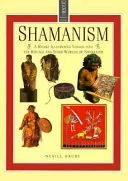
Nevill Drury's "Shamanism" offers a lucid, if somewhat generalized, introduction to a vast subject. Its strength lies in its clear presentation of core shamanic elements—spirit guides, ecstatic states, and the role of drumming—making complex ideas accessible. The inclusion of illustrations, noted in the original blurb, enhances understanding by providing visual context to abstract concepts. However, the book occasionally leans towards descriptive ethnography without deeply probing the philosophical underpinnings or potential pitfalls of the practices discussed. Drury's treatment of sacred plants, for instance, is informative but could benefit from a more critical examination of their specific psychoactive properties and cultural contexts beyond their ritualistic use. The work effectively synthesizes information for a general audience, but seasoned practitioners or scholars might find its analysis less rigorous. Ultimately, "Shamanism" serves as a competent, visually supported overview of its subject matter.
📝 Description
79
Nevill Drury's "Shamanism" (1996) surveys spiritual practices predating recorded history.
First published in 1996, Nevill Drury's "Shamanism" offers a thorough look at spiritual practices that existed long before written records. The book examines the central beliefs of shamanism, particularly the shaman's function as a bridge between the physical world and the spirit realm. Drury discusses the different ways shamans achieve altered states of consciousness, often through trance and visions, to find spiritual direction and healing. The text illustrates the varied forms of shamanic traditions across cultures, pointing out shared elements in their worldviews and rituals.
This volume is suitable for anyone interested in comparative religion, anthropology, or esoteric studies. It will appeal to those wanting to understand the origins of spiritual practices that highlight direct spiritual experience and altered states. Readers curious about the healing aspects of traditional methods, the use of altered states for spiritual growth, and the connection between people and the natural world will find Drury's "Shamanism" particularly useful. It serves as a straightforward introduction for beginners and a helpful reference for those already familiar with occult or mystical subjects.
Nevill Drury's work follows Mircea Eliade's significant 1951 study, "Shamanism: Archaic Techniques of Ecstasy." Drury's book provides a more recent and accessible viewpoint on the subject. The mid-20th century saw a rise in academic and popular interest in indigenous spiritualities and altered states, partly fueled by counter-cultural movements and a critique of purely materialist philosophies. Drury's "Shamanism" was written in this climate, aiming to clarify these practices for a Western audience.
💡 Why Read This Book?
• Gain a foundational understanding of core shamanic practices, including the role of spirit guides and the significance of drumming, as presented in Drury's accessible 1996 overview. • Explore the concept of altered states of consciousness and their function in accessing non-ordinary reality, a central theme detailed throughout the book's examination of shamanic techniques. • Understand the cross-cultural commonalities in shamanic traditions, learning how practices involving sacred plants and animal guides appear in diverse societies as explored in Drury's work.
⭐ Reader Reviews
Honest opinions from readers who have explored this book.
❓ Frequently Asked Questions
What is the primary focus of Nevill Drury's book 'Shamanism'?
Nevill Drury's 'Shamanism' focuses on the rituals, inner world, and practices of shamanism, exploring altered states of consciousness, the role of spirit guides, the power of drumming, and the use of sacred plants across various cultures.
When was Nevill Drury's 'Shamanism' first published?
Nevill Drury's 'Shamanism' was first published in 1996, making it a relatively contemporary overview of the subject at its release.
Does the book discuss the use of specific psychoactive substances?
Yes, the book discusses the use of sacred plants as a method for achieving altered states of consciousness, a common practice in many shamanic traditions.
What role do animal and spirit guides play in the shamanic practices described?
The book explains that animal and spirit guides are seen as crucial allies for shamans, providing wisdom, healing, and assistance during journeys into the spirit world.
Is 'Shamanism' by Nevill Drury suitable for beginners?
Yes, 'Shamanism' is generally considered suitable for beginners due to its accessible language and comprehensive overview of fundamental concepts and practices.
What is the significance of drumming in shamanism according to the book?
According to Drury's 'Shamanism,' drumming is a vital tool for shamans to induce trance states, facilitating a journey into the spirit world and connecting with spiritual energies.
🔮 Key Themes & Symbolism
Altered States and Ecstasy
The work extensively covers how shamans achieve altered states of consciousness, often through rhythmic drumming or the ingestion of sacred plants. These states are presented not as mere hallucinations but as deliberate, controlled journeys into other realities to acquire knowledge, power, or healing. Drury details how these ecstatic experiences are fundamental to the shamanic worldview, enabling communication with spirits and accessing wisdom beyond ordinary perception. The book emphasizes that these are disciplined techniques, not random states.
Spirit Guides and Animal Allies
A core theme is the relationship between the shaman and their spirit guides, often manifesting as animal spirits or ancestral figures. These entities are depicted as essential companions and sources of power, offering protection and guidance during shamanic expeditions. Drury explains that shamans form deep, reciprocal relationships with these guides, learning from them and acting as conduits for their wisdom in the human realm. The book highlights the symbolic importance of specific animal archetypes within different cultural contexts.
The Power of Sound and Ritual
Drury illuminates the critical role of sonic elements, particularly drumming, in shamanic practice. The repetitive rhythms are presented as a mechanism to shift consciousness, break down mental barriers, and synchronize the shaman's energy with that of the spirit world. Beyond drumming, the book touches upon other ritualistic elements, including chanting, dance, and the use of sacred objects, all contributing to the creation of a sacred space and the facilitation of the shaman's work. Rituals are portrayed as structured pathways to the sacred.
Sacred Plants and Visionary Journeys
The employment of sacred plants in shamanic traditions is examined as a method for inducing profound visionary experiences. Drury discusses how these substances, when used within a ritualistic and spiritual framework, can unlock deeper levels of perception and facilitate contact with the spirit domain. The book explores the cultural significance and traditional uses of various psychoactive flora, presenting them as potent tools for healing, divination, and spiritual exploration when handled with respect and proper intention.
💬 Memorable Quotes
Direct passages from the work, attributed to the author.
“The shaman is a healer who walks between worlds.”
— This expresses the dual role of the shaman as a mediator, bridging the physical and spiritual realms for the benefit of their community, particularly in matters of health and well-being.
“Drumming provides a sonic pathway to the spirit realm.”
— This highlights the functional importance of rhythmic sound in shamanism, positing it as a technology for altering consciousness and facilitating direct communication with non-physical entities.
“Animal spirits serve as guides and protectors.”
— This points to the integral nature of animal symbolism and the concept of spirit allies in shamanic practice, where these entities offer wisdom and support to the practitioner.
“Sacred plants are used to achieve visionary states.”
— This directly addresses the role of entheogens in shamanism, framing their use as a deliberate method for accessing altered perceptions and spiritual insights within a defined ritual context.
“Shamanism involves ecstatic techniques to access spiritual knowledge.”
— This defines shamanism by its core methodology—the use of ecstatic states—and its primary objective: the acquisition of spiritual understanding and wisdom.
🌙 Esoteric Significance
Tradition
While shamanism predates many formalized esoteric traditions, Drury's work connects it to broader currents of animism and nature-based spirituality often explored within esoteric circles. It shares common ground with Hermetic principles regarding the interconnectedness of all things and the existence of unseen forces. The emphasis on direct experiential knowledge and the shaman's ability to traverse different planes of existence aligns with Gnostic and Theosophical concepts of spiritual ascent and hidden wisdom, albeit through distinct methodologies.
Symbolism
Key symbols in shamanism explored by Drury include the World Tree, often depicted as a cosmic axis connecting the underworld, earth, and heavens, representing the shaman's journey and the structure of the cosmos. Animal spirits, such as the bear, eagle, or wolf, function as potent symbols of primal power, instinct, and archetypal wisdom, guiding the shaman and embodying specific spiritual attributes. Sacred plants, like the Ayahuasca or Peyote, are symbolic of transformation, vision, and the potent forces of nature harnessed for spiritual insight.
Modern Relevance
Drury's "Shamanism" remains relevant today as interest in nature-based spirituality, ecopsychology, and alternative healing modalities continues to grow. Contemporary figures in ecotherapy and transpersonal psychology often draw upon shamanic principles to foster a deeper connection with the natural world and explore the psyche. Practices influenced by shamanism, particularly those involving sound healing, nature immersion, and the exploration of altered states, are being integrated into wellness and therapeutic contexts, demonstrating the enduring appeal of these ancient techniques.
👥 Who Should Read This Book
• Individuals new to esoteric studies seeking a foundational understanding of cross-cultural spiritual practices, particularly those involving altered states and spirit communication. • Anthropologists and comparative religion scholars looking for an accessible overview of shamanic concepts, rituals, and their global manifestations as presented in a 1996 publication. • Those interested in alternative healing modalities and the potential therapeutic applications of trance states, drumming, and plant-based medicines within a respectful, historical context.
📜 Historical Context
Nevill Drury's "Shamanism" arrived in 1996, a period marked by a burgeoning global interest in indigenous spiritualities, partly fueled by the New Age movement and a growing critique of Western rationalism. This era saw figures like Michael Harner popularizing shamanic practices through his Foundation for Shamanic Studies, founded in 1979, which offered workshops based on his research and interpretation of Eliade's work. Drury's book entered a landscape where shamanism was increasingly being explored not just academically but also as a source of personal transformation and alternative healing. While Mircea Eliade's 1951 work remained a cornerstone, Drury's publication offered a more accessible, illustrated synthesis, aiming to explain the subject for a broader audience. The reception was generally positive, contributing to the ongoing discourse about shamanism's relevance in contemporary society, though some academic circles continued to debate the extent to which modern interpretations accurately reflected ancient practices.
📔 Journal Prompts
The shaman's role as a bridge between worlds: Reflect on the symbolic significance of this duality in your own spiritual understanding.
Spirit guides as animal allies: Consider which animal archetype might represent a guiding force in your current life circumstances.
The efficacy of rhythmic drumming for consciousness alteration: Explore the potential of consistent, repetitive sound in focusing your own awareness.
The journey into the spirit realm: Describe a personal experience of entering a non-ordinary state of consciousness, however brief.
Sacred plants and visionary potential: Reflect on the concept of nature offering direct spiritual insight, without necessarily involving psychoactive substances.
🗂️ Glossary
Shaman
An individual who acts as an intermediary between the human and spirit worlds, often through ecstatic states, for healing, divination, or spiritual guidance.
Altered State of Consciousness (ASC)
Any mental state significantly different from a normal waking state, often induced by techniques like drumming, chanting, or the use of sacred plants.
Spirit Guide
A non-physical entity, often an animal spirit, ancestor, or nature spirit, that provides wisdom, protection, and assistance to a shaman.
Drumming
The use of rhythmic drumming as a primary technique to induce trance states and facilitate journeys into the spirit world in shamanic practices.
Sacred Plants
Botanicals used within specific cultural and ritual contexts for their psychoactive properties, intended to facilitate visionary experiences and spiritual connection.
Animism
The belief that natural objects, phenomena, and the universe itself possess souls or consciousness, a worldview foundational to many shamanic traditions.
Ecstasy
An altered state of consciousness characterized by intense emotion and heightened perception, often associated with spiritual or mystical experiences.
This book appears in 1 collection
🔮 Readers Also Liked
Browse all →









From the “Spirit Guides” Collection
View all →






More Free Occult Philosophy Books
View all →