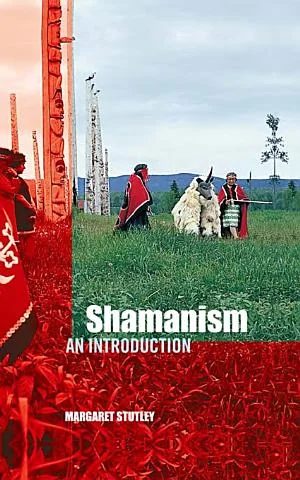
Shamanism
 80
80

Shamanism
Margaret Stutley's "Shamanism" offers a clear, academic overview of a practice that has shaped global spirituality for millennia. The book's strength lies in its methodical presentation of shamanic roles and methods, particularly its examination of how these ancient traditions have subtly informed later religious structures. Stutley effectively grounds the often-ethereal subject matter in anthropological and historical context, citing the practices' deep roots. A limitation, however, is the text's analytical distance; it explains but rarely evokes the visceral experience of shamanic journeys. The passage discussing the shaman's role in retrieving lost soul parts, while informative, could benefit from more detailed ethnographic examples to illustrate the emotional weight of such a practice. Overall, "Shamanism" serves as a solid, foundational text for understanding this ancient discipline.
📝 Description
80
Margaret Stutley's 1980 book "Shamanism" examines one of humanity's oldest spiritual frameworks.
This 1980 study by Margaret Stutley investigates shamanism, a spiritual practice predating many organized religions. The book focuses on the figure of the shaman, an individual believed to communicate with spirit worlds. This intermediary role is presented as vital for community well-being, as shamans interpret and influence unseen forces affecting nature and human destiny. Their authority arises from direct experiences, often achieved through altered states of consciousness, visions, or trance.
The work appeals to those interested in the origins of religious and magical traditions. Scholars of comparative religion and anthropology, along with individuals studying ancient healing and spiritual practices, will find it relevant. The book addresses the roots of modern faiths, the place of altered states in spirituality, and the connection between humanity and the natural world. It is also useful for students of indigenous cultures and the persistence of intuitive knowledge.
Shamanism represents a primal form of spiritual technology, focusing on direct experience of non-ordinary reality. This book places Stutley's work within the broader study of animistic traditions and ecstatic practices that have appeared across diverse cultures for millennia. It acknowledges the shaman's function as a bridge between the material and spiritual dimensions, a role often involving healing, divination, and soul retrieval. The study implicitly connects to a long history of human attempts to access and understand unseen forces.
💡 Why Read This Book?
• Gain an understanding of shamanism's ancient origins, tracing its influence on major world religions and its role as one of the earliest magical and religious traditions. • Learn about the shaman's multifaceted functions, including healing, communicating with spirits, and mediating between the visible and unseen worlds, as detailed in the text's exploration of trance states. • Discover the concept of spirit helpers and their significance in shamanic practice, as presented through the book's examination of the shaman's direct experience with unseen powers.
⭐ Reader Reviews
Honest opinions from readers who have explored this book.
❓ Frequently Asked Questions
What is the primary function of a shaman as described in Margaret Stutley's book?
The book describes the shaman's primary function as a mediator between the human world and the spirit realm, tasked with understanding and influencing unseen powers that govern nature and human destiny.
When was Margaret Stutley's 'Shamanism' first published?
Margaret Stutley's 'Shamanism' was first published in 2003, offering a modern scholarly perspective on this ancient tradition.
Does the book discuss the use of altered states of consciousness in shamanism?
Yes, the book explores how shamans utilize altered states of consciousness, often achieved through drumming or chanting, to access the spirit world and gain knowledge or healing abilities.
What evidence does the book provide for shamanism's antiquity?
The book points to archaeological findings and the enduring presence of shamanic vestiges in major modern religious faiths as evidence of shamanism's deep historical roots, predating many organized religions.
Can readers expect to learn about specific shamanic healing techniques?
The book discusses the shaman's healing powers, often involving soul retrieval or the removal of negative energies, within the broader context of shamanic practices and beliefs.
Is 'Shamanism' by Margaret Stutley suitable for beginners in esoteric studies?
Yes, as one of the earliest and most far-reaching magical traditions, its foundational nature makes it suitable for beginners interested in the origins of spiritual and magical practices.
🔮 Key Themes & Symbolism
The Shaman as World Traveler
The work explores the shaman's unique position as a psychopomp and intermediary, capable of navigating between the physical world and the spirit dimensions. This ability is not merely metaphorical but is described as a direct experience gained through trance states. Stutley details how this journeying allows shamans to retrieve lost souls, diagnose spiritual ailments, and communicate with deities or ancestral spirits, thereby maintaining the balance and well-being of their community.
Ancient Spiritual Foundations
Stutley positions shamanism as a progenitor of many later religious and magical systems. The text argues that elements of shamanic practice—such as animism, ancestor veneration, and the belief in a spirit world accessible through altered states—underlie the major faiths of today. This perspective challenges readers to reconsider the origins of religious phenomena and recognize the pervasive, often hidden, influence of these ancient traditions on contemporary spiritual landscapes.
Intuition and Ecstatic Vision
A core element of shamanic power, as presented in the book, lies in the direct apprehension of reality through intuition and ecstatic visions. These experiences bypass ordinary sensory input, providing shamans with knowledge of unseen forces and spiritual truths. The book examines how these altered states, distinct from mundane consciousness, are cultivated and employed for practical purposes, including healing, divination, and influencing natural events.
The Shamanic Role in Nature
The book highlights the intimate connection between the shaman, the community, and the natural world. Shamans are depicted as conduits through which the community can interact with the spirits of animals, plants, and weather phenomena. Their ability to influence the movements of game or control climatic conditions underscores a worldview where the spiritual and material realms are intrinsically linked and interdependent.
💬 Memorable Quotes
Direct passages from the work, attributed to the author.
“Shamanism is one of the earliest and farthest-reaching magical and religious traditions.”
— This statement establishes the book's central premise: shamanism is not a fringe belief but a foundational spiritual technology that predates and informs many subsequent religious developments worldwide.
“The function of the shaman is to show his or her people the unseen powers behind the mere appearances of nature.”
— This highlights the shaman's role as a seer and interpreter, revealing the spiritual or energetic forces that lie beneath the surface of the mundane world, accessed through direct spiritual experience.
“Shamans possess healing powers, communicate with the dead and the world beyond...”
— This succinctly outlines the core capabilities attributed to shamans: spiritual healing, necromancy, and interdimensional communication, demonstrating their vital role in bridging the gap between life and death.
“...and influence the weather and movements of hunti”
— This fragment points to the shaman's practical, world-affecting power, extending their influence beyond individual healing to community survival through manipulation of natural phenomena.
“The work explores the experience of shamanism through intuition, in trance states, or during ecstatic mystical visions.”
— This emphasizes the non-rational, experiential basis of shamanic knowledge, distinguishing it from empirical or purely intellectual understanding and highlighting the critical role of altered states of consciousness.
🌙 Esoteric Significance
Tradition
While not strictly adhering to a single Western esoteric lineage like Hermeticism or Kabbalah, Stutley's "Shamanism" examines practices that represent a foundational layer of spiritual technology predating many formalized traditions. It explores the universal human impulse towards accessing non-ordinary reality, a pursuit central to all esoteric paths. The work illuminates the direct experiential methods—trance, vision—that are echoed in later mystical disciplines, offering a glimpse into the primal roots from which many esoteric systems may have sprung.
Symbolism
The book touches upon the potent symbolism inherent in shamanic practice. Spirit animals serve as powerful totemic guides, representing archetypal energies and offering specific wisdom or protection. The concept of the World Tree or Axis Mundi is frequently implied, symbolizing the connection between the underworld, the earth, and the heavens—a cosmic structure that the shaman traverses. Dream imagery and visionary landscapes are also crucial, acting as symbolic maps of the spiritual terrain and the challenges faced within it.
Modern Relevance
Contemporary thinkers and practitioners in fields ranging from depth psychology to ecopsychology draw heavily on the principles outlined in works like Stutley's. Modern neo-shamanic movements, often adapted for Western contexts, continue to explore altered states, spirit communication, and nature-based spirituality. Concepts like soul retrieval and the importance of ancestral connections are being re-examined by those seeking alternative healing modalities and a deeper ecological consciousness, demonstrating the enduring resonance of shamanic frameworks.
👥 Who Should Read This Book
• Students of comparative religion and anthropology seeking to understand the historical and cross-cultural roots of spiritual practices. • Individuals interested in the origins of healing traditions and the role of altered states of consciousness in spiritual development. • Practitioners or seekers exploring the connection between the natural world and unseen spiritual forces, who wish to understand one of humanity's oldest modes of engagement.
📜 Historical Context
Margaret Stutley's "Shamanism" emerged in 2003, a period marked by a resurgence of interest in indigenous spiritualities and transpersonal psychology. The book arrived at a time when academic disciplines like anthropology and religious studies were increasingly engaging with non-Western cosmologies, while popular interest in neo-shamanism continued to grow. Stutley's work offered a scholarly counterpoint to more sensationalized accounts, grounding its exploration in historical evidence and comparative analysis. It implicitly engaged with earlier ethnographic works by figures like Mircea Eliade, whose "Shamanism: Archaic Techniques of Ecstasy" (1951) had been a seminal, though sometimes contested, text. While Stutley's approach is more analytical, her book contributes to the ongoing academic dialogue about the universality and antiquity of shamanic practices, particularly as a precursor to later organized religions.
📔 Journal Prompts
The unseen powers behind nature's appearances.
The shaman's function as a mediator between worlds.
Personal experiences of intuition versus sensory input.
The concept of spirit helpers in shamanic traditions.
Vestiges of shamanism in contemporary beliefs.
🗂️ Glossary
Shaman
An individual believed to possess the ability to communicate with the spirit world, often acting as an intermediary, healer, or seer for their community.
Trance State
An altered state of consciousness characterized by deep relaxation, focus, or dissociation, often used by shamans to access spiritual realms or gain insight.
Spirit World
A non-physical realm inhabited by spirits, deities, ancestors, and other entities, accessible to shamans through various techniques.
Ecstatic Vision
A profound, often overwhelming, visionary experience occurring during altered states of consciousness, providing direct spiritual knowledge or insight.
Animism
The belief that natural objects, phenomena, and the universe itself possess a spirit or soul, often a foundational concept in shamanic worldviews.
Soul Retrieval
A shamanic healing practice aimed at recovering lost parts of a person's soul or essence, believed to have become separated due to trauma or spiritual distress.
Spirit Helpers
Spiritual entities or beings that guide, assist, and empower the shaman in their work, often taking the form of animals or ancestral figures.
This book appears in 1 collection
🔮 Readers Also Liked
Browse all →







From the “Shamanism” Collection
View all →





More Free Occult Philosophy Books
View all →