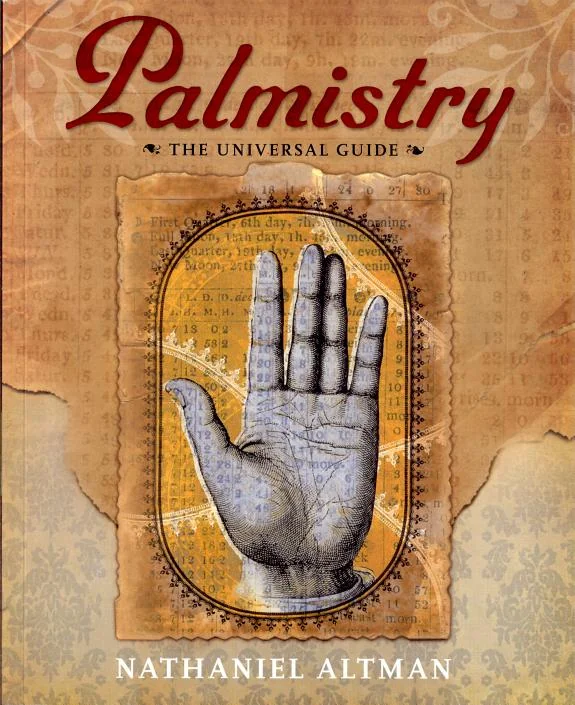
Palmistry
 71
71

Palmistry
Nathaniel Altman's "Palmistry" presents a remarkably detailed compendium of chiromantic knowledge, moving far beyond the cursory readings often found in popular guides. Altman's strength lies in his systematic approach, meticulously detailing the significance of not just the lines but the entire hand's morphology – the mounts, finger shapes, and even nail beds. A particularly well-articulated section concerns the interplay between the hand's physical structure and inherent character traits, offering a more nuanced psychological interpretation than mere prediction. However, the sheer volume of information, while comprehensive, can at times feel overwhelming for the absolute novice. The work might benefit from more explicit case studies illustrating the application of these diverse concepts in tandem. Despite this, Altman's decades of practice lend an authoritative air to his explanations. This book serves as a robust reference, offering a deep dive into the language of the hands.
📝 Description
71
Nathaniel Altman's 2009 book re-examines palmistry beyond simple line readings.
Nathaniel Altman's "Palmistry" examines chiromancy, a practice with roots in ancient India and Greece. This book moves past basic line interpretations to analyze the entire hand, including its mounts, fingers, shape, and texture. Altman, who has practiced palmistry for decades, presents it not just as a predictive art but as a means to understand personality, life paths, and potential. The text explains how a hand's physical traits can reveal psychological tendencies and past events, fostering a complete view of the person. The work is suitable for those drawn to esoteric practices, especially those wanting a practical yet thorough introduction to palmistry. It appeals to students of divination, comparative mysticism, and individuals interested in self-discovery. Whether you are a beginner curious about your own hands or an experienced practitioner seeking to expand your knowledge, this book has value. It speaks to anyone who sees the hand as a reflection of the self.
Altman's work addresses the practice in a time when esoteric traditions are more frequently studied and incorporated into modern self-help and psychological approaches. It builds on a history of occult literature and engages with a public increasingly open to metaphysical exploration. The book systematically breaks down the components of a palm reading, elaborating on the significance of various hand features.
Palmistry, or chiromancy, has a long history, documented by figures like Aristotle and Artemidorus. It experienced revivals throughout history, from medieval Europe to the 19th-century spiritualist movements. Altman's 2009 book contributes to this tradition by offering a contemporary perspective, integrating an ancient art into modern frameworks of self-help and psychological understanding. It taps into a public interest in metaphysical exploration, drawing from a legacy of occult literature.
💡 Why Read This Book?
• Learn to interpret the seven mounts (Venus, Jupiter, Saturn, Apollo, Mercury, Luna, Mars) and their corresponding psychological influences, a core concept from Altman's detailed analysis of palm topography. • Understand the elemental hand shapes (Earth, Air, Fire, Water), a classification system Altman employs to categorize fundamental personality types based on hand structure. • Discover how minor lines and markings, beyond the commonly known Fate and Heart lines, offer subtle insights into life's nuances, as explained in Altman's extensive catalog of palmographic symbols.
⭐ Reader Reviews
Honest opinions from readers who have explored this book.
❓ Frequently Asked Questions
Can palmistry truly predict the future, or is it more about character analysis?
Altman's "Palmistry" emphasizes that while lines may suggest potential paths or tendencies, the practice is primarily a tool for understanding character, psychological predispositions, and life patterns. It offers insights into your present and past, guiding self-awareness rather than dictating a fixed future.
What is the significance of the different hand shapes discussed by Nathaniel Altman?
Altman categorizes hand shapes into four elemental types: Earth (square palm, short fingers), Air (square palm, long fingers), Fire (oblong palm, short fingers), and Water (oblong palm, long fingers). Each type signifies distinct personality traits and approaches to life.
How does the Mount of Venus influence a palm reading?
According to Altman's work, the Mount of Venus, located at the base of the thumb, relates to love, sensuality, vitality, and enthusiasm. Its prominence or flatness can indicate the strength of these qualities in an individual.
Are there differences between reading the left and right hand in palmistry?
Generally, palmists consider the left hand to represent inherited traits and the past, while the right hand shows current conditions and future potential. Altman addresses this duality, suggesting a comparative analysis for a fuller picture.
What does the book say about the Head Line and its variations?
Altman's "Palmistry" details the Head Line's importance in assessing intellect, mental capacity, and communication style. Variations like a chained, broken, or sloping Head Line are interpreted to reveal specific cognitive patterns or challenges.
Is Nathaniel Altman's book suitable for someone completely new to palmistry?
Yes, the book is structured to guide beginners through the fundamentals, starting with basic hand shapes and major lines before progressing to more intricate details like mounts and minor markings. Its comprehensive nature makes it an excellent foundational text.
🔮 Key Themes & Symbolism
Chiromancy as Characterology
Altman frames palmistry not solely as a divinatory art but as a profound system of character analysis. The book meticulously details how the physical contours of the hand – its shape, the proportions of fingers, the development of the mounts – serve as an external map of internal psychology. This perspective moves beyond simple line readings to interpret the hand's overall structure as indicative of personality traits, emotional tendencies, and innate talents. Readers learn to correlate specific hand features, such as a prominent Mount of Jupiter or elongated fingers, with traits like ambition or analytical thinking.
The Language of Lines and Markings
Beyond the well-known Life, Head, and Heart lines, Altman's work explores a vast lexicon of minor lines, crosses, stars, and other markings that appear on the palm. The book provides detailed interpretations for these often-overlooked symbols, suggesting they offer nuanced insights into specific life events, challenges, or opportunities. For instance, the Apollo line is discussed in relation to artistic talent and success, while various crosses might indicate specific karmic lessons or obstacles. This comprehensive approach equips readers with a sophisticated understanding of the palm's intricate symbolic language.
Elemental Hand Typology
A core part of Altman's system is the classification of hands into four elemental types: Earth, Air, Fire, and Water. The book explains how to identify these types based on palm and finger proportions and discusses the core characteristics associated with each element. Earth hands, for example, are linked to practicality and stability, while Air hands suggest intellect and communication. This elemental framework provides an accessible entry point for understanding broader personality archetypes before studying the finer details of individual lines and mounts.
Integrating Past, Present, and Future
Altman presents palmistry as a holistic tool capable of clear an individual's entire life trajectory. The book advocates for reading both the passive (left) and active (right) hand to gain a complete perspective, understanding inherited potentials alongside current manifestations and future possibilities. By analyzing the interplay of lines, mounts, and overall hand structure, readers can gain insights into their personal history, current life circumstances, and potential future developments, fostering a sense of agency and self-awareness.
💬 Memorable Quotes
Direct passages from the work, attributed to the author.
“The features of the hand tell palm readers as much as the lines on its surface.”
— This statement captures Altman's holistic approach to palmistry, emphasizing that the hand's topography—its shape, mounts, and finger characteristics—holds as much interpretive value as the primary lines.
“How can you use a palm reading to change the course of your own future?”
— This question highlights the book's practical application, suggesting that palmistry is not merely passive observation but an active tool for self-understanding that can empower individuals to influence their life's direction.
“The Mount of Venus relates to love, sensuality, vitality, and enthusiasm.”
— A concise definition of the Mount of Venus, illustrating the book's method of associating specific hand areas with distinct psychological and emotional qualities.
“Earth hands are associated with practicality, stability, and a connection to the material world.”
— This describes the core characteristics attributed to the 'Earth' hand type within Altman's elemental classification system, demonstrating the book's method of broad personality categorization.
“The Simian crease, a single transverse palmar crease, can indicate a strong-willed or impulsive nature.”
— This references a specific, notable marking on the palm and provides its common interpretation, showcasing the book's detailed examination of less common palm features.
🌙 Esoteric Significance
Tradition
Altman's "Palmistry" aligns with the Western Esoteric Tradition, drawing heavily from Hellenistic chiromancy and subsequent developments within European occultism. While not explicitly tied to Hermeticism or Kabbalah, the practice shares their foundational principle of correspondence – the idea that the microcosm (the human hand) reflects the macrocosm (the universe and the individual's destiny). The book integrates psychological interpretations, reflecting a modern esoteric trend that bridges ancient divination with contemporary psychological frameworks, moving beyond purely fatalistic interpretations.
Symbolism
Key symbols in Altman's work include the seven mounts on the palm, each representing a planet and associated deity (e.g., Mount of Jupiter for leadership, Mount of Apollo for creativity). The major and minor lines function as symbolic pathways detailing life experiences and character. Hand shapes (Earth, Air, Fire, Water) are also potent symbols, representing fundamental archetypes and temperaments, akin to the four classical elements, providing a framework for understanding innate human nature.
Modern Relevance
Altman's work remains relevant today as interest in self-knowledge and psychological insight through non-traditional means continues. Modern practitioners of somatic psychology and body-mind connection often find value in chiromancy as a somatic interpretive tool. Furthermore, the book serves as a foundational text for contemporary readers exploring comparative divination systems or seeking to understand the historical evolution of esoteric practices within Western culture.
👥 Who Should Read This Book
• Individuals beginning their study of divination: This book provides a structured and detailed introduction to palmistry, covering essential concepts from hand shapes to major and minor lines. • Students of comparative esoteric traditions: Readers interested in how different systems interpret human character and destiny will find value in Altman's comprehensive approach. • Those seeking self-understanding through somatic interpretation: Individuals looking for practical methods to connect with their inner selves and understand their life patterns via physical symbolism will benefit.
📜 Historical Context
Nathaniel Altman's "Palmistry," first published in 2009, arrived during a period of renewed interest in esoteric studies and holistic wellness. While palmistry itself boasts ancient roots, dating back to Hellenistic Greece and Vedic India, its modern iteration has been shaped by figures like William John Warner (Cheiro) in the late 19th and early 20th centuries. Altman's work builds upon this lineage, presenting a comprehensive guide in an era where metaphysical concepts were increasingly integrated into popular psychology and self-help movements. The book's detailed approach offered a counterpoint to more superficial treatments of the subject, engaging with a public receptive to divination and self-discovery practices. Unlike the censorship faced by occult texts in earlier centuries, "Palmistry" benefited from a more open intellectual climate, though it still occupied a niche within the broader spectrum of New Age and esoteric literature.
📔 Journal Prompts
The Mount of Venus's development as an indicator of vitality.
Interpreting the variations of your own Head Line.
The significance of your dominant hand's shape (Earth, Air, Fire, or Water).
Reflecting on a minor line's potential meaning in your palm.
How the characteristics of your thumb might influence your willpower.
🗂️ Glossary
Chiromancy
The art or practice of telling fortunes or judging character by the lines and marks on the palm of the hand; also known as palmistry.
Mounts
The fleshy, raised pads on the palm, each named after a planet (e.g., Mount of Venus, Mount of Jupiter) and associated with specific human traits and potentials.
Elemental Hand Types
A classification system (Earth, Air, Fire, Water) based on the shape of the palm and fingers, used to denote fundamental personality archetypes and life approaches.
Life Line
A major line on the palm, typically extending from near the thumb in a semicircle around the base of the thumb towards the wrist, often interpreted as relating to physical vitality and general well-being.
Head Line
A major line running horizontally across the palm, generally interpreted as representing mental faculties, intellectual capacity, and communication style.
Heart Line
A major line running horizontally across the upper palm, generally interpreted as relating to emotional nature, romantic relationships, and heart health.
Simian Crease
A single transverse palmar crease formed when the Head Line and Heart Line are fused into one line across the palm. It is often associated with strong will or impulsivity.
This book appears in 1 collection
🔮 Readers Also Liked
Browse all →









From the “Palmistry” Collection
View all →









More Free Occult Philosophy Books
View all →