Ley Lines
 77
77

Ley Lines
Tim Welsh’s *Ley Lines* presents a fascinating premise: a town’s fate irrevocably tied to a mountain-top discovery during the Klondike Gold Rush’s last gasp. The fictional Sawdust City serves as a potent microcosm for boom-and-bust cycles, its fortunes rising and falling with the inexplicable event. Welsh effectively captures the gritty, hopeful atmosphere of the era, grounding the speculative elements in a believable historical setting. The narrative’s strength lies in its depiction of how quickly faith can curdle into chaos when the extraordinary disrupts the mundane. However, the latter half of the book feels somewhat rushed, with the descent of Sawdust City into ruin occurring at a pace that lessens the emotional impact of its downfall. A particularly memorable concept is the immediate metamorphosis of the town from a struggling settlement to a pilgrimage site, highlighting the human propensity for both awe and exploitation. Despite its slightly uneven pacing, *Ley Lines* offers a compelling exploration of belief and consequence.
📝 Description
77
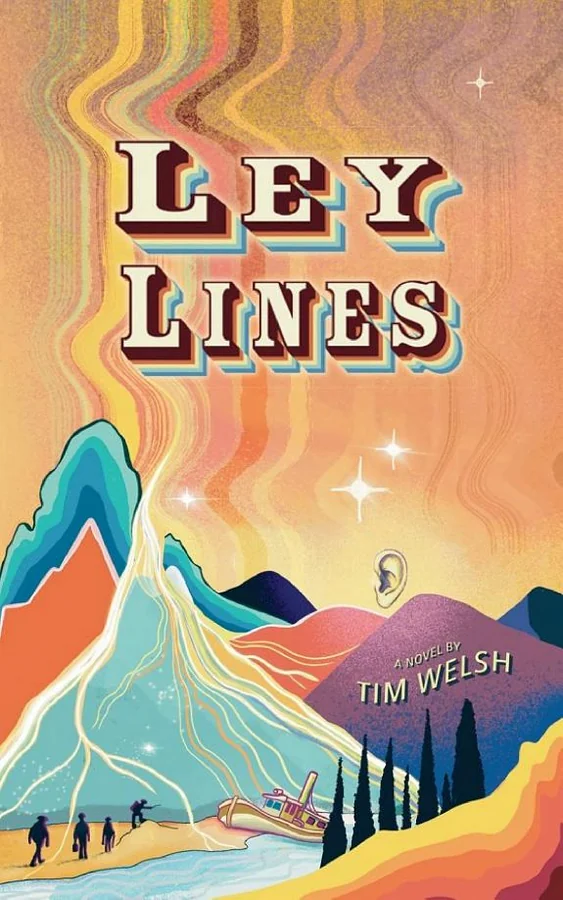
Tim Welsh's Ley Lines is set in 1905 Yukon, a fictional town built on a mountain discovery.
Ley Lines follows prospector Steve Ladle in Sawdust City, a Yukon town that owes its existence to a strange find on a nearby mountain. The story begins as the Klondike Gold Rush fades, detailing Ladle's strange mission and its dual outcome: a miracle that also brings ruin.
Welsh's narrative captures the atmosphere of the early 20th century Yukon, a place of boomtowns that rose and vanished with the gold. Sawdust City embodies this transience, a settlement built on fragile hope. The book examines how extraordinary events can reshape a community, drawing both awe and greed. It reflects on resource exploitation and the inevitable decline that follows intense activity, echoing historical patterns of frontier expansion.
This novel engages with the idea of ley lines, ancient energetic pathways often associated with sacred sites and earth mysteries. While set in a specific historical period and location, the narrative suggests that certain places hold a potent, perhaps supernatural, power that can influence human fortune and the fate of communities. The "peculiar discovery" atop the mountain acts as a focal point for these forces, demonstrating how the unseen can dramatically impact the material world, a concept familiar in occult and earth-based spiritual traditions.
💡 Why Read This Book?
• Gain insight into the speculative impact of discovery on isolated communities, as seen in the transformation of Sawdust City following the mountain-top event. • Understand the volatile economic and social dynamics of the Klondike Gold Rush era, specifically the rapid shifts in fortune experienced by settlements like Sawdust City. • Explore the human response to the inexplicable, examining how extraordinary occurrences can both elevate and destroy a community, as depicted in the book's narrative arc.
⭐ Reader Reviews
Honest opinions from readers who have explored this book.
❓ Frequently Asked Questions
What is the primary historical setting for the book Ley Lines?
The book is set in the fictional Sawdust City, Yukon Territory, during the waning days of the Klondike Gold Rush. This period, the early 20th century, was characterized by rapid boom-and-bust cycles for mining towns.
Who is the main character in Ley Lines by Tim Welsh?
The central character is Steve Ladle, a prospector who takes on an unusual job that leads to the pivotal discovery in the story.
What kind of event occurs in Ley Lines that impacts Sawdust City?
The book describes an 'unusual job' that leads Steve Ladle to a discovery atop a mountain, which briefly brings fortune to Sawdust City before leading to its ruin.
What are the main themes explored in Ley Lines?
Key themes include the impact of extraordinary discoveries on communities, the cyclical nature of fortune, the dynamics of belief and exploitation, and the fragility of frontier settlements.
When was Ley Lines first published?
The book Ley Lines by Tim Welsh was first published on May 1, 2025.
Does Ley Lines involve supernatural elements?
While the book features an 'unusual discovery' and its profound impact, it is framed as speculative fiction within a historical context, focusing on the human and societal consequences rather than explicit supernatural phenomena.
🔮 Key Themes & Symbolism
Fortune's Cycle
The narrative vividly illustrates the ephemeral nature of prosperity, particularly in frontier boom towns like Sawdust City. Following the discovery on the mountain, the town experiences a brief, intense period of fortune, attracting attention and new inhabitants. This boom, however, proves unsustainable, mirroring the boom-and-bust cycles characteristic of the Klondike Gold Rush era. The work examines how quickly fortunes can be made and lost, and the inherent instability of communities built on singular, often unpredictable, sources of wealth.
The Extraordinary and the Mundane
Ley Lines probes the human reaction when the inexplicable intersects with everyday life. The discovery atop the mountain serves as a catalyst, transforming Sawdust City from a struggling settlement into a place of myth and pilgrimage. This shift highlights how quickly belief systems can form around extraordinary events, attracting both genuine adherents and those seeking personal gain. The story examines the tension between the rationalities of frontier survival and the potent allure of the miraculous.
Community Under Pressure
The fictional Sawdust City acts as a crucible for its inhabitants. The arrival of the extraordinary discovery initially unites the town in shared fortune but ultimately becomes the source of its downfall. The narrative explores how external events, especially those that disrupt established norms and create sudden wealth or notoriety, can fracture social cohesion. The 'ragtag group' that emerges in the aftermath suggests a community irrevocably changed, grappling with the consequences of its brief moment in the sun.
Frontier Mythos
Set in the twilight of the Klondike Gold Rush, the book taps into the enduring mythology of the Yukon. Sawdust City, with its remote location and dramatic discovery, embodies the romanticized yet harsh reality of the frontier. The story plays on themes of exploration, the lure of the unknown, and the potent myths that arise from isolated environments. The 'unconquered top of a nearby mountain' becomes a symbol of both potential reward and ultimate peril in this rugged landscape.
💬 Memorable Quotes
Direct passages from the work, attributed to the author.
“Luckless prospector Steve Ladle has accepted an unusual job offer: accompany a local con artist to the unconquered top of a nearby mountain.”
— This sentence succinctly sets up the central conflict and the story's speculative trajectory. It introduces the protagonist, hints at the dubious nature of the enterprise, and establishes the remote, challenging setting where the important event will occur.
“Set in the waning days of the Klondike Gold Rush, Ley Lines begins in the mythical boom town of Sawdust City, Yukon Territory.”
— This opening establishes the specific historical period and geographical location, grounding the narrative in the real-world context of the Klondike Gold Rush while introducing the fictional settlement of Sawdust City.
“In the aftermath, a ragtag group...”
— This phrase suggests the lasting impact of the events on the community. It implies that the original social fabric has been torn and remade, leaving behind a fragmented group of survivors who must contend with the ruins of their former prosperity.
“The unconquered top of a nearby mountain.”
— This description imbues the mountain with a sense of mystery and challenge. It serves as a symbolic destination, representing the unknown and the potential for both great reward and significant danger, central to the prospector's journey.
💡 Key Ideas
Editorial paraphrase of the work's core concepts — not direct quotes.
What he finds there briefly upends the town's fading fortunes, attracting a crowd of gawkers and acolytes, while inadvertently setting in motion a series of events that brings about the town's ruin.
This passage expresses the core narrative arc: a discovery that brings both fleeting prosperity and ultimate destruction. It highlights the dual nature of the event, drawing both curious onlookers and devoted followers, and foreshadows the town's inevitable decline.
🌙 Esoteric Significance
Tradition
While not explicitly tied to a single esoteric lineage, *Ley Lines* engages with themes resonant in earth mysteries and geomancy. The concept of 'ley lines' themselves, though a modern invention often associated with Alfred Watkins and later fringe theories, points towards an underlying energetic geography of the land. The narrative's focus on a specific location—the 'unconquered top of a nearby mountain'—and the transformative power of a discovery there aligns with traditions that seek hidden power or significance within the natural landscape.
Symbolism
The 'mountain' serves as a potent symbol of aspiration, challenge, and the liminal space between the earthly and the divine or unknown. The 'discovery' itself, whatever its nature, functions as a nexus of power, attracting both spiritual seekers ('acolytes') and opportunists ('gawkers'), representing the dual potential for enlightenment and exploitation. The 'fading fortunes' and eventual 'ruin' of Sawdust City symbolize the cyclical nature of earthly endeavors and the potential for even sacred or powerful sites to be corrupted by human avarice.
Modern Relevance
Contemporary interest in earth energies, landscape consciousness, and the potential for sacred geography continues to draw on concepts related to ley lines and powerful natural sites. Thinkers and practitioners in fields like ecopsychology, deep ecology, and certain branches of contemporary paganism often explore the idea that specific locations hold unique energetic properties. *Ley Lines* speaks to this modern fascination with the inherent power of place and the human drive to connect with, understand, or exploit it.
👥 Who Should Read This Book
• Students of speculative fiction interested in narratives that blend historical settings with unique conceptual premises. • Readers drawn to stories exploring the social and psychological impact of extraordinary events on isolated communities. • Enthusiasts of frontier history and narratives that examine the boom-and-bust cycles of historical mining towns.
📜 Historical Context
Tim Welsh's *Ley Lines* is situated in the final chapter of the Klondike Gold Rush, a period that saw the rapid ascents and subsequent declines of numerous Yukon settlements. First published in 2025, the novel revisits the early 20th century, an era defined by intense resource extraction and the often-unstable boomtown economies that characterized North American frontiers. Sawdust City, the fictional locale, serves as a potent allegory for these transient communities, built on hope and quickly abandoned when the perceived source of wealth evaporates. The narrative captures the spirit of prospectors like Steve Ladle, driven by the allure of fortune in harsh environments. While not directly engaging with established historical figures, the work implicitly contrasts the speculative promises of gold with the potential for other, more inexplicable forms of 'riches.' The novel's fictional premise allows it to explore the psychological and social impact of sudden, unexplainable events on isolated populations, a theme that resonated particularly strongly in the context of early 20th-century explorations and discoveries.
📔 Journal Prompts
The 'unusual job offer' Steve Ladle accepted: What internal conflicts might this have presented to a 'luckless prospector'?
Sawdust City's transformation from fading fortunes to a site of 'gawkers and acolytes': How might belief systems shift so rapidly?
The mountain discovery's dual role in bringing fortune and ruin: Reflect on a time when a significant event had contradictory outcomes.
The 'ragtag group' in the aftermath: What elements might define a community's cohesion after a shared, destructive experience?
The 'mythical boom town' status of Sawdust City: How do external perceptions shape the reality of a place or community?
🗂️ Glossary
Klondike Gold Rush
A period of intense gold prospecting in the Yukon region of northwestern Canada and Alaska, primarily between 1896 and 1899, though activity continued into the early 20th century.
Sawdust City
A fictional boom town in the Yukon Territory, serving as the primary setting for the narrative, representing the ephemeral nature of settlements built on resource rushes.
Prospector
An individual who explores an area for valuable minerals, typically gold, often facing harsh conditions and uncertain success.
Boom Town
A community that experiences rapid growth and economic expansion due to a sudden influx of wealth or resources, often followed by a sharp decline.
Acolytes
Followers or attendants, often implying a degree of devotion or discipleship, used here to describe those drawn to the mysterious discovery.
Waning days
Referring to the concluding period or declining phase of an era or event, in this case, the Klondike Gold Rush.
Unconquered top
A descriptive phrase for a mountain peak that has not been successfully reached or fully explored, signifying a challenge and a place of unknown potential.
This book appears in 1 collection
🔮 Readers Also Liked
Browse all →









From the “Ley Lines” Collection
View all →








More Free Occult Philosophy Books
View all →