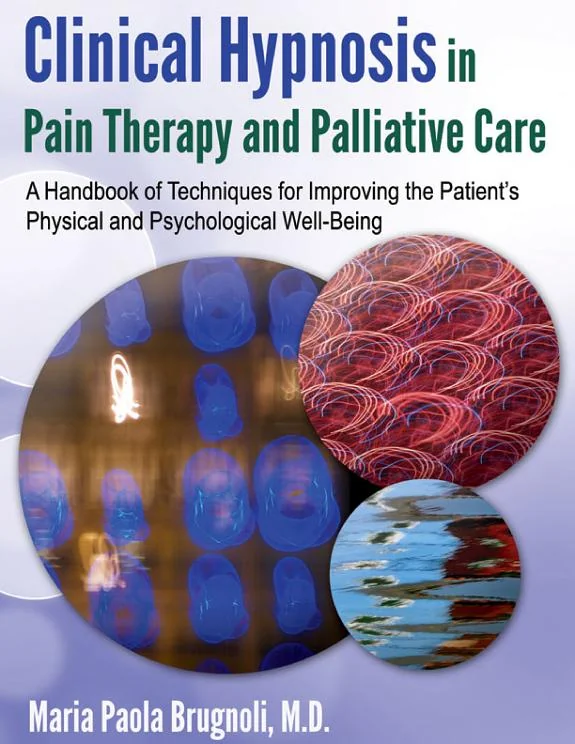
CLINICAL HYPNOSIS IN PAIN THERAPY AND PALLIATIVE CARE
 80
80

CLINICAL HYPNOSIS IN PAIN THERAPY AND PALLIATIVE CARE
Maria Paola Brugnoli's 'Clinical Hypnosis in Pain Therapy and Palliative Care' offers a structured exploration of consciousness states for therapeutic ends. Brugnoli, an anesthesiologist and pain specialist, commendably integrates her clinical experience with theoretical frameworks. The work's strength lies in its systematic approach to understanding neurophysiological correlates of pain and hypnotic states. However, the text occasionally leans heavily on academic exposition, which may present a steeper learning curve for practitioners seeking immediately applicable techniques without a robust background in neuroscience. A particularly insightful section discusses the concept of "dissociative anesthesia" in relation to hypnotic states, a concept often misunderstood. While comprehensive, the book could benefit from more extensive case studies illustrating the nuanced application of its proposed system. Brugnoli's contribution is valuable for its precise focus on the neurophysiology of hypnosis in pain management.
📝 Description
80
In 2015, Maria Paola Brugnoli published a work examining clinical hypnosis and mindfulness for pain and palliative care.
Anesthesiologist Maria Paola Brugnoli's 2015 book details how clinical hypnosis and mindfulness can manage pain and support palliative care. It moves past simply relieving symptoms to analyze the neurophysiological aspects of consciousness, aiming to improve therapeutic results. The approach outlined is systematic, intended for healthcare workers who want a deeper grasp of mind-body therapies.
This text is relevant for clinicians, pain specialists, anesthesiologists, palliative care physicians, psychologists, and psychotherapists interested in alternative methods for pain relief. Researchers studying hypnosis and mindfulness in clinical practice, as well as advanced students in medicine and psychology, will also find it useful. The book addresses a growing need for integrated, evidence-based treatments, connecting conventional medical practices with consciousness techniques for healing.
While not strictly esoteric in the occult sense, Brugnoli's work engages with the manipulation of consciousness for healing, a theme present in many spiritual and mystical traditions. It reflects a modern medical interest in states of awareness that have long been central to practices like meditation, shamanism, and certain contemplative paths. By focusing on the neurophysiological basis of these altered states, the book bridges the gap between ancient understandings of mind-body connection and contemporary scientific inquiry into their therapeutic potential.
💡 Why Read This Book?
• Learn a novel systemic approach to studying neurophysiological states of consciousness, directly applicable to enhancing clinical hypnosis efficacy, as detailed by Brugnoli. • Understand how to integrate clinical hypnosis with mindfulness techniques for improved pain therapy outcomes, a core focus of the book's 2015 publication. • Gain insights into palliative care applications by exploring specific techniques for modulating suffering through altered states of consciousness, building on anesthesiology principles.
⭐ Reader Reviews
Honest opinions from readers who have explored this book.
❓ Frequently Asked Questions
What is the primary focus of 'Clinical Hypnosis in Pain Therapy and Palliative Care'?
The book focuses on a systematic approach to clinical hypnosis and mindfulness for pain management and palliative care, emphasizing the study of neurophysiological states of consciousness to improve therapeutic outcomes.
Who is the author, Maria Paola Brugnoli?
Maria Paola Brugnoli is an anesthesiologist and pain specialist who brings her extensive clinical experience and knowledge to this integrative work.
When was the book first published?
The book was first published on January 1, 2015.
What is the unique contribution of this book to pain therapy?
It proposes a new system for studying neurophysiological states of consciousness to enhance the application of clinical hypnosis and mindfulness in pain therapy and palliative care.
Is this book suitable for patients seeking self-treatment?
No, this book is primarily intended for healthcare professionals, researchers, and advanced students in medical and psychological fields.
What kind of approach does Brugnoli advocate?
Brugnoli advocates for an integrative, systemic approach that combines clinical hypnosis and mindfulness, grounded in an understanding of neurophysiology.
🔮 Key Themes & Symbolism
Neurophysiological States of Consciousness
The work meticulously details how altered states of consciousness, induced through hypnosis and mindfulness, directly impact neurophysiological processes related to pain perception. Brugnoli outlines a systematic method for studying these states, moving beyond anecdotal evidence to a more empirical understanding. This approach seeks to unlock the potential for precise intervention in chronic pain conditions and end-of-life care, by understanding how the brain and body respond to focused mental states.
Integrative Pain Management
Brugnoli champions an integrative model for pain therapy that bridges conventional anesthesiology and pain management with psychotherapeutic techniques. The book presents clinical hypnosis not as a standalone therapy but as a potent adjunct, working in concert with mindfulness practices. This holistic perspective aims to address the complex nature of suffering, encompassing physical, emotional, and psychological dimensions for comprehensive patient care.
Mindfulness in Palliative Care
The application of mindfulness and hypnosis in palliative care is a significant focus. Brugnoli explores how these techniques can offer comfort, reduce anxiety, and improve the quality of life for patients facing terminal illnesses. By cultivating present-moment awareness and facilitating altered states of consciousness, the book suggests methods to alleviate distress and enhance the patient's experience during their final stages of life.
Systemic Approach to Therapy
A central theme is the introduction of a novel 'systemic approach' to the study and application of hypnosis. This framework encourages a comprehensive view, considering the interplay of various factors—neurophysiological, psychological, and environmental—in the therapeutic process. It moves away from fragmented treatments towards a unified understanding of how consciousness manipulation can yield consistent, improved outcomes in pain management.
💬 Memorable Quotes
Direct passages from the work, attributed to the author.
“A new system approach to study the neurophysiological states of consciousness.”
— This highlights Brugnoli's core contribution: proposing a structured methodology to investigate how specific brain states, achievable through hypnosis, can be scientifically understood and applied to pain relief.
“Improve the use of clinical hypnosis and mindfulness in pain therapy and palliative care.”
— This statement captures the book's practical aim – to provide clinicians with advanced insights and techniques to enhance the effectiveness of established mind-body therapies for patients experiencing significant suffering.
“Brugnoli brings together her experience, knowledge and emotional intelligence.”
— This suggests the author's combination of practical medical expertise, theoretical understanding, and empathetic insight, forming the foundation for her integrative approach to pain and consciousness.
“Explores the fields of clinical hypnosis and mindfulness as applied to the therapy of suffering.”
— This indicates the broad scope of the book, positioning hypnosis and mindfulness as versatile tools not just for physical pain but for the alleviation of existential and emotional suffering.
“The neurophysiological states of consciousness.”
— This phrase signifies the book's scientific grounding, focusing on the biological and neurological underpinnings of altered mental states and their therapeutic potential, rather than purely psychological or philosophical aspects.
🌙 Esoteric Significance
Tradition
While not strictly adhering to a single esoteric lineage like Hermeticism or Kabbalah, Brugnoli's work appeals to the broader tradition of consciousness exploration found in various mystical and Gnostic traditions. It shares a lineage with practices that seek to manipulate subjective experience for healing and insight, viewing the mind as a potent tool for altering physical reality. The emphasis on 'states of consciousness' echoes ancient contemplative practices that explored altered awareness for spiritual or therapeutic ends.
Symbolism
The book doesn't rely on overt esoteric symbolism but centers on the profound symbolism of 'consciousness' itself as a malleable force. The 'neurophysiological state' can be seen as a modern, scientific symbol for the 'inner realms' or 'astral planes' explored in older traditions. The act of hypnosis and mindfulness can be interpreted as symbolic journeys into the self, where pain is not merely an external affliction but a manifestation of internal states that can be transformed.
Modern Relevance
Brugnoli's work is highly relevant today, particularly for practitioners in fields like psychedelic-assisted therapy and neurofeedback, which also explore and modulate neurophysiological states of consciousness. It provides a foundational understanding of how subtle shifts in awareness can yield tangible therapeutic results, informing contemporary research into the placebo effect, pain perception, and the mind-body connection in holistic health movements.
👥 Who Should Read This Book
• Pain management specialists and anesthesiologists seeking to expand their therapeutic arsenal with evidence-informed mind-body techniques. • Palliative care providers aiming to enhance patient comfort and quality of life through non-pharmacological interventions. • Psychologists and psychotherapists interested in the neurophysiological underpinnings of hypnosis and mindfulness for treating suffering.
📜 Historical Context
Published in 2015, Maria Paola Brugnoli's work arrived as mind-body medicine was solidifying its place in academic and clinical settings. The preceding decades had seen significant advancements, notably the development of the Stress Reduction Clinic by Jon Kabat-Zinn at the University of Massachusetts Medical School in 1979, popularizing mindfulness. Simultaneously, hypnotherapy, though having roots stretching back to Franz Mesmer in the late 18th century and revolutionized by Milton H. Erickson in the 20th century, was undergoing rigorous scientific scrutiny. Brugnoli's contribution distinguishes itself by focusing specifically on the neurophysiological correlates of consciousness states within hypnosis and mindfulness for pain and palliative care. This era saw a growing discourse contrasting purely pharmacological approaches with integrated therapies. While not facing overt censorship, works like Brugnoli's aimed to bridge the gap between the empirically verifiable and the subtly experiential aspects of healing, often encountering skepticism from more traditional medical practitioners.
📔 Journal Prompts
The neurophysiological states of consciousness as a therapeutic modality.
Brugnoli's systemic approach to pain therapy.
Integrating clinical hypnosis with mindfulness practices.
The role of emotional intelligence in pain management.
Therapeutic applications of altered states of consciousness.
🗂️ Glossary
Clinical Hypnosis
A therapeutic technique involving focused attention and suggestion to achieve a state of heightened suggestibility, used to address medical and psychological conditions, including pain.
Mindfulness
A mental state achieved by focusing one's awareness on the present moment, while calmly acknowledging and accepting one's feelings, thoughts, and bodily sensations.
Neurophysiological States
Specific patterns of brain activity and bodily responses associated with different states of awareness, such as wakefulness, sleep, or hypnotic trance.
Palliative Care
Specialized medical care for people living with a serious illness, focusing on providing relief from the symptoms and stress of the illness to improve quality of life.
Pain Therapy
The branch of medicine focused on the diagnosis and treatment of pain, often employing a multidisciplinary approach.
Systemic Approach
A method of understanding complex phenomena by examining the whole system and the interactions between its parts, rather than focusing on individual components in isolation.
Emotional Intelligence
The capacity to be aware of, control, and express one's emotions, and to handle interpersonal relationships judiciously and empathetically.
This book appears in 1 collection
🔮 Readers Also Liked
Browse all →









From the “Hypnosis” Collection
View all →









More Free Occult Philosophy Books
View all →