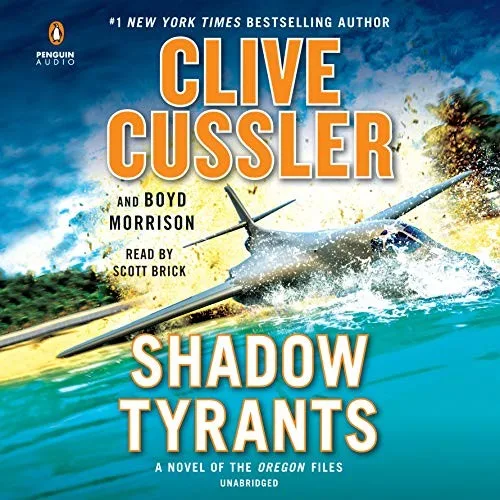
Shadow Tyrants
 75
75

Shadow Tyrants
The strength of "Shadow Tyrants" lies in its ambitious attempt to graft a modern thriller onto the bones of the Roman Republic. Cussler and Morrison have clearly invested in the historical backdrop, presenting a Rome that feels both grand and grimy. However, the narrative occasionally strains under the weight of its own plot, with the Dirk Pitt-esque problem-solving feeling somewhat anachronistic within the 49 BCE setting. The pacing, while generally brisk, falters in moments where exposition about Roman political factions threatens to overtake the action. A particularly striking element is the depiction of the Senate's impotence against rising military powers, a recurring theme in the late Republic that the authors effectively highlight. Ultimately, "Shadow Tyrants" is an entertaining, if occasionally uneven, historical adventure that offers a unique lens on a critical period.
📝 Description
75
In 49 BCE, as Caesar crossed the Rubicon, a conspiracy threatened Rome.
Clive Cussler and Boyd Morrison's "Shadow Tyrants" places readers in ancient Rome during the late Republic, specifically around 49 BCE. The story follows Dirk Pitt and his team as they uncover a plot with significant consequences for Western history. The novel combines detailed historical research with Cussler's characteristic fast-paced action and suspense.
The book examines the dynamics of power, the precariousness of empires, and the constant tension between order and chaos. It appeals to those who enjoy historical fiction mixed with mystery and adventure. Readers familiar with Cussler's Dirk Pitt series will recognize the familiar rhythm and character interactions. The narrative also suits individuals interested in the Roman Republic's political struggles and the social pressures present before the emperors' rule. Those drawn to stories about ancient artifacts, secret motives, and worldwide dangers will find "Shadow Tyrants" absorbing.
While framed as historical adventure, "Shadow Tyrants" touches on themes of hidden influences shaping major historical events. It suggests that secret societies or powerful, unseen forces might steer the course of empires. This aligns with certain esoteric traditions that posit a hidden hand guiding human affairs, often through manipulating political and social structures. The narrative implies that the known history of Rome, particularly its transition from Republic to Empire, was not solely driven by public figures but also by clandestine machinations.
💡 Why Read This Book?
• Gain insight into the political climate of 49 BCE Rome, understanding the pressures that led to Caesar's civil war, beyond standard historical accounts. • Experience the thrill of uncovering a secret society's influence on major historical turning points, a narrative device not commonly applied to this specific era. • Appreciate the blend of Cussler's signature adventure style with meticulously researched details of Roman military and political structures, offering a unique reading experience.
⭐ Reader Reviews
Honest opinions from readers who have explored this book.
❓ Frequently Asked Questions
What specific historical period does "Shadow Tyrants" by Clive Cussler and Boyd Morrison focus on?
The novel is set around 49 BCE, the critical year Julius Caesar crossed the Rubicon, marking the beginning of the Roman Civil War and the transition from Republic to Empire.
Are the characters in "Shadow Tyrants" based on real historical figures?
While the main protagonists like Dirk Pitt are fictional creations, the novel prominently features and interacts with real historical figures such as Julius Caesar, Pompey, and Cicero, placing them within the fictional plot.
Does "Shadow Tyrants" involve ancient artifacts or lost knowledge?
Yes, the plot of "Shadow Tyrants" often involves the discovery or pursuit of ancient artifacts and forgotten knowledge, which are central to the conspiracy the protagonists must unravel.
What is the primary genre of "Shadow Tyrants"?
The primary genre is historical adventure fiction, combining elements of thriller, mystery, and action with a strong foundation in the history of the Roman Republic.
Is "Shadow Tyrants" part of a series?
Yes, "Shadow Tyrants" features the recurring characters of Dirk Pitt and his associates, who are central to Clive Cussler's extensive bibliography of adventure novels.
What makes the historical setting of "Shadow Tyrants" significant?
The setting of 49 BCE is significant as it represents a point of profound crisis for the Roman Republic, where internal conflicts and the ambitions of powerful individuals led to its eventual collapse.
🔮 Key Themes & Symbolism
Hidden Hand of Power
The novel posits the existence of a shadowy cabal manipulating historical events from behind the scenes. This theme speaks to esoteric traditions that explore hidden hierarchies and unseen forces influencing the world. The narrative suggests that figures like Caesar and Pompey might have been pawns in a larger game orchestrated by entities with ancient motives, questioning the autonomy of historical actors and the perceived linearity of progress. This concept aligns with Gnostic ideas of demiurgic control or certain Hermetic interpretations of cosmic governance.
Republic to Empire Transition
"Shadow Tyrants" meticulously details the societal and political pressures that led to the fall of the Roman Republic. It examines how ambition, corruption, and external threats could destabilize a governing system, paving the way for authoritarian rule. The book illustrates the fragility of democratic institutions and the allure of strongman leadership during times of crisis, a recurring pattern explored in political philosophy and historical analysis across various esoteric schools.
Legacy of Antiquity
The narrative emphasizes the enduring impact of ancient civilizations and the potential power contained within their artifacts and forgotten knowledge. It suggests that the wisdom or destructive capabilities of the past are not inert but can be rediscovered and wielded in the present. This theme touches upon the esoteric interest in ancient mysteries, lost technologies, and the cyclical nature of history, where wisdom from bygone eras can resurface to shape the future.
The Nature of Tyranny
The book scrutinizes the various forms tyranny can take, from overt military dictatorship to the subtle manipulation of public opinion and political systems. It questions whether true freedom exists when powerful, unseen forces dictate the course of events. This exploration aligns with philosophical inquiries into power structures and the potential for oppressive control, a subject frequently addressed in occult literature concerning societal control and liberation.
💬 Memorable Quotes
Direct passages from the work, attributed to the author.
“The Senate debated, but the legions decided.”
— This concise statement captures the essence of the Roman Republic's final years. It highlights the shift in power dynamics, where political discourse became increasingly irrelevant as military might and the will of ambitious generals, like Caesar, dictated the fate of Rome.
“History is written by the victors, but its foundations are laid by the forgotten.”
— This interpretation suggests that while official histories focus on prominent figures and outcomes, the underlying actions of secret societies or less visible forces are what truly shape monumental events. It points to a hidden layer of causation in human affairs.
“An empire built on sand can still cast a long shadow.”
— This metaphor speaks to the deceptive nature of power and influence. It implies that even systems or organizations founded on unstable or morally questionable principles can exert significant control and leave a lasting impact on the world.
“The future is a ghost, haunted by the choices of the past.”
— This evocative concept underscores the deterministic influence of history and past actions on subsequent events. It implies that the consequences of historical decisions reverberate through time, shaping the possibilities and limitations of the future.
💡 Key Ideas
Editorial paraphrase of the work's core concepts — not direct quotes.
Some secrets are buried not in the earth, but in the hearts of men.
This paraphrase emphasizes the internal, psychological dimension of conspiracy and hidden knowledge. It suggests that the most potent secrets are those guarded by individuals, driven by personal motives, rather than merely physical concealment.
🌙 Esoteric Significance
Tradition
While not explicitly tied to a single esoteric lineage, "Shadow Tyrants" echoes themes found in Hermeticism and Gnosticism concerning hidden knowledge, cosmic manipulation, and the cyclical nature of power. The idea of a hidden cabal influencing world events aligns with certain interpretations of secret societies or unseen hierarchies that govern human affairs, as explored in various occult traditions. The novel’s focus on powerful individuals acting out grand historical narratives can be seen as a secularized manifestation of archetypal forces discussed in more mystical texts.
Symbolism
The Roman Eagle (Aquila) serves as a potent symbol of military might, imperial ambition, and the state's authority, representing both the glory and the potential for tyranny. The Tiber River, flowing through Rome, can symbolize the flow of history, the lifeblood of civilization, and the constant currents of change and corruption that undermine stability. The concept of 'shadows' itself functions symbolically, representing hidden motives, clandestine organizations, and the unseen forces that manipulate overt political actions.
Modern Relevance
Contemporary thinkers concerned with deep political theory, conspiracy narratives, and the mechanics of power consolidation find resonance in "Shadow Tyrants." Modern esoteric circles exploring systems theory, historical cycles, or the influence of clandestine groups on global events might draw parallels to the novel's plot. Furthermore, the book's exploration of how historical narratives can be manipulated speaks to current discussions surrounding disinformation and the construction of public perception in the digital age.
👥 Who Should Read This Book
• Readers fascinated by the political intrigue and military campaigns of the Roman Republic, seeking a narrative that dramatizes the era's key conflicts. • Fans of Clive Cussler's signature adventure style who enjoy fast-paced plots involving historical settings and global stakes. • Individuals interested in exploring themes of power, conspiracy, and the hidden forces that may shape historical outcomes, presented through an accessible, action-driven lens.
📜 Historical Context
Published in 2018, "Shadow Tyrants" entered a literary landscape where historical fiction, particularly concerning ancient Rome, had a robust following. The novel was written during a period of renewed global interest in political polarization and the perceived fragility of democratic institutions, mirroring themes explored within the book's depiction of the late Roman Republic. The era of 49 BCE was a critical juncture, marked by the breakdown of republican norms and the rise of figures like Julius Caesar, a period extensively documented by contemporaries such as Cicero. While Cussler's work often leans towards adventure, its engagement with the fall of the Republic taps into ongoing scholarly debates about republicanism's demise. Unlike purely academic works, Cussler and Morrison's approach prioritizes narrative excitement, potentially overshadowing nuanced historical interpretation for some readers, but making the period accessible to a broader audience.
📔 Journal Prompts
The Senate's waning influence in 49 BCE.
Dirk Pitt's interpretation of hidden historical causation.
The symbolic weight of the Roman Eagle in the narrative.
The contrast between public history and 'shadow' histories.
Reflections on the cyclical nature of power presented in the book.
🗂️ Glossary
Republic
In the context of "Shadow Tyrants," the Roman Republic refers to the period of Roman history (c. 509 BCE – 27 BCE) governed by elected officials and a Senate, before the establishment of the Roman Empire under Augustus.
Consul
One of the two highest-ranking elected officials in the Roman Republic, holding significant executive and military power. Their rivalry often shaped political events.
Legions
The primary military units of the Roman army, consisting of several thousand heavily armed infantry soldiers. Their loyalty and deployment were crucial in Roman political struggles.
Rubicon
A small river in northern Italy. Julius Caesar's crossing of the Rubicon in 49 BCE with his army was an act of treason and initiated the civil war against Pompey and the Senate.
Cabal
A secret political clique or faction, often operating with hidden motives. In the novel, 'cabal' refers to the clandestine group influencing Roman events.
Triumvirate
A political alliance of three men holding power. The First Triumvirate (Caesar, Pompey, Crassus) was a significant power bloc leading up to the events of the novel.
Dictator
In the Roman Republic, a temporary office granted extraordinary powers during emergencies. Figures like Caesar eventually held this title, signaling the Republic's decline.
🔮 Readers Also Liked
Browse all →









More by Clive Cussler, Boyd Morrison, Boyd Morrison
All books →
More Free Occult Philosophy Books
View all →