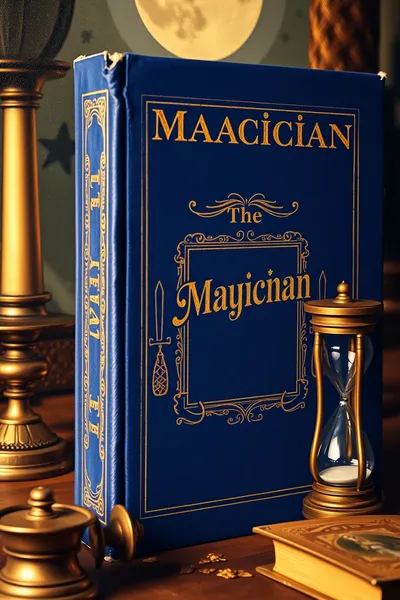
Shadow kiss

 75
75

Shadow kiss
Leigh Dragoon’s Shadow Kiss offers a narrative approach to the often abstract world of esoteric studies. The book’s strength lies in its ability to ground complex ideas about the shadow self and archetypal influences within a story that, while symbolic, maintains narrative momentum. Dragoon avoids didacticism, allowing the concepts to emerge organically through character interactions and plot development. A particular passage detailing the protagonist’s encounter with their shadow reflection in a scrying mirror effectively illustrates the book’s central theme of confrontation and integration.
However, the book’s allegorical nature can sometimes obscure clarity. Readers unfamiliar with foundational esoteric concepts might find themselves occasionally lost in the symbolic language without sufficient grounding. While the narrative serves its purpose, a more explicit glossary or an appendix explaining certain symbolic elements could have enhanced accessibility without sacrificing the book’s artistic integrity.
Read more ↓
Ultimately, Shadow Kiss provides a compelling, if sometimes opaque, fictional exploration of inner transformation.
📝 Description
75
Leigh Dragoon's 2013 novel, Shadow Kiss, uses narrative to convey esoteric ideas.
Shadow Kiss is a 2013 novel by Leigh Dragoon that embeds metaphysical concepts within its story. It is not a historical text or academic study, but a fictional work designed for readers to experience esoteric themes directly. The book seeks to foster understanding through immersion in its symbolic language and unique world. It appeals to those who find traditional academic approaches to esotericism dry. Readers interested in shadow work, personal change, and the connection between the visible and invisible worlds will find relevant material. The novel is suited for individuals who appreciate how stories can carry esoteric principles, especially those who enjoy symbolic narratives and character-focused examinations of inner life.
Dragoon's work centers on integrating the 'shadow self,' those repressed or unacknowledged parts of personality. The narrative examines how these hidden aspects affect a person's life and spiritual development. It also touches on archetypal forces and their appearance in human experience, suggesting that recognizing these forces can lead to greater self-awareness. The book invites readers to engage with these ideas through the unfolding plot and characters.
Published in 2013, Shadow Kiss arrived during a time of growing public interest in occult and esoteric subjects, often fueled by online spaces. While not tied to a specific historical order like the Hermetic Order of the Golden Dawn, the book draws from the broader Western esoteric tradition. Dragoon's fictional approach echoes earlier practices of using narrative to communicate mystical principles, seen in authors such as Helena Blavatsky or Aleister Crowley, yet it maintains its own distinct literary style.
💡 Why Read This Book?
• Gain a practical understanding of shadow work, as depicted through the protagonist’s journey of confronting repressed aspects of themselves, a core tenet explored in Chapter 3. • Experience how archetypal forces are presented through narrative, offering a unique perspective on their influence beyond theoretical discussion, as illustrated by the character of the Weaver. • Discover how symbolic storytelling can illuminate esoteric concepts, providing a memorable framework for understanding the integration of the self as presented in the book's concluding narrative arc.
⭐ Reader Reviews
Honest opinions from readers who have explored this book.
❓ Frequently Asked Questions
What is the primary focus of Leigh Dragoon's Shadow Kiss?
Shadow Kiss primarily focuses on the esoteric concept of the 'shadow self' and its integration into the conscious personality. It uses narrative to explore how unacknowledged aspects of the psyche influence an individual's spiritual and psychological development.
When was Shadow Kiss first published?
Shadow Kiss was first published in 2013, placing it within a contemporary wave of interest in esoteric literature and personal development.
Does Shadow Kiss offer practical exercises for readers?
While not a direct instruction manual, the book's narrative implicitly guides readers through a process of self-reflection. The character arcs and symbolic encounters encourage readers to consider their own inner landscapes and shadow aspects.
What esoteric traditions does Shadow Kiss draw upon?
The book draws broadly from Western esoteric traditions, particularly Jungian psychology's concept of the shadow and general archetypal symbolism found in myth and occultism.
Is Shadow Kiss suitable for beginners in esoteric studies?
It is suitable for beginners who prefer learning through narrative and symbolism rather than purely theoretical texts. However, prior familiarity with basic psychological or esoteric concepts might enhance comprehension.
Who is the author, Leigh Dragoon?
Leigh Dragoon is the author of Shadow Kiss, first published in 2013. Information about their other works or background is often found within niche esoteric communities and discussions surrounding the book.
🔮 Key Themes & Symbolism
The Shadow Self
The central theme of Shadow Kiss is the exploration and integration of the 'shadow self.' This concept, popularized by Carl Jung, refers to the unconscious aspects of the personality that the conscious ego does not identify in itself. Dragoon's narrative depicts this shadow not as purely negative, but as a potent source of energy and wisdom that must be confronted and integrated for wholeness. The book suggests that repression of these shadow elements leads to psychological and spiritual stagnation, while integration fosters growth and authenticity.
Archetypal Forces
Shadow Kiss engages with the idea of archetypal forces that shape human experience. These universal patterns, common across cultures and mythologies, are presented as dynamic entities within the narrative. Characters and events often embody these archetypes, serving as mirrors or catalysts for the protagonist's journey. Understanding and interacting with these forces, rather than being unconsciously driven by them, is presented as a key to reading through the spiritual path and achieving self-mastery.
Narrative as Metaphor
The book utilizes narrative itself as a primary vehicle for esoteric teaching. Rather than presenting abstract doctrines, Dragoon embeds metaphysical principles within a story. The plot, characters, and setting function as metaphors for inner psychological and spiritual processes. This approach aims to make complex esoteric ideas more accessible and relatable, allowing readers to experience them vicariously and draw their own conclusions, mirroring the process of symbolic interpretation in occult traditions.
Integration and Wholeness
The overarching goal presented in Shadow Kiss is the achievement of personal wholeness through integration. This involves not just accepting, but actively incorporating the shadow aspects and understanding the influence of archetypes. The narrative arc suggests that true spiritual progress is not about eradicating perceived flaws, but about transforming them through conscious awareness and acceptance. This leads to a more balanced and authentic self, capable of reading through the complexities of existence with greater wisdom.
💬 Memorable Quotes
Direct passages from the work, attributed to the author.
“The Weaver spins threads of what might be from the frayed edges of what is.”
— This refers to the creative and potential-generating power of the unconscious or the feminine principle (often associated with the Weaver archetype). It highlights how possibilities emerge from the existing, often fragmented, reality of our lives.
“To know the path, one must first acknowledge the traveler's hidden baggage.”
— This emphasizes the importance of self-awareness in spiritual or personal development. The 'hidden baggage' represents repressed traumas, beliefs, or shadow aspects that must be recognized before genuine progress can be made.
“Mirrors do not lie, they merely reflect what stands before them, however unwelcome.”
— This points to the function of confrontation in the book's narrative. Mirrors, literal or metaphorical, serve to reveal truths about the self, forcing characters (and by extension, the reader) to face aspects they might prefer to ignore.
“The kiss of shadow bestows not death, but a deeper form of sight.”
— This is a direct interpretation of the title, suggesting that engaging with the 'shadow' aspect of existence or the self leads not to destruction, but to enhanced perception and understanding, a core tenet of esoteric transformation.
💡 Key Ideas
Editorial paraphrase of the work's core concepts — not direct quotes.
The darkness you fear is the unlit room within yourself.
This line captures the book's central metaphor: the 'shadow' is not an external enemy but an internal, unacknowledged part of the self. It suggests that confronting personal darkness is a necessary step towards self-discovery and illumination.
🌙 Esoteric Significance
Tradition
Shadow Kiss operates within the broad spectrum of Western Esotericism, drawing heavily on archetypal psychology, particularly the Jungian concept of the shadow. It also aligns with perennialist philosophies that suggest universal spiritual truths can be found across diverse traditions. The work departs from more structured or dogmatic traditions by prioritizing symbolic narrative as the primary vehicle for conveying its insights, offering a more fluid and experiential approach to inner alchemy.
Symbolism
Key symbols include the 'shadow' itself, representing repressed or unknown aspects of the psyche, and the 'mirror,' which signifies self-reflection and confrontation with these hidden elements. The 'Weaver' archetype appears as a force of creation and destiny, embodying the potential inherent in even fragmented aspects of reality. These symbols are employed to illustrate the process of psychological integration and the unfolding of spiritual awareness.
Modern Relevance
Contemporary practitioners of Jungian analysis and those interested in modern witchcraft or pagan traditions often find resonance in Shadow Kiss's exploration of the shadow and archetypes. Thinkers focused on narrative psychology and the use of storytelling for personal growth also draw upon its methods. The book’s emphasis on integrating 'darker' aspects of the self aligns with current discussions on mental health and authentic living, making its symbolic approach relevant to modern self-help and spiritual exploration.
👥 Who Should Read This Book
• Individuals interested in Jungian psychology and shadow work who prefer learning through allegorical storytelling rather than academic texts. • Seekers of spiritual development looking for a narrative that explores the integration of personal 'darkness' into a more complete self. • Readers who appreciate symbolic literature and wish to understand how esoteric concepts can be woven into compelling fictional narratives.
📜 Historical Context
Published in 2013, Leigh Dragoon's Shadow Kiss arrived during a period marked by a resurgence of interest in esoteric and occult subjects, largely fueled by digital platforms and a growing desire for alternative spiritual frameworks. While not directly aligned with historical movements like the Theosophical Society founded by Helena Blavatsky in 1875, it taps into the broader Western esoteric tradition that seeks to explore hidden realities and inner transformation. The book's narrative approach, using fiction to convey complex ideas about the psyche and the unseen, echoes earlier traditions but adapts them for a contemporary audience. Unlike the more academic or ritualistic outputs of groups like the Hermetic Order of the Golden Dawn, Shadow Kiss functions as an accessible, symbolic story. Its reception occurred in an era where authors like Jordan Peterson were beginning to popularize Jungian concepts, though Dragoon’s focus remains distinctly within the mystical and symbolic rather than purely psychological analysis.
📔 Journal Prompts
The protagonist's initial fear of the shadow:
Reflecting on the Weaver's threads of potential:
The symbolic meaning of the mirror encounter:
Identifying personal 'hidden baggage' as the traveler:
The nature of the 'kiss of shadow' in your own experience:
🗂️ Glossary
Shadow Self
In Jungian psychology and esoteric thought, this refers to the unconscious aspects of the personality that the conscious ego does not identify with. It contains repressed desires, instincts, and weaknesses, but also untapped potential.
Archetype
Universal, archaic patterns and images that derive from the collective unconscious and are the psychic counterpart of a biological instinct. They manifest in myths, dreams, and symbolic representations.
Integration
The process of bringing unconscious or repressed aspects of the psyche (like the shadow) into conscious awareness and acceptance, leading to greater wholeness and psychological balance.
Scrying Mirror
A reflective surface, such as a mirror or bowl of water, used in divination or for facilitating visions and introspective states. In the book, it serves as a tool for confronting the shadow.
Inner Alchemy
A metaphorical process of transforming base psychological or spiritual qualities into higher, more refined states of consciousness, often drawing parallels with material alchemy.
The Weaver
An archetypal figure, often associated with fate or creation, who spins, binds, or cuts the threads of life. In the book, likely represents a force of destiny or unconscious creation.
Perennial Philosophy
The idea that all religions and spiritual traditions share a common source or underlying truth, often explored in esoteric literature.
🔮 Readers Also Liked
Browse all →






More by Leigh Dragoon
All books →

More Free Magic & Ritual Books
View all →