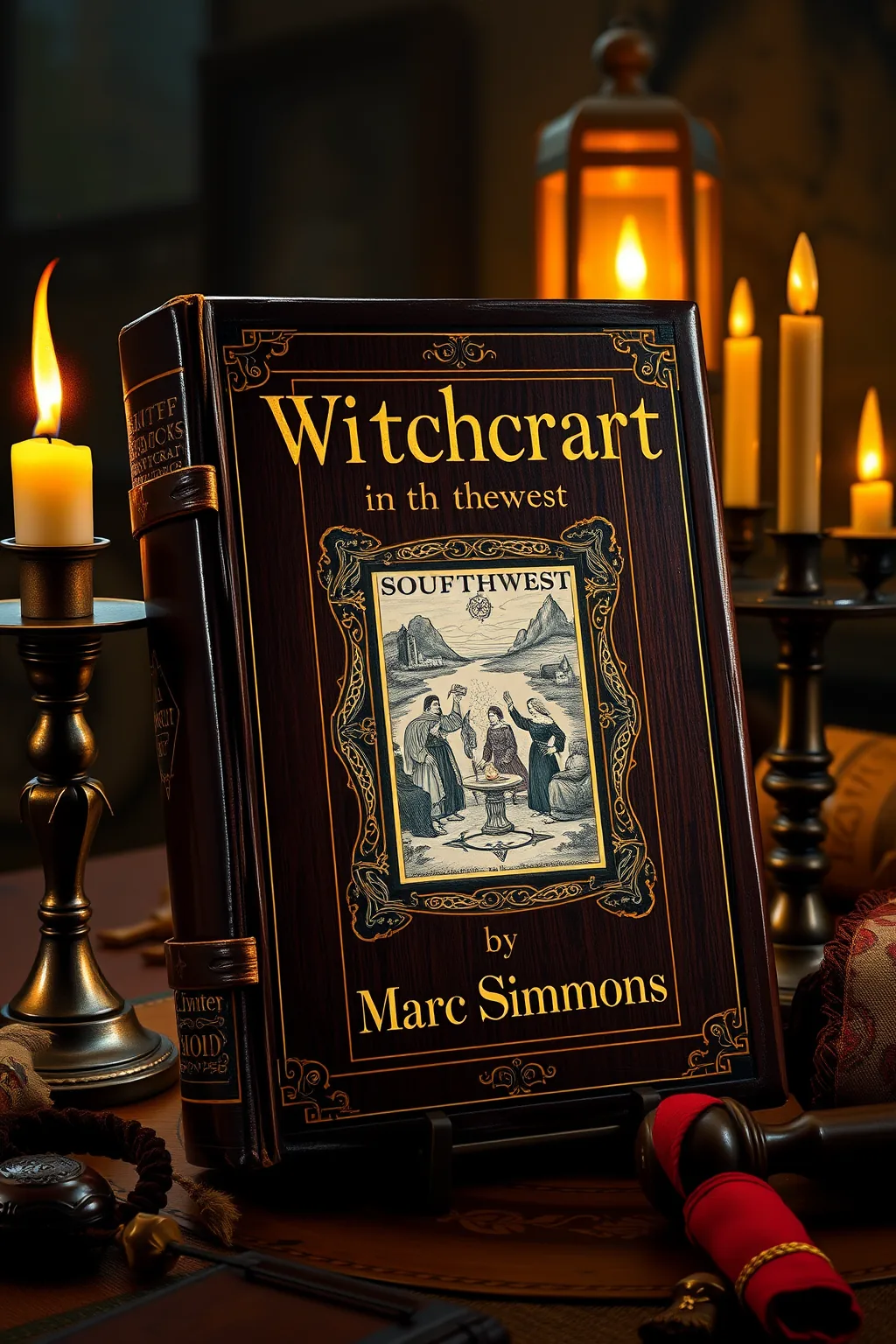
Witchcraft in the Southwest
 70
70

Witchcraft in the Southwest

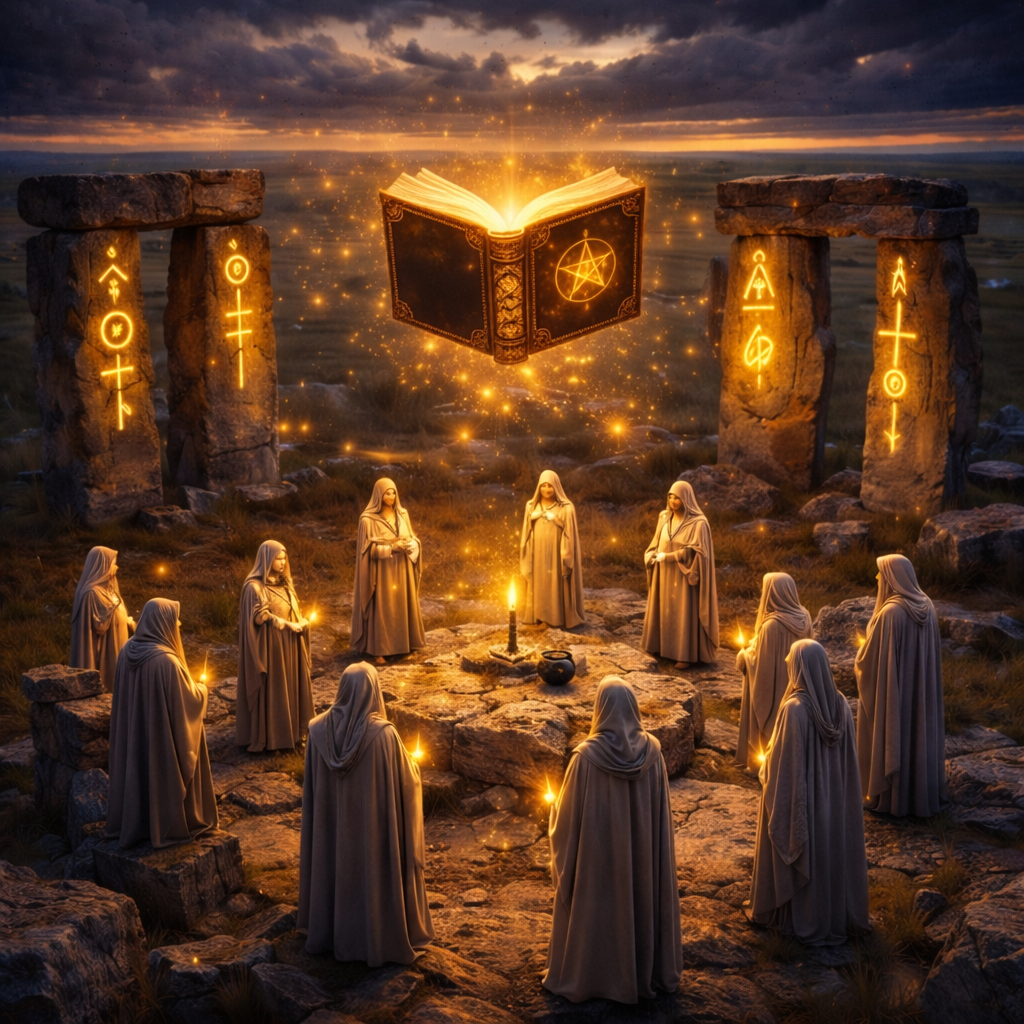

Evander Ashcroft (Alchemy & Hermeticism Editor) — Marc Simmons' 'Witchcraft in the Southwest' is a vital contribution to understanding the syncretic spiritual currents of North America. He brilliantly juxtaposes European anxieties about witchcraft with the nuanced magical cosmologies of the indigenous peoples, revealing a shared human preoccupation with manipulating unseen forces. This work offers profound insights into the psychology of fear and belief during the colonial era, highlighting how notions of sorcery became a lens through which cultures clashed and misunderstood each other. For practitioners and scholars of Western esotericism, it provides a unique perspective on the diffusion and adaptation of magical concepts, urging a deeper appreciation for the diverse expressions of the Craft beyond its European origins. A truly illuminating read.
📝 Description
70
Marc Simmons's 1991 book examines witchcraft in the American Southwest.
This book investigates the intersection of European witchcraft beliefs and indigenous spiritual practices in the American Southwest. Marc Simmons details the anxieties of Spanish colonists, who feared sorcery and the devil, and juxtaposes these fears with the complex magical traditions of the Pueblo peoples. The work examines how these colliding worldviews shaped the region's cultural and spiritual landscape.
Simmons moves beyond simple historical accounts to look at the underlying human fascination with the unknown and the power of belief. He explores how fear and faith contributed to the formation of spiritual understandings. The book considers universal archetypes of magic and the lasting influence of these beliefs.
This work sits within the study of Western esotericism, specifically focusing on the historical manifestation of folk magic and witchcraft in a colonial context. It examines how European occult traditions, often rooted in medieval and early modern European demonology and folk beliefs, encountered and interacted with the pre-existing shamanic and animistic systems of Native American cultures. The book is less about contemporary occult practice and more about the historical entanglement of belief systems concerning hidden powers and spiritual forces.
💡 Why Read This Book?
Uncover the hidden spiritual history of the Southwest. Explore the fascinating intersection of European witchcraft fears and indigenous magical practices. Understand the psychological impact of belief and superstition during colonial expansion. Ideal for seekers of esoteric knowledge, students of folklore, and anyone intrigued by the enduring power of magic.
⭐ Reader Reviews
Honest opinions from readers who have explored this book.
❓ Frequently Asked Questions
What is the primary focus of 'Witchcraft in the Southwest'?
The book primarily focuses on the beliefs, fears, and perceived practices of witchcraft among both Spanish colonists and indigenous peoples in the American Southwest, exploring the cultural exchange and conflict surrounding these ideas.
Does the book detail specific witchcraft rituals?
While it touches upon the nature of witchcraft, the book emphasizes the beliefs and cultural understanding of witchcraft rather than providing a manual of specific ritual mechanics.
Who were the main groups discussed in relation to witchcraft?
The book discusses the fears and beliefs of Spanish colonists regarding witchcraft, and explores the magical and ceremonial practices of the indigenous Pueblo peoples of the Southwest.
Is this book suitable for beginners interested in witchcraft?
Yes, it offers a valuable historical and cultural context for understanding witchcraft, making it accessible for beginners seeking to grasp its broader historical and societal dimensions.
What is the historical period covered in the book?
The book covers the period of Spanish colonization in the Southwest, detailing the interactions and perceptions of witchcraft from the early colonial era onwards.
🔮 Key Themes & Symbolism
The Syncretic Dance of Belief
This theme explores the remarkable synthesis of European notions of witchcraft and the complex magical systems of the indigenous peoples of the Southwest. It explores how these distinct worldviews, often born from vastly different understandings of the cosmos and human agency, interacted and influenced one another. The book illuminates how fear, misunderstanding, and genuine spiritual exchange created a unique cultural landscape where ancient practices were viewed through a European lens and vice-versa, forging a potent, albeit often fraught, spiritual dialogue.
Fear as a Catalyst for Magic
Marc Simmons masterfully illustrates how fear served as a potent catalyst for both the persecution of perceived witches and the practice of protective or transformative magic. The anxieties of the Spanish colonists, steeped in European folklore and religious doctrine, projected their deepest fears onto the unfamiliar spiritual practices of the native inhabitants. Conversely, indigenous communities likely employed their own magical traditions to ward off perceived threats, both natural and supernatural, demonstrating the dual nature of magic as both a tool of apprehension and a means of empowerment.
The Traces of Ancient Power
Beyond the historical narrative, this theme explores the enduring resonance of ancient indigenous spiritual traditions and their inherent connection to the earth and the unseen forces of the universe. The book suggests that the 'witchcraft' observed and feared by the colonists was often a misinterpretation of deeply ingrained ceremonial practices, shamanistic endeavors, and a profound understanding of natural energies. It invites readers to consider the primal power inherent in these ancient traditions and their continued relevance in understanding the human connection to the mystical.
💬 Memorable Quotes
Direct passages from the work, attributed to the author.
“The witch's power was seen as a dark mirror.”
— This implies that witchcraft was perceived as a perversion or opposite of accepted spiritual power, reflecting negative aspects rather than positive creation.
“Fear painted shadows on the desert sky.”
— This evocative phrase suggests that the anxieties of the colonists created a palpable atmosphere of dread and suspicion, transforming the natural landscape into a manifestation of their inner turmoil.
“Belief shaped reality more than any herb or incantation.”
— This highlights the power of the human psyche and collective belief systems in defining what is real and influencing events, underscoring the psychological underpinnings of magic.
“The old ways whispered secrets to the wind.”
— This speaks to the continuity and hidden nature of indigenous traditions, suggesting they held ancient wisdom and knowledge that was passed down subtly and perhaps only understood by those attuned to nature.
“Alien rituals became specters of the night.”
— This conveys how unfamiliar or misunderstood indigenous ceremonies were transformed into terrifying, supernatural threats in the minds of the European observers.
🌙 Esoteric Significance
Tradition
This work speaks to the broader esoteric tradition of comparative religion and folklore, particularly concerning the universal human impulse towards magic, ritual, and the manipulation of unseen forces. It bridges the gap between the European occult tradition, with its established notions of witchcraft, and the often-overlooked shamanistic and animistic practices of indigenous cultures. The book highlights how similar underlying archetypes of power, transformation, and spiritual connection manifest across diverse cultural landscapes, suggesting a common wellspring of esoteric understanding.
Symbolism
Key symbols emerge from the clash of cultures: the cross, representing European faith and perceived divine authority, juxtaposed with indigenous symbols of nature, the cosmos, and ancestral spirits. The fear of the 'witch' becomes a potent symbol of the unknown, the forbidden, and the power that lies outside established societal control. The desert landscape itself, with its stark beauty and inherent dangers, acts as a symbolic stage for these spiritual battles, embodying both harsh reality and the potential for profound mystical experience.
Modern Relevance
In an era increasingly aware of the importance of indigenous rights, cultural preservation, and the limitations of colonial perspectives, 'Witchcraft in the Southwest' offers crucial historical context. It encourages a re-evaluation of how 'magic' and 'witchcraft' have been defined and policed, prompting a more inclusive and respectful understanding of diverse spiritual paths. The book's exploration of belief, fear, and the human need for agency in shaping reality remains profoundly relevant to contemporary discussions on psychology, spirituality, and the ongoing quest for meaning.
👥 Who Should Read This Book
This evocative work is essential for seekers of arcane knowledge and students of esoteric traditions, offering a unique perspective on the cross-cultural transmission of magical beliefs. Scholars of Native American history, folklore, and religious studies will find a rich source of comparative insight. Practitioners of witchcraft and Wicca, particularly those interested in historical roots and diverse expressions of the Craft, will discover valuable context for understanding the evolution of their path. Beginners curious about the intersection of culture, belief, and the supernatural will find an accessible and compelling introduction to a fascinating historical phenomenon.
📜 Historical Context
The narrative unfolds against the backdrop of the Spanish colonization of the American Southwest, a period marked by profound cultural collision and religious evangelism. From the late 16th century onwards, Spanish explorers, missionaries, and settlers encountered diverse indigenous societies, particularly the Pueblo peoples, whose spiritual and ceremonial lives were deeply rooted and distinct. The arrival of the Spanish brought with it a European worldview steeped in Catholic doctrine and a pervasive fear of witchcraft, a concept deeply embedded in the European psyche. This fear was often projected onto the unfamiliar practices of the native populations, leading to accusations, persecution, and a complex interplay of misunderstanding and mutual influence. The book captures the anxieties of a frontier society grappling with the unknown, where spiritual beliefs, both indigenous and European, were potent forces shaping daily life and intercultural relations.
📔 Journal Prompts
How might the fears of the Spanish colonists have distorted their perception of Pueblo spiritual practices?
Reflect on a time when your own beliefs have been challenged by encountering a different worldview.
In what ways can understanding historical 'witchcraft' accusations inform our modern understanding of prejudice and fear?
Consider the symbolism of the desert landscape in relation to spiritual power and isolation.
How does the concept of 'belief shaping reality' manifest in your own life or in contemporary society?
🗂️ Glossary
Pueblo Peoples
A group of indigenous peoples of the Southwestern United States, known for their distinctive multi-storied adobe villages and complex agricultural and ceremonial systems.
Syncretism
The merging of different religions, cultures, or schools of thought, often resulting in a new, hybrid form.
Animism
The belief that natural objects, phenomena, and the universe itself possess souls or consciousness.
Shamanism
A practice characterized by the belief in and communication with a spirit world through altered states of consciousness, often facilitated by a shaman.
Esotericism
Belief systems and practices that are concerned with or intended only for a small number of people with specialized knowledge or interest.
This book appears in 3 collections
🔮 Readers Also Liked
Browse all →




More by Marc Simmons
All books →

From the “Ritual Magic” Collection
View all →





More Free Magic & Ritual Books
View all →