Life after near Death

 76
76

Life after near Death
Debra Diamond's Life After Near Death offers a thoughtful, if somewhat uneven, exploration of the NDE phenomenon. The strength lies in its attempt to synthesize anecdotal evidence with philosophical inquiry, particularly in its examination of the post-NDE transformation. However, the work occasionally falters by not always clearly distinguishing between subjective reports and established scientific consensus, creating a slight ambiguity for the reader. A particularly compelling section discusses the 'life review' as not merely a visual replay, but an empathic re-experiencing of events from the perspective of all involved. While the book provides a valuable overview, it could benefit from a more robust engagement with counter-arguments and the latest neurological research. It serves as a solid introduction but leaves room for deeper critical analysis.
📝 Description
76
Debra Diamond's 2016 book examines the philosophical and spiritual dimensions of near-death experiences.
Life After Near Death, published in 2016, moves beyond simple accounts of individuals who have neared death and returned. Debra Diamond analyzes the common elements in these experiences and their impact on a person's outlook and life choices. The work considers the philosophical, psychological, and spiritual aspects of these encounters, aiming for a deeper comprehension than mere anecdotes might offer.
This book is for readers interested in the nature of consciousness, what might exist beyond the physical, and questions about mortality. It appeals to those who have had their own near-death experiences (NDEs), or professionals who support individuals through such events, like therapists and spiritual counselors. Researchers studying consciousness will also find value, as will general readers seeking a more thorough understanding of life's significant transitions.
This work fits within the broader study of spiritualism and consciousness. It follows in a tradition that includes earlier investigations into altered states and psychic phenomena, notably the work of figures like Raymond Moody. Diamond's book emerged as discourse around subjective experiences that challenge purely materialist views became more common, even while facing skepticism. It addresses phenomena often explored in esoteric thought, such as encounters with spiritual entities and the potential for non-physical existence.
💡 Why Read This Book?
• Gain insight into the 'life review' concept, understanding it as an empathic re-experiencing of events, as detailed in the book's analysis of NDE narratives. • Explore the profound shift in values and perspectives commonly reported by individuals after a near-death experience, as documented in the text's examination of post-NDE transformations. • Understand the philosophical implications of NDEs, considering how these experiences challenge conventional views of consciousness and mortality, as presented by the author's synthesis of anecdotal evidence and esoteric thought.
⭐ Reader Reviews
Honest opinions from readers who have explored this book.
❓ Frequently Asked Questions
When was Life After Near Death first published?
Life After Near Death was first published in 2016, positioning it within a contemporary wave of interest in near-death experiences and consciousness studies.
What is a common element discussed in near-death experiences?
A frequently discussed element is the 'out-of-body experience,' where individuals report observing their physical bodies from a detached perspective.
What is the 'life review' concept in NDEs?
The 'life review' refers to the experience where individuals reportedly see their entire life flash before their eyes, often accompanied by a profound sense of understanding and judgment.
Does the book offer scientific explanations for NDEs?
The book explores various potential explanations, including neurological events and theories of consciousness, without definitively endorsing one over others.
Who might benefit most from reading Life After Near Death?
Individuals interested in consciousness, spirituality, the nature of death, and those who have personally experienced NDEs or work with others who have.
What is a post-NDE transformation?
A post-NDE transformation describes the significant and often lasting changes in a person's values, beliefs, and outlook on life following a near-death experience.
🔮 Key Themes & Symbolism
The Phenomenology of NDEs
This theme focuses on the detailed accounts of what individuals report experiencing when close to death. It covers phenomena such as the sensation of leaving the physical body, traversing a tunnel towards a light, encountering deceased relatives or spiritual guides, and experiencing an overwhelming sense of peace and love. The work meticulously catalogs these subjective reports, highlighting recurring patterns that suggest a common underlying structure to these extraordinary states of consciousness. It moves beyond simple cataloging to explore the transformative potential inherent in these deeply personal encounters with the threshold of death.
Post-NDE Transformation
A central focus is the radical and often permanent shift in perspective and values that frequently follows a near-death experience. Readers are introduced to concepts like increased altruism, a profound sense of interconnectedness with all life, a diminished fear of death, and a reordering of life priorities away from material concerns towards spiritual or relational ones. The book examines how these transformations are not merely psychological adjustments but can represent a fundamental reorientation of an individual's entire being, often leading to a life lived with greater purpose and compassion.
Consciousness Beyond the Physical
Life After Near Death engages directly with the implications of NDEs for our understanding of consciousness. It probes whether consciousness can exist independently of the physical brain, drawing on the accounts of individuals who report experiencing heightened awareness or cognitive function while physiologically compromised. The work explores various theoretical frameworks, from neurobiological explanations to more metaphysical interpretations, inviting readers to consider the possibility that the mind or spirit may transcend the limitations of the material body, particularly at the brink of death.
The Meaning of Death and Life
Ultimately, the book addresses existential questions about the meaning of life and death through the lens of near-death experiences. It suggests that these encounters can offer individuals a profound glimpse into the nature of reality, providing a sense of continuity beyond physical demise. By examining the wisdom and peace often reported by NDErs, the work encourages a reevaluation of societal attitudes towards death, framing it not as an end, but potentially as a transition or a gateway to another state of being. This perspective can profoundly impact one's approach to living.
💬 Memorable Quotes
Direct passages from the work, attributed to the author.
“The life review is not simply a movie of past events, but an empathic re-living.”
— This interpretation highlights the active, emotional, and relational aspect of the life review, suggesting it's a process of deep personal understanding rather than passive observation.
“A common thread is the overwhelming sense of unconditional love experienced.”
— This emphasizes the profound emotional and spiritual impact of NDEs, pointing to a universal experience of benevolent presence that reorients the individual's internal state.
“Fear of death diminishes significantly after such encounters.”
— This captures a key outcome of many NDEs, indicating that confronting the threshold of death can lead to a radical recalibration of one's relationship with mortality.
“Post-NDE individuals often report a heightened sense of purpose.”
— This points to the practical, life-altering effect of NDEs, suggesting they provide clarity and direction, motivating individuals to live more intentionally.
“The boundary between life and death appears more fluid than conventionally assumed.”
— This provocative statement challenges materialistic assumptions, suggesting NDEs offer evidence for a continuity of consciousness that blurs the sharp distinction between existence and non-existence.
🌙 Esoteric Significance
Tradition
This work aligns with the broader esoteric tradition of exploring consciousness beyond the physical, echoing themes found in Hermeticism, Neoplatonism, and certain branches of Western mysticism. It engages with the perennial question of life after death, a subject central to many esoteric lineages. While not strictly adhering to a single doctrine, it draws upon the shared esoteric understanding that reality is multi-layered and that human consciousness possesses capabilities extending beyond the material brain, particularly during profound transitional states.
Symbolism
Recurring symbols in NDE accounts, and thus in this work, include the 'tunnel' and the 'light.' The tunnel can be interpreted as a passage between worlds, a liminal space representing the transition from the physical realm to a spiritual or non-physical dimension. The light often symbolizes divine presence, ultimate truth, or pure consciousness, representing a state of unconditional love and profound peace that is frequently reported as transformative for the experiencer.
Modern Relevance
The concepts explored in Life After Near Death continue to resonate with contemporary spiritual and philosophical movements. Thinkers and practitioners in fields such as consciousness studies, transpersonal psychology, and even some areas of quantum physics engaged with the idea of consciousness as fundamental and potentially separable from the body. The book's insights inform modern discussions on end-of-life care, grief counseling, and the development of contemplative practices aimed at expanding awareness and reducing the fear of death.
👥 Who Should Read This Book
• Individuals grappling with questions about mortality and the nature of consciousness, seeking a comprehensive overview of near-death experiences and their philosophical implications. • Therapists, counselors, and spiritual caregivers who work with individuals experiencing NDEs or facing end-of-life issues, providing them with a framework for understanding these profound events. • Researchers and students of comparative religion, psychology, and consciousness studies, looking for a synthesis of anecdotal evidence and theoretical discussions on phenomena that challenge materialistic paradigms.
📜 Historical Context
Published in 2016, Debra Diamond's Life After Near Death entered a discourse already shaped by pioneers like Dr. Raymond Moody, whose 1975 work 'Life After Life' brought near-death experiences (NDEs) into mainstream discussion. The late 20th and early 21st centuries saw a growing body of research from figures such as Dr. Bruce Greyson and Dr. Pim van Lommel, exploring the physiological and psychological aspects of NDEs. Diamond's work arrived in an era where, despite increasing academic interest, NDEs still faced considerable skepticism from some quarters of the scientific community, often debated alongside parapsychology and altered states of consciousness research. The book's contribution lies in synthesizing these diverse accounts and philosophical considerations within a framework accessible to a broader audience, following in the tradition of thinkers who sought to bridge empirical observation with metaphysical inquiry.
📔 Journal Prompts
The reported 'life review' phenomenon as an empathic re-experiencing.
The concept of unconditional love encountered during an NDE.
Transformations in values and priorities following a near-death experience.
The symbolism of light and tunnels in transitional states.
Challenging conventional beliefs about the cessation of consciousness at death.
🗂️ Glossary
Near-Death Experience (NDE)
A profound personal experience associated with being close to death or undergoing a traumatic physical or emotional event, often involving altered perceptions and a sense of transcendence.
Out-of-Body Experience (OBE)
A sensation of floating outside one's physical body and being able to perceive the physical world from a different vantage point, commonly reported during NDEs.
Life Review
A commonly reported element of NDEs where individuals perceive a rapid, comprehensive overview of their past life, often with a strong sense of understanding and emotional processing.
Post-NDE Transformation
Significant and lasting changes in personality, values, beliefs, and life direction that occur after a person has had a near-death experience.
Phenomenology
The philosophical study of the structures of experience and consciousness, focusing on how things appear to us from the first-person point of view.
Liminal Space
A transitional or in-between state or place, often characterized by ambiguity and the potential for profound change, as experienced during the passage described in NDEs.
Materialistic Paradigm
A philosophical viewpoint that matter is the fundamental substance in nature, and that all phenomena, including consciousness, can be explained in terms of material interactions.
🔮 Readers Also Liked
Browse all →









More by Debra Diamond
All books →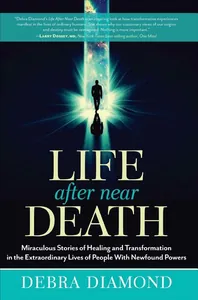
More Free Occult Philosophy Books
View all →