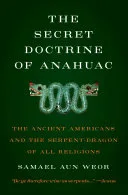
Secret Doctrine of Anahuac
 71
71

Secret Doctrine of Anahuac
Samael Aun Weor's "Secret Doctrine of Anahuac" presents a compelling, albeit dense, re-examination of serpent symbolism, moving beyond common interpretations to situate it within a framework of internal, psychospiritual awakening. The strength of the work lies in its ambitious attempt to synthesize Mesoamerican mythos with Gnostic principles, offering a unique lens on ancient wisdom traditions. However, the text can be challenging for newcomers, frequently assuming a familiarity with esoteric terminology that may not be universally present. A particularly striking section discusses the serpent on the Rod of Asclepius not merely as a medical symbol, but as an allegory for the awakening of internal spiritual forces. While the author’s erudition is evident, the dense prose requires sustained concentration. The "Secret Doctrine of Anahuac" offers a complex, symbolic interpretation of ancient beliefs for the serious student of esoteric philosophy.
📝 Description
71
Published January 1, 2025, Samael Aun Weor's "Secret Doctrine of Anahuac" examines the serpent symbol's esoteric meaning.
Samael Aun Weor's "Secret Doctrine of Anahuac" investigates the serpent motif as it appears in global mythologies and religious texts. The book argues that this symbol, often seen negatively, holds a hidden esoteric significance accessible only to initiates. Weor analyzes the serpent's appearance in texts like Genesis and the story of Moses' healing rod, proposing an inner, psychospiritual interpretation.
This work is for serious students of esoteric traditions, especially those interested in Mesoamerican cosmology and its links to universal occult ideas. It will appeal to readers of comparative religion, Gnosticism, and ancient symbolism who want to understand deeper meanings. The book requires careful thought and engagement with complex metaphysical ideas.
The "Secret Doctrine of Anahuac" draws heavily from the symbolic systems of pre-Columbian Mexico, connecting ancient Nahua thought with Gnostic and Hermetic traditions. It presents a modern interpretation of these doctrines for those seeking spiritual insight.
This book places itself within the lineage of Gnostic and Hermetic philosophies, seeking to reinterpret ancient Mesoamerican symbolism through these lenses. It aims to bridge the gap between indigenous Mexican spiritual traditions and Western esoteric thought. The focus on an 'inner serpent' connects it to traditions discussing spiritual energy, such as Kundalini in Indian thought, but framed within a Mesoamerican context.
💡 Why Read This Book?
• Understand the dualistic symbolism of the serpent, moving beyond simplistic good/evil binaries, as explored in relation to the Mosaic healing serpent and the Genesis serpent. • Gain insight into the esoteric significance of Mesoamerican symbolism, specifically how ancient Nahua concepts connect to universal Gnostic principles discussed by the author. • Discover the concept of the 'inner serpent' within the context of spiritual awakening, drawing parallels between internal energies like Kundalini and external mythological figures.
⭐ Reader Reviews
Honest opinions from readers who have explored this book.
❓ Frequently Asked Questions
What is the primary focus of "Secret Doctrine of Anahuac"?
The book primarily focuses on the esoteric interpretation of serpent symbolism found across world religions and mythologies, particularly its significance within ancient Mesoamerican traditions and its connection to internal spiritual energy.
Who is Samael Aun Weor?
Samael Aun Weor (born Víctor Manuel Gómez Rodríguez) was a prolific author on esoteric subjects, founding the Universal Gnostic Movement and writing extensively on mysticism, yoga, and occultism.
When was "Secret Doctrine of Anahuac" first published?
The book was first published on January 1, 2025, presenting a contemporary exploration of ancient esoteric doctrines.
Does the book discuss specific Mesoamerican cultures?
Yes, the work draws significantly from the symbolic systems and cosmological understandings of pre-Columbian Mexico, particularly the Nahua civilization.
What is the 'inner serpent' mentioned in the book?
The 'inner serpent' refers to the internal spiritual energy within humans, often associated with Kundalini or the 'serpent fire,' believed to be key to spiritual enlightenment and transformation.
Is this book suitable for beginners in esoteric studies?
While accessible, the book delves into complex metaphysical and symbolic concepts, making it most suitable for those with some background or a dedicated interest in esoteric philosophy and comparative religion.
🔮 Key Themes & Symbolism
Dual Nature of the Serpent
The work meticulously analyzes the serpent's representation across diverse cultures, highlighting its paradoxical roles: temptation and healing, destruction and creation. It contrasts the biblical serpent tempting Eve with the fiery serpent healing the Israelites and Apollo's battle with Python. The core argument is that these external manifestations mirror an internal, psycho-spiritual dynamic within the human being, representing latent energies and wisdom.
Mesoamerican Esoteric Traditions
A significant portion of the book is dedicated to interpreting the symbolism of ancient Mexico, particularly the Nahua people. Weor connects symbols like Quetzalcoatl (the feathered serpent) to universal esoteric principles. This section bridges indigenous cosmologies with broader Gnostic and Hermetic philosophies, suggesting a common root of ancient wisdom preserved in the Americas.
The Inner Serpent (Kundalini)
The central thesis posits the serpent as an internal force, often identified with Kundalini or the 'serpent fire.' This energy, when awakened and consciously directed, is presented as the mechanism for spiritual evolution and direct Gnosis. The book elaborates on how to awaken and control this inner power, linking it to the ancient initiatory traditions mentioned throughout.
Comparative Mythology and Religion
Weor employs a comparative approach, drawing parallels between serpent myths from Egyptian, Greek, Hebrew, and Mesoamerican sources. This method aims to reveal a universal esoteric doctrine underlying all religious expressions. The book argues that the true meaning of these symbols was historically reserved for initiates, suggesting a hidden layer of knowledge accessible through esoteric study.
💬 Memorable Quotes
Direct passages from the work, attributed to the author.
“A mysterious serpent is found in all religions and mythologies, yet its true meaning was known only to initiates of the secret doctrine.”
— This statement frames the serpent as a core, yet often misunderstood, symbol across spiritual traditions. It implies that esoteric knowledge holds the key to deciphering its profound, hidden significance beyond superficial interpretations.
“In the Bible, a serpent tempted Eve, yet a serpent also healed the Israelites.”
— This highlights the inherent duality of the serpent symbol within a single religious text, serving as an early example for the book's argument that the serpent represents complex, often opposing, forces.
“Apollo fought the dreaded Python, while a healing serpent rose upon the rod of Aesculapius.”
— This juxtaposes two Greek myths featuring serpents: one of conflict and destruction (Python), the other of healing and medicine (Aesculapius's rod). It reinforces the theme of the serpent's many-sided nature.
“The dual nature of the serpent is obvious, yet few know that the serpent is within us.”
— This is an important assertion, shifting the focus from external mythology to internal, personal experience. It posits the serpent's true relevance lies in its representation of forces or energies residing within the human psyche or physiology.
“Be ye therefore wise as serpents...”
— This biblical injunction serves as the epigraph, immediately linking the serpent to wisdom and suggesting that its 'serpentine' qualities, when understood esoterically, are a source of profound intelligence and insight.
🌙 Esoteric Significance
Tradition
The work is firmly situated within the Gnostic tradition, particularly as reinterpreted by Samael Aun Weor through his founding of the Universal Gnostic Movement. It draws parallels between the Gnostic concept of Sophia and the divine feminine, and indigenous deities, while emphasizing the Gnostic pursuit of gnosis (direct spiritual knowledge) through internal alchemy and self-realization, departing from more academic or purely philosophical approaches.
Symbolism
Central symbols include the serpent itself, representing both primal creative/destructive forces and the awakened Kundalini energy. The feathered serpent (Quetzalcoatl) is interpreted as a symbol of the synthesis of spiritual and material wisdom. The cross, often depicted with serpents, signifies the intersection of the divine with the material plane, and the potential for spiritual transmutation.
Modern Relevance
Contemporary practitioners of Gnosticism, practitioners of esoteric yoga or internal alchemy, and scholars of comparative religion and Mesoamerican spirituality find value in Weor's synthesis. His work continues to influence modern Gnostic groups seeking practical methods for spiritual development and a deeper understanding of ancient symbolism in a psychological context.
👥 Who Should Read This Book
• Students of Gnosticism and esoteric philosophy seeking to understand Samael Aun Weor's unique synthesis of Gnostic principles with Mesoamerican symbolism. • Researchers in comparative mythology and religion interested in alternative interpretations of the serpent motif across diverse cultures. • Dedicated practitioners of internal alchemy and spiritual disciplines looking for texts that explore the awakening of inner spiritual energies.
📜 Historical Context
Published in 2025, "Secret Doctrine of Anahuac" enters contemporary esoteric discourse by reinterpreting ancient Mesoamerican wisdom through a Gnostic lens. Samael Aun Weor's work emerged within the mid-20th century's fertile ground for occult revival, influenced by movements like Theosophy and Anthroposophy, yet seeking a distinct path rooted in Gnostic principles and direct experiential knowledge. While figures like Helena Blavatsky had previously explored comparative mythology, Weor focused specifically on bridging Nahua cosmology with his Gnostic framework. His prolific output aimed to reintroduce what he termed 'Gnostic Yoga' to a modern world he believed had lost touch with its spiritual heritage. The reception of Weor's extensive body of work has been primarily within dedicated Gnostic and esoteric communities, often viewed as a continuation of earlier esoteric traditions but with a unique emphasis on practical, internal transformation.
📔 Journal Prompts
The dual symbolism of the serpent in mythology, as contrasted in the temptation of Eve versus the healing rod of Moses.
Reflections on the concept of the 'inner serpent' and its potential manifestation within one's own psycho-spiritual landscape.
How does the symbolism of Quetzalcoatl, as presented in the book, relate to broader concepts of divine synthesis?
The significance of initiating knowledge: what does it mean for esoteric truths to be known only by initiates?
Exploring the connection between external serpent myths and the internal awakening of spiritual forces discussed by Weor.
🗂️ Glossary
Anahuac
An ancient Nahuatl (Aztec) term referring to the Valley of Mexico and its surrounding regions, often used more broadly to denote the cultural sphere of Mesoamerica.
Gnosis
In esoteric and Gnostic traditions, gnosis refers to direct, intuitive knowledge of spiritual truths, often achieved through personal experience rather than intellectual reasoning.
Inner Serpent
A concept central to the book, referring to the latent spiritual energy within the human being, often equated with Kundalini or the 'serpent fire,' believed to be the key to spiritual evolution.
Nahua
An indigenous group of Central Mexico, including the Aztecs, known for their complex civilization, cosmology, and symbolic language.
Esoteric Doctrine
A body of knowledge or teachings intended only for a select group of initiates, concerning spiritual truths and hidden meanings not accessible to the general public.
Kundalini
A primordial cosmic energy, often depicted as a coiled serpent, said to reside at the base of the spine in yogic and Tantric traditions, which can be awakened to achieve higher states of consciousness.
Initiates
Individuals who have undergone a process of initiation into a mystery school or esoteric order, thereby gaining access to secret knowledge or spiritual insights.