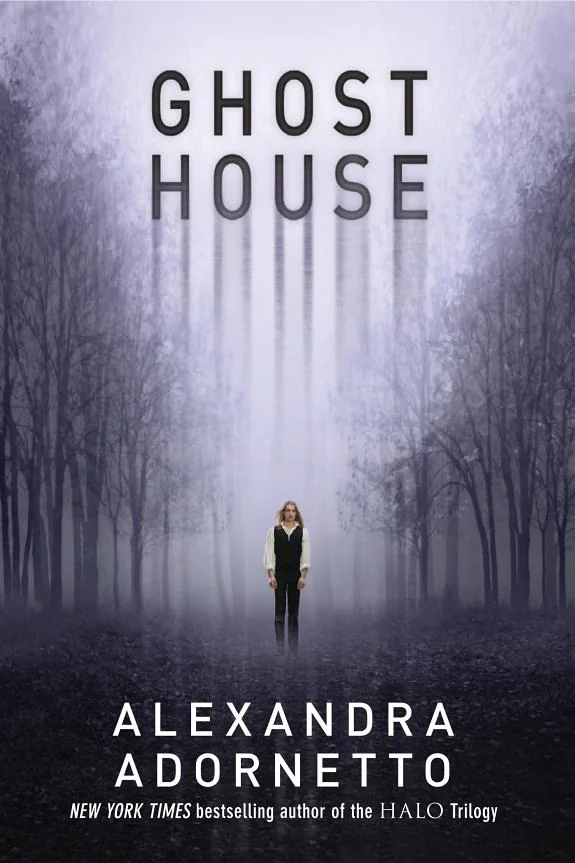
Ghost House
 72
72

Ghost House
Alexandra Adornetto’s "Ghost House" presents a familiar premise: a grieving protagonist retreats to an ancestral home plagued by spirits. The 2014 novel succeeds in establishing a potent atmosphere of unease early on, particularly in its depiction of Chloe's initial disorientation and the palpable sense of lingering sorrow within the English country estate. The introduction of a mysterious male figure, a staple of the genre, adds an immediate layer of romantic tension and intrigue. However, the plot occasionally strains under the weight of its own supernatural lore, becoming somewhat predictable as Chloe uncovers the house's secrets. While the writing effectively conjures a gothic mood, the pacing falters in the middle sections, slowing the momentum of the mystery. The strength lies in Adornetto's ability to evoke a sense of place and Chloe's internal turmoil; its limitation is a narrative trajectory that, while satisfying, rarely surprises. The depiction of the spectral entities as deeply connected to the Kennedy lineage is a compelling, albeit underdeveloped, concept. "Ghost House" offers a competent, atmospheric ghost story, best suited for readers seeking comfort in familiar spectral tropes.
📝 Description
72
Alexandra Adornetto's 2014 novel 'Ghost House' begins with a young woman seeking refuge at her grandmother's English estate.
Following her mother's death, Chloe Kennedy retreats to a secluded country estate, only to discover the property is home to persistent spectral inhabitants. These entities are deeply connected to the house's history and potentially to Chloe's family line. Her solitude is further complicated by the arrival of a stranger whose presence seems tied to the supernatural occurrences.
The narrative follows Chloe as she confronts her grief and the unsettling reality of the house's unseen residents. The estate, with its gothic architecture and layered past, acts as a mirror to Chloe's internal struggles. Adornetto uses this setting to heighten the psychological tension and the encroaching supernatural elements, blurring the lines between the living and the deceased.
As Chloe investigates the estate's secrets, she unearths historical connections to the hauntings. The mysterious stranger offers a complex role, acting as both a source of information and a possible danger. The story culminates in revelations about the nature of the hauntings and Chloe's entanglement within them, weaving together mystery, romance, and paranormal events.
Ghost House taps into traditions of haunted house literature that explore the intersection of personal history and spectral phenomena. The estate serves not just as a setting but as a repository of past lives and unresolved energies, suggesting a form of psychic residue tied to place and bloodline. This aligns with occult concepts of ancestral influence and the idea that significant emotional events can imprint themselves upon physical locations, making them accessible to sensitive individuals. The narrative questions the veil between worlds and the potential for the past to manifest in the present.
💡 Why Read This Book?
• Gain insight into the manifestation of ancestral trauma, as Chloe Kennedy directly confronts the spectral echoes of her family's past within the confines of the English country estate. • Experience the classic gothic trope of a haunted dwelling as a character in itself, exploring how the architecture and history of the grandmother's estate in southern England amplify psychological distress. • Discover the narrative device of a mysterious stranger who appears to understand and influence the supernatural occurrences, adding a layer of romantic suspense to the unfolding mystery.
⭐ Reader Reviews
Honest opinions from readers who have explored this book.
❓ Frequently Asked Questions
What is the primary setting for Alexandra Adornetto's "Ghost House"?
The novel is primarily set in a secluded country estate in the south of England, belonging to the protagonist Chloe Kennedy's grandmother.
What is the publication year of "Ghost House"?
Alexandra Adornetto's "Ghost House" was first published in 2014.
What genre does "Ghost House" fall into?
"Ghost House" is best categorized as a supernatural thriller or gothic romance, blending elements of ghost stories with mystery and young adult fiction.
Who is the author of "Ghost House"?
The author of "Ghost House" is Alexandra Adornetto, also known for her "New York Times"-bestselling Halo trilogy.
What is the central conflict for the protagonist, Chloe Kennedy?
Chloe Kennedy's central conflict involves dealing with the grief from her mother's loss while simultaneously confronting the spectral presences that haunt her grandmother's estate.
Does "Ghost House" involve romantic elements?
Yes, the novel introduces a mysterious stranger whose presence introduces romantic tension and intertwines with the unfolding supernatural mystery.
🔮 Key Themes & Symbolism
Spectral Inheritance
The novel posits that the past is not merely remembered but can manifest as tangible spectral presences. Chloe Kennedy inherits not only her grandmother's estate but also the lingering spirits and unresolved histories tied to her lineage. This theme explores how ancestral trauma and unresolved emotions can imprint themselves onto a place and its inhabitants, suggesting that familial connections extend beyond the physical realm into a persistent, spectral continuity.
Grief and the Unseen
Chloe's profound grief following her mother's death serves as a catalyst for her heightened awareness of the supernatural. The estate becomes a mirror to her internal desolation, where the spectral inhabitants reflect her own sense of loss and isolation. The work suggests that periods of intense emotional vulnerability can open individuals to perceive realities beyond the mundane, blurring the lines between psychological distress and genuine paranormal phenomena.
The Haunted Estate
The country estate in southern England functions as a classic gothic setting, imbued with a sense of history, decay, and mystery. Its architecture and grounds are not just a backdrop but an active participant in the narrative, harboring secrets and spectral activity. The estate symbolizes the weight of the past and the inescapable influence of history on the present, with its spectral inhabitants acting as living (or un-living) embodiments of forgotten events.
Enigmatic Strangers
The introduction of a mysterious stranger into Chloe's isolated world serves to propel the plot and introduce romantic tension. This figure, appearing in 2014, embodies the archetype of the knowledgeable outsider who understands the supernatural workings of the house. Their presence raises questions about allegiance and hidden motives, forcing Chloe to confront not only the house's ghosts but also the potential dangers posed by the living.
💬 Memorable Quotes
Direct passages from the work, attributed to the author.
“The house held its breath, waiting.”
— This evocative phrase captures the oppressive atmosphere of the estate, suggesting a sentient presence that is aware of Chloe's arrival and anticipates unfolding events, amplifying the sense of foreboding.
“Grief was a ghost that walked beside her.”
— This interpretation highlights how Chloe's sorrow is personified, becoming an almost tangible companion. It connects her internal emotional state directly to the spectral themes of the novel, suggesting that grief itself can feel like a haunting presence.
“The past was not dead; it merely slept uneasily.”
— This concept suggests that historical events and the spirits associated with them remain active, albeit dormant, within the house. It implies that Chloe's presence has disturbed this uneasy rest, awakening the spectral elements.
“She felt the eyes of the house upon her.”
— This highlights the personification of the estate, portraying it as an entity that observes and possibly judges Chloe. It enhances the gothic mood and the feeling of being constantly watched by unseen forces within the dwelling.
💡 Key Ideas
Editorial paraphrase of the work's core concepts — not direct quotes.
He seemed to know the secrets the walls whispered.
This paraphrase refers to the mysterious stranger, implying he possesses an intimate understanding of the estate's hidden history and supernatural activities, positioning him as a key figure in unraveling the central mystery.
🌙 Esoteric Significance
Tradition
While not explicitly aligned with a singular esoteric tradition, "Ghost House" draws upon the archetypal themes prevalent in Western occultism, particularly those related to hauntings, ancestral spirits, and the veil between worlds. It echoes Gnostic ideas of hidden knowledge and the influence of the past on the present, as well as general spiritualist concepts of communication with the deceased. The narrative functions as a contemporary fictional exploration of these enduring themes, accessible to a mainstream audience.
Symbolism
The country estate itself serves as a potent symbol, representing the protagonist's psyche and the accumulated weight of family history. The spectral inhabitants can be interpreted as manifestations of unresolved trauma or ancestral memory, common motifs in discussions of spiritual residue. The mysterious stranger often symbolizes a hidden guide or potential danger, embodying the unknown forces that either aid or hinder spiritual progression, a recurring trope in initiatory narratives.
Modern Relevance
The work's exploration of inherited emotional burdens and the psychological impact of place speaks to contemporary interest in ancestral healing and trauma-informed spirituality. Modern practitioners of esoteric studies might see traces of mediumistic practices and the concept of energetic imprints left by significant events or individuals. The novel's accessible blend of paranormal and romantic elements continues to appeal to readers exploring themes of connection, loss, and the unseen in popular culture.
👥 Who Should Read This Book
• Readers interested in contemporary gothic fiction who enjoy atmospheric settings and supernatural mysteries, particularly those familiar with authors like Shirley Jackson. • Young adult and new adult readers seeking a blend of romance, mystery, and ghost story elements within a compelling narrative structure. • Individuals exploring themes of grief, family history, and the lingering impact of the past, presented through an accessible fictional lens.
📜 Historical Context
Published in 2014, "Ghost House" emerged in a literary landscape where paranormal romance and young adult supernatural fiction, popularized by authors like Stephenie Meyer, were highly visible. Adornetto herself was already a "New York Times"-bestselling author with her Halo trilogy, lending significant visibility to this new series. The novel tapped into enduring gothic traditions, echoing themes found in works like Shirley Jackson's "The Haunting of Hill House" (1959), which also explored psychological distress within a haunted architectural space. While not directly engaging with specific occult movements of the era, the book participated in a broader cultural fascination with ghosts and the afterlife, often filtered through a lens of romantic entanglement. Its reception was largely within the YA and paranormal fiction spheres, where the blend of mystery, romance, and spectral encounters proved popular, aligning with contemporary trends rather than engaging with specific historical esoteric debates.
📔 Journal Prompts
Chloe Kennedy's perception of the estate's spectral inhabitants.
The symbolic role of the country estate in southern England.
The relationship between Chloe's grief and the house's hauntings.
The mysterious stranger's connection to the spectral activity.
Reflections on the nature of inherited memory and trauma as depicted in the novel.
🗂️ Glossary
Spectral Presences
Entities or apparitions believed to be spirits of the deceased that linger in a particular location, often tied to unfinished business or strong emotional imprints from their lives.
Ancestral Trauma
The concept that emotional or psychological wounds experienced by ancestors can be passed down through generations, manifesting in descendants as unexplained anxieties, behavioral patterns, or sensitivities.
Gothic Atmosphere
A literary mood characterized by suspense, mystery, decay, and the supernatural, often set in isolated, ancient buildings like castles or estates, aiming to evoke feelings of dread and unease.
Supernatural Thriller
A genre that combines elements of suspense and horror with paranormal or supernatural phenomena, focusing on creating tension and excitement through otherworldly threats.
Country Estate
A large rural property, typically including a substantial house and extensive grounds, often associated with old families, history, and potential hidden secrets or hauntings in literature.
Lineage
A sequence of descendants of a particular person; ancestry. In "Ghost House," it refers to the Kennedy family line and its connection to the estate's spectral history.
Protagonist
The main character of a story. In "Ghost House," this is Chloe Kennedy, whose experiences and journey drive the narrative forward.
This book appears in 1 collection
🔮 Readers Also Liked
Browse all →









From the “Apparitions” Collection
View all →

More Free Occult Philosophy Books
View all →