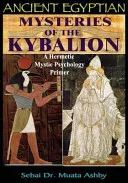
ANCIENT EGYPTIAN MYSTERIES OF THE KYBALION
 71
71

ANCIENT EGYPTIAN MYSTERIES OF THE KYBALION
Muata Ashby’s "Ancient Egyptian Mysteries of the Kybalion" attempts a bold recontextualization of a well-known esoteric text. Ashby’s strength lies in his deep immersion in Ancient Egyptian cosmology, offering a perspective that moves beyond the more common interpretations of the Kybalion. His detailed exploration of Neterianism provides a fascinating counterpoint to the 1908 text. However, the book occasionally struggles to bridge the gap between the specific historical context of Kemet and the Universal Principles as presented in the Kybalion. The section on the origins of Hermes Trismegistus, while informative, sometimes leans into speculative historical reconstruction rather than verifiable fact. The work is most compelling when it focuses on practical exercises derived from this synthesis. Ashby’s scholarship offers a valuable, albeit sometimes challenging, addition for those seeking a Neterian framework for Hermetic study.
📝 Description
71
Muata Ashby's 2014 book examines The Kybalion through Ancient Egyptian Hermeticism.
Published in 2014, Muata Ashby's "Ancient Egyptian Mysteries of The Kybalion" scrutinizes the famous text by connecting its principles to the ancient Egyptian tradition known as Neterianism. Ashby presents The Kybalion not just as a philosophical document, but as a manual for spiritual development and illumination. He argues for a deeper, practical understanding of its teachings, moving beyond mere intellectual appreciation.
The book traces the historical lineage of Hermeticism back to the mystic traditions of ancient Kemet. Ashby unpacks the Seven Principles of The Kybalion, discussing Hermes Trismegistus as a symbol of a particular spiritual path within Egyptian cosmology. The emphasis throughout is on how these concepts can be applied for personal spiritual growth, making it a guide for dedicated students of Hermetic philosophy and mysticism.
This work situates The Kybalion, first published in 1908 with a modern interpretation of Hermetic principles, within its purported Ancient Egyptian origins. Ashby connects the text to Neterianism, a tradition rooted in the mystic practices of ancient Kemet. It addresses the historical development of Hermetic thought, highlighting the figure of Hermes Trismegistus as an embodiment of ancient Egyptian spiritual paths. The book aims to illuminate the practical dimensions of these philosophies for contemporary seekers.
💡 Why Read This Book?
• Gain a practical framework for spiritual enlightenment by understanding the Seven Principles of the Kybalion as presented through the lens of Ancient Egyptian Neterianism, a perspective distinct from its 1908 publication. • Explore the historical origins of Hermeticism by tracing its lineage back to Kemet, learning about the Neterian tradition and its connection to figures like Hermes Trismegistus. • Engage with specific Neterian practices and meditations designed for spiritual growth, as outlined in the book's practical application sections.
⭐ Reader Reviews
Honest opinions from readers who have explored this book.
❓ Frequently Asked Questions
What is the relationship between the Kybalion and Ancient Egyptian mysteries according to Muata Ashby?
Muata Ashby posits that the Kybalion's principles are deeply rooted in Ancient Egyptian Neterianism, a spiritual tradition he extensively researches. He aims to show how these principles were originally understood and practiced in Kemet, offering a historical and practical context beyond the 1908 publication.
Who was Hermes Trismegistus in the context of this book?
Ashby presents Hermes Trismegistus not just as a mythical figure but as a symbolic representation of a spiritual adept and teacher within the Ancient Egyptian Neterian tradition. The book explores the historical and spiritual significance attributed to this figure in Kemet.
What are the Seven Principles discussed in the book?
The book discusses the Seven Principles of Hermeticism as outlined in the Kybalion: Mentalism, Correspondence, Vibration, Polarity, Rhythm, Cause and Effect, and Gender. Ashby reinterprets these principles through the framework of Ancient Egyptian Neterianism.
Is this book a new interpretation of the Kybalion or a direct translation?
This book is an interpretive study that connects the teachings of the Kybalion to Ancient Egyptian mysteries and Neterianism. It is not a direct translation but an in-depth analysis and re-contextualization of the Kybalion's concepts.
When was 'Ancient Egyptian Mysteries of the Kybalion' first published?
The book 'Ancient Egyptian Mysteries of the Kybalion' by Muata Ashby was first published on December 5, 2014.
What is Neterianism as described by Muata Ashby?
Neterianism, as presented by Ashby, refers to the spiritual and philosophical system of Ancient Egypt, emphasizing the worship and understanding of the Neteru (divine forces or gods) as manifestations of the One Divine. It is the framework through which he interprets Hermeticism.
🔮 Key Themes & Symbolism
Neterianism as Hermetic Origin
This volume argues for the direct lineage of Hermetic philosophy from the spiritual practices of Ancient Egypt, termed Neterianism. Ashby details how concepts presented in the Kybalion are not merely philosophical abstracts but reflections of the cosmology and spiritual disciplines practiced in Kemet. He analyzes the Neteru (divine forces) as foundational to understanding the Seven Principles, positioning Ancient Egypt as the primary source for this esoteric wisdom, predating later Greek interpretations.
Practical Application of Hermetic Principles
Beyond theoretical exposition, the book stresses the practical application of Hermetic teachings for achieving spiritual enlightenment. Ashby outlines meditations, prayers, and rituals derived from Neterian practices, intended to help the practitioner embody the Seven Principles. This focus on experiential realization distinguishes the work, presenting Hermeticism as a living path rather than a historical curiosity.
Hermes Trismegistus: A Neterian Adept
Ashby reinterprets the figure of Hermes Trismegistus within the context of Ancient Egyptian spirituality. He suggests that the legend of Hermes is rooted in the wisdom of Egyptian priest-adepts who transmitted esoteric knowledge. The book explores the attributes and teachings associated with Hermes, linking them to specific Neterian deities and concepts, thereby providing a deeper understanding of his role as a spiritual guide.
The Seven Principles Recontextualized
The core of the Kybalion's Seven Principles—Mentalism, Correspondence, Vibration, Polarity, Rhythm, Cause and Effect, and Gender—are examined through an Ancient Egyptian lens. Ashby demonstrates how these universal laws are reflected in Egyptian myths, rituals, and hieroglyphic symbolism, offering a richer and more nuanced comprehension of their meaning and operation within a cosmological framework.
💬 Memorable Quotes
Direct passages from the work, attributed to the author.
“The Kybalion is not merely a philosophical work but a guide for spiritual transformation.”
— This interpretation highlights Ashby's central thesis: that the teachings of the Kybalion are intended for practical implementation, aiming at the attainment of enlightenment, rather than remaining purely theoretical knowledge.
“Practical exercises are key to embodying the Seven Principles.”
— This emphasizes the experiential aspect of Ashby's approach, suggesting that true understanding and spiritual growth come from actively practicing the Hermetic principles, drawing from Neterian techniques.
“Hermes Trismegistus symbolizes the highest spiritual attainment within the Neterian tradition.”
— This interpretation positions Hermes Trismegistus not just as a historical figure but as an exemplar of spiritual mastery, deeply connected to the wisdom and practices of Ancient Egypt as presented in the book.
💡 Key Ideas
Editorial paraphrase of the work's core concepts — not direct quotes.
Hermeticism finds its deepest roots in the ancient Neterianism of Kemet.
This quote captures Ashby's argument for the Egyptian origins of Hermetic philosophy. It suggests that understanding the spiritual system of Ancient Egypt is crucial for a complete grasp of Hermetic wisdom.
The Neteru represent divine principles that govern the cosmos and human consciousness.
This paraphrased concept explains Ashby's view of the Egyptian deities (Neteru) as fundamental cosmic forces and spiritual archetypes, integral to understanding the underlying principles of Hermeticism.
🌙 Esoteric Significance
Tradition
This work firmly situates itself within the Hermetic tradition, specifically arguing for its primary foundation in Ancient Egyptian Neterianism. Ashby's approach seeks to bridge the gap between the Hellenistic Hermetica and the earlier, indigenous spiritual system of Kemet. It departs from interpretations that solely focus on later Neoplatonic or alchemical developments, re-centering the Egyptian Neteru and cosmology as the essential source.
Symbolism
Key symbols explored include the Ankh, representing life and immortality, and the Djed pillar, symbolizing stability and endurance, both interpreted through the lens of Hermetic principles. Hieroglyphs are also treated as symbolic representations of cosmic laws and spiritual truths, providing a visual language for understanding concepts like Vibration and Polarity within the Neterian framework.
Modern Relevance
Contemporary practitioners of Western esoteric traditions, particularly those interested in Hermeticism, ceremonial magic, and Kemetic paganism, find value in Ashby's work. His emphasis on practical application and spiritual attainment appeals to modern seekers looking for tangible methods to integrate ancient wisdom into their lives, moving beyond purely academic study.
👥 Who Should Read This Book
• Students of Hermetic philosophy seeking to understand the Ancient Egyptian origins of the Kybalion's Seven Principles. • Practitioners of Neterianism or Kemetic spirituality interested in exploring the philosophical underpinnings of their tradition through a well-known esoteric text. • Comparative religion scholars investigating the cross-pollination of ideas between Ancient Egyptian religion and later Western esoteric traditions like Hermeticism.
📜 Historical Context
The early 20th century, particularly the period surrounding the anonymous publication of *The Kybalion* in 1908, saw a surge of interest in esoteric movements and comparative religion. Thinkers like Helena Blavatsky had already popularized the idea of ancient wisdom traditions. Muata Ashby's 2014 work, 'Ancient Egyptian Mysteries of the the Kybalion,' emerged in a landscape where Hermeticism was often studied through its Renaissance or alchemical manifestations. Ashby's contribution is to firmly anchor these principles within the specific religious and philosophical milieu of Ancient Egypt, challenging interpretations that might overlook its Neterian roots. While contemporaries like Manly P. Hall explored similar themes in works like 'The Secret Teachings of All Ages' (1928), Ashby's focus is more narrowly on the Kybalion's Egyptian antecedents, engaging with scholarly discussions on Egyptian religion and Hermeticism.
📔 Journal Prompts
The Seven Principles as understood through Neterianism: which principle presents the most immediate challenge to your current worldview?
Reflecting on the concept of the Neteru: how do these divine forces manifest in your daily life?
Hermes Trismegistus as a Neterian adept: what qualities of spiritual mastery do you aspire to cultivate?
The practical application of the Kybalion's teachings: identify one specific meditation or exercise you wish to explore further.
The concept of 'Correspondence' within the Egyptian cosmological framework: how does this principle relate to your understanding of interconnectedness?
🗂️ Glossary
Neterianism
The spiritual and philosophical system of Ancient Egypt, centered on the worship and understanding of the Neteru (divine forces) as manifestations of the One Divine. Ashby uses this term to refer to the indigenous Egyptian religion.
Neteru
The divine beings or forces in Ancient Egyptian religion, often translated as 'gods'. Ashby interprets them as fundamental cosmic principles and aspects of the One Divine.
Kemet
The ancient name for Egypt, meaning 'Black Land,' referring to the fertile soil along the Nile. It is used to denote the land and its civilization in its historical context.
Hermes Trismegistus
A legendary Hellenistic figure who synthesized Greek and Egyptian religious and philosophical traditions. In Ashby's work, he is viewed as a Neterian adept embodying supreme wisdom.
The Kybalion
A book published anonymously in 1908 that claims to present the core teachings of Hermeticism. Ashby's work provides an interpretation of its principles through an Ancient Egyptian lens.
Mentalism
The First Principle of Hermeticism, as presented in the Kybalion, stating that 'The All is Mind; The Universe is Mental.' Ashby explores its roots in Egyptian concepts of creation through thought.
Correspondence
The Second Principle of Hermeticism, 'As above, so below; as below, so above.' Ashby connects this to Egyptian ideas of cosmic order and the mirroring of divine principles in the human and natural realms.