Saducismus Triumphatus

 75
75

Saducismus Triumphatus
Glanvill and More's Saducismus Triumphatus presents a formidable, albeit chilling, defense of witchcraft and diabolical agency. The strength of the work lies in its meticulous cataloging of alleged supernatural events and its earnest attempt to reconcile these with a rational, albeit divinely ordered, worldview. Glanvill's own preface, a powerful statement against the rising tide of skepticism, is particularly compelling. However, the sheer volume of anecdotal evidence, presented without critical scientific scrutiny by modern standards, can be overwhelming. The lengthy accounts of spectral evidence and pacts with the Devil, while historically illuminating, often lack the nuanced argumentation one might expect from a proponent of empirical philosophy. The work's limitation is its inherent bias; it assumes the veracity of its supernatural claims from the outset. A striking passage details the case of the alleged haunting of a house in Suffolk, a narrative rich in detail but ultimately unprovable. Saducismus Triumphatus remains a crucial, if disquieting, document for understanding the late 17th-century mind wrestling with the unseen.
📝 Description
75
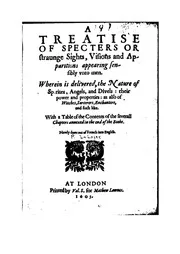
Saducismus Triumphatus, published in 1681, defended supernatural phenomena against 17th-century skepticism.
Compiled after Joseph Glanvill's death by Henry More, Saducismus Triumphatus argues for the reality of witchcraft and other supernatural events. It emerged in the late 17th century when empirical philosophy and organizations like the Royal Society encouraged doubt about traditional beliefs. Glanvill, a member of the Royal Society himself, used empirical evidence and testimonies to support his case for the existence of spirits and their influence.
The book presents accounts of alleged witchcraft and encounters with the supernatural. These are paired with philosophical and theological arguments designed to counter skeptical viewpoints and affirm the presence of spiritual forces. It engages directly with criticisms that questioned the existence of non-corporeal beings and their agency in the world. The work also touches upon wider intellectual currents, including figures like Isaac Newton who explored older metaphysical traditions alongside emerging scientific inquiry.
This work is situated within the Christian demonological tradition, a significant current in early modern Europe. It reflects a persistent engagement with the nature of spirits, both angelic and demonic, and their interactions with the human world. While written in an era increasingly influenced by mechanical philosophy, Saducismus Triumphatus shows how older beliefs about spiritual realities continued to be debated and defended using both theological reasoning and appeals to empirical observation. It stands as a record of the intellectual climate where belief in the supernatural coexisted and contended with nascent scientific explanations.
💡 Why Read This Book?
• Understand the philosophical underpinnings of early modern witchcraft accusations, particularly Glanvill's attempt to reconcile empirical observation with spiritual realities, as detailed in his arguments against atheism. • Examine the historical methodology of supernatural inquiry through the detailed case studies and testimonies presented, offering insight into the evidentiary standards of the period. • Grasp the intellectual conflict between burgeoning scientific rationalism and enduring supernatural beliefs, as exemplified by Glanvill's engagement with skeptical arguments prevalent around the time of the Royal Society's influence.
⭐ Reader Reviews
Honest opinions from readers who have explored this book.
❓ Frequently Asked Questions
What is the historical significance of Glanvill's 'Saducismus Triumphatus'?
Published in 1681, it represents a significant late 17th-century attempt to scientifically and philosophically defend the reality of witchcraft and supernatural phenomena against growing skepticism, influencing debates on empiricism and belief.
Who were the primary authors involved in 'Saducismus Triumphatus'?
The work is largely attributed to Joseph Glanvill (1636-1680), with significant compilation and editing done by Henry More (1614-1687) from Glanvill's papers after his death.
What philosophical stance did Glanvill take regarding witchcraft?
Glanvill, an early supporter of the Royal Society, argued for the reality of witchcraft and demonic influence, using empirical evidence and reasoned arguments to counter atheistic and materialistic explanations of the world.
Is 'Saducismus Triumphatus' in the public domain?
Yes, due to its age, the original work is in the public domain in the United States and many other countries, allowing for free distribution and scholarly study.
What is the meaning of 'Saducismus Triumphatus'?
The title translates from Latin as 'Sadducism Triumphant,' referring to the triumph of the Sadducees' disbelief in spirits and resurrection over the Pharisees' belief, thus signifying the triumph of belief in supernatural agents over skepticism.
What kind of evidence does the book present for witchcraft?
The book compiles numerous testimonies, depositions, and accounts of alleged witch trials, spectral evidence, and interactions with spirits, presenting them as empirical proof of supernatural occurrences.
🔮 Key Themes & Symbolism
The Reality of Witchcraft
The central thesis of 'Saducismus Triumphatus' is the undeniable reality of witchcraft and the active presence of malevolent spiritual forces. Glanvill and More compile extensive testimonies and case studies, from alleged pacts with the Devil to the malevolent actions of witches, presenting them as empirical evidence. They argue that denying such phenomena aligns with Sadducean disbelief, hence the title, and that a proper understanding of God's creation must include its spiritual inhabitants and their interactions with the material world.
Spirituality vs. Materialism
The work is a vigorous polemic against the burgeoning materialistic and atheistic philosophies of the late 17th century. Glanvill, an advocate for empirical inquiry, paradoxically uses its principles to defend the spiritual realm. He argues that a purely naturalistic explanation of the world is incomplete and leads to moral decay. The existence of witches and demons is presented not merely as a religious tenet but as a logical consequence of accepting a divinely created universe with active spiritual agents.
Empiricism and Testimony
A key methodological aspect is the reliance on testimony and reported experience as valid forms of evidence. Glanvill, while associated with the Royal Society, champions the idea that credible accounts of supernatural events, when corroborated, possess evidential weight. The book meticulously records the details of alleged witch trials and personal encounters, treating these narratives as data points supporting the existence of witchcraft, challenging those who would dismiss such accounts as mere superstition or delusion.
The Role of the Devil
The Devil is portrayed as an active, intelligent agent in the world, capable of making pacts with humans and influencing events. 'Saducismus Triumphatus' details the perceived methods by which the Devil operates, including possession, enchantment, and the granting of unholy powers. The work posits that the Devil's influence is a significant factor in human affairs and that understanding his role is crucial to comprehending the phenomena of witchcraft and demonic activity.
💬 Memorable Quotes
Direct passages from the work, attributed to the author.
“Accounts of witchcraft are presented as evidence against materialistic philosophy.”
— This captures the book's central claim that the alleged actions and existence of witches, supported by numerous testimonies, serve as empirical proof that the universe is not merely a material system, but one inhabited and influenced by spiritual forces.
“The testimony of credible witnesses is treated as foundational proof.”
— This reflects the book's reliance on anecdotal evidence. Glanvill and More prioritize detailed accounts from individuals and judicial proceedings as valid data points supporting the reality of supernatural phenomena, a stance that aligns with an early form of empiricism.
“The Devil is depicted as an active agent in human affairs.”
— This expresses the book's portrayal of demonic influence. The work details how the Devil supposedly interacts with the world, making pacts and granting power, presenting this as a crucial element in understanding witchcraft and other supernatural occurrences.
💡 Key Ideas
Editorial paraphrase of the work's core concepts — not direct quotes.
The work systematically attempts to refute 'Atheism and Sadducism'.
This paraphrased concept highlights the book's core argumentative strategy: to combat both the denial of God's existence (atheism) and the disbelief in spirits and the afterlife (Sadducism), which Glanvill and More saw as interconnected threats to a divinely ordered worldview.
The book argues for the necessity of believing in spirits.
This summarizes Glanvill and More's theological and philosophical position. They contend that belief in a spiritual realm, including angels and demons, is essential for a complete understanding of reality and for maintaining moral order.
🌙 Esoteric Significance
Tradition
While not strictly adhering to a single esoteric lineage like Hermeticism or Kabbalah, 'Saducismus Triumphatus' engages with the broader Western tradition of demonology and spiritualism. It aligns with a long-standing belief in an active spiritual hierarchy, including angelic and demonic forces, that interacts with the human world. The work can be seen as a bridge between medieval scholastic demonology and later occult revival movements, attempting to rationalize and empirically validate supernatural beliefs within a Christian framework.
Symbolism
The book's primary symbolic focus is the concept of the 'Devil's Pact,' representing a transgression of divine order and a deliberate alliance with malevolent spiritual forces. This pact symbolizes the ultimate corruption of the soul and the human will. Witches' 'marks' or 'teats' are discussed as physical manifestations of this unholy connection, serving as supposed empirical proof of their allegiance. The narrative of spectral evidence, where disembodied spirits appear to accuse the guilty, symbolizes the unseen world intruding upon and revealing itself within the material realm.
Modern Relevance
Contemporary occultists and scholars of Western esotericism find 'Saducismus Triumphatus' valuable for its historical documentation of belief systems. It informs discussions on the psychology of belief, the history of paranoia, and the evolution of parapsychological inquiry. Modern practitioners interested in historical magical traditions or the roots of spiritualist movements may reference its accounts as formative influences, even if they interpret the phenomena through different theoretical lenses.
👥 Who Should Read This Book
• Students of early modern English history and the history of science, seeking primary source material on the intellectual debates surrounding superstition and empirical philosophy. • Researchers in religious studies and demonology, interested in the arguments used to defend the existence of witchcraft and supernatural agents in the 17th century. • Practitioners and scholars of Western esotericism, looking to understand the historical foundations of beliefs in spiritual entities and their influence on human affairs.
📜 Historical Context
Saducismus Triumphatus emerged in 1681, a period marked by intellectual transition in England. The late 17th century witnessed the rise of the Royal Society and the embrace of empirical investigation, championed by figures like Robert Boyle. This scientific revolution fostered skepticism towards traditional beliefs, including witchcraft. Joseph Glanvill, an early Fellow of the Royal Society, found himself in a unique position: defending the reality of witchcraft using empirical arguments and testimonies. He aimed to counter the growing tide of atheism and materialism, which he believed would result from dismissing supernatural phenomena. His contemporary, Henry More, a Cambridge Platonist, shared similar concerns about the spiritual state of England and contributed significantly to the compilation of Glanvill's posthumous work. The intellectual climate also included figures like John Webster, whose 'The Displaying of Supposed Witchcraft' (1677) offered a more skeptical view, creating a direct intellectual counterpoint to Glanvill's project.
📔 Journal Prompts
The concept of 'Sadducism' as presented by Glanvill and More.
Glanvill's use of empirical testimony to support supernatural claims.
The portrayal of the Devil's active role in the material world.
The tension between scientific inquiry and belief in witchcraft in the 17th century.
The implication of spectral evidence in the context of early modern trials.
🗂️ Glossary
Sadducism
A philosophical stance, named after the biblical Sadducees, characterized by disbelief in spirits, angels, demons, and the resurrection of the dead. Glanvill uses it as a term for atheistic or materialistic skepticism.
Demoniacal Possession
The state of being inhabited or controlled by a demon or evil spirit, believed to manifest in physical or mental afflictions. This was considered a key sign of witchcraft or demonic influence.
Spectral Evidence
Testimony regarding visions or apparitions of the accused person tormenting the victim. In witchcraft trials, this involved seeing the spirit or shape of the accused, rather than the physical person.
Witch's Mark
A physical blemish, sore, or abnormality on the body of an accused witch, believed to be a sign of the Devil's compact or a place where the Devil drew nourishment.
Atheism
The rejection of belief in the existence of God or gods. In the 17th century, it was often associated with materialistic philosophies that denied the spiritual realm.
Empiricism
A philosophical stance emphasizing the role of experience and evidence, especially sensory perception, in the formation of knowledge. Glanvill applied this to defend supernatural phenomena.
Naturalism
The philosophical belief that everything arises from natural properties and causes, and supernatural or spiritual explanations are excluded or discounted. Glanvill argued against this.
This book appears in 1 collection
🔮 Readers Also Liked
Browse all →








From the “Apparitions” Collection
View all →

More Free Occult Philosophy Books
View all →