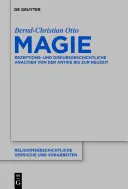
Resonances of Neo-Confucianism

 84
84

Resonances of Neo-Confucianism
Ott's *Resonances of Neo-Confucianism* offers a refreshingly active model for philosophical comparison. Rather than merely juxtaposing ideas, Ott employs Deleuze's concept of resonance to suggest a dynamic interplay that actualizes latent potential within traditions. The focus on Zhang Zai, Zhu Xi, and Wang Yangming is particularly well-chosen, representing a crucial arc within Neo-Confucian thought. A significant strength lies in its methodological innovation, proposing a way to think *between* traditions without reducing one to the other. However, the dense philosophical language, while precise, might present a barrier to readers less familiar with Deleuzian concepts. The exploration of Zhang Zai's *Doctrine of the Heavenly Principle* serves as a compelling example of how resonance can illuminate overlooked connections. This work is a serious academic intervention, offering a potent tool for future comparative philosophy.
📝 Description
84
Margus Ott's 2024 book applies Gilles Deleuze's concept of resonance to Neo-Confucianism.
This 2024 publication by Margus Ott offers a novel approach to comparative philosophy by applying Gilles Deleuze's concept of "resonance." Ott uses this model not to find a singular truth, but to activate latent possibilities within distinct philosophical traditions, particularly Neo-Confucianism. The book challenges established interpretations by suggesting that comparison itself can generate new ontological understandings.
Ott engages directly with the Song Dynasty development of Neo-Confucianism, referencing thinkers like Zhang Zai, Zhu Xi, and Wang Yangming. His work situates these historical Chinese philosophies within contemporary discourse, drawing on post-structuralist thought. The central thesis is that "resonance" enables a reciprocal engagement between traditions, fostering new meanings and possibilities. This method aims to move beyond the limitations of exclusively Western or Eastern philosophical frameworks, proposing a more integrated perspective on ontology and metaphysics.
While Neo-Confucianism is a mainstream philosophical tradition, this work situates its reinterpretation within a context that draws from post-structuralist thought, a field often engaging with the limits of traditional epistemology and ontology. By using Deleuze's "resonance" as a comparative method, Ott seeks to uncover new, virtual potentials within these established systems. This approach can resonate with esoteric practices that look beyond literal interpretation to find deeper, generative meanings within ancient texts and traditions.
💡 Why Read This Book?
• Learn a novel method for comparative philosophy, moving beyond simple comparison to active synthesis, as exemplified by the engagement with Zhang Zai's ideas. • Understand how Gilles Deleuze's concept of "resonance" can be applied to historical philosophies, potentially revealing new ontological perspectives not present in the original traditions. • Gain insight into the specific contributions of Neo-Confucian thinkers like Zhu Xi (1130–1200) and Wang Yangming (1472–1529) through the lens of a dynamic, inter-traditional analytical framework.
⭐ Reader Reviews
Honest opinions from readers who have explored this book.
❓ Frequently Asked Questions
What is the primary philosophical concept used in *Resonances of Neo-Confucianism*?
The primary concept is "resonance," adapted from Gilles Deleuze. It proposes a dynamic interaction between philosophical traditions where comparison itself creates new ontological possibilities and actualizes virtual potentials.
Which Neo-Confucian thinkers are central to Margus Ott's analysis?
The book focuses on three key figures: Zhang Zai (1020–1077), Zhu Xi (1130–1200), and Wang Yangming (1472–1529), representing significant developments in Neo-Confucian thought.
How does this book differ from traditional comparative philosophy?
Unlike methods seeking equivalences or hierarchies, Ott's "resonance" model suggests that comparison actively creates new meanings and actualizes virtual aspects within the engaged traditions, fostering a more generative dialogue.
What philosophical tradition does Margus Ott draw upon for his methodology?
Ott draws heavily on post-structuralist philosophy, particularly the work of Gilles Deleuze, to develop his concept of resonance as a tool for comparative ontological inquiry.
What is the intended outcome of applying the "resonance" model to Neo-Confucianism?
The aim is to develop ontological ideas that transcend purely Chinese or Western philosophical categories, creating novel syntheses and actualizing the virtual potential inherent in both the compared traditions.
When was *Resonances of Neo-Confucianism* first published?
The book was first published on May 28, 2024.
🔮 Key Themes & Symbolism
Deleuzian Resonance
This book reinterprets Gilles Deleuze's concept of resonance not as mere similarity, but as a dynamic, generative force in philosophical inquiry. Ott posits that applying this model to traditions like Neo-Confucianism allows for the actualization of virtual potentials, creating novel ontological understandings that are neither purely Chinese nor Western. The method emphasizes active engagement, where the process of comparison itself becomes a creative act, challenging established frameworks and opening new conceptual spaces for metaphysical exploration.
Neo-Confucian Ontological Synthesis
Focusing on Zhang Zai, Zhu Xi, and Wang Yangming, the work explores their contributions to Chinese ontology. By applying the resonance model, Ott seeks to move beyond static interpretations, highlighting how these thinkers grappled with fundamental questions of existence, principle (li), and vital force (qi). The book aims to demonstrate how their ideas, when engaged through resonance with Western philosophical concepts, can generate new ontological frameworks relevant to contemporary thought.
Comparative Philosophy Method
Ott critiques traditional comparative philosophy's tendency towards equivalences or hierarchical structures. Instead, the "resonance" model offers a more fluid and productive approach. It argues that by counter-actualizing the actual within each tradition, new philosophical possibilities emerge. This method encourages a dialogue where traditions mutually inform and transform each other, leading to a richer, more integrated understanding of philosophical concepts across diverse cultural contexts.
Actualizing the Virtual
A core tenet is the idea that philosophical traditions contain virtual potentials that remain unrealized. The resonance model, as applied in this book, serves to actualize these virtual aspects through cross-cultural philosophical engagement. This process involves not just understanding existing thought but actively bringing forth new conceptual formations, challenging the fixed nature of established philosophical doctrines and opening pathways for emergent ontologies.
💬 Memorable Quotes
Direct passages from the work, attributed to the author.
“The Deleuzian idea of ‘resonance’ offers a model for a new way of doing comparative philosophy.”
— This statement highlights the book's methodological innovation. It proposes that Deleuze's concept of resonance provides a framework for a more dynamic and generative approach to comparing distinct philosophical traditions, moving beyond traditional methods.
“Comparison actualizes the virtual and counter-actualizes the actual in both compared traditions.”
— This expresses the core mechanism of Ott's proposed method. It suggests that engaging different philosophies through resonance not only brings latent possibilities to light but also challenges and reconfigures existing understandings within each tradition.
“Zhang Zai (1020–1077), Zhu Xi (1130–1200), and Wang Yangming (1472–1529) are resonated.”
— This indicates the specific historical figures from Neo-Confucianism that Ott focuses on. Their inclusion signifies a deep dive into key moments and thinkers within this tradition to apply the resonance methodology.
“Ontological ideas that are neither purely Chinese nor Western.”
— This points to the ultimate goal of the book's approach: to synthesize philosophical concepts in a way that transcends cultural or geographical origins, fostering genuinely new ontological perspectives.
“The work develops ontological ideas through philosophical resonance.”
— This is a concise summary of the book's project, emphasizing the development of metaphysical concepts through the specific method of resonance applied to comparative philosophy.
🌙 Esoteric Significance
Tradition
While not explicitly aligning with a single esoteric lineage like Hermeticism or Kabbalah, *Resonances of Neo-Confucianism* engages with the philosophical underpinnings of a tradition often imbued with esoteric interpretations. Neo-Confucianism, particularly in its later developments and internal debates, explored concepts of cosmic order, self-cultivation, and the interconnectedness of the universe, themes that resonate with broader esoteric concerns about universal laws and spiritual transformation. Ott's method of resonance can be seen as a modern approach to uncovering latent spiritual or metaphysical dimensions within philosophical systems.
Symbolism
Key concepts within Neo-Confucianism, such as *Taiji* (the Supreme Ultimate) and *qi* (vital force), carry symbolic weight that can be interpreted esoterically. *Taiji* often represents the primordial unity from which all multiplicity arises, a common motif in creation cosmologies. *Qi* symbolizes the fundamental energetic substance of the cosmos, its flow and transformation dictating the nature of reality. By applying the resonance model, Ott's work may illuminate how these symbols function not just intellectually but as conceptual anchors for understanding cosmic processes and the human place within them.
Modern Relevance
The work's relevance lies in its proposed methodology for contemporary comparative philosophy and metaphysics. Thinkers and practitioners interested in synthesizing Eastern and Western thought, particularly those exploring process philosophy or speculative metaphysics, can draw upon Ott's resonance model. It offers a framework for scholars engaging with thinkers like Deleuze and Guattari, as well as those seeking to revitalize the study of classical Chinese philosophy for contemporary ethical and ontological discussions. The approach could influence fields seeking interdisciplinary synthesis, from philosophy of religion to consciousness studies.
👥 Who Should Read This Book
• Advanced students and scholars of comparative philosophy seeking novel methodologies for East-West dialogue, particularly those interested in ontology and metaphysics. • Researchers of Neo-Confucianism, including specialists focusing on Zhang Zai, Zhu Xi, or Wang Yangming, who wish to explore their ideas through a contemporary theoretical lens. • Philosophers and theorists interested in the application of post-structuralist concepts, like Deleuze's notion of resonance, to historical philosophical traditions.
📜 Historical Context
Margus Ott's *Resonances of Neo-Confucianism*, published in 2024, enters a contemporary philosophical landscape eager for innovative comparative methods. It engages with Neo-Confucianism, a major intellectual movement in China flourishing particularly from the Song Dynasty (960–1279) onwards. Key figures like Zhang Zai (1020–1077), Zhu Xi (1130–1200), and Wang Yangming (1472–1529) represent the evolution of this school, grappling with concepts like *li* (principle) and *qi* (vital force). Ott's work is situated against the backdrop of post-structuralist thought, particularly Gilles Deleuze's philosophy, offering a counterpoint to more traditional hermeneutic or analytic approaches to East-West philosophy. While scholars like Wing-tsit Chan have previously mapped Neo-Confucianism for Western audiences, Ott's distinctive contribution lies in proposing a generative, rather than purely interpretive, model for engaging these historical traditions.
📔 Journal Prompts
The Deleuzian concept of resonance as a comparative tool.
Zhang Zai's engagement with ontological principles.
The synthesis of Chinese and Western metaphysical ideas.
Counter-actualizing the actual in philosophical traditions.
The virtual potentials within Wang Yangming's philosophy.
🗂️ Glossary
Neo-Confucianism
A major school of Chinese philosophy that flourished from the Song Dynasty (960–1279) onwards, seeking to revive and deepen Confucian thought by incorporating metaphysical and cosmological elements, often in response to Buddhism and Taoism.
Resonance (Deleuzian)
In Ott's usage, adapted from Deleuze, a dynamic philosophical method where the comparison between traditions actualizes latent potentials and challenges existing frameworks, creating new ontological understandings.
Ontology
The branch of metaphysics concerned with the nature of being, existence, and reality. This book explores ontological ideas developed through comparative philosophy.
Actualization
The process by which potentiality becomes a reality. In this context, Ott discusses how comparison can actualize virtual aspects within philosophical traditions.
Virtual
In this philosophical context, refers to potentials or tendencies within a system that are not yet fully realized or manifest, but which can be brought forth through specific interactions or processes.
Qi (氣)
A fundamental concept in Chinese philosophy, often translated as vital force, energy, or breath. It is seen as the material constituent of the universe, whose transformations give rise to all phenomena.
Li (理)
A key Neo-Confucian concept, often translated as principle or pattern. It refers to the underlying order and rational structure of the cosmos and things within it.