Sacred Geometry
 84
84

Sacred Geometry
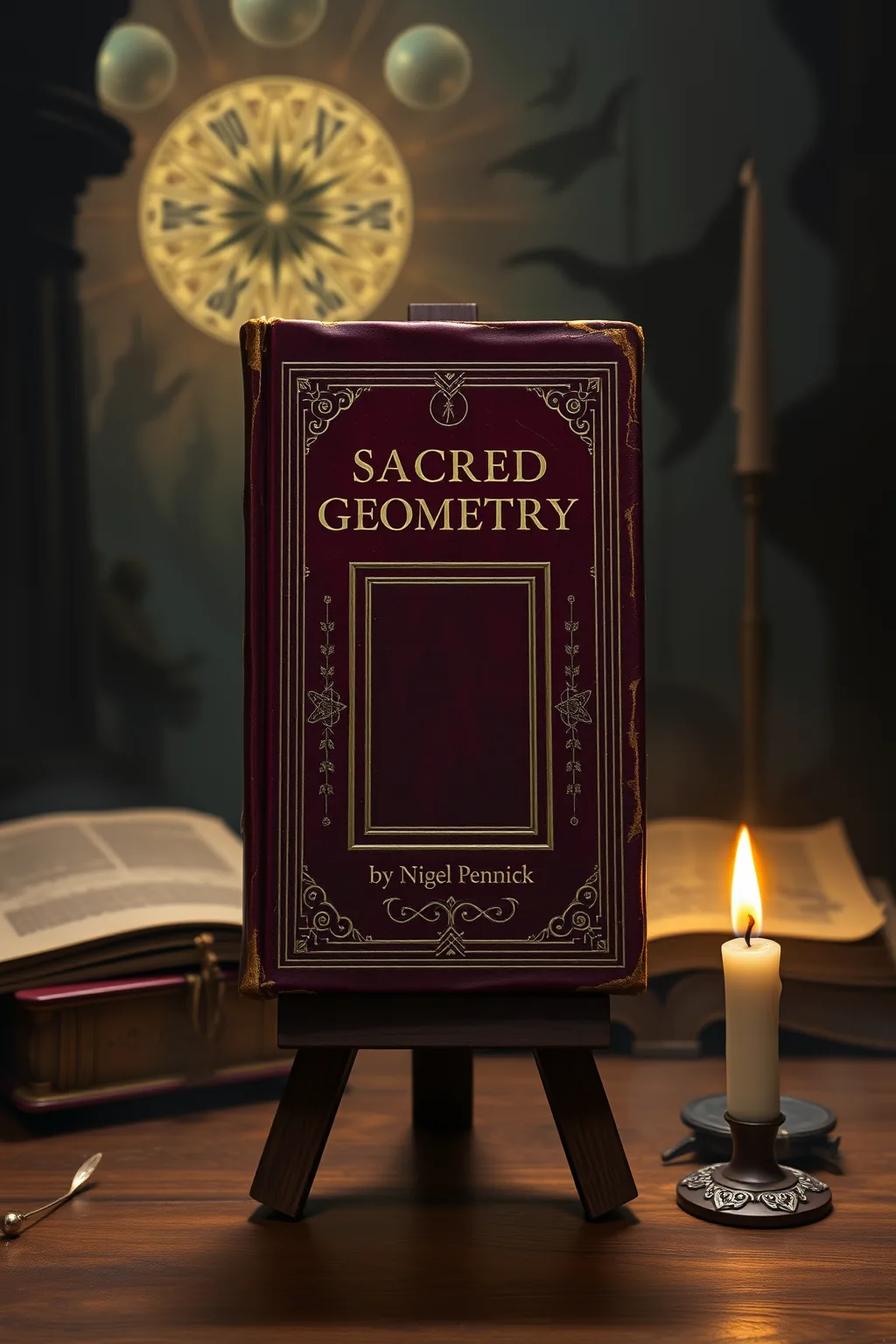
Nigel Pennick's "Sacred Geometry" presents a meticulously researched survey of geometric principles as they relate to cosmology and symbolism. Its strength lies in its comprehensive cataloging of forms and their historical applications across diverse cultures and eras, from ancient Egypt to medieval Christian symbolism. The chapter detailing the construction and symbolism of the Rose Line, for instance, offers a particularly clear exposition. However, the book occasionally suffers from an academic dryness that can obscure the intuitive wonder the subject often inspires. While Pennick grounds his analysis in historical fact, the connective tissue between these facts and their deeper metaphysical implications could sometimes be more developed. Despite this, "Sacred Geometry" remains an essential reference for anyone seeking a scholarly understanding of the geometric underpinnings of esoteric traditions.
📝 Description
84
Nigel Pennick's Sacred Geometry, published in 1994, deciphers the symbolic language of geometric forms in nature and human design.
This 1994 text by Nigel Pennick examines the symbolic language of geometric forms and how they appear in the natural world and in human constructions. It discusses the principles of shape, proportion, and pattern, showing their historical presence from ancient cosmologies to the design of sacred sites. The book argues that geometry is a reflection of universal laws, not merely a human invention. Pennick details specific geometric figures, such as the circle, square, triangle, vesica piscis, and the Golden Ratio. He illustrates their presence in natural phenomena like crystal structures and plant growth, as well as in the layout of temples and cities, suggesting an underlying cosmic blueprint.
Published in the mid-1990s, Sacred Geometry resonates with a renewed interest in Western esotericism. The work connects to a long tradition of thought, including the Pythagoreans, Plato, and Renaissance thinkers who viewed geometry as a divine expression. It offers a structured approach to geometry's philosophical and mystical implications, distinct from more speculative interpretations. Pennick positions geometry as a fundamental aspect of cosmic order, linking mathematical concepts to spiritual and cosmological significance.
💡 Why Read This Book?
• Understand the fundamental role of geometric forms, such as the circle and square, in cosmological diagrams and ancient architecture, revealing how patterns of creation are encoded in shape. • Learn about the historical applications of geometric symbolism, including its use in the design of medieval cathedrals and Renaissance art, providing concrete examples of its influence. • Explore the concept of the Golden Ratio (phi) and its pervasive presence in nature and art, offering a tangible example of mathematical harmony manifesting in the physical world.
⭐ Reader Reviews
Honest opinions from readers who have explored this book.
❓ Frequently Asked Questions
When was Nigel Pennick's 'Sacred Geometry' first published?
Nigel Pennick's 'Sacred Geometry' was first published in 1994, marking its emergence during a period of renewed interest in esoteric studies and ancient wisdom.
What kind of geometric shapes does 'Sacred Geometry' focus on?
The book examines a wide array of geometric shapes, including fundamental forms like the circle, square, and triangle, as well as more complex figures such as the vesica piscis and the Golden Ratio.
Does 'Sacred Geometry' discuss geometric applications in architecture?
Yes, a significant portion of the book is dedicated to the application of geometric principles in architecture, exploring their use in the design of ancient temples, medieval cathedrals, and other significant structures.
Is 'Sacred Geometry' suitable for beginners in esoteric studies?
While comprehensive, the book's academic approach makes it particularly suitable for students and researchers seeking a structured understanding of the topic's historical and symbolic dimensions.
What is the primary argument of Nigel Pennick's 'Sacred Geometry'?
Pennick argues that geometry is not merely a human construct but a reflection of universal laws and a symbolic language inherent in the cosmos, visible in both natural phenomena and human creations.
Does the book connect geometry to natural patterns?
Absolutely. 'Sacred Geometry' extensively details how geometric forms and proportions manifest in natural patterns, from plant growth and crystalline structures to the human body.
🔮 Key Themes & Symbolism
Geometric Forms as Cosmic Language
This theme posits that fundamental geometric shapes are not arbitrary but represent a universal language through which the cosmos communicates its underlying order. Pennick illustrates how basic forms like the circle, representing unity and the divine, or the square, signifying the material world, are foundational to understanding creation. The book traces these forms through various traditions, suggesting they are archetypal blueprints embedded in reality, observable from the smallest particle to the grandest celestial arrangement.
Proportion and Harmony in Design
The work emphasizes the significance of proportion and harmonious ratios in both natural phenomena and human-made artifacts. Concepts like the Golden Ratio (phi) are presented not just as mathematical curiosities but as principles of aesthetic and structural beauty that govern growth patterns in plants, the proportions of the human body, and the design of sacred architecture. This theme highlights the idea that beauty and order are intrinsically linked to specific mathematical relationships.
Sacred Sites and Architectural Symbolism
A central tenet explored is the deliberate use of geometric principles in the planning and construction of sacred spaces. Pennick examines how ancient temples, cathedrals, and other religious sites often incorporate specific geometric layouts and symbolic forms to align with cosmic principles or to create environments conducive to spiritual experience. This section underscores the belief that architecture can serve as a physical manifestation of metaphysical truths.
The Geometry of Nature
This theme focuses on the pervasive presence of geometric patterns within the natural world. From the hexagonal structure of honeycombs and snowflakes to the spiral arrangements of seeds in a sunflower or the branching patterns of trees, the book presents numerous examples of nature employing precise geometric forms. Pennick suggests these manifestations are not accidental but indicative of underlying, intelligent design principles at play in biological and geological processes.
💬 Memorable Quotes
Direct passages from the work, attributed to the author.
“The circle is the primal form, representing the divine, the infinite, and the source of all creation.”
— This statement captures the symbolic importance of the circle in esoteric thought, highlighting its representation of unity, wholeness, and the ultimate origin from which all manifest forms emerge.
“The Golden Ratio, or phi, appears consistently in organic growth and artistic composition, suggesting a universal principle of beauty and balance.”
— This interpretation points to the book's exploration of mathematical constants like the Golden Ratio, presenting them as fundamental to both natural aesthetics and the perceived beauty in art and architecture.
“Ancient builders understood that the dimensions and proportions of sacred structures influenced the spiritual atmosphere within.”
— This concept emphasizes the practical application of sacred geometry in architecture, suggesting that specific geometric arrangements were intentionally employed to create spaces conducive to spiritual or ritualistic purposes.
“The vesica piscis, formed by the intersection of two circles, symbolizes the union of opposites and the creation of new forms.”
— This highlights the symbolic meaning attributed to specific geometric figures, illustrating how the vesica piscis, a common motif in religious art, represents concepts of duality, union, and genesis.
💡 Key Ideas
Editorial paraphrase of the work's core concepts — not direct quotes.
Geometric patterns are not merely abstract ideas but are imprinted upon the fabric of reality itself.
This paraphrased concept underscores Pennick's view that geometry is an intrinsic aspect of the universe, manifesting physically in nature and serving as a key to understanding its underlying order.
🌙 Esoteric Significance
Tradition
This work fits squarely within the Western Esoteric tradition, particularly its Hermetic and Pythagorean branches. It engages with the ancient Greek philosophical concept that 'all is number' and the Hermetic principle of 'as above, so below,' viewing geometry as the visible manifestation of divine order. Pennick's approach departs from purely mystical interpretations by grounding his analysis in historical evidence and observable natural phenomena, offering a more systematic exploration of geometric symbolism than some earlier, more purely philosophical or alchemical texts.
Symbolism
Key symbols explored include the circle, representing the divine, the void, and unity; the square, signifying the material plane and earthly stability; and the equilateral triangle, embodying balance and divine triplicities. The vesica piscis, formed by the intersection of two circles, is examined as a symbol of creation, the union of spirit and matter, and the gateway to manifestation. The Golden Ratio (phi) is also central, presented as a divine proportion underlying natural beauty and cosmic harmony.
Modern Relevance
Contemporary thinkers and practitioners in fields such as architectural design, permaculture, and conscious living draw upon Pennick's work. His systematic cataloging of geometric principles and their applications provides a tangible framework for those seeking to integrate symbolic order into modern life. Artists and designers inspired by geometric patterns find in "Sacred Geometry" a deep well of historical context and symbolic meaning, while spiritual seekers use its insights to understand the universe as an ordered, harmonious system.
👥 Who Should Read This Book
• Students of Western Esotericism seeking a scholarly foundation in the symbolic language of geometry, tracing its roots from ancient Greece through the Renaissance. • Architects, designers, and artists interested in the historical and philosophical underpinnings of proportion, symmetry, and form in creation. • Individuals exploring the concept of universal order and seeking to understand how mathematical principles manifest in nature and sacred traditions.
📜 Historical Context
Nigel Pennick's "Sacred Geometry" emerged in 1994, a period marked by the proliferation of New Age literature and a renewed academic interest in esotericism and Western mystery traditions. The work draws heavily on a lineage of thought that includes Pythagoreanism, Neoplatonism, and Renaissance Hermeticism, fields explored by figures like Marsilio Ficino and Agrippa. Contemporaneously, scholars like Frances Yates had already laid groundwork for understanding the Hermetic tradition's influence on Renaissance thought. Pennick's approach provided a structured, encyclopedic overview, contrasting with more purely experiential or speculative works. While not facing overt censorship, its academic rigor offered a distinct voice amidst a landscape often characterized by less rigorous claims. The book engaged with an intellectual current that sought to bridge ancient wisdom with modern understanding, positioning geometry as a fundamental key to unlocking cosmic secrets.
📔 Journal Prompts
The inherent order suggested by geometric forms like the circle and square.
Reflecting on the presence of the Golden Ratio (phi) in natural and artistic structures.
The symbolic significance of the vesica piscis as a gateway or union.
How the geometry of ancient temples might have influenced their perceived spiritual function.
Connecting personal understanding of pattern to universal geometric principles.
🗂️ Glossary
Vesica Piscis
A geometric shape formed by the intersection of two circles of the same radius, intersecting at each other's centers. It is a significant symbol in sacred geometry, representing the union of opposites and the creation of new forms.
Golden Ratio (Phi)
An irrational number approximately equal to 1.618, often found in nature, art, and architecture. It is believed to represent a divine proportion and is associated with harmony, beauty, and organic growth.
Cosmology
The study of the origin, evolution, and structure of the universe. In the context of sacred geometry, it refers to the understanding of the cosmos as an ordered system governed by geometric principles.
Archetype
In this context, fundamental geometric forms (like the circle or square) that are considered universal patterns or blueprints underlying reality and consciousness.
Proportion
The relationship in size or degree between two things. In sacred geometry, specific proportions, such as the Golden Ratio, are seen as fundamental to harmonious and aesthetically pleasing design.
Sacred Site
A location considered sacred due to religious or spiritual significance, often designed with specific geometric layouts and symbolism to align with cosmic principles or enhance spiritual experience.
Platonic Solid
The five convex regular polyhedra (tetrahedron, cube, octahedron, dodecahedron, icosahedron) whose faces are congruent regular polygons. They are fundamental to understanding geometric order in the universe.
🔮 Readers Also Liked
Browse all →









More by Nigel Pennick
All books →




More Free Occult Philosophy Books
View all →