Life Force. Il potere del prana
 81
81

Life Force. Il potere del prana
Lucki Shivani's compilation, "Life Force. Il potere del prana," offers a focused collection of Paramahansa Yogananda's teachings on vital energy. The strength lies in its singular focus on pranayama as a tool for holistic well-being, directly linking breath control to tangible health benefits and spiritual advancement. Shivani has effectively gathered Yogananda's often dispersed lessons on prana into a cohesive presentation. A minor limitation is that, by design, it does not delve into the broader philosophical underpinnings of Yogananda's Kriya Yoga, which might leave newcomers wanting more context. The section detailing the physiological effects of specific breathing exercises, like the cleansing action of Kapalabhati, is particularly illuminating. This volume serves as a practical manual for those ready to engage directly with yogic breathwork.
📝 Description
81
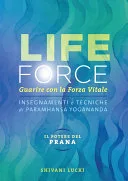
Lucki Shivani compiles Paramahansa Yogananda's teachings on prana in "Life Force. Il potere del prana."
This volume gathers Paramahansa Yogananda's techniques for applying pranayama, the yogic science of breath control, to manage vital energy. It details Yogananda's methods for using prana, the fundamental life force, to improve physical health, mental clarity, and spiritual growth. The book shows how conscious breathing can support everyday well-being and advanced spiritual practices.
"Life Force. Il potere del prana" is for yoga and meditation practitioners who want to understand breathwork more deeply than basic postures allow. It will interest those drawn to the energetic and philosophical aspects of yogic thought, especially followers of Yogananda. Individuals facing health issues or seeking greater vitality through natural energetic methods will find practical advice. Students of esoteric traditions may also use it to integrate yogic ideas into their spiritual path.
The techniques in "Life Force. Il potere del prana" come from Paramahansa Yogananda, who introduced Kriya Yoga to the West in 1920. His teachings emerged during a time when Western interest in Eastern spirituality was growing, alongside movements like Theosophy and New Thought. Yogananda's work offered a specific yogic perspective on consciousness and the animating force of life, distinct from other contemporary spiritual currents.
💡 Why Read This Book?
• Learn specific pranayama techniques, such as Nadi Shodhana, directly from Yogananda's teachings, enabling you to consciously influence your vital energy for improved health, a method detailed extensively in "Life Force. Il potere del prana." • Understand the yogic concept of 'prana' as the fundamental life force, as presented in this book, and how its manipulation through breath can lead to greater vitality and mental clarity. • Gain practical methods for self-healing and spiritual growth derived from Yogananda's extensive work, offering a direct pathway to harnessing your inner energetic resources as outlined in the book's healing techniques.
⭐ Reader Reviews
Honest opinions from readers who have explored this book.
❓ Frequently Asked Questions
What is the primary focus of "Life Force. Il potere del prana"?
The book's primary focus is on the teachings of Paramahansa Yogananda concerning pranayama, the yogic science of breath control, and its application for harnessing 'prana,' the vital life force, to enhance physical health, mental clarity, and spiritual development.
When was the original publication of Yogananda's teachings compiled in this book?
While the specific compilation "Life Force. Il potere del prana" by Lucki Shivani was first published on December 19, 2024, the teachings themselves originate from Paramahansa Yogananda's extensive lectures and writings throughout the mid-20th century.
What is 'prana' as explained in Yogananda's teachings?
In Yogananda's system, 'prana' is the fundamental, universal life force that animates all beings and the cosmos. The book details techniques to consciously control and increase one's prana through specific breathing exercises.
Are there specific breathing techniques mentioned in the book?
Yes, "Life Force. Il potere del prana" details various pranayama techniques taught by Yogananda, such as Nadi Shodhana (Alternate Nostril Breathing) and Kapalabhati (Skull Shining Breath), explaining their energetic and physiological benefits.
Who is Lucki Shivani in relation to these teachings?
Lucki Shivani is the compiler of "Life Force. Il potere del prana," bringing together Paramahansa Yogananda's teachings on prana and pranayama into a unified volume for the first time.
Can these techniques help with stress reduction?
Absolutely. The book explains how conscious control of the breath, a core tenet of pranayama, directly impacts the nervous system, aiding in stress reduction, promoting calmness, and improving mental focus, as taught by Yogananda.
🔮 Key Themes & Symbolism
Prana as Universal Energy
The book posits prana as the fundamental life force pervading the universe, not merely a biological function but the animating principle of all existence. Yogananda's teachings, compiled here, emphasize that understanding and manipulating prana through breath is key to unlocking one's full potential. This energy is presented as the bridge between the physical and subtle bodies, and its conscious direction can influence health, consciousness, and spiritual evolution. The text explores how yogic practices aim to refine and amplify this vital current within the practitioner.
Pranayama for Health and Consciousness
Central to the work is the detailed exploration of pranayama, the yogic science of breath control. "Life Force. Il potere del prana" presents specific techniques, such as Nadi Shodhana and Kapalabhati, as powerful tools for purifying the nadis (energy channels) and enhancing the flow of prana. Beyond physical benefits like improved respiration and detoxification, these practices are shown to directly influence mental states, sharpening focus, calming the mind, and preparing the practitioner for deeper states of meditation and self-realization.
Energetic Healing Modalities
The compilation highlights Yogananda's perspective on energetic healing, viewing illness as a manifestation of blocked or depleted prana. The techniques described offer a method for individuals to actively participate in their own healing process by learning to direct vital energy. This approach moves beyond purely physical interventions, suggesting that by consciously managing breath and life force, one can restore balance, promote regeneration, and cultivate a robust state of well-being from within.
The Breath-Mind Connection
A crucial theme is the inseparable link between breath and mind. The book elaborates on how the quality and rhythm of one's breath directly correlate with mental activity and emotional states. By mastering the breath through specific yogic exercises, practitioners gain a profound capacity to regulate their thoughts, emotions, and overall psychological landscape. This control over the mind, facilitated by pranayama, is presented as a vital step on the path to inner peace and spiritual insight.
💬 Memorable Quotes
Direct passages from the work, attributed to the author.
“Prana is the force that holds the universe together.”
— This statement underscores the cosmic significance attributed to prana, portraying it not just as personal life energy but as the fundamental binding force of all creation, a concept central to yogic cosmology.
“Through conscious breathing, we can purify our energy channels.”
— This highlights the therapeutic and spiritual efficacy of pranayama, suggesting that specific breathing techniques actively cleanse the subtle energetic pathways within the body, facilitating a freer flow of life force.
“The breath is the bridge between the physical and the astral body.”
— This points to the subtle function of respiration, positioning it as the critical link that connects our material form to our more ethereal energetic and consciousness bodies.
“By controlling the breath, you gain mastery over your thoughts and emotions.”
— This emphasizes the psychological impact of pranayama, asserting that disciplined breathwork provides a direct pathway to regulating one's mental and emotional states, leading to greater inner stability.
“Harnessing prana is essential for both physical vitality and spiritual realization.”
— This captures the dual benefit of pranic cultivation, indicating that the practice serves not only to enhance physical health and energy levels but also to advance one's spiritual journey towards higher consciousness.
🌙 Esoteric Significance
Tradition
The work is firmly rooted in the yogic tradition, specifically drawing from the lineage of Kriya Yoga as transmitted by Paramahansa Yogananda. It aligns with the broader Vedic and Tantric understanding of prana as the fundamental cosmic energy. While many esoteric systems explore vital forces, Yogananda's approach emphasizes a systematic, physiological, and psychological application of pranayama for both material well-being and spiritual liberation, distinguishing it from purely Kabbalistic or Hermetic energy manipulations.
Symbolism
The primary symbol is 'prana' itself, representing the animating breath of the universe. Another key motif is the 'nadis,' the subtle energy channels within the body, often visualized as a network of cosmic rivers. The book implicitly uses the symbol of the 'lotus' (as in chakras) by discussing energy centers activated through breathwork. The concept of 'Kundalini' energy, though perhaps not explicitly detailed here, is the ultimate dormant force Yogananda's prana techniques aim to awaken and direct upwards.
Modern Relevance
Contemporary practices in mindfulness, breathwork therapy, and even certain branches of bioenergetics echo Yogananda's teachings on prana. Modern yoga instructors and wellness coaches frequently integrate pranayama techniques derived from his lineage. Thinkers exploring consciousness studies and the mind-body connection find Yogananda's systematic approach to vital energy particularly relevant for understanding subjective experience and developing practical tools for mental and physical resilience in the 21st century.
👥 Who Should Read This Book
• Yoga practitioners seeking to deepen their understanding of pranayama beyond basic asana practice, gaining specific techniques from Yogananda's extensive teachings. • Individuals interested in esoteric healing modalities and self-empowerment, looking for practical methods to influence their vital energy and overall well-being. • Students of comparative spirituality and Eastern philosophies, particularly those studying yogic traditions and the concept of life force energy.
📜 Historical Context
Paramahansa Yogananda's teachings on prana and pranayama gained significant traction in the West following his arrival in 1920 and the establishment of the Self-Realization Fellowship. "Life Force. Il potere del prana" draws from this fertile period of spiritual exchange, where Eastern esoteric concepts began to permeate Western thought. Yogananda's approach, rooted in the ancient yogic traditions of India, offered a practical, systematic method for harnessing vital energy, distinct from the more philosophical or occult explorations common in movements like Theosophy, which was also popular at the time. His important work, "Autobiography of a Yogi" (1946), reached a vast audience, paving the way for the widespread acceptance of yogic practices. The reception of Yogananda's work was largely positive among spiritual seekers, though some traditional Western religious circles viewed it with skepticism. His emphasis on direct experience and scientific inquiry into consciousness set his teachings apart.
📔 Journal Prompts
Reflect on your current breath patterns and their connection to 'prana' as described by Yogananda.
Analyze the efficacy of Nadi Shodhana for balancing your energetic state.
Consider how conscious control of your breath could impact your daily emotional responses.
Explore the potential for harnessing 'prana' to address a specific physical or mental challenge.
Document your experience practicing Kapalabhati and its perceived effect on your vitality.
🗂️ Glossary
Prana
The fundamental, universal life force energy that animates all living beings and the cosmos. It is considered the vital energy that can be consciously controlled and directed through yogic practices, especially pranayama.
Pranayama
The yogic science of breath control, involving specific techniques designed to regulate the intake and expulsion of breath to influence the flow of prana within the body and mind.
Nadi Shodhana
Alternate Nostril Breathing, a specific pranayama technique used to purify the nadis (energy channels) and balance the left and right hemispheres of the brain, promoting mental clarity and calmness.
Kapalabhati
Skull Shining Breath, an energizing pranayama technique characterized by short, forceful exhalations and passive inhalations, used to cleanse the respiratory tract and stimulate metabolic energy.
Nadis
Subtle energy channels within the body through which prana flows. There are said to be thousands of nadis, with the three primary ones being Ida, Pingala, and Sushumna.
Chakras
Energy centers located along the spine, from the base to the crown of the head. These are focal points where prana is believed to be concentrated and transformed.
Vital Force
A general term for the inherent energy that animates living organisms, synonymous with 'prana' in the context of yogic philosophy presented in the book.