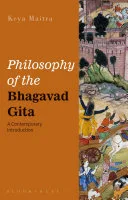
Philosophy of the Bhagavad Gita
 78
78

Philosophy of the Bhagavad Gita
Keya Maitra's "Philosophy of the Bhagavad Gita" carves a distinct path through the dense jungle of its source text. By focusing on philosophical argumentation rather than hagiography or poetic flourish, Maitra succeeds in presenting the Gita's ethical and metaphysical framework with admirable clarity. The translation itself is a notable achievement, stripping away centuries of devotional accretion to reveal the skeletal logic beneath. A particularly strong section is the analysis of Krishna's arguments for selfless action, which Maitra renders as a sophisticated ethical theory applicable beyond its narrative confines. However, the book occasionally feels constrained by its explicit classroom orientation; some of the philosophical connections could be explored with greater interpretive freedom. Despite this, Maitra offers a compelling case for viewing the Bhagavad Gita as a central text in world philosophy, not merely a religious document. It is a valuable, if sometimes austere, reappraisal.
📝 Description
78
Keya Maitra's 2018 book offers a philosophical reading of the Bhagavad Gita, emphasizing its arguments over religious interpretation.
Philosophy of the Bhagavad Gita: A Contemporary Introduction by Keya Maitra provides a focused philosophical analysis of the ancient Hindu text. Maitra presents a new translation that foregrounds the scripture's philosophical arguments, setting aside its more devotional or poetic aspects. The book aims to clarify the ethical and metaphysical ideas found within the narrative of the Kurukshetra War, making them understandable for contemporary readers. It moves through these complex concepts with clarity, structured for student and academic audiences.
This volume is primarily intended for students and scholars of philosophy and religious studies, especially those interested in Eastern thought. It is a useful resource for anyone wanting a systematic philosophical grasp of the Bhagavad Gita, beyond devotional or literary readings. General readers with a serious interest in Hinduism's foundational texts and their lasting philosophical significance will also find it valuable. The book engages with the long history of commentary on the Gita.
The Bhagavad Gita, composed between the 5th and 2nd centuries BCE, is a synthesis of earlier Indian philosophical traditions like the Upanishads, Samkhya, and Yoga. It proposes paths to liberation through knowledge, action, and devotion. The text has been a cornerstone of Hindu thought for millennia, attracting significant commentary. Maitra's work enters this rich interpretive history, focusing on the ethical and metaphysical underpinnings that have shaped spiritual discourse across centuries.
💡 Why Read This Book?
• Gain a structured philosophical understanding of the Bhagavad Gita's core arguments, moving beyond its religious interpretations, as presented through Maitra's 2018 translation and analysis. • Grasp the complex interplay between duty (dharma) and action (karma yoga) as explored in the narrative of Arjuna's conflict, offering practical ethical frameworks. • Understand the concept of Atman and Brahman, and their relationship within the larger context of early Indian philosophical synthesis, as detailed in the book's historical context section.
⭐ Reader Reviews
Honest opinions from readers who have explored this book.
❓ Frequently Asked Questions
What is the primary philosophical focus of Keya Maitra's "Philosophy of the Bhagavad Gita"?
Maitra's work centers on the Bhagavad Gita as a philosophical text, emphasizing its ethical and metaphysical arguments. It offers a new translation that prioritizes philosophical content over religious or poetic interpretations, aiming to make these concepts accessible to contemporary readers.
Who is the intended audience for "Philosophy of the Bhagavad Gita"?
The book is designed for students and academics in philosophy and religious studies, as well as general readers interested in a systematic philosophical exploration of Hindu scripture. It serves those seeking a deeper, analytical understanding of the text.
When was the Bhagavad Gita believed to have been composed?
The Bhagavad Gita is generally believed to have been composed between the 5th and 2nd centuries BCE, emerging from the philosophical and religious landscape of early India.
What key philosophical concepts are discussed in Maitra's book?
Maitra's analysis highlights concepts such as Atman (the self), Brahman (ultimate reality), karma yoga (the path of action), and the distinction between the material and spiritual realms.
How does Maitra's translation differ from traditional interpretations?
Maitra's translation focuses on the philosophical underpinnings of the Gita, aiming for a direct and analytical rendering. It seeks to highlight the logical structure of Krishna's teachings, distinct from devotional or purely literary readings.
What is the significance of Arjuna's dilemma in the book?
Arjuna's dilemma is presented as a central philosophical problem, exploring the tension between personal duty (dharma) and the moral implications of action, particularly in the context of warfare.
🔮 Key Themes & Symbolism
Dharma and Action
The work meticulously examines the concept of dharma, or righteous duty, as it pertains to Arjuna's predicament on the battlefield of Kurukshetra. Maitra's analysis emphasizes the philosophical justification for action, particularly selfless action (karma yoga), as a means to spiritual liberation. The book explores how adherence to one's prescribed duty, even when morally challenging, is presented as a fundamental tenet for working through the complexities of existence and achieving inner equilibrium. This theme is central to understanding the practical ethical dimension of the Gita's philosophy.
Atman and Brahman
A core focus is the intricate relationship between Atman, the individual soul or self, and Brahman, the ultimate, universal consciousness. Maitra unpacks the philosophical arguments that posit Atman as eternal and unchanging, ultimately identical with Brahman. This metaphysical understanding is presented not merely as theological doctrine but as a philosophical foundation for transcending worldly suffering and achieving moksha (liberation). The book illuminates how this concept informs the Gita's perspective on the nature of reality and consciousness.
Paths to Liberation
Maitra's introduction delineates the various paths to liberation (moksha) described in the Bhagavad Gita: karma yoga (the path of action), jnana yoga (the path of knowledge), and bhakti yoga (the path of devotion). The philosophical arguments for the efficacy and interrelation of these paths are critically examined. The book highlights how Krishna's discourse integrates these diverse approaches, offering a comprehensive spiritual and philosophical framework designed to guide the individual towards union with the divine or ultimate reality.
The Nature of Reality
The book explores the Gita's dualistic yet ultimately non-dualistic view of reality. It contrasts the transient, material world (prakriti) with the eternal, spiritual essence (purusha) and the supreme divine. Maitra's philosophical approach dissects the arguments presented for understanding the illusory nature of the material realm and the paramount importance of realizing the true, unchanging self. This ontological discussion provides a framework for interpreting the ethical and spiritual directives within the text.
💬 Memorable Quotes
Direct passages from the work, attributed to the author.
“Arjuna's dilemma is not merely personal but represents a universal conflict between duty and inclination.”
— This interpretation highlights how the narrative of Arjuna's crisis is framed by Maitra as a philosophical problem with broad applicability. It suggests the Gita's teachings on dharma and action are relevant beyond the specific context of the Kurukshetra War.
“The identity of Atman with Brahman forms the metaphysical bedrock of the Gita's soteriology.”
— This captures the essence of the book's explanation of the relationship between the individual soul and the universal consciousness. It frames this understanding as fundamental to the Gita's teachings on achieving liberation.
“Maitra's translation prioritizes the philosophical arguments over poetic or devotional layers.”
— This statement reflects the core methodology of Keya Maitra's work. It explains that the translation aims to reveal the text's philosophical architecture, distinguishing it from traditional interpretations.
“The concept of dharma provides a framework for ethical conduct within a complex world.”
— This highlights the practical application of the Gita's philosophy as presented by Maitra. It frames dharma not just as a religious concept but as an ethical guide for navigating life's challenges.
💡 Key Ideas
Editorial paraphrase of the work's core concepts — not direct quotes.
Krishna's discourse systematically presents the philosophical case for selfless action.
This paraphrase underscores Maitra's approach, emphasizing the logical and argumentative structure within the Bhagavad Gita. It points to the book's focus on the philosophical rationale behind karma yoga, rather than its devotional aspects.
🌙 Esoteric Significance
Tradition
While not strictly belonging to a singular Western esoteric lineage like Hermeticism or Kabbalah, the Bhagavad Gita functions as a foundational text for many modern esoteric movements, particularly within the Theosophical and New Age traditions. Its emphasis on the inner spiritual journey, the nature of consciousness, and the potential for human transformation aligns with core esoteric goals. It is often studied as a primary source for understanding universal spiritual principles that transcend specific cultural or religious boundaries, offering a philosophical basis for self-realization.
Symbolism
Key symbols within the Bhagavad Gita, as illuminated by philosophical analysis, include the battlefield of Kurukshetra, representing the arena of life's moral and existential struggles. Arjuna's chariot, driven by Krishna, symbolizes the human being with their senses and mind (chariot and horses) guided by divine wisdom (Krishna). The very act of warfare can be interpreted esoterically as the internal battle against ego, ignorance, and lower desires, a purification process essential for spiritual growth and awakening.
Modern Relevance
Contemporary thinkers and spiritual practitioners continue to draw heavily on the Bhagavad Gita's philosophical insights. Movements focused on mindfulness, ethical living, and the integration of spiritual practice into daily life often reference its principles, particularly karma yoga. Philosophers exploring ethics, consciousness studies, and comparative religion find its sophisticated arguments on duty, selfhood, and reality enduringly relevant. Its influence is palpable in diverse spiritual communities seeking a non-dogmatic, philosophically robust path to self-understanding and liberation.
👥 Who Should Read This Book
• Students of comparative philosophy and religious studies seeking a rigorous introduction to foundational Hindu texts beyond devotional readings. • Individuals interested in ethical frameworks and the philosophical underpinnings of duty and action, particularly as applied to complex life choices. • Practitioners and scholars of esoteric traditions who wish to understand the philosophical roots of concepts like karma, dharma, and consciousness explored in Eastern thought.
📜 Historical Context
The Bhagavad Gita, originating likely between the 5th and 2nd centuries BCE, emerged during a period of significant intellectual ferment in ancient India. It synthesized and harmonized diverse philosophical strands, including Upanishadic thought, the nascent Samkhya and Yoga schools, and early devotional impulses. Its composition addressed the need for a unified path to liberation (moksha) that could accommodate various approaches—action, knowledge, and devotion. This integration was crucial in a landscape where different ascetic and ritualistic traditions vied for prominence. The Gita's philosophical synthesis offered a more accessible and comprehensive framework, contributing to its eventual canonical status within Hinduism. Its enduring influence is evident in the vast body of commentary it generated, from Adi Shankara's Advaita Vedanta interpretations to Ramanuja's Vishishtadvaita, demonstrating its central role in shaping subsequent Indian philosophical discourse.
📔 Journal Prompts
Arjuna's chariot: Reflect on the relationship between your mind, senses, and guiding wisdom.
The nature of dharma: Consider a situation where your perceived duty conflicted with personal inclination.
Selfless action (karma yoga): Analyze the potential philosophical benefits of performing actions without attachment to outcomes.
Atman and Brahman: Explore the concept of an unchanging self distinct from temporary experiences.
The battlefield of Kurukshetra: Contemplate the internal struggles one faces in life's significant challenges.
🗂️ Glossary
Atman
The eternal, unchanging self or soul within an individual, often considered identical to Brahman in Advaita Vedanta philosophy.
Brahman
The ultimate reality, the supreme cosmic spirit, or absolute consciousness that underlies all existence in Hindu philosophy.
Dharma
One's duty, righteousness, moral law, or essential nature; the principles that uphold cosmic order and individual ethical conduct.
Karma Yoga
The spiritual path of selfless action performed without attachment to the results, considered a means to liberation.
Moksha
Liberation or release from the cycle of birth, death, and rebirth (samsara); the ultimate spiritual goal in Hinduism.
Prakriti
In Samkhya and related philosophies, the primordial material nature or substance that constitutes the manifest universe.
Soteriology
The doctrine or study of salvation, especially as related to religious beliefs and practices; concerning the means of achieving liberation.