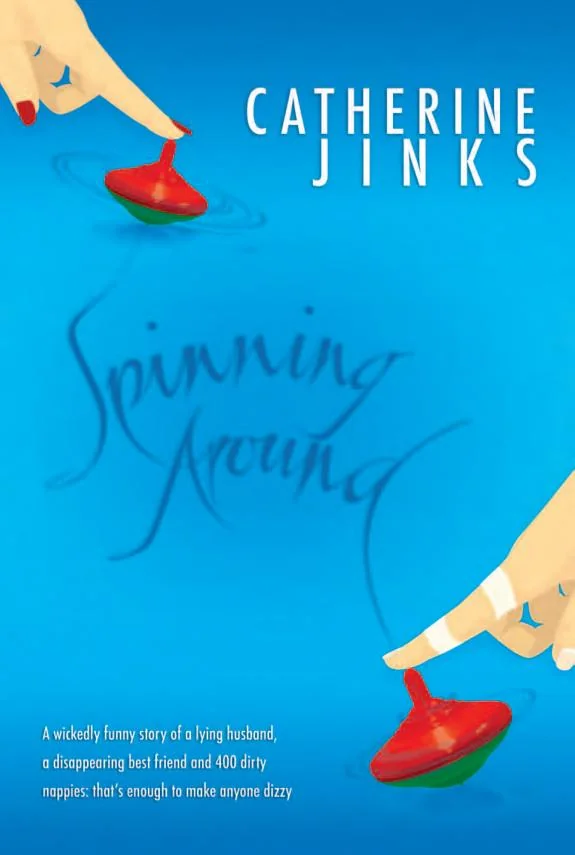
Spinning Around
 84
84

Spinning Around
Catherine Jinks’ “Spinning Around” lands with a quiet, unsettling accuracy that feels more potent than any melodrama. The unnamed protagonist’s internal monologue, a constant hum of suspicion and self-doubt regarding her husband’s fidelity, is rendered with a brittle honesty. Jinks excels at depicting the mundane chaos of modern family life – the school runs, the DIY disasters, the ever-present to-do lists – as the backdrop against which profound personal crises unfold. The novel’s strength lies in its refusal to offer easy answers or cathartic outbursts; instead, it mirrors the frustrating ambiguity of the protagonist’s situation. A notable limitation is the sheer relatability of the protagonist's anxieties, which might feel overwhelming to some readers, bordering on the claustrophobic. The passage detailing the protagonist's obsessive replaying of minor interactions with her husband, searching for hidden meanings, perfectly encapsulates this suffocating introspection. Ultimately, "Spinning Around" is a keenly observed study of quiet desperation and the internal labor of maintaining a semblance of normalcy.
📝 Description
84
Catherine Jinks' 2004 novel, Spinning Around, examines domestic unease and personal re-evaluation.
Spinning Around centers on a woman confronting the subtle feeling that her marriage may be weakening. She balances this internal doubt with the practicalities of work, home renovations, and childcare. The narrative unfolds as a slice-of-life account, focusing on everyday anxieties rather than grand statements. The book appeals to readers who enjoy character-focused fiction with a deep sense of interiority.
It is well suited for those interested in post-millennial domestic dramas or narratives that explore marital uncertainty. Readers who value sharp observation and wit over fast-paced plots will appreciate this novel. The story captures the texture of modern life through relatable, everyday concerns.
Published in 2004, Spinning Around reflects a literary moment influenced by confessional narratives and ongoing discussions of female identity and work-life balance. It follows in the vein of works like Bridget Jones's Diary but offers a more restrained portrayal of similar pressures. The novel's setting, before the widespread rise of social media, captures a period where private anxieties were often processed through traditional literary forms. It speaks to a tradition of domestic realism that dissects the subtle shifts within personal lives.
💡 Why Read This Book?
• Gain insight into the subtle erosion of trust within long-term relationships, as depicted through the protagonist's internal anxieties in "Spinning Around." • Understand how the pressures of domesticity and career, exemplified by the character’s juggling of renovations and childcare, can amplify personal insecurities. • Experience a narrative that prioritizes authentic internal conflict and observational detail over conventional plot resolutions, reflecting a specific literary trend from the early 2000s.
⭐ Reader Reviews
Honest opinions from readers who have explored this book.
❓ Frequently Asked Questions
When was Catherine Jinks' "Spinning Around" first published?
Catherine Jinks' "Spinning Around" was first published in 2004, placing it within the early 21st-century wave of domestic fiction.
What is the main theme of "Spinning Around" by Catherine Jinks?
The primary theme is marital uncertainty and suspicion, explored through the internal monologue of a woman questioning her husband's faithfulness amidst everyday life.
Is "Spinning Around" considered a sequel to Bridget Jones?
While often compared to "post-Bridget Jones" narratives for its focus on a woman's domestic and romantic anxieties, "Spinning Around" is not a direct sequel.
What kind of reader would enjoy "Spinning Around"?
Readers who appreciate character-driven, introspective fiction focusing on domestic realism and psychological nuance, particularly from the early 2000s era, would likely enjoy it.
Does the book offer a clear resolution to the protagonist's doubts?
The novel leans towards ambiguity, reflecting the realistic, ongoing nature of such anxieties rather than providing a neat, definitive resolution.
What is the narrative perspective in "Spinning Around"?
The story is primarily told from the first-person perspective of the protagonist, immersing the reader directly in her thoughts and perceptions.
🔮 Key Themes & Symbolism
Domestic Disquiet
The novel meticulously details the friction points within domestic life – the endless tasks, the renovations gone awry, the children’s demands – presenting them not just as background noise, but as active contributors to the protagonist's internal turmoil. This constant low-level stress becomes the fertile ground where suspicion about her marriage takes root, illustrating how the mundane can become a source of profound psychological unease.
Marital Suspicion
Fundamentally, , "Spinning Around" dissects the insidious nature of marital doubt. The protagonist’s investigation into her husband’s potential infidelity is less about uncovering concrete evidence and more about a pervasive feeling, a subtle shift in perceived intimacy. This theme captures the modern predicament of navigating relationships where external appearances often mask internal realities.
The Interior Life
Jinks places significant emphasis on the protagonist’s inner world, her constant stream of thoughts, interpretations, and anxieties. This focus on interiority makes the novel a study of perception and self-deception, exploring how one’s own mind can construct narratives of suspicion and doubt, independent of external validation.
Post-Millennial Womanhood
Published in 2004, the book reflects a specific cultural moment for women balancing career, family, and personal identity. It moves beyond the overtly comedic struggles of earlier characters like Bridget Jones, offering a more understated, yet equally potent, portrayal of the pressures and quiet desperation that can accompany modern womanhood.
💬 Memorable Quotes
Direct passages from the work, attributed to the author.
“She found herself cataloging his every word, every glance, searching for inconsistencies.”
— This highlights the obsessive nature of the protagonist's suspicion. It's not about finding proof, but about a constant, draining analysis of micro-behaviors, turning everyday interactions into potential evidence.
“The house was undergoing renovations, mirroring the state of her marriage.”
— This metaphor emphasizes the parallel between the external chaos of home improvement and the internal crumbling of her marital security, suggesting that both require significant, often stressful, repair.
“She wondered if children made you blind, or just too tired to care.”
— This reflects a profound weariness and the potential for maternal responsibilities to both obscure personal issues and deplete the energy needed to confront them.
“The quiet evenings were the worst, filled with unspoken questions.”
— This pinpoints the specific anxiety of shared, silent domestic spaces. It’s in these moments of enforced proximity and lack of external distraction that internal doubts often surface most acutely.
“Was he seeing someone else, or was she just imagining it all?”
— This distillation captures the central, unresolved tension of the novel: the agonizing uncertainty that plagues the protagonist, blurring the lines between reality and her own perceptions.
🌙 Esoteric Significance
Tradition
While not overtly esoteric, "Spinning Around" touches upon themes resonant with certain psychological and philosophical traditions concerned with perception and self-awareness. Its focus on the protagonist's internal state and the subjective nature of her reality aligns with Gnostic ideas of illusion (Maya) and the struggle to perceive true reality beneath a veil of deception. The meticulous cataloging of perceived slights and subtle shifts in behavior could be seen as a form of 'shadow work,' an unacknowledged engagement with the darker aspects of the self and relationship dynamics.
Symbolism
The ongoing house renovation serves as a potent symbol for the state of the protagonist's marriage and her own internal structure. Cracks in the plaster, unfinished rooms, and the general disruption mirror the perceived instability and hidden flaws within her relationship. The telephone, as a conduit for communication (or lack thereof), also functions symbolically, representing the potential for connection or the source of anxious misinterpretations based on tone and brevity.
Modern Relevance
Contemporary thinkers and practitioners in fields like attachment theory and relationship psychology often explore the dynamics of relational anxiety and codependency, themes deeply embedded in "Spinning Around." The novel’s unflinching look at how external stressors impact marital bonds continues to inform discussions on maintaining healthy partnerships in the face of modern pressures. Furthermore, its exploration of subjective reality and self-generated doubt appeals to current interest in mindfulness and cognitive behavioral techniques aimed at managing intrusive thoughts.
👥 Who Should Read This Book
• Readers interested in psychological realism and character studies, particularly those who appreciate nuanced explorations of marital dynamics and internal conflict. • Individuals seeking relatable narratives about the challenges of balancing domestic responsibilities, career, and personal well-being in the early 21st century. • Literary enthusiasts who enjoy contemporary fiction that explores the quiet anxieties and unspoken tensions of everyday life, offering observational depth over overt plot.
📜 Historical Context
Catherine Jinks' "Spinning Around" arrived in 2004, a period when literary fiction was increasingly exploring the complexities of domestic life and female identity, often with a knowing nod to the confessional style popularized by Helen Fielding's Bridget Jones series. While Bridget Jones offered a more overtly comedic and romanticized struggle, Jinks’ work presented a subtler, more psychologically grounded exploration of marital unease. The early 2000s saw a rise in novels focusing on the internal lives of women navigating careers, family, and relationships, reflecting broader societal shifts regarding work-life balance and evolving gender roles. The novel’s publication occurred before the ubiquitous influence of social media, meaning the protagonist's anxieties were primarily internal or expressed through direct, real-world interactions, a contrast to contemporary narratives often amplified by digital platforms. The literary reception of such works often focused on their perceived realism and relatability, positioning them as accurate reflections of contemporary female experience.
📔 Journal Prompts
The protagonist's constant re-evaluation of her husband's actions.
The symbolism of the house renovations.
Moments of perceived distance in the marriage.
The protagonist's internal monologue versus external reality.
The tension between domestic routine and personal doubt.
🗂️ Glossary
Post-Bridget Jones narrative
A literary category referring to novels published after the success of Helen Fielding's "Bridget Jones's Diary," often featuring female protagonists grappling with career, romance, and self-identity in a contemporary, relatable style.
Domestic Unease
A state of subtle psychological discomfort or anxiety arising from the pressures and routines of home life and family relationships.
Interiority
The focus on a character's inner thoughts, feelings, and perceptions, often presented through first-person narration or close third-person perspective.
Marital Suspicion
The condition of harboring doubts or distrust regarding a spouse's fidelity or commitment, often fueled by subtle cues or a general sense of unease.
Slice-of-life fiction
A narrative genre that focuses on the ordinary, everyday experiences of characters, often emphasizing realism and character development over dramatic plot points.
Self-deception
The act of convincing oneself of something that is contrary to fact or reality, often as a defense mechanism against uncomfortable truths.
Work-life balance
The state of equilibrium where a person equally prioritizes the demands of their career and the demands of their personal life.
This book appears in 1 collection
🔮 Readers Also Liked
Browse all →









From the “Rune Reading” Collection
View all →








More Free Occult Philosophy Books
View all →