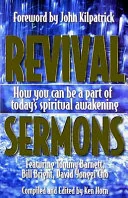
Revival Sermons
 81
81

Revival Sermons
Ken Horn’s Revival Sermons offers a bracingly direct, almost alchemical distillation of spiritual urgency. The strength of this work lies in its unpretentious sincerity; Horn speaks with a voice that feels less like a scholar and more like a guide pointing emphatically towards an essential truth. He avoids the arcane jargon that often encumbers esoteric texts, opting instead for clarity and conviction. A notable passage discusses the "dormant ember" within, urging its fanning into flame, which powerfully encapsulates the book’s core message of reawakening. However, the very directness that serves as a strength can also be a limitation. The sermonic style, while effective for its intended purpose, may feel repetitive to readers accustomed to more nuanced dialectical approaches. The work’s brevity and focus on exhortation mean it explores fewer conceptual depths than one might expect from a purely philosophical inquiry. Still, for those feeling a spiritual drift, Horn’s call to action provides a potent, albeit brief, recalibration.
📝 Description
81
Published in 2000, Ken Horn's Revival Sermons argues for direct spiritual experience over intellectual frameworks.
Revival Sermons is a collection of talks by Ken Horn, first released in 2000. It is not an academic book but a direct engagement with spiritual themes, delivered with an earnest and clear tone. Horn's method avoids complex theories, aiming instead to stir a sense of spiritual urgency in the reader. The book acts as a series of exhortations, calling for a return to fundamental spiritual principles that are often neglected in current discussions.
This book suits individuals looking for a more immediate, less filtered spiritual experience. It will appeal to those who find modern religious or philosophical talk overly intellectual or disconnected from real life. Readers who favor a direct, preacher-like style and are open to spiritual calls rather than just analytical arguments will find value. It is for the seeker who wishes to be challenged and prompted toward action in their spiritual life.
Emerging at the turn of the millennium, a time marked by widespread spiritual seeking and diverse New Age movements, Revival Sermons offers a counterpoint to the often skeptical and academic philosophical trends in Western thought. While not tied to a single tradition, Horn's work echoes the long history of revivalist preaching found in various Christian denominations. However, it frames its message for a broader, non-denominational audience interested in personal spiritual awakening, reflecting a wider cultural shift in the late 20th and early 21st centuries.
💡 Why Read This Book?
• Gain a direct call to spiritual reawakening, distinct from academic study, by engaging with Horn’s direct exhortations on the "dormant ember" concept. • Experience a concentrated dose of spiritual urgency, learning to identify and counter spiritual passivity through specific calls to action presented in the text. • Reconnect with fundamental spiritual principles stripped of complex dogma, as exemplified by the book’s focus on the necessity of direct, felt experience over intellectual assent.
⭐ Reader Reviews
Honest opinions from readers who have explored this book.
❓ Frequently Asked Questions
What is the primary message of Ken Horn's Revival Sermons?
The primary message is a call to spiritual reawakening and the necessity of direct, felt experience over purely intellectual understanding, urging readers to actively engage with their inner spiritual life.
When was Revival Sermons first published?
Revival Sermons was first published in the year 2000, positioning it at the cusp of the 21st century's renewed interest in personal spiritual exploration.
Does the book require prior knowledge of specific esoteric traditions?
No, the book is written to be accessible to a broad audience seeking spiritual connection, focusing on universal themes rather than specific, complex traditional doctrines.
What is the writing style of Revival Sermons?
The style is direct, earnest, and akin to revivalist preaching, prioritizing conviction and direct address over academic or purely philosophical exposition.
Who would benefit most from reading Revival Sermons?
Individuals feeling spiritually stagnant, those who find modern religious or philosophical discourse too detached, and seekers looking for a direct, action-oriented spiritual message would benefit.
What does Horn mean by 'spiritual passivity'?
Horn uses 'spiritual passivity' to describe a state of spiritual detachment or inaction, where one's inner spiritual life is neglected or not actively cultivated, akin to a 'dormant ember'.
🔮 Key Themes & Symbolism
The Dormant Ember
This central metaphor represents the latent spiritual potential within each individual. Horn argues that this inner fire, akin to an ember, can become dormant through neglect or distraction by the material world. The sermons urge the reader to recognize this ember and actively fan it into flame, thereby rekindling their spiritual vitality. It’s a call to move from a state of spiritual complacency to one of active engagement and inner illumination, emphasizing that the power for transformation resides within.
Spiritual Urgency
A recurring theme is the pressing need for immediate spiritual attention. Horn conveys a sense of urgency, suggesting that delays in spiritual cultivation can lead to permanent loss or deeper disconnection. This isn't about apocalyptic prediction but about the critical importance of present action in one's spiritual journey. The sermons aim to shake the reader out of complacency, highlighting that the opportune moment for spiritual renewal is now, not in some distant future.
Direct Experience Over Doctrine
Revival Sermons champions the primacy of personal, felt spiritual experience over adherence to rigid doctrines or intellectual assent alone. Horn posits that true spiritual understanding arises from direct engagement with the divine or the sacred within oneself. The book encourages readers to trust their inner promptings and intuitive graspings, suggesting that these direct encounters are more potent and transformative than learned theories or dogmas.
Countering Spiritual Passivity
The work actively seeks to combat a perceived widespread spiritual passivity. Horn identifies complacency and a lack of active spiritual practice as significant obstacles to genuine spiritual growth. He calls for a conscious effort to cultivate inner life, to actively seek connection, and to resist the inertia that can lead to spiritual stagnation. This theme serves as a direct challenge to the reader to take responsibility for their spiritual state.
💬 Memorable Quotes
Direct passages from the work, attributed to the author.
“The ember within is not dead, merely sleeping.”
— This phrase captures the essence of the book's message: a belief in the inherent spiritual potential that exists even when unexpressed. It offers hope and a call to action, suggesting that awakening this potential is possible and crucial.
“Do not mistake the echo for the voice.”
— This highlights the book's emphasis on direct spiritual experience versus secondhand knowledge or mere intellectual understanding. It warns against relying on external pronouncements or doctrines when inner resonance is the true signifier.
“Seeking is the first step towards finding.”
— This directly addresses the reader's potential state of searching. It validates the act of seeking as a fundamental and necessary precursor to any form of spiritual discovery or attainment.
💡 Key Ideas
Editorial paraphrase of the work's core concepts — not direct quotes.
The present moment is the only altar.
This quote underscores the theme of spiritual urgency and the importance of acting now. It suggests that true spiritual practice and connection are rooted in the immediate present, not in past regrets or future hopes.
Acknowledge the spark before the flame is lost.
This paraphrased concept emphasizes the fragility of spiritual awareness and the need for timely action. It reinforces the 'dormant ember' idea, urging readers to nurture nascent spiritual insights before they fade.
🌙 Esoteric Significance
Tradition
While not strictly adhering to a single esoteric lineage, Revival Sermons draws implicitly from the broader Western esoteric tradition’s emphasis on inner transformation and direct spiritual apprehension. It carries the Gnostic concern with awakening hidden knowledge within the self and the Hermetic principle of "as above, so below," applied to the inner landscape. Horn’s work functions as a modern homily, urging a return to the vital spiritual core that many esoteric paths seek to illuminate, albeit without the complex symbolic systems often found in Kabbalah or ceremonial magic.
Symbolism
The central symbol is the 'dormant ember,' representing the unexpressed divine spark or spiritual potential within the individual. This motif is a powerful representation of the soul's latent connection to the sacred. Another implied symbol is the 'flame,' representing awakened consciousness, spiritual vitality, and direct experience. The sermons implicitly use the metaphor of 'awakening' to signify a transition from ignorance or spiritual sleep to conscious awareness and divine connection.
Modern Relevance
In contemporary spiritual discourse, Horn's emphasis on direct experience and combating spiritual passivity remains highly relevant. Thinkers and practitioners focused on mindfulness, authentic living, and unmediated spiritual connection can find resonance here. His direct, accessible style serves as an antecedent to many modern online spiritual teachers and coaches who prioritize earnest communication and a call to personal growth, bypassing dense theoretical frameworks in favor of immediate applicability.
👥 Who Should Read This Book
• Seekers feeling spiritually adrift or disconnected who desire a direct, unvarnished call to reconnect with their inner life. • Individuals who find conventional religious or philosophical discourse overly abstract and wish for a more experiential and urgent spiritual message. • Those interested in the tradition of spiritual exhortation and revivalism, seeking a modern, non-denominational approach to personal spiritual awakening.
📜 Historical Context
Published in 2000, Ken Horn’s Revival Sermons arrived during a period marked by widespread spiritual but not religious (SMN) sentiment and a growing interest in personal development and self-help, often with esoteric undertones. This era saw a proliferation of New Age philosophies and eclectic spiritual practices, moving away from traditional religious structures. Horn’s work, while not explicitly New Age, tapped into this zeitgeist of seeking direct, personal spiritual experience. It stands in contrast to the prevailing academic skepticism and the highly intellectualized philosophical discourse of the late 20th century, which often prioritized empirical evidence and rationalism. While not directly engaging with specific contemporaries in a polemical manner, the book’s earnest appeal implicitly offers an alternative to the more detached or analytical spiritual inquiries that were also gaining traction, such as those found in some branches of comparative religion studies.
📔 Journal Prompts
The dormant ember within: How might you actively 'fan' this flame in your daily life?
Reflect on instances of spiritual passivity you observe in yourself or society.
What does 'direct experience' of the spiritual mean to you, beyond intellectual understanding?
Consider the urgency of spiritual connection: What immediate actions can you take?
Where do you find the 'echo' versus the 'voice' in your spiritual seeking?
🗂️ Glossary
Dormant Ember
A metaphor for the latent spiritual potential or divine spark within an individual that has become inactive or unexpressed, needing to be rekindled.
Spiritual Passivity
A state of spiritual complacency or inaction, where one neglects the cultivation of their inner spiritual life and connection to higher principles.
Direct Experience
Spiritual understanding or connection that is personally felt and apprehended, rather than derived solely from external teachings, doctrines, or intellectual study.
Awakening
The process of becoming consciously aware of one's spiritual nature and connection to the divine, moving from a state of ignorance or slumber to illumination.
Urgency
The critical importance and immediate need for spiritual engagement and renewal, emphasizing that the present moment is crucial for spiritual growth.
Inner Illumination
A state of spiritual clarity, insight, and self-realization achieved through active engagement with one's inner spiritual life.
Spiritual Vitality
A state of energetic and active connection to one's spiritual core, characterized by purpose, meaning, and a felt sense of the sacred.
This book appears in 1 collection
🔮 Readers Also Liked
Browse all →








From the “Spiritual Awakening” Collection
View all →






More Free Magic & Ritual Books
View all →