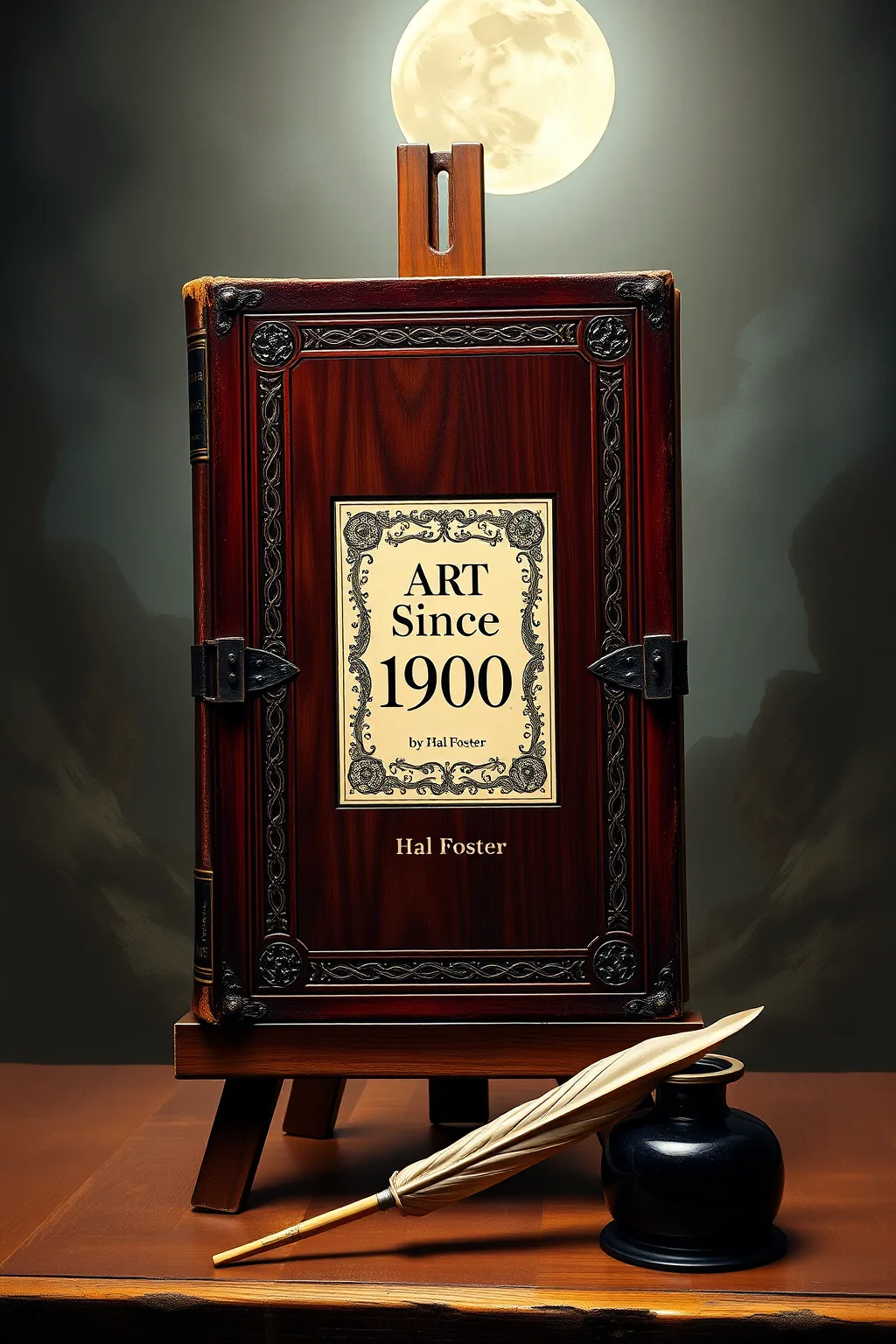
Art since 1900
 66
66

Art since 1900


By Aurelia Blackwood (Occult Philosophy Critic) — "Art Since 1900" is not simply a history; it is an initiation into the labyrinthine consciousness of modern art. Foster and his esteemed colleagues masterfully decode the symbolic languages and ritualistic impulses embedded within artistic innovation. They illuminate how artists, often unknowingly, tapped into deeper currents of collective psyche and spiritual yearning. This volume is indispensable for scholars of esotericism and practitioners of the visual arts alike, offering profound insights into the esoteric dimensions of creation. Its rigorous scholarship, combined with an almost intuitive grasp of artistic metamorphosis, makes it a cornerstone for understanding art’s role as a catalyst for transformation.
📝 Description
66
Hal Foster and his co-authors examine art's radical shifts from 1900 to the present.
Hal Foster, Rosalind Krauss, Yve-Alain Bois, and Benjamin H. D. Buchloh analyze key artworks and movements from 1900 onward. They structure the book around critical events and shifts in artistic production, offering detailed case studies of specific works and the theoretical contexts that informed them. The authors consider how art has responded to and shaped historical moments, from the rise of avant-gardes to the impact of new technologies and global developments. They engage with a range of theoretical frameworks, including psychoanalysis, semiotics, and post-structuralism, to interpret the complex relationship between art, theory, and society. The book aims to provide a comprehensive, yet critically engaged, account of modern and contemporary art's trajectory.
While not a text on occultism, "Art Since 1900" engages with concepts that resonate with esoteric traditions by examining art's capacity to channel, transmute, and reveal hidden dimensions of experience. The authors' focus on symbolic language, alchemical processes in artmaking, and the emergent mythologies of modernity touches upon ideas of transformation and deeper understanding often found in esoteric thought. The book treats avant-garde manifestos and artistic creation as vehicles for expanding consciousness, mirroring esoteric pursuits of inner knowledge and altered perception.
💡 Why Read This Book?
Uncover the secret dialogues between artists and the unseen forces shaping modernity. "Art Since 1900" offers a unique lens, revealing artistic movements as ritualistic practices and artworks as vessels of hidden knowledge. Ideal for seekers of deeper meaning, scholars of esoteric traditions, and practitioners who wish to infuse their work with profound symbolic resonance. It’s an essential key to understanding art's alchemical power.
⭐ Reader Reviews
Honest opinions from readers who have explored this book.
❓ Frequently Asked Questions
Does "Art Since 1900" contain explicit occult rituals?
While not a manual for ritual practice, the book explores art as a ritualistic act, delving into the symbolic and transformative processes inherent in artistic creation and reception, revealing its esoteric dimensions.
Is this book suitable for beginners interested in esoteric art?
Yes, it provides a comprehensive overview, making complex artistic and philosophical concepts accessible while offering profound insights for those new to the intersection of art and esotericism.
What makes this book essential for understanding modern art's 'hidden' aspects?
It uncovers the often-overlooked symbolic languages, mythologies, and psychological undercurrents that drive artistic innovation, presenting art as a form of esoteric inquiry and expression.
How does the updated edition enhance the esoteric perspective?
The inclusion of contemporary developments allows for a broader understanding of how esoteric themes and symbolic thinking continue to manifest and evolve in the latest artistic frontiers.
What kind of 'hidden knowledge' can one expect to find?
Readers can anticipate discovering the symbolic codes, philosophical underpinnings, and psychological archetypes that artists have employed to challenge perception and explore the deeper mysteries of existence.
🔮 Key Themes & Symbolism
The Alchemical Transformation of Vision
This theme explores how modern artists, akin to alchemists, transmuted raw materials of perception and experience into potent symbolic forms. It examines the deliberate manipulation of color, line, and form not merely for aesthetic appeal, but as a means to unlock hidden truths and catalyze spiritual or psychological metamorphosis in the viewer. The book reveals art as a laboratory where societal and personal transformations are envisioned and enacted through visual means, challenging the conventional understanding of artistic practice as purely representational or decorative.
Rituals of Modernity and Artistic Manifestation
Here, the focus shifts to the performative and ritualistic aspects embedded within art movements. It investigates how artists conceived of their creative process as a form of sacred rite, whether through the collective ceremonies of avant-garde groups or the solitary invocation of inspiration. The book analyzes manifestos as incantations, exhibitions as temples, and the very act of creation as a means to access deeper realities, offering a framework for understanding art's role in shaping collective consciousness and individual spiritual pathways in the modern era.
The Unveiling of Arcane Symbolism
This section studies the profound symbolic language that permeates art since 1900. It deciphers the recurring motifs, archetypes, and esoteric signifiers that artists have employed to communicate complex ideas about the human condition, the cosmos, and the nature of reality. The book traces the lineage of these symbols, from ancient traditions to their reinterpretation in modern contexts, providing readers with the keys to unlock deeper layers of meaning and appreciate art as a powerful vehicle for esoteric wisdom and spiritual exploration.
💬 Memorable Quotes
Direct passages from the work, attributed to the author.
“The canvas, a sacred space for transmutation.”
— This phrase elevates the artist's workspace to a ritualistic arena, implying that the act of painting or creating is a profound, transformative process, akin to alchemical work, where ideas and emotions are refined.
“Movements as incantations, art as prophecy.”
— This interpretation posits that artistic movements function as collective pronouncements or spells, aimed at shaping reality, while individual artworks serve as visions or foretellings of future possibilities and societal shifts.
“Symbolism, the silent language of the soul.”
— This highlights the profound and intuitive connection between symbols and the inner self, suggesting that visual symbols communicate directly with the soul, bypassing rational intellect to convey deeper emotional and spiritual truths.
“To see is to understand the hidden architecture of being.”
— This suggests that true visual perception goes beyond surface appearances, allowing one to grasp the underlying structures, principles, and interconnectedness of existence, revealing a deeper, often spiritual, reality.
💡 Key Ideas
Editorial paraphrase of the work's core concepts — not direct quotes.
Art is a lens through which the unseen becomes manifest.
This quote suggests that art possesses the unique ability to reveal hidden truths, spiritual dimensions, or psychological depths that are not readily apparent in everyday experience, acting as a conduit for revelation.
🌙 Esoteric Significance
Tradition
This work resonates deeply with Hermeticism and Alchemy, viewing artistic creation as a process of transformation and revelation. It also reflects the symbolic language found in Gnosticism and various mystical traditions, where art becomes a vehicle for accessing hidden divine knowledge and understanding the underlying order of the cosmos. The exploration of archetypes aligns with Jungian depth psychology, itself heavily influenced by esoteric symbolism and the collective unconscious.
Symbolism
Key symbols explored include geometric forms (sacred geometry), archetypal figures (the anima, the shadow), colors as energetic frequencies, and recurring motifs such as the labyrinth, the mandala, and the ouroboros. These elements are presented not merely as decorative but as powerful signifiers of psychological states, spiritual journeys, and cosmic principles, offering a visual grammar for understanding the ineffable.
Modern Relevance
In an era often characterized by fragmentation and digital ephemerality, "Art Since 1900" highlights art's enduring capacity to provide meaning, foster introspection, and connect us to deeper currents of human experience. Its exploration of symbolic communication and transformative processes remains vital for cultivating mindful engagement with visual culture and for understanding art's potential to inspire personal growth and societal consciousness.
👥 Who Should Read This Book
This book is a treasure for the intellectually curious and spiritually inclined. **Beginners** seeking to understand the roots of modern artistic expression will find a clear, yet profound, introduction to its underlying philosophies. **Scholars** of art history, philosophy, and comparative religion will appreciate its rigorous analysis and interdisciplinary approach. **Seekers** yearning for deeper meaning will discover art as a potent pathway to self-discovery and an understanding of universal truths. **Practitioners**, particularly those in creative fields, will find inspiration for infusing their own work with richer symbolic resonance and transformative intent.
📜 Historical Context
The period from 1900 onwards witnessed unprecedented societal upheaval: world wars, rapid industrialization, burgeoning psychological theories, and the erosion of traditional belief systems. This fertile, yet often tumultuous, ground spurred artists to seek new languages and forms of expression. Movements like Cubism, Surrealism, and Abstract Expressionism emerged not just as stylistic innovations but as radical attempts to grapple with existential anxieties, explore the subconscious, and redefine humanity's place in a rapidly changing universe. Esoteric thought, from Jungian psychology to Eastern philosophies, permeated intellectual circles, influencing artists who sought to tap into universal archetypes, spiritual energies, and hidden knowledge, making art a potent field for both personal and collective transformation.
📔 Journal Prompts
How has the concept of 'transformation' manifested in the art movements discussed?
Identify a piece of art that you feel embodies a 'ritualistic' act of creation. Describe its qualities.
What personal archetypes or symbols have you observed recurring in your own life or creative endeavors?
Explore the idea of art as a 'lens' for the unseen. What unseen aspects does your favorite artwork reveal?
Consider how the 'arcane symbolism' in art can be a language for communicating complex emotions or spiritual insights.
🗂️ Glossary
Avant-Garde
Artistic movements that are experimental, radical, and push the boundaries of conventional artistic norms, often seeking to challenge societal structures and provoke change.
Archetype
A universal, archaic pattern or image that is part of the collective unconscious, often appearing in myths, dreams, and art across cultures and time periods.
Symbolism
The use of symbols to represent ideas and qualities, often conveying meanings beyond the literal, allowing for the expression of abstract concepts and emotions.
Transmutation
In an artistic context, the process of transforming raw materials (ideas, emotions, physical substances) into a higher, more refined, or symbolically potent form.
Esoteric
Intended for or likely to be understood by only a small number of people with a specialized knowledge or interest; pertaining to hidden or secret knowledge.
This book appears in 3 collections
🔮 Readers Also Liked
Browse all →
From the “Ritual Magic” Collection
View all →
More Free Magic & Ritual Books
View all →