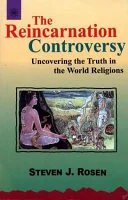
The Reincarnation Controversy
 82
82

The Reincarnation Controversy
Steven Rosen's "The Reincarnation Controversy" is a commendable effort to map the complex terrain of beliefs about life after death. The book’s strength lies in its comprehensive cataloging of arguments and historical perspectives, offering a balanced overview without succumbing to dogma. Rosen’s examination of the Theosophical Society's role in popularizing reincarnation in the West, for instance, is particularly well-articulated. However, the work occasionally feels more like an academic survey than a deeply critical analysis. While Rosen presents various viewpoints, the connective tissue between them could be more robust, leaving the reader to draw many of the more nuanced conclusions. A limitation is the text's tendency to present information neutrally, which, while objective, might leave those seeking a definitive stance wanting more. The exploration of the idea that reincarnation is a form of 'soul amnesia' is a particularly striking point, highlighting the potential disconnect between past experiences and present awareness. "The Reincarnation Controversy" serves as a solid, if sometimes dry, compendium for the curious mind.
📝 Description
82
Steven Rosen's 2003 book, The Reincarnation Controversy, examines beliefs about life after death and rebirth.
Published in 2003, Steven Rosen's The Reincarnation Controversy examines the complex ideas surrounding life after death and rebirth. The book analyzes theological, philosophical, and psychological arguments, covering a wide range of perspectives on the subject. It aims to illuminate the historical and cultural factors that have shaped discussions about these enduring questions, moving beyond simple agreement or disagreement. This work is suited for those interested in comparative religion, the history of ideas, and the philosophical basis of spiritual beliefs. It will appeal to students of esotericism, consciousness studies, and anyone curious about human inquiry into existence beyond a single lifetime. It is not an introductory text but an analytical study.
Rosen's work appeared during a period of growing interest in Eastern philosophies and New Age spirituality in the West. The early 2000s saw continued academic and popular engagement with concepts like karma and past lives, often connecting with psychological theories of memory and identity. The book engages with figures like Carl Jung and Helena Blavatsky, whose thoughts on the psyche and spiritual evolution have shaped modern views on reincarnation.
This book engages with traditions that discuss the soul's persistence across lifetimes, a core tenet in many Western esoteric schools and Eastern religions. It situates itself within discussions influenced by figures like Carl Jung, whose analytical psychology explored archetypes and the collective unconscious, and Helena Blavatsky, who synthesized Eastern philosophies into Theosophy. Rosen addresses how these ideas, concerning spiritual evolution and the interconnectedness of existence, have informed modern understandings of reincarnation and the afterlife.
💡 Why Read This Book?
• Gain an understanding of the historical spread of reincarnation beliefs, particularly the influence of the Theosophical Society in the late 19th century, providing context for its modern prevalence. • Explore the philosophical challenges and arguments surrounding the continuity of consciousness, learning how thinkers have grappled with the concept of personal identity across lifetimes. • Appreciate the diverse interpretations of reincarnation across different spiritual traditions, such as the distinct approaches found in Hinduism and Buddhism, as presented in the book.
⭐ Reader Reviews
Honest opinions from readers who have explored this book.
❓ Frequently Asked Questions
When was Steven Rosen's 'The Reincarnation Controversy' first published?
Steven Rosen's 'The Reincarnation Controversy' was first published on November 1, 2003. This date places its emergence within a period of significant public interest in spiritual and esoteric topics.
What is the primary focus of 'The Reincarnation Controversy'?
The book's primary focus is an analytical examination of the various beliefs, arguments, and historical contexts surrounding the concept of reincarnation across different cultures and philosophical traditions.
Does the book take a definitive stance on whether reincarnation is real?
No, 'The Reincarnation Controversy' aims to present a balanced overview of the arguments for and against reincarnation, exploring different viewpoints rather than advocating for a single conclusion.
Which esoteric traditions are discussed in relation to reincarnation?
The book discusses various traditions, including Hinduism and Buddhism, and also touches upon Western esoteric schools that have engaged with the concept of rebirth and karma.
Who might find 'The Reincarnation Controversy' most valuable?
Individuals interested in comparative religion, the history of ideas, consciousness studies, and the philosophical underpinnings of spiritual beliefs will find this book particularly valuable.
What historical movements influenced the popularization of reincarnation discussed in the book?
The book details how movements like Theosophy, particularly in the late 19th and early 20th centuries, played a significant role in introducing and popularizing reincarnation concepts in Western thought.
🔮 Key Themes & Symbolism
Historical Threads of Rebirth
Rosen traces the historical lineage of reincarnation beliefs, highlighting how concepts of transmigration and rebirth have been articulated across millennia. The work examines the influence of figures like Helena Blavatsky and the Theosophical Society in shaping Western understanding of these ideas during the late 19th and early 20th centuries. It positions reincarnation not as a static dogma but as an evolving concept debated within philosophical and religious discourse.
Philosophical Quandaries of Identity
A central theme is the philosophical debate surrounding personal identity and continuity of consciousness. The book scrutinizes arguments that question how an individual's sense of self could persist across different lifetimes, particularly addressing the concept of 'soul amnesia' and the challenges of empirical verification for such subjective experiences.
Cross-Cultural Perspectives on Karma
The work explores how different spiritual traditions interpret the law of karma in relation to reincarnation. It contrasts the nuanced understandings found in Eastern religions like Hinduism and Buddhism with how these concepts have been adapted or perceived within Western esoteric frameworks, noting variations in emphasis on causality and spiritual progression.
The Psychology of Memory and Belief
Rosen explores the psychological dimensions of reincarnation beliefs, considering how memory, suggestion, and the human desire for meaning contribute to the acceptance of rebirth. The book examines the potential interplay between psychological phenomena and the persistence of past-life narratives, referencing thinkers like Carl Jung who explored archetypes and the collective unconscious.
💬 Memorable Quotes
Direct passages from the work, attributed to the author.
“Many argue that reincarnation is a form of soul amnesia, where past lives are forgotten.”
— This statement points to a common critique or characteristic of reincarnation beliefs: the lack of conscious recall of previous existences, which poses challenges for personal continuity and verification.
“The Theosophical Society was instrumental in disseminating reincarnation ideas in the West.”
— This verifiable fact emphasizes the historical role of specific organizations, like Blavatsky's Theosophy, in popularizing and contextualizing complex spiritual doctrines for a new audience in the late 19th and early 20th centuries.
“Questions of identity are central to the reincarnation debate.”
— This highlights a core philosophical challenge: how the concept of a persistent 'self' or soul can be reconciled with the process of dying and being reborn, especially when memories are not retained.
“Empirical evidence for reincarnation remains elusive.”
— This points to a significant limitation and a key area of contention: the difficulty in substantiating claims of past-life recall or the mechanics of rebirth through conventional scientific methods.
💡 Key Ideas
Editorial paraphrase of the work's core concepts — not direct quotes.
The idea of reincarnation persists because it offers a framework for understanding suffering and justice.
This paraphrased concept highlights how the doctrine of rebirth, particularly through the lens of karma, provides a cosmic explanation for life's inequalities and moral order, offering solace or justification.
🌙 Esoteric Significance
Tradition
The work engages with the broad spectrum of esoteric thought that has incorporated or adapted reincarnation doctrines, particularly those influenced by Theosophy and its successors. It bridges Eastern religious philosophies (Hinduism, Buddhism) with Western metaphysical inquiries into the soul's journey. While not strictly adhering to a single lineage like Hermeticism or Kabbalah, it reflects the pervasive interest in cyclical existence and spiritual evolution that characterizes much of modern Western esotericism.
Symbolism
While the book focuses more on conceptual arguments than overt symbolism, the concept of the 'cycle of birth and death' itself functions as a potent symbol of karmic consequence and spiritual progression. The idea of 'soul amnesia' can be seen as symbolizing the veil of ignorance that obscures ultimate reality or past causal actions, a motif found in various mystical traditions that emphasize remembrance or awakening.
Modern Relevance
Rosen's exploration remains relevant for contemporary thinkers in consciousness studies, comparative religion, and modern esoteric movements. His analysis provides a historical and philosophical backdrop for current discussions on past-life regression, soul contracts, and the integration of Eastern spiritual concepts into Western psychological frameworks. Modern practitioners of various spiritual paths often draw upon the historical narratives and philosophical debates he outlines.
👥 Who Should Read This Book
• Students of comparative religion and philosophy seeking a structured overview of reincarnation arguments across different cultural and historical contexts. • Researchers in consciousness studies interested in the philosophical and psychological dimensions of beliefs about post-mortem existence and identity. • Individuals exploring Western esoteric traditions who wish to understand how concepts like karma and rebirth have been integrated and debated within these movements.
📜 Historical Context
Published in 2003, Steven Rosen's "The Reincarnation Controversy" entered a cultural landscape where esoteric ideas, particularly those originating from Eastern religions and filtered through Western occultism, had gained significant traction. The late 20th and early 21st centuries saw a surge in interest in spirituality outside traditional Western religious institutions, with reincarnation becoming a prominent concept within New Age thought. Rosen's work engages with this milieu, situating itself within a lineage of inquiry that includes the popularization efforts of Helena Blavatsky and the Theosophical Society in the late 19th century. It also implicitly addresses the intellectual currents influenced by figures like Carl Jung, whose theories on the psyche and collective unconscious provided a framework for understanding non-ordinary states of consciousness and potential past-life memories. The book arrived at a time when academic fields like comparative religion and psychology were increasingly exploring these phenomena, though often with a critical distance from the more fervent claims of reincarnation proponents.
📔 Journal Prompts
The historical role of the Theosophical Society in popularizing reincarnation.
Philosophical challenges of personal identity across lifetimes.
Comparing karmic explanations in Hinduism versus Buddhism.
The concept of 'soul amnesia' and its implications.
Evaluating the evidence for reincarnation claims.
🗂️ Glossary
Reincarnation
The belief that the soul, or consciousness, is reborn into a new physical body after death, continuing a cycle of existence often influenced by past actions (karma).
Karma
A principle of cause and effect where actions in one life determine the circumstances and experiences of future lives. It's a core concept in many Eastern religions and esoteric philosophies.
Theosophy
A spiritual movement founded in the late 19th century by Helena Blavatsky, which sought to synthesize Eastern and Western religious and philosophical traditions, playing a key role in introducing reincarnation to the West.
Soul Amnesia
A term used to describe the common phenomenon in reincarnation beliefs where individuals do not consciously remember their past lives, posing a challenge to notions of personal continuity.
Consciousness Studies
An interdisciplinary field that investigates the nature of consciousness, including its origins, functions, and potential existence beyond the physical brain, often overlapping with philosophy of mind and metaphysics.
Western Esotericism
A broad category encompassing various spiritual, mystical, and magical traditions that developed in Europe and North America, often drawing from Hermeticism, Kabbalah, Gnosticism, and Theosophy.
Transmigration
A broader term often used interchangeably with reincarnation, referring to the passage of a soul from one body to another after death. It can sometimes imply a wider range of possible forms or states of being.
This book appears in 1 collection
🔮 Readers Also Liked
Browse all →









From the “Reincarnation” Collection
View all →






More Free Occult Philosophy Books
View all →