Tantric yoga
 77
77

Tantric yoga
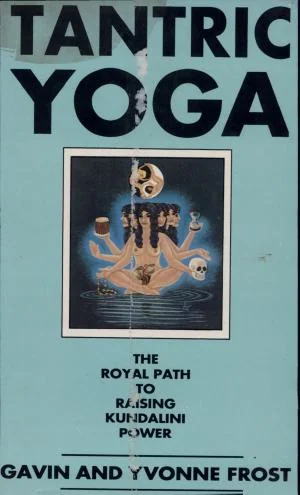
Gavin Frost's Tantric Yoga presents a challenging, yet rewarding, manual for those seeking to engage with the deeper currents of yogic practice. Frost avoids the common pitfalls of spiritual instruction by maintaining a rigorous focus on energetic mechanics and subtle body work. His explanation of the *chakras* as dynamic energy centers, rather than static points, offers a more nuanced perspective than many contemporary texts. However, the book's dense prose and reliance on esoteric terminology can be a significant hurdle for newcomers. A passage discussing the precise manipulation of *prana* through specific breath retention techniques, while informative, requires considerable prior knowledge to fully grasp. Ultimately, Tantric Yoga is a valuable resource for dedicated students prepared to wrestle with its demanding, yet illuminating, material.
📝 Description
77
Gavin Frost's Tantric Yoga, published in 1989, details esoteric practices beyond physical postures.
Published in 1989, Gavin Frost's Tantric Yoga moves past common understandings of physical postures to focus on the subtle energies and spiritual dimensions within Tantric traditions. The book explains methods for awakening inner forces, aligning consciousness, and reaching higher states of awareness through specific yogic techniques. Frost advocates for integrating these practices into daily life to achieve holistic personal evolution.
This work is for serious practitioners and students of esoteric spirituality interested in a deeper, less popularized view of Tantra. It suits those drawn to the philosophical underpinnings and energetic mechanics of yogic disciplines, especially within Western esotericism. Readers seeking to explore advanced meditation, visualization, and energy manipulation techniques will find significant value. It is not intended as an introductory guide to physical yoga or secular wellness.
Tantric Yoga by Gavin Frost was published in 1989, a time when Western esoteric circles showed renewed interest in Eastern spiritual traditions. Building on decades of engagement with yogic philosophy, Frost's book offered a direct approach to Tantric methods, distinguishing itself from adaptations common in popular yoga. This period saw the lingering influence of figures like Helena Blavatsky, whose earlier work helped introduce esoteric concepts to a broader audience, paving the way for more detailed explorations like Frost's.
💡 Why Read This Book?
• Learn specific techniques for visualizing and directing *prana*, offering a practical method for energy cultivation distinct from general meditation practices. • Understand the role of *Shakti* and *kundalini* not as abstract concepts but as vital forces within the subtle anatomy, as detailed in Frost's original 1989 publication. • Gain insight into the esoteric purpose of *mantra* and *yantra* beyond their sonic or visual forms, exploring their function in altering consciousness as presented in the text.
⭐ Reader Reviews
Honest opinions from readers who have explored this book.
❓ Frequently Asked Questions
What is the primary focus of Gavin Frost's Tantric Yoga?
Gavin Frost's Tantric Yoga focuses on the esoteric and energetic dimensions of yogic practice, emphasizing subtle body work, energy manipulation, and spiritual awakening beyond physical postures. It was first published in 1989.
Is Tantric Yoga suitable for beginners?
While offering foundational principles, the book's depth and specialized terminology make it more suitable for practitioners with some existing background in esoteric studies or advanced meditation techniques.
What is the concept of Shakti in this book?
In Tantric Yoga, Shakti refers to the divine feminine energy, understood as a primal force within the subtle body that is essential for spiritual awakening and transformation.
How does this book approach Kundalini?
The book presents Kundalini awakening as a controlled, systematic process of spiritual evolution, detailing methods for its safe and effective activation through yogic discipline.
When was Tantric Yoga by Gavin Frost first published?
Tantric Yoga by Gavin Frost was first published in 1989, placing it within a specific wave of esoteric literature exploring Eastern traditions in the late 20th century.
Are there practical exercises in Tantric Yoga?
Yes, the book includes detailed instructions on practices involving breath control (pranayama), visualization, mantra recitation, and energy manipulation aimed at spiritual development.
🔮 Key Themes & Symbolism
Subtle Body Energetics
The work meticulously details the subtle anatomy, focusing on the interplay of *prana* (life force) within the *nadis* (energy channels) and *chakras* (energy centers). Frost explains how specific yogic techniques, including breath control and visualization, can be employed to purify, energize, and harmonize these energetic pathways. This focus moves beyond the physical body to address the energetic blueprint that influences consciousness and spiritual development, offering practical methods for practitioners to cultivate and direct these forces.
Shakti and Kundalini Awakening
Central to Frost's teachings is the understanding and controlled awakening of *Shakti*, the potent divine feminine energy, often personified as *Kundalini*. The book frames Kundalini not as a volatile force to be feared, but as a dormant spiritual potential that can be systematically roused through dedicated practice. It outlines the ascent of this energy through the *chakras*, detailing the transformative experiences and spiritual insights that accompany its journey towards the crown center.
Consciousness Transformation
Tantric Yoga posits that spiritual growth is achieved through the direct transformation of consciousness. Frost elaborates on methods such as *mantra* recitation and *yantra* contemplation as tools to focus the mind, alter vibrational states, and expand awareness. By engaging with these practices, practitioners can transcend ordinary perception, access deeper levels of insight, and ultimately achieve a state of unified consciousness, moving towards spiritual liberation.
Esoteric Yoga Philosophy
Frost's work is rooted in an esoteric philosophical framework, interpreting yogic practices through a lens that emphasizes hidden spiritual laws and subtle realities. It distinguishes itself from purely physical or psychological approaches by stressing the integration of mind, body, and spirit for ultimate realization. The book explores the Tantric view of the universe as a manifestation of consciousness and energy, providing a theoretical basis for the practical exercises offered.
💬 Memorable Quotes
Direct passages from the work, attributed to the author.
“The body is a temple, but the subtle body is the sacred space within.”
— This highlights the book's emphasis on the energetic and spiritual dimensions over the purely physical. It suggests that true spiritual work occurs not just through physical discipline, but by cultivating and understanding the non-physical energetic structures.
“Prana is the bridge between the material and the spiritual realms.”
— This statement underscores the crucial role of life force energy (*prana*) in Frost's system. It positions the conscious manipulation of *prana* as a key method for accessing higher states of consciousness and spiritual awareness.
“Chakras are not merely points, but dynamic vortices of consciousness.”
— This interpretation reframes the common understanding of *chakras* as static energy points. Frost presents them as active, pulsating centers that are integral to the flow of energy and the unfolding of spiritual awareness.
“Mantra is the key that unlocks the subtle energetic locks.”
— This emphasizes the power of sacred sound and vibration in Tantric practice. It suggests that specific *mantras* have the ability to influence and release blocked energies within the subtle body.
💡 Key Ideas
Editorial paraphrase of the work's core concepts — not direct quotes.
The goal is not to escape the world, but to transform one's perception of it.
This paraphrase captures the integrated approach of Tantric Yoga, aiming for spiritual realization within the context of existence, rather than through renunciation. It points to internal transformation as the path to spiritual freedom.
🌙 Esoteric Significance
Tradition
Frost's work firmly sits within the Western esoteric tradition, specifically drawing from and elaborating on Hindu Tantric philosophy and yogic practices through an occult lens. It synthesizes elements of subtle body anatomy, energy manipulation (*prana*), and consciousness alteration, aligning with Hermetic principles of correspondence and the microcosm/macrocosm relationship. While rooted in Eastern concepts, its presentation and integration into a broader esoteric framework distinguish it from purely academic or devotional approaches to Tantra.
Symbolism
Key symbols in Tantric Yoga include the *chakras*, understood as energetic vortices crucial for spiritual development, and the coiled serpent representing *Kundalini* energy. The *yantra*, a geometric diagram, serves as a focal point for meditation, symbolizing cosmic order and aiding in concentration. *Mantra*, sacred sound, is also treated symbolically, as a vibrational key to unlock specific states of consciousness and energetic potentials within the practitioner.
Modern Relevance
Frost's detailed approach to subtle energy work and consciousness transformation continues to inform contemporary esoteric practitioners. Modern schools focusing on energy healing, advanced meditation, and subtle body awareness often echo the principles outlined in Tantric Yoga. Thinkers exploring the intersection of consciousness studies and ancient practices find value in its systematic approach to awakening inner forces, influencing current discussions on embodied spirituality and energetic psychology.
👥 Who Should Read This Book
• Serious students of esoteric yoga seeking to understand the energetic mechanics of practices like *prana* manipulation and *chakra* activation. • Practitioners interested in exploring *Shakti* and *Kundalini* awakening from a controlled, systematic perspective, as detailed in texts first published in the 1980s. • Individuals engaged in comparative esoteric studies looking for a Western interpretation of foundational Tantric concepts and their practical application.
📜 Historical Context
Gavin Frost's Tantric Yoga, released in 1989, emerged during a dynamic period for Western esotericism. The late 20th century saw a significant wave of interest in Eastern spiritual practices, often filtered through Western occult and philosophical traditions. While figures like Paramahansa Yogananda had popularized Kriya Yoga earlier, and the Theosophical Society had introduced broader esoteric concepts, Frost's work offered a more direct engagement with Tantric energetic mechanics. This was a time when esoteric bookstores and study groups flourished, providing a niche audience for detailed explorations of practices distinct from the increasingly commercialized yoga scene. The book's approach likely drew from earlier Western interpretations of Eastern mysticism, while aiming for a greater fidelity to what Frost perceived as the core energetic principles, potentially diverging from more syncretic or simplified versions circulating at the time.
📔 Journal Prompts
The energetic function of the *Anahata* chakra.
Gavin Frost's perspective on the role of *prana* in daily life.
How *mantra* can be used to focus consciousness.
The subtle body as described in the text.
Interpreting the symbolism of the ascending *Kundalini* serpent.
🗂️ Glossary
Prana
The vital life force or energy that permeates all existence. In Tantric Yoga, it is consciously manipulated through breathwork and visualization for spiritual development.
Shakti
The divine feminine energy, often understood as the primordial cosmic power and the creative force of the universe. It is considered the dynamic aspect of consciousness.
Chakras
Energetic centers located along the subtle spinal column, believed to govern various physical, emotional, and spiritual functions. They are visualized as spinning wheels or lotuses.
Kundalini
A potent spiritual energy, often depicted as a coiled serpent, said to reside at the base of the spine. Its awakening is central to achieving higher states of consciousness.
Mantra
A sacred sound, syllable, word, or phrase repeated during meditation to aid concentration and invoke spiritual energies or states of consciousness.
Yantra
A mystical diagram, often geometric, used as a tool for meditation and focusing the mind. It represents cosmic energies and serves as a visual aid for spiritual practice.
Subtle Body
The non-physical energetic framework of a being, comprising channels (*nadis*), energy centers (*chakras*), and vital energies (*prana*), which is seen as influencing the physical body and consciousness.
🔮 Readers Also Liked
Browse all →









More by Gavin Frost
All books →
More Free Spiritual Development Books
View all →





![The History of Spiritualism. [With Plates, Including Portraits.]](/img/thumb/the-history-of-spiritualism-with-plates-including-portraits-arthur-conan-doyle-008182.webp)