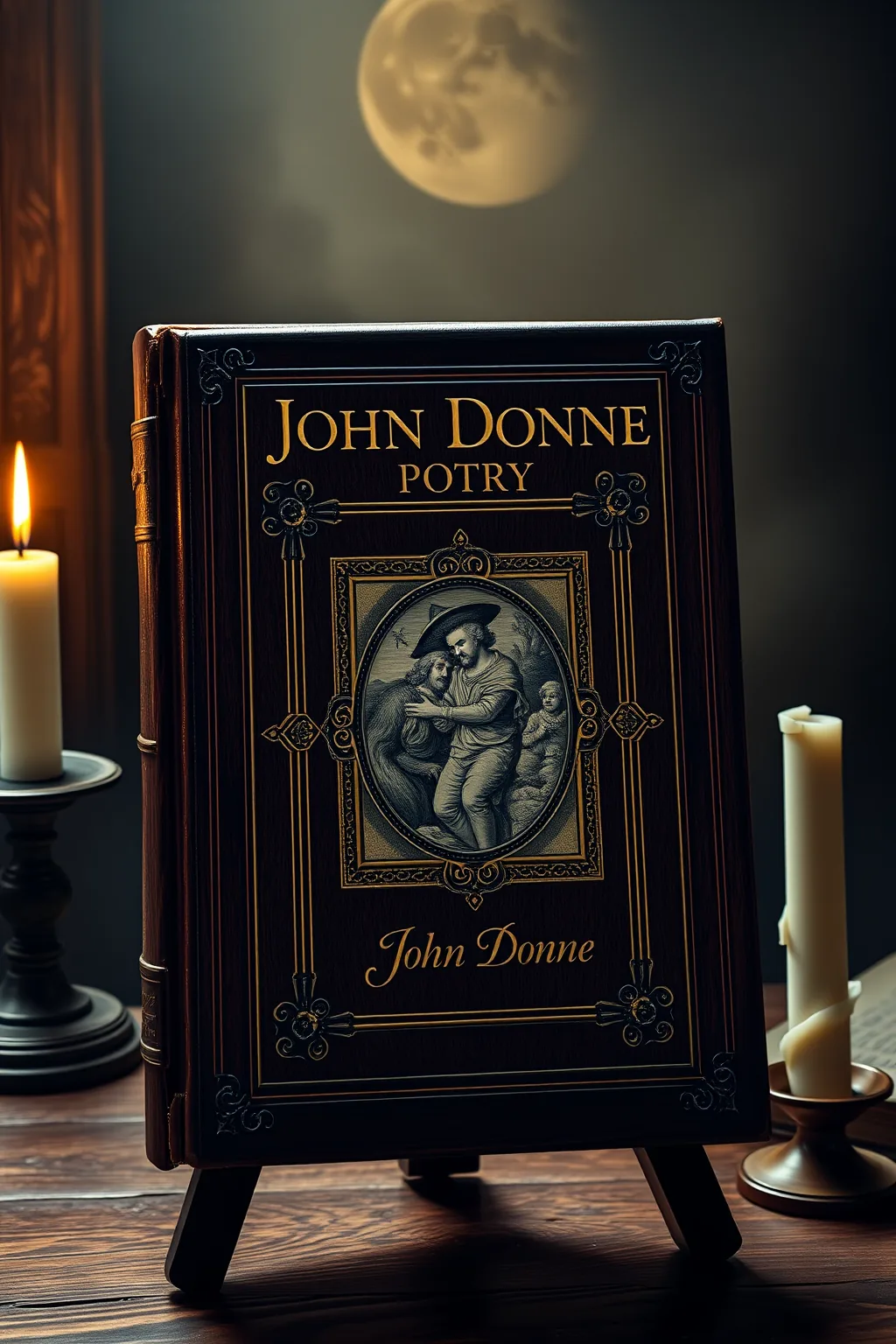
John Donne Poetry
 80
80

John Donne Poetry
The enduring power of John Donne's verse lies in its unflinching examination of human experience, a quality this edition effectively showcases. The meticulous scholarship behind Booty and Stanwood's work provides a solid foundation for engaging with Donne's intricate language and challenging themes. One strength is the clear presentation of the Holy Sonnets, allowing their spiritual wrestling to confront the reader directly. A limitation, however, is the absence of extensive critical commentary that might illuminate some of Donne's more obscure allusions for contemporary readers unfamiliar with 17th-century theological debates. For instance, the exploration of the soul's journey in poems like 'The Ecstasy' remains potent, demonstrating Donne's ability to render abstract concepts with visceral imagery. This collection is an essential resource for anyone seeking to understand the raw, intellectual heart of English metaphysical poetry.
📝 Description
80
Edited by John Booty and P.G. Stanwood, this collection of John Donne's poetry was first compiled in 1927.
This volume gathers significant works by the 17th-century poet John Donne, including his Holy Sonnets, secular songs, sonnets, and elegies. The collection offers a broad view of his thematic concerns and stylistic methods.
It is aimed at students of English literature, particularly those focused on the Renaissance and early modern periods. Readers interested in the interplay of religious feeling, secular love, and philosophical thought in poetry will find it useful. Scholars studying Donne's impact on later metaphysical poets or the development of poetic form and language in the 17th century will also benefit from this edition.
Donne, a key figure of the English Baroque, wrote during a time of significant religious and political change in England. His poems often reflect the intellectual climate of his era, absorbing influences from scholasticism, Renaissance humanism, and new scientific ideas. This book places Donne within the context of 17th-century English poetry, highlighting his departure from conventional styles and his unique approach characterized by intellectual depth and strong emotion.
John Donne's poetry is often considered esoteric due to its intellectual complexity and its use of startling analogies, particularly the metaphysical conceit. He frequently draws connections between the spiritual and the physical, the divine and the human, often engaging with theological paradoxes and intense emotional states. This approach requires a reader willing to engage with intricate arguments and unconventional imagery, placing his work in a tradition that values intellectual rigor and symbolic depth over direct emotional expression.
💡 Why Read This Book?
• Gain insight into the metaphysical conceit, a poetic device Donne pioneered, by analyzing its application in poems like 'The Flea' to connect disparate ideas. • Understand the complex spiritual landscape of 17th-century England through Donne's Holy Sonnets, exploring his personal theological struggles. • Appreciate Donne's innovative use of language and form, as seen in his secular songs, which challenged prevailing poetic conventions of his era.
⭐ Reader Reviews
Honest opinions from readers who have explored this book.
❓ Frequently Asked Questions
When was John Donne's poetry first compiled in a major edition?
While John Donne lived from 1572 to 1631, major compilations of his poetry began to appear posthumously. The edition by John Booty and P.G. Stanwood draws on historical publications, with its first published date noted as 1927, indicating a significant scholarly effort in the early 20th century to consolidate his work.
What is a 'metaphysical conceit' as used by John Donne?
A metaphysical conceit is an extended, often surprising, metaphor that draws comparisons between spiritual or abstract concepts and concrete, often mundane, physical objects or experiences. Donne famously uses these in poems like 'A Valediction: Forbidding Mourning' to explore themes of love and separation.
What are the Holy Sonnets?
The Holy Sonnets are a series of 19 religious sonnets written by John Donne, exploring profound spiritual themes, theological paradoxes, and his personal relationship with God. They are notable for their intense emotional and intellectual grappling with faith, sin, and salvation.
Who were John Donne's contemporaries in English poetry?
John Donne's contemporaries included poets like Ben Jonson, George Herbert, and the Cavalier poets such as Robert Herrick and Thomas Carew. While sharing some thematic interests, Donne's style and intellectual approach often set him apart.
What is the significance of John Donne's secular poetry?
Donne's secular poetry, including his Songs and Sonnets, is significant for its frank exploration of love, desire, and human relationships. It often employs wit, paradox, and the metaphysical conceit to examine earthly passions with an intellectual rigor unusual for the time.
How did John Donne's work influence later poets?
Donne's influence is evident in the revival of metaphysical poetry in the early 20th century, particularly through T.S. Eliot's advocacy. His emphasis on intellectual content, colloquial language, and surprising imagery inspired poets seeking an alternative to Romantic sensibilities.
🔮 Key Themes & Symbolism
Love and the Sacred
Donne's poetry frequently intertwines carnal desire with spiritual devotion, blurring the lines between earthly and divine love. In works like 'The Canonization,' he elevates romantic love to a quasi-religious status, suggesting lovers can create their own sacred space. This thematic duality challenges conventional distinctions, proposing that profound human connection, even in its physical aspects, can possess a sacred dimension. The collection allows readers to trace this complex interplay across his secular and religious verse.
Mortality and the Soul
The inevitability of death and the fate of the soul are central preoccupations in Donne's work, particularly in the Holy Sonnets. He grapples with the fear of damnation, the hope of salvation, and the nature of the afterlife with an intense, often raw, honesty. Poems such as 'Death, be not proud' (Holy Sonnet 10) confront mortality directly, using intellectual argument to assuage fear. This theme reflects a broader Renaissance fascination with the transience of life and the eternal.
Intellectual Rigor and Poetic Form
Donne's poetry is characterized by its sharp intellect and innovative use of language and form. The metaphysical conceit, a hallmark of his style, allows him to forge unexpected connections, demanding active engagement from the reader. This collection showcases his ability to apply logical argumentation and scientific imagery to emotional and spiritual subjects, pushing the boundaries of poetic expression beyond the conventions of his time.
The Nature of Truth and Belief
Across his oeuvre, Donne probes the foundations of belief, questioning dogma and seeking personal conviction. Whether exploring theological paradoxes in his sonnets or the complexities of human relationships in his secular verse, he approaches truth with a skeptical yet earnest inquiry. His poetry does not offer easy answers but rather maps the intellectual and emotional terrain of wrestling with faith, doubt, and the search for meaning in a complex world.
💬 Memorable Quotes
Direct passages from the work, attributed to the author.
“Death, be not proud, though some have called thee Mighty and dreadful, for thou art not so.”
— This iconic line from Holy Sonnet 10 directly confronts the perceived power of death. Donne argues that death is not an end but a transition, diminishing its terror by framing it as a servant or a passage to eternal life.
“Busy old fool, unruly Sun,”
— The opening of 'The Sun Rising' immediately establishes a combative and witty tone. Donne personifies the sun, chiding it for disrupting his lovemaking, thereby emphasizing the supreme importance of his personal experience over cosmic order.
“Our two souls therefore, which are one,”
— This is a key line from 'A Valediction: Forbidding Mourning.' It illustrates the metaphysical conceit, comparing the union of two souls to the legs of a drawing compass, suggesting a spiritual connection that transcends physical separation.
💡 Key Ideas
Editorial paraphrase of the work's core concepts — not direct quotes.
For God's sake hold your tongue, and let me love.
From 'The Canonization,' this line expresses a defiant stance on romantic love, asserting its private sanctity against external judgment. Donne suggests that the lovers' world is self-contained and their passion warrants its own form of veneration.
I, by love’s devotions, might have made
This line from 'The Expiration' reflects Donne's tendency to use religious language and imagery to describe secular love. It elevates the act of love-making to a devotional practice, highlighting the sacredness he perceived in intense human connection.
🌙 Esoteric Significance
Tradition
While not strictly adhering to a single esoteric lineage, Donne's work deeply engages with Neoplatonic concepts of divine love and the soul's ascent, themes resonant within Hermetic and mystical traditions. His exploration of the spiritual dimensions of human experience, particularly the union of souls and the transcendence of the physical, echoes Gnostic ideas of spiritual knowledge and liberation. His intellectual approach to faith and the divine, often employing paradox and intricate logic, aligns with esoteric modes of inquiry that seek deeper truths beyond conventional dogma.
Symbolism
Donne frequently employs symbols that carry layered meanings. The compass, as seen in 'A Valediction: Forbidding Mourning,' symbolizes the perfect, indivisible union of souls, representing a spiritual connection that remains constant despite physical distance. The sun, often depicted as intrusive in his secular poetry, can represent the mundane world's attempt to interfere with the sacred space of love. His recurring use of religious imagery—churches, altars, saints—in secular contexts suggests a worldview where the sacred permeates all aspects of human life, blurring the boundaries between the profane and the divine.
Modern Relevance
Donne's influence persists in contemporary poetry and spirituality that seeks to integrate intellectual rigor with emotional depth. Modern poets exploring themes of faith, doubt, and the complexities of human relationships find resonance in his unflinching honesty and inventive use of language. Thinkers and practitioners interested in the intersection of psychology, spirituality, and existential inquiry often revisit Donne's work for its clear insights into the human condition, appreciating his ability to articulate the often-paradoxical nature of love, loss, and belief.
👥 Who Should Read This Book
• Students of 17th-century English literature seeking to understand a foundational figure of metaphysical poetry, benefiting from a curated collection of his key works. • Spiritual seekers and theologians interested in explorations of faith, doubt, and the divine through poetic expression, particularly Donne's intense Holy Sonnets. • Readers drawn to philosophical poetry that grapples with profound themes of love, mortality, and the human condition using intellectual wit and striking imagery.
📜 Historical Context
John Donne (1572-1631) was a towering figure in English literature during a period of profound religious and political change, encompassing the late Elizabethan and Jacobean eras. His poetry emerged amidst the intellectual ferment of Renaissance humanism, scholasticism, and the early stirrings of the scientific revolution. He navigated a challenging career path, from his early days as a courtier and poet known for passionate secular verse to his later ordination as Dean of St Paul's Cathedral, after which his writing took on a more overtly religious tone. Donne's unique style, characterized by intellectual complexity and the metaphysical conceit, distinguished him from contemporaries like Ben Jonson, whose classical sensibilities often leaned towards more formal structures. The reception of Donne's work was initially limited, with many poems circulating in manuscript; however, his posthumous reputation grew significantly, especially with the revival of metaphysical poetry in the 20th century, notably championed by T.S. Eliot.
📔 Journal Prompts
The compass metaphor in 'A Valediction: Forbidding Mourning'—how does it represent spiritual unity?
Donne's confrontation with 'Death, be not proud'—what intellectual strategies does he employ?
The elevation of lovers to sainthood in 'The Canonization'—explore this paradoxical claim.
Analyze the use of scientific imagery in depicting love in 'The Expiration.'
Reflect on Donne's concept of the soul's journey in poems like 'The Ecstasy.'
🗂️ Glossary
Metaphysical Conceit
An extended, surprising, and often elaborate metaphor that draws parallels between dissimilar things, typically linking abstract or spiritual concepts with concrete, often mundane, physical objects or experiences.
Holy Sonnets
A sequence of 19 sonnets by John Donne, characterized by intense spiritual struggle, theological debate, and profound personal reflection on sin, death, and salvation.
Secular Songs and Sonnets
Donne's non-religious poems, often dealing with themes of love, desire, jealousy, and the complexities of human relationships, frequently employing wit and intellectual argument.
Renaissance Humanism
An intellectual movement during the Renaissance that emphasized the study of classical literature and philosophy, focusing on human potential, reason, and worldly achievements.
Theology
The systematic study of the nature of the divine and, more broadly, of religious belief. Donne's poetry often engages directly with theological concepts and debates.
Paradox
A statement or proposition that, despite sound reasoning from acceptable premises, leads to a conclusion that seems senseless, logically unacceptable, or self-contradictory. Donne frequently uses paradox to explore complex truths.
Manuscript Circulation
The practice of sharing literary works by hand-copying them before the widespread availability of printing. Many of Donne's poems were initially circulated in this manner.
🔮 Readers Also Liked
Browse all →









More by John Donne, John Booty, P.G. Stanwood
All books →
More Free Spiritual Development Books
View all →