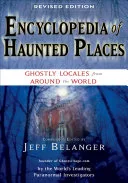
Encyclopedia of Haunted Places
 72
72

Encyclopedia of Haunted Places
Jeff Belanger’s *Encyclopedia of Haunted Places* offers a sprawling, if sometimes uneven, compendium of spectral locales. Its strength lies in its sheer breadth; the book presents a dizzying array of reported hauntings, from the well-known to the obscure, providing a useful starting point for anyone interested in global paranormal folklore. However, the reliance on reported accounts without deep critical analysis means the reader is often presented with assertions rather than investigations. A passage detailing the alleged hauntings at the Lizzie Borden House, for instance, recounts the commonly cited phenomena without extensively probing the historical context or potential psychological underpinnings that might explain the persistent lore. While invaluable as a catalog, it functions more as a gazetteer of the uncanny than a critical examination of belief.
Ultimately, this encyclopedia is a comprehensive inventory for the curious, a dense gathering of ghost stories from around the world.
📝 Description
72
Jeff Belanger's 2009 Encyclopedia of Haunted Places catalogs reported supernatural phenomena worldwide.
Published in 2009, Jeff Belanger's Encyclopedia of Haunted Places gathers accounts of supernatural phenomena from numerous locations across the globe. It compiles information from paranormal investigators and eyewitnesses, detailing the alleged spectral inhabitants and historical events tied to each site. The book structures reports of hauntings, aiming to go beyond simple anecdotes to create a comprehensive record of lore. It is intended for those interested in the paranormal, ghost hunting, folklore, and local legends. Readers might use it for planning paranormal tourism, understanding the history of specific haunted sites, or researching the broader subject of hauntings. The work appeals to a general audience curious about the supernatural and those studying parapsychology.
The encyclopedia organizes its entries by geographical location. Each haunted place receives a narrative describing its alleged hauntings, historical background, and prominent spectral figures. Implicitly, the book touches on the concept of place memory, suggesting that historical events and human emotions can imprint themselves on a location, causing recurring phenomena. It also references ghost hunting methods through the accounts presented.
Belanger's encyclopedia emerged in the early 21st century, a period marked by widespread popular interest in the paranormal, amplified by media and online information. It follows a tradition of ghost lore compilation that includes earlier works like Charles Harper's *A Treasury of British Folklore* (1955). While previous collections often focused on specific regions, Belanger's work aimed for a worldwide scope, reflecting a modern desire for encyclopedic knowledge of supernatural claims.
💡 Why Read This Book?
• Gain a global perspective on reported hauntings, learning about specific locations like the Queen Mary, first docked in 1936, and the phenomena associated with them. • Discover the historical narratives and alleged spectral inhabitants of over 1000 sites, providing context for their enduring reputations. • Understand the common threads in paranormal folklore by examining recurring types of hauntings and their historical roots across diverse cultures.
⭐ Reader Reviews
Honest opinions from readers who have explored this book.
❓ Frequently Asked Questions
What is the primary purpose of the Encyclopedia of Haunted Places?
The book's primary purpose is to serve as a comprehensive catalog and guide to locations worldwide that are reported to be haunted. It compiles lore, historical background, and alleged paranormal activity for each site, aimed at enthusiasts and researchers of the supernatural.
How many haunted places are featured in Jeff Belanger's encyclopedia?
Jeff Belanger's *Encyclopedia of Haunted Places* features over 1,000 haunted locations. This extensive compilation covers sites across various countries and continents, offering a broad overview of global paranormal claims.
Does the book offer practical advice for visiting haunted locations?
While the book details numerous haunted locations and their histories, it primarily functions as an informational guide rather than a practical travel manual. It provides context for potential visitors but does not typically include specific advice on visiting etiquette or safety.
What kind of evidence does the book present for hauntings?
The book presents alleged eyewitness accounts, historical records, and reports from paranormal investigators. It compiles existing lore and claims associated with each location, rather than presenting new scientific evidence or debunking claims.
Is this book suitable for skeptics?
The book is suitable for skeptics interested in folklore, cultural history, and the sociology of belief. It presents claims and legends without necessarily validating them, offering a factual compilation of what people report and believe about haunted places.
When was the Encyclopedia of Haunted Places first published?
The *Encyclopedia of Haunted Places* by Jeff Belanger was first published in January 2009. This edition aimed to provide updated information and new listings beyond earlier paranormal compendiums.
🔮 Key Themes & Symbolism
Geographical Compendium of the Unseen
The book's core function is its encyclopedic approach to cataloging reported hauntings across the globe. It meticulously lists locations, from historic inns to desolate battlefields, detailing the specific entities or events that lend them their spectral reputation. This geographical organization allows readers to trace patterns of reported paranormal activity across different cultures and landscapes, highlighting how local history and collective imagination coalesce to create enduring legends of the supernatural.
The Persistence of Folklore
By compiling tales of ghosts, apparitions, and unexplained phenomena, the encyclopedia underscores the enduring nature of folklore in the modern era. It showcases how narratives of the uncanny are passed down, adapted, and continue to capture public imagination. The book implicitly examines the cultural function of ghost stories, which often serve to explain the inexplicable, memorialize historical tragedies, or explore anxieties about death and the unknown.
Eyewitness Accounts and Investigator Reports
A significant aspect of the book involves the inclusion of firsthand accounts and the findings of paranormal investigators. This reliance on testimony positions the work within the broader discourse of parapsychology and ghost hunting. It presents the phenomena through the lens of those who claim to have experienced or documented them, offering a glimpse into the methods and observations prevalent in the contemporary paranormal investigation community.
Place Memory and Historical Imprints
The encyclopedia frequently touches upon the concept of 'place memory,' the idea that locations can retain energetic imprints of significant events or strong emotions. Many entries describe hauntings that are directly linked to historical occurrences, such as battles, murders, or tragic accidents. This theme suggests that the past is not entirely gone but can manifest in the present, influencing the atmosphere and perceived activity of a specific site.
💬 Memorable Quotes
Direct passages from the work, attributed to the author.
“The world is filled with places where the veil between worlds is thin.”
— This statement expresses the book's premise: that numerous locations possess an unusual susceptibility to paranormal manifestation, suggesting a global network of sites where the mundane and the supernatural intersect with notable frequency.
“Every reported haunting has a story, a history, and often, a human element.”
— This highlights the author's approach, emphasizing that ghost stories are not merely random occurrences but are deeply rooted in the specific circumstances, historical events, and emotional resonance of the places they inhabit.
“From ancient castles to modern homes, the unexplained continues to be reported.”
— This observation underscores the timeless and universal nature of reported hauntings, suggesting that paranormal phenomena are not confined to specific eras or types of architecture but are a persistent feature of human experience across different settings.
“Many locations gain their reputation from a single, dramatic event.”
— This points to the causal link often drawn between important historical moments, particularly traumatic ones, and the subsequent reports of hauntings, suggesting that such events can 'imprint' themselves onto a location.
💡 Key Ideas
Editorial paraphrase of the work's core concepts — not direct quotes.
Ghost hunters seek to document and understand these lingering energies.
This paraphrase points to the active pursuit of paranormal phenomena, framing the work of ghost hunters as an effort to systematically record and interpret the purported residual energies or spectral presences found at haunted sites.
🌙 Esoteric Significance
Tradition
While not explicitly aligned with a single esoteric tradition, the *Encyclopedia of Haunted Places* draws from broader currents of occult and folk magic that acknowledge the persistence of spiritual energy and the possibility of communication with unseen realms. It touches upon concepts found in spiritualism and certain branches of folklore studies that explore residual energy, elemental spirits, or the impact of human consciousness on the environment, resonating with a loosely defined modern esoteric interest in the energetic landscape.
Symbolism
The book implicitly engages with the symbolism of 'liminal spaces' – thresholds, crossroads, and places of transition – which are often sites of reported hauntings. These locations symbolize the boundaries between life and death, the known and the unknown. Furthermore, the spectral figures described often embody archetypal fears or unresolved historical traumas, serving as potent symbols of collective anxieties and unfinished business that manifest in the physical world.
Modern Relevance
Contemporary practitioners of psychogeography, urban exploration, and those interested in ley lines or earth energies may find the encyclopedia a valuable resource for identifying locations with purported energetic significance. It also appeals to modern spiritualists and ghost hunting groups who utilize such compendiums to guide their investigations and connect with the energetic residue of historical events and personalities.
👥 Who Should Read This Book
• Enthusiasts of paranormal investigation and ghost stories seeking a comprehensive global catalog of reported hauntings. • Researchers of folklore and cultural history interested in the persistence of supernatural narratives and their connection to local lore. • Individuals planning paranormal tourism or seeking background information on famously haunted locations worldwide.
📜 Historical Context
Published in 2009, Jeff Belanger's *Encyclopedia of Haunted Places* arrived during a period of burgeoning interest in paranormal investigation, amplified by reality television programs and online communities. This era saw a proliferation of ghost-hunting shows that brought spectral lore into mainstream living rooms, creating a demand for comprehensive resources. Belanger's work built upon a long tradition of cataloging spectral phenomena, exemplified by earlier works like *The Book of Ghosts* (1911) by Sabine Baring-Gould, which also sought to document reported hauntings. Unlike purely academic studies of folklore or religion, Belanger's approach is geared towards enthusiasts and potential paranormal tourists. The popular reception in the late 2000s was largely positive among this audience, though critical academic engagement often focused on the sociological aspects of belief rather than the veracity of the claims themselves. The work positioned itself as a definitive guide in a field increasingly saturated with sensationalized accounts.
📔 Journal Prompts
The prevalence of spectral apparitions in locations associated with tragedy.
The concept of 'place memory' as a recurring motif in hauntings.
The role of eyewitness testimony in substantiating paranormal claims.
How historical events shape the lore of specific haunted sites.
The comparison of hauntings across different geographical regions.
🗂️ Glossary
Apparition
A ghost or ghostlike image of a person, often seen as a visual manifestation of a deceased individual.
Residual Haunting
A type of haunting where paranormal activity is believed to be an imprint or recording of past events, replaying like a loop without conscious interaction.
Intelligent Haunting
A haunting characterized by paranormal activity that appears to be interactive and responsive, suggesting the presence of a conscious entity.
Poltergeist
A type of paranormal phenomenon characterized by physical disturbances such as loud noises, moving objects, and physical assaults, often attributed to an unseen force or entity.
Place Memory
The theory that locations can retain energetic imprints of past events or strong emotions, leading to recurring phenomena or a distinct atmosphere.
Spectral
Relating to or resembling a ghost; phantom or ghostly.
Eyewitness Account
A firsthand report of an event or phenomenon by someone who observed it directly.