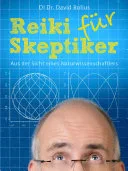
REIKI für Skeptiker
 78
78

REIKI für Skeptiker
DI Dr. David Bolius and Marie-Luise Bolius’s "REIKI für Skeptiker" attempts a difficult but necessary task: to present a practice often steeped in mysticism to a rationalist audience. Its greatest strength lies in its commitment to empirical demonstration, using simple experiments to illustrate concepts that might otherwise remain abstract. The section detailing "Reiki-Selbstbehandlung" is particularly effective, offering a practical entry point for those wary of esoteric jargon. However, the book occasionally struggles to fully satisfy the deeply ingrained skepticism it courts. While it aims for a middle ground, the inherent nature of energy healing means that some aspects will inevitably require a degree of acceptance beyond strict scientific proof. The work is most compelling when it grounds subjective experience in observable actions and outcomes, rather than solely relying on theoretical energetic principles. It’s a valuable bridge, though the gap it spans remains wide for some.
📝 Description
78
Published in 2014, REIKI für Skeptiker examines energetic healing through empirical investigation.
This book, REIKI für Skeptiker, approaches the practice of Reiki not as a matter of faith, but as a subject open to empirical investigation. Authors DI Dr. David Bolius and Marie-Luise Bolius aim to bridge the perceived divide between scientific methods and energetic healing. They introduce Reiki through accessible experiments and practical applications, seeking to clarify its underlying principles.
The text balances the acknowledgment of subjective personal experiences with a grounding in rational analysis. This dual perspective is central to their portrayal of modern Reiki, which they suggest blends intuition with observable results. The work is specifically written for those with a skeptical outlook, individuals who might have previously dismissed Reiki as unscientific. It appeals to readers who value empirical evidence and logical reasoning but are also willing to consider phenomena outside conventional scientific frameworks. Those looking for a rational way to understand energetic modalities or wishing to reconcile personal experience with objective observation will find this volume useful. It addresses the questioner, the doubter, and the scientifically minded seeker.
REIKI für Skeptiker emerges within a contemporary milieu grappling with the integration of complementary and alternative medicine. While Reiki's origins trace back to early 20th century Japan and its Western popularization in the mid-20th century, this 2014 publication addresses a more recent scientific debate. The authors' emphasis on empirical validation directly confronts long-standing critiques of energy healing from within the scientific community. This approach distinguishes it from earlier, faith-centric presentations of Reiki, reflecting a modern effort to connect spiritual practice with scientific inquiry.
💡 Why Read This Book?
• Learn how to approach energetic practices like Reiki through scientific inquiry, using the book's methodology of simple experiments to test observable effects, as discussed in its empirical approach to 'Energetik'. • Understand the practical application of 'Reiki-Selbstbehandlung' (self-treatment) presented in the text, enabling you to explore personal energetic well-being with a framework that values rational analysis alongside subjective experience. • Reconcile seemingly opposing concepts such as rationality and intuition, as explored through the lens of modern Reiki, providing tools to integrate subjective experiences with objective observation as detailed in the book's exploration of 'Gegensätzen'.
⭐ Reader Reviews
Honest opinions from readers who have explored this book.
❓ Frequently Asked Questions
Is Reiki scientifically proven to work?
The book "REIKI für Skeptiker" explores how Reiki can be understood through observable experiments and practical applications, aiming to make its principles accessible to those with a scientific mindset. While not claiming definitive scientific proof in the traditional sense, it demonstrates how to analyze its effects.
Can skeptics actually benefit from Reiki?
Yes, this book is specifically designed for skeptical individuals. By using simple experiments and practical examples, it aims to demonstrate the potential benefits and mechanisms of Reiki in a way that appeals to a rational and analytical approach.
What is 'Energetik' as discussed in the book?
'Energetik' in this context refers to the study of energy fields and their influence, particularly concerning well-being. The book uses this concept to bridge the gap between scientific thinking and energetic healing practices like Reiki.
How does this book differ from other Reiki guides?
Unlike many guides that assume belief, "REIKI für Skeptiker" directly addresses doubters. It prioritizes empirical observation and rational analysis, presenting Reiki through practical experiments and real-world applications rather than solely relying on spiritual or faith-based explanations.
What is 'Reiki-Selbstbehandlung'?
'Reiki-Selbstbehandlung' translates to 'Reiki self-treatment'. The book details this practice as a tangible way individuals can engage with Reiki principles for personal well-being, making it a key practical element for skeptical readers.
When was 'REIKI für Skeptiker' first published?
The book 'REIKI für Skeptiker' by DI Dr. David Bolius and Marie-Luise Bolius was first published in February 2014.
🔮 Key Themes & Symbolism
Empirical Approach to Energetics
The core of this work lies in its commitment to examining energetic practices, specifically Reiki, through the lens of empirical investigation. It challenges the notion that such fields are beyond scientific scrutiny by proposing simple experiments and observable applications. The text aims to clarify concepts like 'Energetik' by grounding them in tangible outcomes, thereby appealing to individuals who prioritize rational analysis and verifiable results. This theme encourages readers to question assumptions and seek practical evidence for energetic phenomena, fostering a bridge between subjective experience and objective understanding.
Bridging Rationality and Subjectivity
This theme addresses the apparent dichotomy between scientific rationality and personal, subjective experience, particularly relevant in healing modalities. The book argues that these seemingly opposite forces—'Gegensätzen'—can coexist and inform each other within the context of Reiki. It presents a method for analyzing subjective feelings and intuitive insights through rational frameworks and practical demonstrations. This approach seeks to validate personal experiences without discarding critical thinking, offering a pathway for skeptics to engage with practices that involve both inner perception and outward observation.
Practical Application of Self-Healing
The book emphasizes 'Reiki-Selbstbehandlung' (Reiki self-treatment) as a primary means of engaging with and understanding Reiki. This theme focuses on the actionable aspects of the practice, providing readers with concrete methods they can implement in their own lives. By detailing self-treatment techniques, the authors empower individuals to become active participants in their well-being, testing the principles discussed through direct personal experience. This practical orientation is crucial for a skeptical audience, offering a tangible entry point to explore energetic concepts.
Reiki Beyond Dogma
This theme positions Reiki as a subject for inquiry rather than an unquestionable doctrine. The work actively deconstructs common perceptions and potential misconceptions surrounding Reiki, particularly those that label it as unscientific 'Humbug'. By focusing on its modern evolution and its capacity to integrate with rational thought, the book aims to present a more nuanced and accessible understanding. It encourages a critical yet open-minded exploration, inviting readers to assess Reiki based on its practical efficacy and observable effects.
💬 Memorable Quotes
Direct passages from the work, attributed to the author.
“Das moderne Reiki ist eine Vereinigung von vermeintlichen Gegensätzen wie naturwissenschaftliches Denken und Energetik.”
— This highlights the book's central thesis: that Reiki, in its contemporary form, seeks to harmonize elements often seen as conflicting, such as scientific reasoning and the study of energy fields. It sets the stage for exploring how these disparate concepts can be integrated.
“Reiki wird anhand von einfachen Experimenten und Erfahrungen aus der Praxis nachvollziehbar erklärt.”
— This statement underscores the book's practical and empirical methodology. It promises readers that the complex principles of Reiki will be made understandable through accessible experiments and real-world applications, appealing to a desire for concrete evidence.
“Dieses Buch speziell für skeptisch denkende Menschen interessant, die womöglich Reiki bis jetzt als unwissenschaftlichen Humbug abgetan haben.”
— This directly addresses the target audience, acknowledging potential skepticism. It frames the book as a resource for those who have dismissed Reiki, suggesting it offers a new perspective based on rational inquiry and practical demonstration rather than blind faith.
“Reiki ergänzt die Schulmedizin und ist in Form der Reiki-Selbstbehandlu”
— This points to the complementary nature of Reiki, suggesting it can work alongside conventional medicine rather than replace it. The mention of 'Reiki-Selbstbehandlung' emphasizes the practical, self-applicable aspect central to the book's approach.
“Rationalität und Subjektivität, Analyse und Hingabe.”
— These pairs represent the 'Gegensätzen' (opposites) the book aims to reconcile. It suggests that Reiki practice involves both analytical, rational processes and subjective, devotional elements, challenging the idea that one must exclude the other.
🌙 Esoteric Significance
Tradition
While not strictly adhering to a single esoteric lineage like Hermeticism or Theosophy, this work engages with the broader field of energy healing, which has roots in various spiritual traditions, including Eastern practices. It seeks to translate principles often conveyed through metaphor and spiritual insight into a language more accessible to a Western, scientifically-minded audience. It departs from traditional esoteric texts by prioritizing empirical investigation and rational deduction over faith-based acceptance, aiming to create a bridge between esoteric concepts and contemporary scientific discourse.
Symbolism
The book's approach bypasses complex esoteric symbolism often found in traditional texts. Instead, it focuses on observable phenomena and practical applications. If symbolism is present, it is likely in the form of the underlying energetic principles themselves, such as the concept of universal life force energy, which, while not a specific symbol, represents a foundational esoteric concept. The emphasis is less on interpreting mystical symbols and more on understanding the mechanics and effects of energetic interactions through practical demonstration.
Modern Relevance
This work is relevant to contemporary thinkers and practitioners seeking to integrate mind-body modalities with evidence-based approaches. It speaks to fields like psychoneuroimmunology and integrative medicine, which explore the complex interplay between mental states, the nervous system, and physical health. The book's empirical methodology informs modern discussions on the placebo effect, subjective well-being, and the potential limitations and applications of energy healing in conjunction with conventional medical treatments. It offers a model for how esoteric concepts can be investigated in a scientifically informed manner.
👥 Who Should Read This Book
• Individuals with a scientific or skeptical mindset curious about energy healing, seeking a rational framework to understand practices like Reiki without necessarily adopting spiritual beliefs. • Practitioners of complementary and alternative medicine (CAM) interested in exploring methods to explain or validate energetic modalities to a more critical audience or to themselves. • Students of comparative religion or consciousness studies looking for works that attempt to bridge the gap between traditional spiritual practices and contemporary scientific inquiry.
📜 Historical Context
Published in 2014, "REIKI für Skeptiker" emerged during a period of growing interest in complementary and alternative medicine (CAM), yet also amidst persistent scientific skepticism towards energy healing. The authors, DI Dr. David Bolius and Marie-Luise Bolius, positioned their work against a backdrop where many Reiki texts relied heavily on anecdotal evidence or spiritual conviction. Their approach, emphasizing empirical validation and rational analysis, was a direct response to the scientific community's demand for evidence-based practices. This contrasts sharply with the early 20th-century popularization of Reiki in the West, which often focused more on spiritual transmission. The book's empirical methodology can be seen as an attempt to bridge the gap between the intuitive, subjective experiences central to energy work and the objective, analytical framework favored by mainstream science. It sought to engage critics like those within the scientific establishment who often dismissed such practices as pseudoscience, offering a more grounded perspective.
📔 Journal Prompts
The concept of 'Energetik' as presented, and its potential observable effects.
Reconciling the 'Gegensätzen' of rationality and subjectivity in personal experience.
Practical steps for 'Reiki-Selbstbehandlung' and initial observations.
Assessing the empirical evidence proposed for Reiki's efficacy.
How does the book's approach to Reiki differ from previous understandings?
🗂️ Glossary
Energetik
In the context of this book, 'Energetik' refers to the study and application of energy fields, particularly in relation to health and well-being. It serves as a bridge between scientific thinking and energetic healing practices.
Reiki-Selbstbehandlung
This term translates to 'Reiki self-treatment'. It refers to the practice of applying Reiki energy to oneself for personal healing and well-being, a key focus of the book's practical approach.
Gegensätzen
Meaning 'opposites' or 'contrasts' in German, this term is used to describe seemingly conflicting concepts that the book aims to integrate within Reiki practice, such as rationality and subjectivity, or analysis and surrender.
Rationalität
The quality of being based on or in accordance with reason or logic. The book emphasizes incorporating rational thought and analysis when exploring Reiki, even when dealing with subjective experiences.
Subjektivität
The quality of being based on or influenced by personal feelings, tastes, or opinions. The book acknowledges the role of subjective experience in healing and spiritual practices.
Schulmedizin
German for 'conventional medicine' or 'Western medicine'. The book suggests that Reiki can complement, rather than replace, established medical treatments.
Humbug
Nonsense or deceptive talk or behavior. The book addresses readers who may have dismissed Reiki as unscientific 'humbug'.