A Doorway to Silence
 71
71

A Doorway to Silence
Robert Llewelyn's A Doorway to Silence offers a rare clarity on the often-muddled path to inner quiet. Rather than prescribing exercises, Llewelyn dissects the very nature of the mental chatter that prevents access to stillness. His strength lies in his direct, unadorned prose, which mirrors the subject matter itself. One particularly striking section discusses the subtle ways the 'thinking mind' actively resists silence, creating an illusion of activity that masquerades as progress. However, the book's very focus on the internal can sometimes feel abstract; a reader looking for concrete, actionable techniques might find it lacking in explicit instruction. Despite this, the work provides a vital conceptual framework for anyone serious about cultivating genuine inner peace. It remains a valuable, if demanding, exploration of stillness.
📝 Description
71
Robert Llewelyn's 1986 book, A Doorway to Silence, addresses the practice of inner stillness.
A Doorway to Silence, published in 1986, examines the cultivation of inner stillness and its role in spiritual development. Robert Llewelyn does not present a simple manual but instead offers a philosophical and practical meditation on silence. His perspective is personal yet speaks to universal experiences, drawing from various contemplative traditions. The book aims for readers seeking a deeper understanding of inner silence beyond superficial methods.
It appeals to those who find purely intellectual approaches to spirituality unsatisfying and desire a more direct, experiential path. Readers who value introspective writing, subtle examinations of consciousness, and a grounded perspective on esoteric concepts will find this work valuable. It is for the dedicated individual who recognizes that genuine progress arises from internal work.
Published in 1986, A Doorway to Silence appeared during a time of renewed interest in Western esotericism. While figures like Idries Shah introduced Sufi teachings and Jungian psychology gained traction, Llewelyn focused on the direct, internal experience of stillness. His approach offered a contrast to more overt or dogmatic spiritual movements of the era, providing a restrained yet deeply resonant viewpoint.
💡 Why Read This Book?
• Gain a nuanced understanding of 'inner silence' as a distinct state of consciousness, moving beyond mere relaxation, as detailed in Llewelyn's discussions on the 'thinking mind's' resistance. • Discover practical philosophical approaches to maintaining 'presence' amidst daily distractions, a core theme Llewelyn revisits throughout the text. • Appreciate the book's original 1986 publication context, offering a unique perspective on esoteric thought that differs from contemporary trends.
⭐ Reader Reviews
Honest opinions from readers who have explored this book.
❓ Frequently Asked Questions
When was A Doorway to Silence first published?
A Doorway to Silence by Robert Llewelyn was first published in 1986, marking its emergence during a period of evolving interest in esoteric and contemplative practices.
What is the main focus of A Doorway to Silence?
The book's primary focus is on the cultivation and understanding of inner silence as a state of consciousness, exploring the obstacles and the nature of presence.
Is A Doorway to Silence a practical guide with exercises?
While deeply practical in its philosophy, the book is less a manual of specific exercises and more an in-depth exploration of the concepts and challenges related to inner stillness.
Who would benefit most from reading A Doorway to Silence?
Individuals seeking a profound, introspective understanding of spiritual development, particularly those interested in contemplative traditions and overcoming mental distractions, will find it beneficial.
What makes Robert Llewelyn's approach unique?
Llewelyn's unique contribution lies in his direct, unadorned prose and his focus on the experiential nature of silence, contrasting with more dogmatic or intellectual spiritual teachings prevalent at the time.
Does the book discuss specific esoteric traditions?
While not strictly tied to one tradition, the work draws upon universal contemplative principles found across various esoteric and mystical paths, focusing on the direct experience of stillness.
🔮 Key Themes & Symbolism
The Nature of Inner Silence
This theme looks at the concept of silence not as an absence of sound, but as a positive, active state of profound mental quietude. Llewelyn explores how this state is fundamental to direct perception and spiritual insight. The work distinguishes between superficial quietude and a deep, abiding inner stillness that can be cultivated. It posits that this silence is the fertile ground from which true understanding and presence emerge, acting as a gateway to deeper consciousness and a means to bypass the limitations of ordinary thought processes.
Obstacles to Stillness
A significant portion of the book addresses the pervasive 'noise' that prevents individuals from accessing inner silence. This includes the incessant chatter of the ego, the distractions of the external world, and the subtle ways the 'thinking mind' actively resists stillness. Llewelyn examines how habitual patterns of thought and emotional reactivity create barriers. The work highlights the subtle nature of these obstacles, emphasizing that overcoming them requires not brute force, but a refined awareness and a persistent, gentle redirection of attention.
Cultivating Presence
Central to Llewelyn's exploration is the idea of 'presence'—a state of being fully aware and grounded in the current moment, often experienced when inner silence is achieved. The book discusses how to foster and maintain this sense of presence throughout daily life, transforming mundane activities into opportunities for spiritual practice. It suggests that presence is not merely about focus, but about a quality of being that emerges from a settled mind. This theme underscores the practical application of inner silence, making it a lived reality rather than an abstract ideal.
The Experiential Path
A Doorway to Silence champions an experiential approach to spiritual development, prioritizing direct inner knowing over dogma or intellectual understanding. Llewelyn guides the reader to look inward, to trust their own perceptions, and to find truth within. The book implicitly critiques purely theoretical or belief-based systems, suggesting that true transformation comes from direct encounter with the self and with deeper realities. This emphasis on personal experience speaks to contemplative traditions that value inner realization above all else.
💬 Memorable Quotes
Direct passages from the work, attributed to the author.
“The mind's habit of thinking is the primary obstacle to silence.”
— This highlights Llewelyn's core argument that the very mechanism we use for understanding—our thought processes—can become a barrier to a deeper, non-conceptual awareness.
“Silence is not an absence but a presence.”
— This redefines silence as an active, potent state of being, rather than a mere lack of noise, suggesting it is a fertile ground for consciousness.
“One must learn to be present even amidst chaos.”
— This emphasizes the practical application of inner stillness, suggesting that true presence is not dependent on external tranquility but on internal stability.
“The ego resists the stillness it cannot control.”
— This points to the psychological underpinnings of our difficulty in achieving silence, framing it as a struggle against the self's desire for dominance and activity.
“True insight arises from the quiet mind.”
— This connects the state of inner silence directly to the capacity for profound understanding and spiritual realization, positioning it as essential for wisdom.
🌙 Esoteric Significance
Tradition
A Doorway to Silence draws heavily from the contemplative and mystical branches of Western esotericism, particularly traditions that emphasize inner stillness and direct experience over dogma. While not explicitly Gnostic or Kabbalistic, its focus on cultivating a state of being that bypasses ordinary perception aligns with mystical paths across traditions. It speaks to a perennial wisdom concerning the nature of consciousness and the 'kingdom of heaven within,' echoing themes found in Christian mysticism, Hermeticism, and Zen Buddhism, though framed through Llewelyn's unique lens.
Symbolism
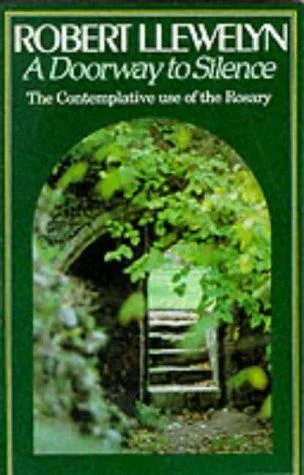
The primary 'symbol' in this work is 'silence' itself, representing not an emptiness but a fertile, conscious void—a space pregnant with potential and direct knowing. The 'doorway' in the title is a potent metaphor for the transition from the noisy, ego-driven external world to the inner area of profound stillness. 'Presence' functions as a symbol of awakened consciousness, the state of being fully alert and grounded, which is the fruit of cultivating silence.
Modern Relevance
Llewelyn's work remains highly relevant in the 21st century, particularly for mindfulness practitioners, meditators, and those seeking genuine spiritual depth amidst constant digital distraction. Contemporary teachers in contemplative spirituality and secular mindfulness often echo Llewelyn's core ideas about the importance of inner quietude and presence. His approach offers a counter-narrative to the often-superficial wellness industry, providing a more rigorous and philosophically grounded path to self-awareness and inner peace.
👥 Who Should Read This Book
• Dedicated students of contemplative practices seeking to understand the philosophical underpinnings of inner stillness beyond simple relaxation techniques. • Individuals feeling overwhelmed by modern life's constant stimulation and looking for a grounded, introspective path to mental clarity and peace. • Scholars and practitioners of Western esotericism interested in works that emphasize direct experience and the cultivation of consciousness from the late 20th century.
📜 Historical Context
When A Doorway to Silence was first published in 1986, the range of esoteric thought was diverse. The 1970s had seen a surge in interest in Eastern religions and New Age spirituality, often characterized by syncretism and a focus on personal empowerment. In contrast, Llewelyn's work offered a more austere, introspective approach rooted in the Western contemplative tradition. While authors like Idries Shah were popularizing Sufi wisdom, and Jungian psychology continued to influence explorations of the psyche, Llewelyn's focus on the direct cultivation of inner silence provided a distinct voice. His work can be seen as a response to, or at least a counterpoint against, some of the more superficial or trend-driven spiritual movements of the time, emphasizing depth and sustained inner work over fleeting experiences.
📔 Journal Prompts
The nature of the 'thinking mind' as an obstacle.
Moments where external 'noise' most impedes inner silence.
How 'presence' manifests in ordinary daily activities.
The resistance of the ego to true stillness.
The distinction between absence and presence in silence.
🗂️ Glossary
Inner Silence
A profound state of mental quietude, not merely the absence of external sound, but an active, conscious stillness conducive to direct perception and spiritual insight.
Presence
A state of alert, grounded awareness in the present moment, often experienced as a result of cultivating inner silence, allowing for direct engagement with reality.
Ego
In this context, the part of the self that is identified with thought, personal history, and the desire for control, often acting as a primary obstacle to stillness.
Thinking Mind
Refers to the habitual, discursive processes of thought that can dominate consciousness, often creating a sense of busyness that obscures deeper awareness.
Direct Perception
Knowledge or understanding gained through immediate experience and intuition, bypassing the analytical and conceptual filters of the ordinary mind.
Stillness
Synonymous with inner silence, referring to a settled state of mind free from agitation and mental clutter, allowing for clarity and deeper insight.
Doorway
A metaphorical threshold representing the transition from the external, distracted state of consciousness to the internal area of silence and presence.
🔮 Readers Also Liked
Browse all →

![The Teti Cemetery at Saqqara / N. Kanawati and M. Abder-Raziq ; with contributions by A. McFarlane ... [et al.].](/img/thumb/the-teti-cemetery-at-saqqara-n-kanawati-and-m-abder-raziq-with-contributions-by-a-mcfarlane-et-al-n--688041.webp)







More by Robert Llewelyn
All books →



More Free Occult Philosophy Books
View all →